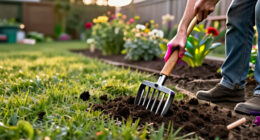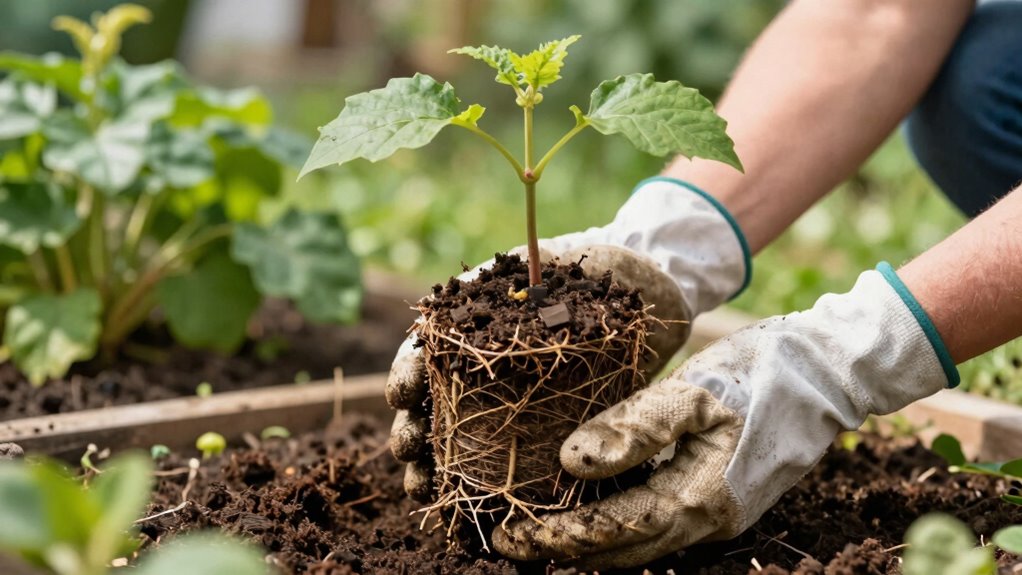

To avoid root damage during transplanting, handle the root ball gently and keep it intact to promote better establishment. Use sharp tools to make clean cuts if roots need trimming, and support the root ball during removal and placement to prevent breakage. Keep roots moist by keeping them shaded or wrapped in damp material, and water thoroughly after transplanting to settle the soil. For more tips on protecting roots during this vital process, keep exploring the key techniques.

Get garden gear delivered free — and shop member deals
- Fast, free delivery on millions of items
- Access to Prime Big Deal Days deals on October 6–7
- Prime Video, Amazon Music and more included
Key Takeaways
- Handle the root ball gently, supporting it firmly to prevent breakage during digging and transplanting.
- Use sharp, clean tools to make precise cuts, avoiding tearing or damaging roots.
- Keep roots moist and shaded during transfer to prevent desiccation and stress.
- Minimize root disturbance by transplanting quickly once dug up.
- Avoid overwatering or waterlogging to reduce root stress and damage post-transplant.
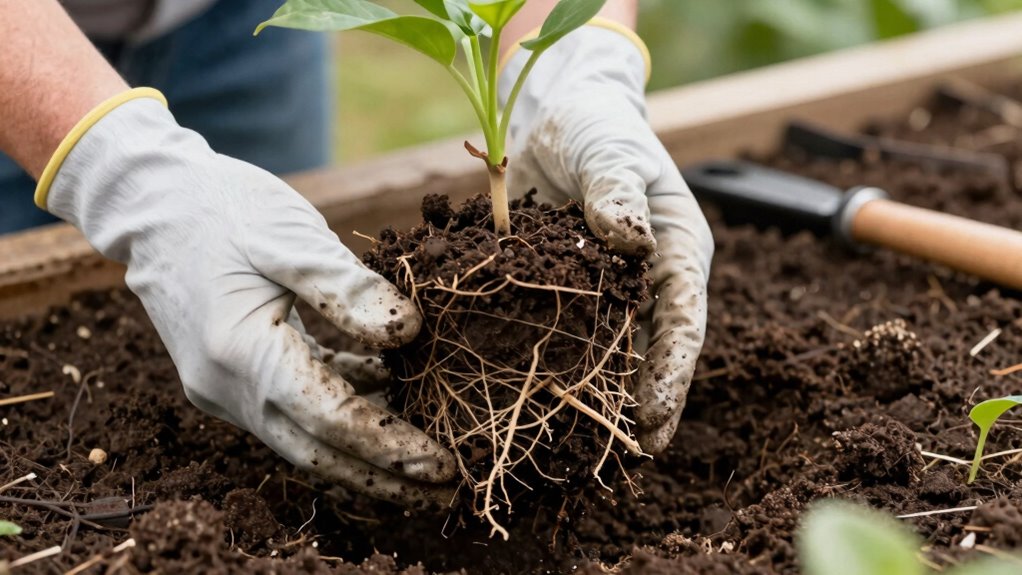
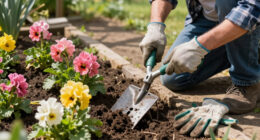
Transplanting can be stressful for plants, but you can minimize root damage by handling them carefully and preparing properly. The key to a successful move starts long before you dig up the plant. Proper soil preparation is essential; make certain the new location has loose, well-draining soil rich in organic matter. Loosen the soil in the transplant area, removing weeds and debris, so roots can spread easily once planted. Incorporate compost or organic amendments to improve soil fertility and structure, which encourages healthy root growth and minimizes stress on the plant during and after transplanting.
Proper soil prep and organic matter boost root health and reduce transplant stress.
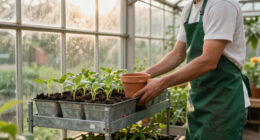
As you prepare to dig, be mindful of the root ball’s size and shape. Use sharp tools to make clean cuts, avoiding unnecessary tearing or crushing of roots. When you lift the plant, try to keep as much of the root ball intact as possible. The larger the root ball, the better the plant’s chances of establishing quickly in its new home. Handle the roots gently, supporting the root ball to prevent breakage. Once out of the ground, keep the roots moist by placing the plant in a shaded, cool area or wrapping the roots in damp burlap. This prevents them from drying out during the transfer.
Watering techniques play a vital role in reducing transplant shock and root damage. Before transplanting, water the plant thoroughly a day or two ahead to make certain the roots are hydrated and the soil is moist. After planting, give the new site a deep watering to settle the soil around the roots and eliminate air pockets. During the first few weeks, maintain consistent moisture without overwatering, which can lead to root rot. Drip irrigation or soaker hoses work well because they deliver water slowly and evenly, keeping the soil consistently moist but not waterlogged. It’s important to avoid letting the soil dry out completely or become overly saturated, both of which can cause stress and damage to the roots. Additionally, soil aeration can improve root health by allowing better oxygen flow to the roots, further supporting their growth and recovery.
In addition, after transplanting, applying a layer of mulch around the base helps retain soil moisture, regulate temperature, and protect roots from fluctuations. Proper soil health is crucial, as it directly impacts root growth and plant resilience. Good soil structure and proper aeration facilitate healthy root development and reduce compaction, which can hinder growth. Keep an eye on the moisture level of the soil, adjusting your watering schedule as needed. Proper soil preparation and careful watering techniques are your best tools for supporting healthy root growth and making certain your plant establishes quickly and thrives in its new environment. Being aware of soil health and maintaining optimal conditions can significantly improve transplant success. With patience and attention to detail, you’ll help your plant recover from the shock of transplanting and grow vigorously in its new home.
garden transplant root ball support
As an affiliate, we earn on qualifying purchases.
As an affiliate, we earn on qualifying purchases.
Frequently Asked Questions
What Tools Are Best for Transplanting Delicate Roots?
You should use sharp, sterilized tools like a pruning shear or a small hand saw for transplanting delicate roots. These tools help you perform root pruning carefully, minimizing damage. Before transplanting, prepare the soil well, ensuring it’s loose and nutrient-rich to support healthy growth. Handle roots gently, avoiding excessive disturbance, and keep them moist to prevent stress. Proper tools and soil preparation are essential for successful transplanting of delicate roots.
How Deep Should the Planting Hole Be?
Imagine planting a delicate shrub for a garden makeover; you’ll want to dig a hole about twice as wide and as deep as the root ball. Proper soil preparation and root inspection are key. When preparing the site, make certain the hole isn’t too shallow, which can stress roots, or too deep, which might suffocate them. This balance helps roots establish quickly and thrive after transplanting.
When Is the Optimal Time of Year to Transplant?
You should transplant during early spring or fall, when seasonal considerations favor plant recovery. These times typically offer cooler temperatures and increased moisture, reducing climate impact stress. Avoid mid-summer transplanting, as heat and drought can hinder root establishment. By choosing the right season, you give your plants the best chance to adapt, grow strong, and thrive in their new environment.
How Can I Tell if a Root Is Healthy or Damaged?
You can tell if a root is healthy by inspecting its appearance; healthy roots are firm, white or light-colored, and flexible. Damaged roots appear brown, shriveled, or mushy. To keep roots healthy during transplanting, prepare the soil properly and use gentle watering techniques to avoid stress. Ensuring the roots are undamaged helps the plant establish quickly and thrive in its new environment.
Should I Prune Roots Before Transplanting?
A gentle touch with root pruning can be beneficial before transplanting, helping to encourage healthier growth and minimize stress. You should prune only if the roots are overly tangled or circling, and always do so with clean, sharp tools. Proper soil preparation is equally crucial, guaranteeing the new site has proper drainage and nutrients. This combined approach reduces shock, promotes root establishment, and guarantees your plant’s successful shift.
Conclusion
So, next time you transplant, remember—it’s all about gentle handling and patience. Ironically, the very act of trying to rush your plant into its new home can damage its roots more than anything. But if you take your time and handle those roots with care, you might just be surprised how quickly your plant bounces back. Sometimes, the best thing you can do is simply not to mess with nature—yet here you are, meddling again!
Halloween Picks
halloween
As an affiliate, we earn on qualifying purchases.