
TL;DR

Get garden gear delivered free — and shop member deals
- Fast, free delivery on millions of items
- Access to Prime Big Deal Days deals on October 6–7
- Prime Video, Amazon Music and more included
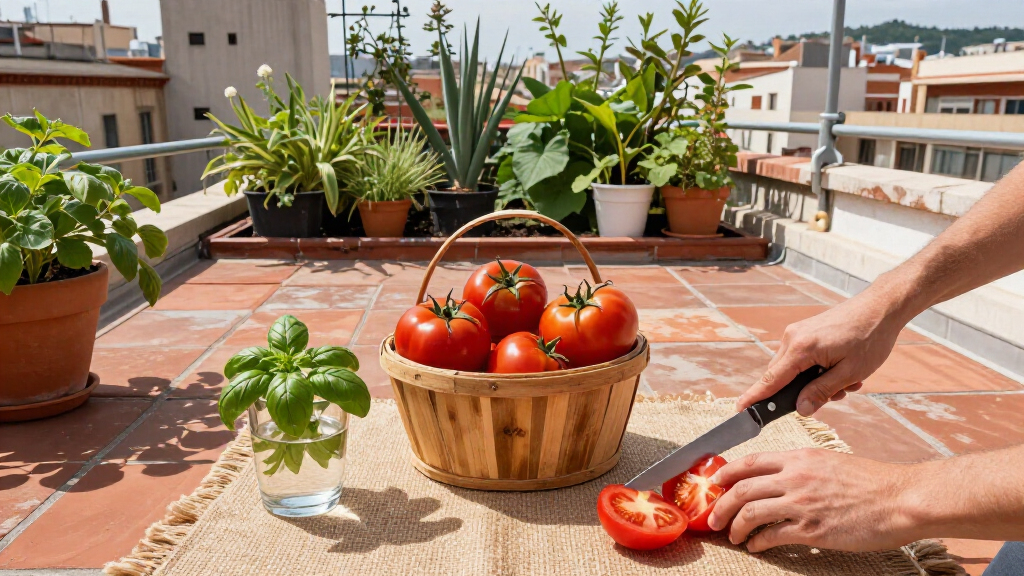
Research from the Autonomous University of Barcelona indicates that urban rooftops in Barcelona could produce up to 31% of the city’s tomato consumption. This development highlights the potential for urban agriculture to contribute significantly to local food supply, though the feasibility and implementation details remain under study.
Research from the Autonomous University of Barcelona indicates that up to 31% of the tomatoes consumed in Barcelona could be produced on municipal rooftops.
This finding underscores the potential for urban agriculture to play a major role in local food sustainability, especially amid rising concerns over supply chains and environmental impact.
The study, conducted by researchers at the Autonomous University of Barcelona, analyzed the available rooftop space across the city and assessed its suitability for tomato cultivation. The findings suggest that, if fully utilized, these rooftops could meet approximately 31% of the city’s tomato demand.
Barcelona’s urban landscape, characterized by a dense concentration of buildings, offers a significant amount of unused rooftop space. Researchers identified that with appropriate infrastructure, including irrigation and protective coverings, these spaces could support tomato growth year-round.
The study emphasizes that this potential is based on ideal conditions and current technological capabilities. Actual implementation would require overcoming logistical, structural, and regulatory challenges, which are still being evaluated.
Potential Impact on Urban Food Security
This development points to a possible paradigm shift in how cities approach food production. By utilizing rooftops for agriculture, Barcelona could reduce its reliance on food imports, lower carbon emissions associated with transportation, and promote local food resilience.
Moreover, integrating urban farming into city planning could foster community engagement, create green jobs, and improve air quality. The finding also aligns with broader trends in sustainable urban development and climate adaptation strategies.
As an affiliate, we earn on qualifying purchases.
Urban Agriculture and Barcelona’s Food Supply
Barcelona has a long history of innovative urban planning, but its reliance on food imports remains high. The city’s dense architecture leaves many rooftops unused, representing a potential resource for local food production. Recent interest in urban agriculture has increased amid global supply chain disruptions and climate change concerns.
The idea of rooftop farming is not new globally, but Barcelona’s specific geographic and structural conditions make this study particularly relevant. Previous pilot projects in other cities have demonstrated the feasibility of small-scale rooftop farms, but large-scale implementation remains complex.
This study builds on ongoing research into how cities can adapt to environmental and economic challenges by harnessing existing infrastructure for food production.
Implementation Challenges and Practical Limitations
It is not yet clear how feasible large-scale rooftop tomato farming is in practice. Factors such as structural integrity of buildings, access to water, sunlight exposure, and local regulations could limit the actual deployment. The study presents an optimistic potential but does not detail specific plans or timelines for implementation.
Furthermore, economic viability and community acceptance are still under assessment. Researchers acknowledge that significant investment and policy support would be required to turn this potential into reality.
Next Steps for Urban Agricultural Development in Barcelona
Further research is expected to explore the technical, economic, and regulatory aspects of rooftop farming at scale. City officials and stakeholders are likely to consider pilot projects to test feasibility and gather practical data.
In addition, discussions around policy adjustments, building regulations, and funding mechanisms are anticipated to facilitate potential expansion of urban agriculture initiatives.
The study’s findings could influence future urban planning strategies, potentially leading to official programs promoting rooftop cultivation of various crops, including tomatoes.
Key Questions
How realistic is it to produce 31% of tomatoes on rooftops in Barcelona?
The figure is based on theoretical analysis of available rooftop space and current technology. Practical implementation faces challenges such as structural capacity, water access, and regulatory approval. Pilot projects and further studies are needed to assess real-world viability.
What are the main obstacles to rooftop tomato farming in Barcelona?
Key obstacles include building structural limitations, access to water and sunlight, city regulations, and the cost of infrastructure upgrades. Addressing these will be critical for scaling up rooftop agriculture.
Could this approach help reduce Barcelona’s dependence on imported food?
Yes, if successfully implemented, rooftop farming could significantly contribute to local food supplies, reducing reliance on imports and lowering transportation emissions, especially for perishable products like tomatoes.
Are there any existing rooftop farms in Barcelona?
Some small-scale rooftop gardens and pilot projects exist, but large-scale commercial rooftop farming remains in the planning or conceptual stage. This study highlights the potential, not current widespread practice.
What is the timeline for turning this potential into reality?
There is no fixed timeline yet. Further research, pilot projects, and policy development are needed before large-scale rooftop tomato farming can be operationalized, which could take several years.
Source: local
Fall Picks
fall essentials
As an affiliate, we earn on qualifying purchases.