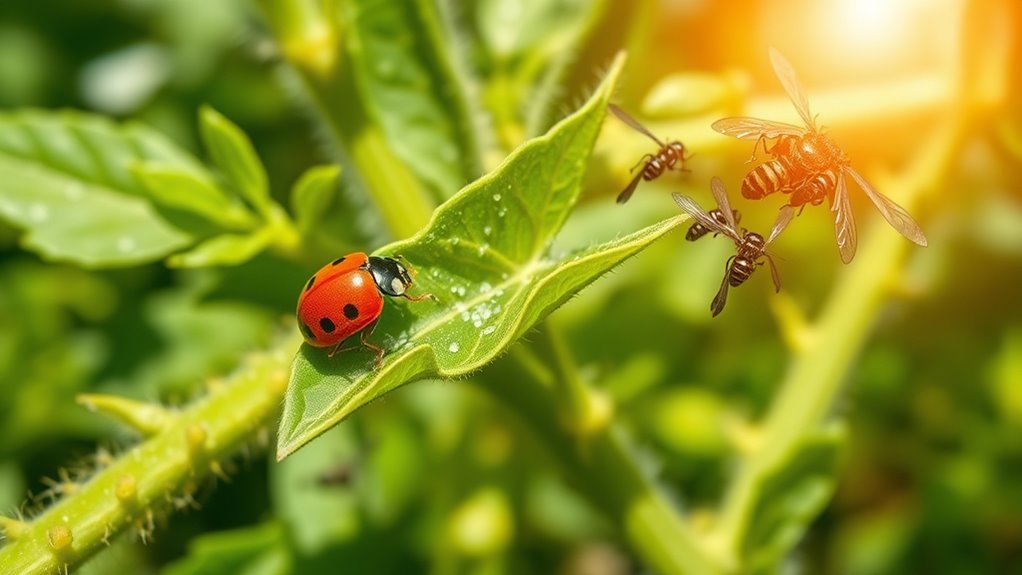

To effectively use biocontrol agents against plant pests, you should introduce beneficial insects like ladybugs and parasitic wasps early when pests start to appear. Plant nectar-rich flowers nearby to support their survival and reproduce naturally. Apply treatments during the right times—early morning or late afternoon—and avoid broad-spectrum chemicals that harm these helpful insects. This eco-friendly method leverages natural behaviors to keep pests in check. Keep exploring to learn how to optimize these strategies for your crops.
Key Takeaways
- Introduce beneficial insects like ladybugs and parasitic wasps early when pest populations rise.
- Apply biocontrol agents using targeted methods such as sprays or granular treatments during optimal times.
- Create a supportive environment with flowering plants providing nectar and pollen to sustain beneficial insects.
- Avoid broad-spectrum insecticides to protect beneficial insect populations and enhance pest control.
- Monitor pest and beneficial insect populations regularly to time applications effectively and maximize results.
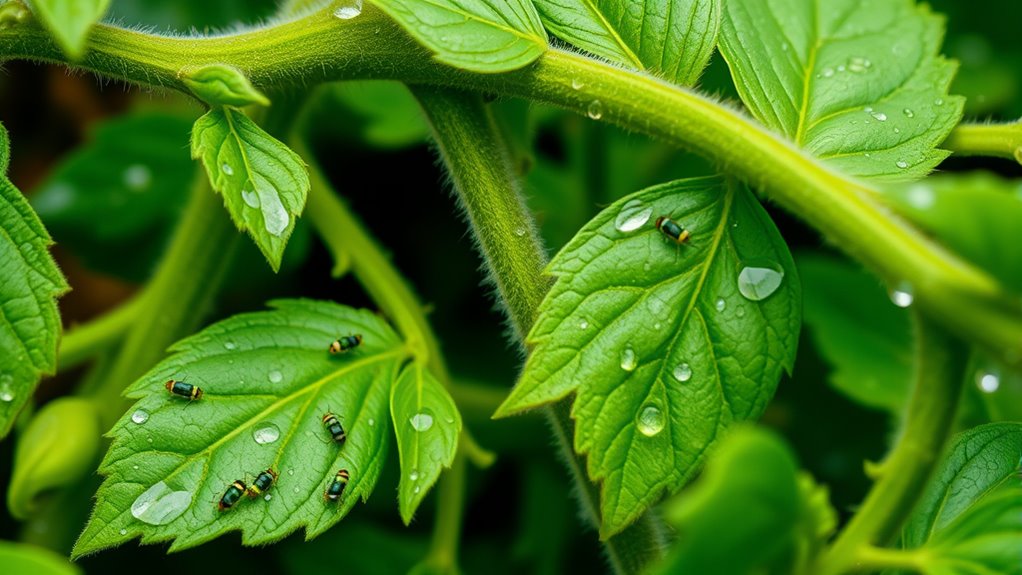
Have you ever wondered how farmers protect their crops without relying solely on chemical pesticides? One effective method is harnessing beneficial insect behaviors to naturally control pests. These beneficial insects, such as ladybugs, parasitic wasps, and predatory beetles, play essential roles in keeping pest populations in check. Understanding their behaviors helps farmers deploy biocontrol agents more effectively. For instance, ladybugs are voracious aphid eaters, and their natural hunting instincts mean you can encourage their presence by planting nectar-rich flowers nearby. Similarly, parasitic wasps seek out specific pest hosts, laying their eggs inside pests like caterpillars or aphids. Recognizing these behaviors allows you to time biocontrol agent applications precisely, ensuring maximum impact when pests are vulnerable.
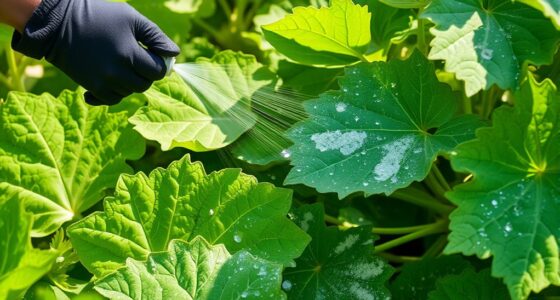
Applying biocontrol agents correctly is fundamental for their success. Biocontrol agent application techniques vary depending on the pest, crop type, and environment. You might use sprays, granular treatments, or even incorporate beneficial insects directly into the soil or foliage. When using sprays, it’s essential to target the underside of leaves and areas where pests tend to hide. Spraying during cooler parts of the day can help prevent the agents from being damaged by sunlight or wind. Granular applications can be effective for soil-dwelling pests or when you want to distribute beneficial insects directly into the root zone. Whichever method you choose, it’s important to follow manufacturer instructions and adjust your approach based on pest life cycles and weather conditions. Additionally, understanding the life cycles of pests and beneficial insects helps optimize control strategies and timing.
Timing your biocontrol agent application is equally important. You want to introduce beneficial insects when pest populations are beginning to rise but before they reach damaging levels. This proactive approach reduces the need for chemical interventions and promotes a balanced ecosystem. Additionally, creating an environment conducive to beneficial insect behaviors enhances their effectiveness. For example, providing flowering plants that offer nectar and pollen encourages these insects to stay and reproduce on your farm or garden. Avoiding broad-spectrum insecticides that could harm beneficial insects is also essential, as it allows these natural predators to thrive and perform their pest control duties.
In essence, leveraging beneficial insect behaviors and applying biocontrol agents using appropriate techniques forms a sustainable, eco-friendly approach to pest management. It requires understanding the natural instincts and needs of these beneficial insects, timing applications carefully, and creating a habitat that supports their presence. When you integrate these practices into your pest control plan, you not only reduce chemical use but also foster a healthier, more resilient crop environment. This strategy ultimately leads to more sustainable farming and healthier crops, benefiting both your harvest and the ecosystem.
Frequently Asked Questions
Are Biocontrol Agents Effective Year-Round?
Biocontrol agents aren’t effective year-round because their seasonal effectiveness depends on factors like temperature and pest life cycles. You need to take into account application timing carefully to maximize results, applying agents when pests are most vulnerable. During colder months, their activity drops, so you may need supplementary methods. Proper timing ensures you get the best benefits from biocontrol agents, making your pest management more sustainable and efficient throughout the year.
How Do Biocontrol Agents Impact Local Ecosystems?
You might wonder how biocontrol agents affect local ecosystems. They can impact biodiversity impacts by either supporting or disrupting native species, depending on how selectively they target pests. Properly used, they help maintain ecosystem balance by reducing reliance on chemicals and promoting natural pest control. However, if not carefully managed, they could unintentionally harm non-target organisms, leading to shifts in ecosystem dynamics and potential biodiversity impacts.
Can Biocontrol Agents Be Used Alongside Chemical Pesticides?
Yes, you can use biocontrol agents alongside chemical pesticides, but you need to contemplate compatibility concerns. Always check if the pesticides harm the biocontrol agents, and plan your application timing carefully. Applying pesticides too close to releasing biocontrol agents can reduce their effectiveness. To maximize benefits, stagger applications and choose pesticides that are compatible with your biocontrol options.
What Is the Cost Comparison Between Biocontrol and Chemical Methods?
The economic comparison shows that biocontrol agents often have higher upfront costs but lead to long-term savings. You might spend more initially on biocontrol products, but they reduce reliance on chemical pesticides, lowering ongoing expenses. Over time, this approach can be more cost-effective, especially as it promotes sustainable pest management. Investing in biocontrol methods can ultimately save you money by decreasing chemical use and minimizing environmental impacts.
Are Biocontrol Agents Safe for Non-Target Organisms?
Biocontrol agents are generally safe for non-target organisms when they have high host specificity, acting like a lock only fitting a particular key. You can help maintain ecological balance by choosing agents that target pests without harming beneficial insects or other wildlife. While no method is entirely risk-free, biocontrols are designed to minimize unintended impacts, making them a safer, eco-friendly option for sustainable pest management.
Conclusion
By using biocontrol agents, you harness nature’s own warriors to fight plant pests, making your garden healthier and more sustainable. Like a gentle but relentless tide, these agents naturally keep pests in check without harmful chemicals. Embracing biocontrol means you’re protecting your plants and the environment simultaneously. So, take this eco-friendly approach and watch your garden thrive, as resilient and vibrant as a wildflower meadow. It’s a step toward a greener, more balanced future.