
Blackout greenhouses often shift your crop timelines more than you expect because they block natural light, so you need to manage supplemental lighting carefully to keep growth on schedule. Changes in light cues, environment, and pest control add complexity to planning. Without proper adjustments, your harvests may come earlier or later than anticipated. To stay ahead, you must monitor conditions closely and adapt swiftly—there’s more to take into account if you want predictable results.

Get garden gear delivered free with Prime
- Fast, free delivery on millions of items
- Prime Video, Amazon Music and more included
- Member-only deals all year
Key Takeaways
- Blackout greenhouses alter natural light cues, causing unexpected shifts in crop growth stages and harvest schedules.
- Dependence on artificial LED lighting requires precise management; miscalibration leads to timing discrepancies.
- Environmental modifications increase pest risks and complicate pest control, impacting crop development timelines.
- Constant adjustments in light, watering, and feeding routines are necessary to maintain accurate crop timing.
- Growers often underestimate the extent of growth timeline shifts, leading to planning challenges and surprises.
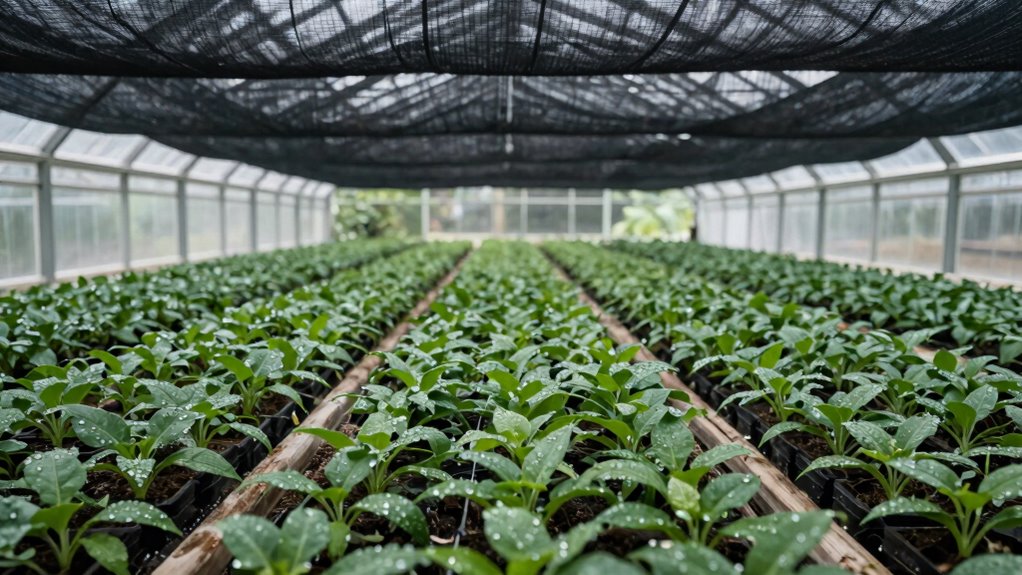
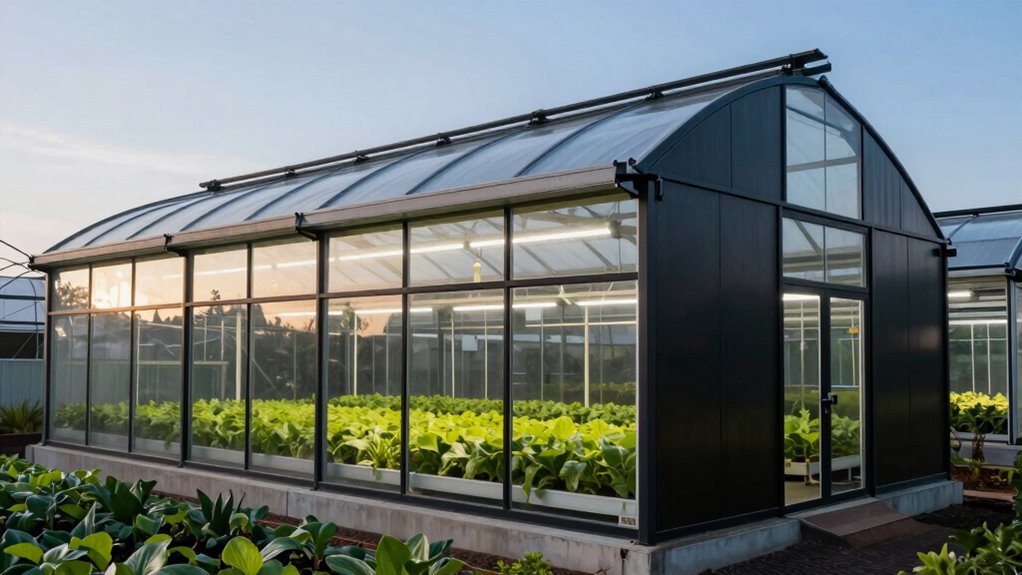
Greenhouses offer growers the flexibility to control environmental conditions, enabling them to optimize crop timing throughout the year. However, when you introduce blackout greenhouses into your setup, you might find that your plans for harvest schedules often shift more than expected. These structures block out natural light entirely, which can dramatically alter your crop growth timeline. While blackout greenhouses are useful for extending growing seasons or controlling flowering times, they also create unforeseen challenges, especially if you’re relying on precise crop timing to meet market demands.
Blackout greenhouses can significantly shift crop timelines, requiring careful management of light, pests, and growth conditions.
One of the key ways blackout greenhouses impact your schedule is through their influence on plant development stages. Without natural sunlight, you need to depend heavily on supplemental lighting like LED lighting to ensure plants receive the right spectrum and intensity. LED lighting allows you to mimic natural conditions inside the blackout environment, but it also means you have to carefully manage light durations and intensities to prevent stress or uneven growth. If not calibrated properly, your crops might develop slower or faster than planned, throwing off your harvest timeline. This makes it imperative to monitor and adjust your LED lighting strategies constantly, especially when you’re working within restricted light windows. Recognizing how light management influences crop development is crucial for maintaining accurate schedules.
Pest management also becomes more complex in blackout greenhouses. Since natural light and temperature fluctuations help regulate pest populations, blocking out sunlight can create a stable but sometimes problematic environment. Pests that thrive in dark, humid conditions might flourish unnoticed, leading to infestations that threaten your crops before you even realize it. You need to be proactive with pest management strategies, including regular inspections, integrated pest management (IPM) techniques, and possibly introducing beneficial insects or biological controls. Failing to adapt your pest control measures to the altered environment can result in outbreaks that delay your harvest or reduce crop quality. Additionally, the microclimate within blackout greenhouses can often favor certain pests, making vigilant environmental monitoring even more essential.
Furthermore, blackout greenhouses demand meticulous planning. You might think that controlling light alone will give you precise crop timing, but other factors like growth rate variability and pest pressures can disrupt your schedule. You’ll need to stay flexible and ready to adjust your feeding, watering, and lighting routines based on real-time observations. By integrating advanced sensors and automation, you can better synchronize your crop development with your desired timeline, but it requires effort and attentiveness. Recognizing the impact of environmental modifications on crop development is essential for adjusting your management practices effectively.
In essence, blackout greenhouses change crop timing more than many growers anticipate, primarily because they alter natural growth cues and introduce new management challenges. While they offer control and predictability in some aspects, they also demand a higher level of vigilance, especially in managing light with LED systems and controlling pests effectively. If you’re prepared to adapt your practices and monitor your environment closely, you can still achieve your crop goals. However, understanding the extent of these shifts upfront helps you plan more accurately and avoid surprises down the line.
Popular right now

Dyson Ball Animal 2 Plus Corded Vacuum

KitchenAid Artisan Series 5-Quart Tilt-Head Stand Mixer, Dried Rose (KSM150PS)
Dyson Car+Boat Cordless Handheld Vacuum
As an affiliate, we earn on qualifying purchases.
Frequently Asked Questions
How Does Blackout Shading Affect Plant Disease Risk?
Blackout shading can increase your plant disease risk by creating humid, stagnant conditions that promote disease spread. However, it also helps with disease suppression by controlling humidity and temperature, reducing fungal growth. Additionally, blackout shading prevents pest prevention issues by limiting pest entry and activity. By managing these factors carefully, you can balance disease suppression and pest prevention, minimizing overall plant health risks while optimizing crop timing.
What Crops Benefit Most From Blackout Greenhouse Adjustments?
You’ll find that delicate crop varieties, like strawberries or certain herbs, benefit most from blackout adjustments, especially during critical growth stages. These modifications can dramatically optimize development, protecting plants from excessive heat or light that could otherwise stunt growth or cause stress. By tailoring blackout schedules to specific crops and their growth stages, you can extend your harvest window, improve quality, and reduce disease risks, making your greenhouse operations more efficient and profitable.
How Do Blackout Periods Impact Energy Consumption?
Blackout periods boost your energy efficiency by reducing the need for supplemental lighting and heating, which leads to significant power savings. During blackout phases, you use less electricity because natural light is maximized, decreasing reliance on artificial sources. This not only cuts costs but also lowers your carbon footprint. Implementing blackout periods strategically helps you optimize energy consumption, making your greenhouse operation more sustainable and cost-effective over time.
Can Blackout Techniques Be Automated for Precision Control?
Yes, blackout techniques can be automated for precision control. You can implement automated shading systems that respond to real-time light levels, temperature, and crop needs. These systems use sensors and advanced controls to precisely regulate shading, reducing energy use and optimizing crop growth. Automation guarantees consistent blackout periods, minimizes manual work, and enhances crop timing accuracy, making your greenhouse operations more efficient and adaptable to changing environmental conditions.
What Are the Long-Term Economic Impacts of Blackout Timing?
Blackout timing acts like a steady anchor, shaping your farm’s economic stability over time. If you adapt well to market shifts and optimize blackout use, you can smooth out seasonal fluctuations and boost profits. However, miscalculations can lead to costly delays or overproduction, destabilizing your finances. Long-term, strategic blackout scheduling helps you navigate market demands, ensuring consistent yields and fostering resilience in your farm’s economic future.
Conclusion
As you plan your greenhouse crops, remember that blackout periods can unexpectedly shift your schedule more than you anticipate. Will your careful timing hold against these unpredictable changes? Staying adaptable becomes essential as blackout impacts continue to evolve. Don’t let surprises catch you off guard—prepare for the unknown and keep your crop cycle flexible. The next season could bring surprises that challenge everything you’ve planned. Are you ready to face what’s coming?