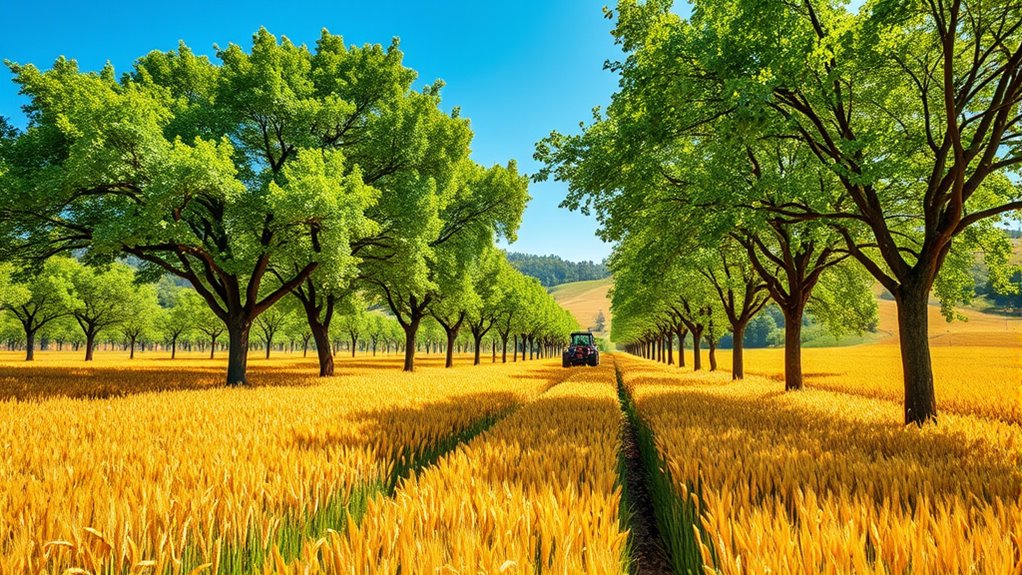
Incorporating trees into cropland through farm-scale agroforestry boosts soil health, attracts beneficial insects, and creates a more resilient, diverse farm system. You’ll benefit from improved microclimates, natural pest control, and erosion reduction. Trees also provide additional income from fruits, nuts, or timber while supporting climate adaptation. This integrated approach enhances productivity and sustainability, helping your land stay healthy long-term. Continue to explore why farm-scale agroforestry offers a key solution for sustainable agriculture.
Key Takeaways
- Integrate diverse tree species into cropland to enhance land resilience and attract beneficial insects and birds.
- Use alley cropping and windbreaks to protect crops, improve microclimates, and conserve soil and water resources.
- Incorporate trees for additional income through timber, fruit, or nuts, diversifying farm revenue streams.
- Promote soil health by reducing erosion, improving water infiltration, and adding organic matter through leaf litter.
- Enhance farm sustainability and climate resilience by creating a biodiverse, adaptable, and environmentally balanced system.
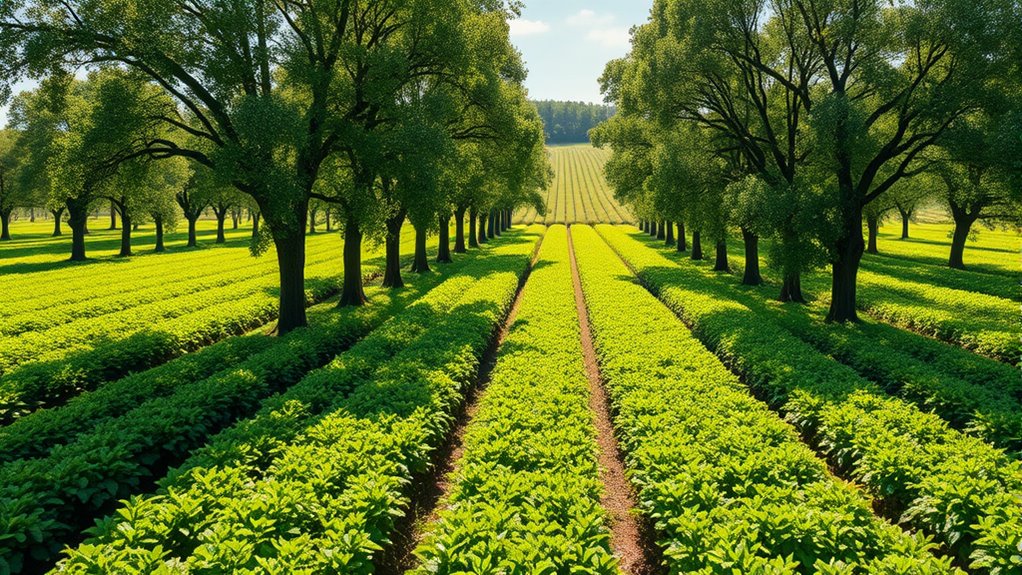
Have you ever considered how integrating trees into your farm can boost productivity and sustainability? By adopting farm-scale agroforestry, you can transform your land into a more resilient and productive system. One of the key benefits of this approach is increasing tree diversity across your fields. Instead of planting a monoculture, you introduce a variety of tree species that serve multiple functions. Different trees attract various beneficial insects and birds, which help control pests naturally. Additionally, diverse tree species can improve the microclimate, providing shade and reducing wind erosion, which benefits your crops. With a broader tree diversity, your farm becomes more adaptable to changing weather patterns and environmental stresses, ensuring long-term viability.
Another essential aspect of integrating trees into your cropland is soil conservation. Trees act as natural barriers against soil erosion, stabilizing the soil with their roots and reducing runoff during heavy rains. Their roots penetrate deeply, helping to break up compacted soil and increase water infiltration. This not only prevents the loss of valuable topsoil but also enhances soil fertility over time. As the trees grow, their leaf litter adds organic matter to the soil, further boosting its structure and nutrient content. This process creates a healthier soil environment that supports crop growth and reduces the need for chemical inputs. Soil conservation through agroforestry also helps in maintaining moisture levels, which is especially crucial during droughts or dry seasons. Incorporating a mix of trees into your farm doesn’t mean sacrificing crop production. Instead, it complements your cropping system by creating a more sustainable landscape. For example, alley cropping, where rows of trees are planted between crop rows, allows you to harvest both timber or fruit and your main crops simultaneously. Over time, the trees can provide additional income streams, such as fruit, nuts, or timber, diversifying your farm’s revenue. Trees also serve as windbreaks, protecting your crops from damage and reducing evaporation, which conserves water. The cumulative effect of these benefits is a more resilient farm system that can withstand environmental challenges while maintaining productivity. Additionally, integrating trees can enhance biodiversity by attracting various beneficial insects and birds, further supporting a healthy and balanced ecosystem on your farm.
Frequently Asked Questions
How Does Agroforestry Affect Crop Yields Long-Term?
Agroforestry positively impacts your crop yields long-term by providing shade enhancement, which reduces heat stress and conserves soil moisture. It also boosts biodiversity benefits, encouraging beneficial insects and improving pest control. Over time, these advantages create a more resilient farming system, leading to stable or increased yields. Incorporating trees promotes better soil health and microclimates, ensuring your crops thrive sustainably well into the future.
What Are the Initial Costs of Establishing Farm-Scale Agroforestry Systems?
Thinking of agroforestry as planting the seeds for future gains, you’ll face initial costs like land preparation, tree seedlings, and labor, which can range from moderate to high. A thorough cost analysis helps you understand these expenses, while financial incentives like grants or subsidies can lighten the load. Although the upfront investment may seem steep, the long-term benefits often outweigh initial costs, making it a smart sustainable choice.
How Do Trees Impact Soil Health and Nutrient Cycling?
Trees improve soil health and nutrient cycling by boosting soil fertility and enhancing microbial diversity. Their roots help prevent erosion and promote aeration, which benefits beneficial microbes. As trees decompose, they release nutrients back into the soil, supporting crop growth. This process creates a more resilient and productive soil ecosystem, ultimately leading to healthier crops and better long-term yields. You’ll notice the positive effects on your soil over time.
Can Agroforestry Be Integrated With Organic Farming Practices?
Imagine a lush, thriving garden where every element supports the others—this is agroforestry integrated with organic farming. You can definitely combine these practices by following permaculture principles, which emphasize sustainability and harmony with nature. Trees boost biodiversity, improve soil health, and naturally manage pests, aligning perfectly with organic methods. By blending agroforestry and organic farming, you create resilient, productive landscapes that work with nature rather than against it.
What Are the Best Tree Species for Different Climate Zones?
You should choose native species for your climate zone to guarantee better climate adaptation and resilience. In temperate areas, consider oaks or maples; in tropical zones, look at drought-tolerant species like acacias. Native trees naturally thrive in your environment, requiring less maintenance and water. Matching tree species to your specific climate zone helps maximize agroforestry benefits, supporting soil health, biodiversity, and sustainable crop production.
Conclusion
As you consider integrating trees into your cropland, remember that the potential benefits are immense—more than just yields, it’s about shaping a resilient future. But what challenges might lie ahead? Will you overcome them and realize the full promise of farm-scale agroforestry? The choices you make today could determine whether your land transforms into a thriving, sustainable ecosystem or remains caught in old patterns. The next step is yours—are you ready to take it?