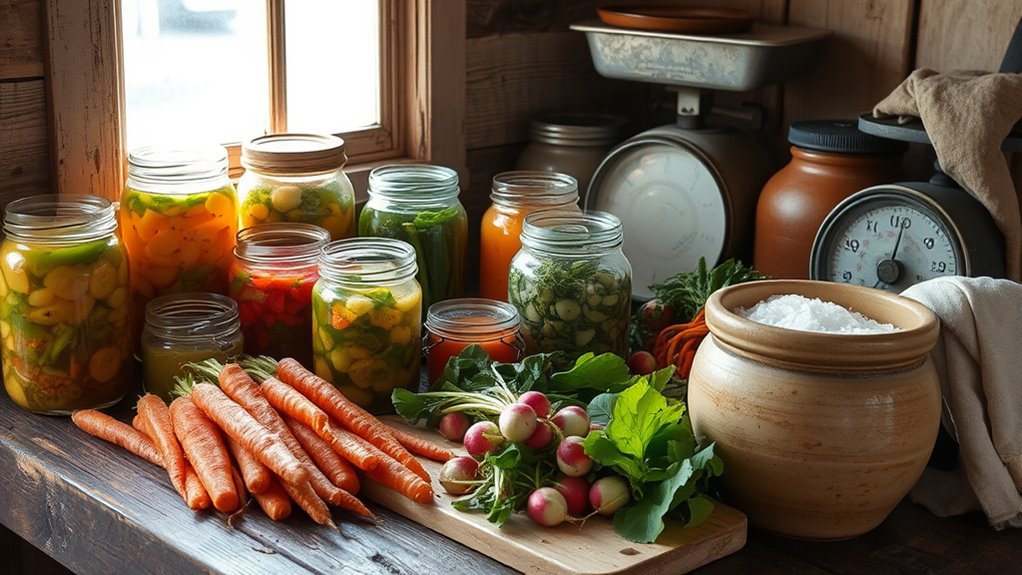

Fermentation and preservation methods are key to extending the shelf life of your farm produce while keeping it nutritious and safe to enjoy. Techniques like pickling, drying, canning, and freezing help prevent spoilage caused by bacteria, molds, and yeasts. These methods also enhance flavor, boost digestibility, and reduce waste, allowing you to enjoy seasonal foods year-round. If you want to discover practical tips for mastering these skills and improving your food storage, stay with us for more insights.
Key Takeaways
- Fermentation enhances food safety, flavor, and probiotic content while extending shelf life of farm produce.
- Preservation methods like pickling, drying, and canning prevent spoilage and maintain nutritional value.
- Combining fermentation with dehydration or freezing creates versatile, long-term storage options for surplus crops.
- Proper handling and sanitation are essential to prevent contamination and ensure food safety during preservation.
- Preserving farm produce supports year-round availability, reduces waste, and promotes sustainable, health-conscious practices.
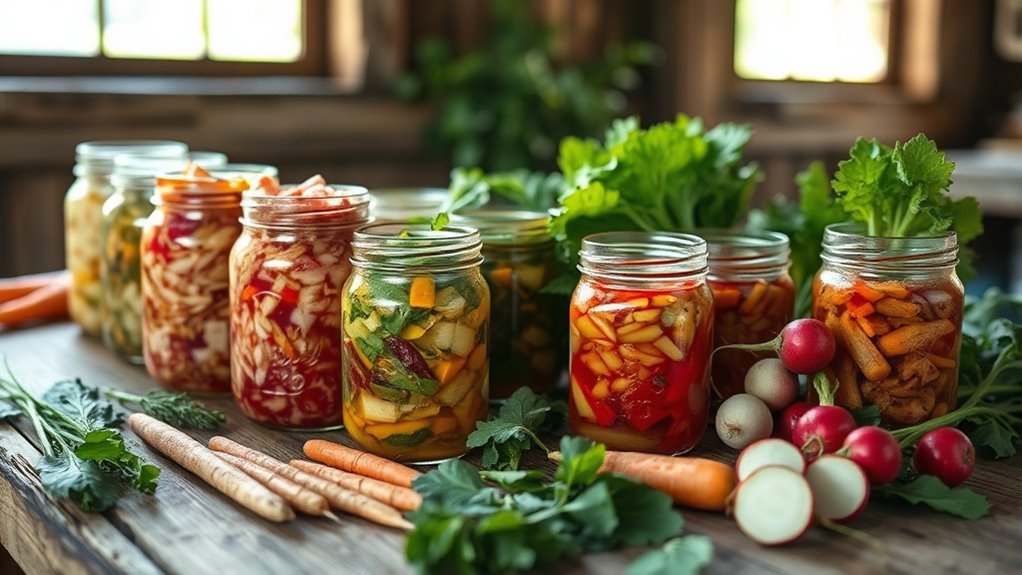
Fermentation and preservation are essential techniques that help you extend the shelf life of farm produce and maintain its nutritional value. When you explore fermentation techniques, you’re tapping into age-old methods that transform fresh crops into durable, flavorful foods. These techniques not only prevent spoilage but also enhance the digestibility and probiotic content of your produce. From fermenting vegetables like cabbage into sauerkraut to fermenting milk into yogurt, each method offers a way to make the most of your harvest. Preservation methods such as pickling, drying, and canning are practical tools that allow you to store fruits and vegetables for months. They protect your produce from bacteria, molds, and yeasts that cause spoilage, ensuring you have nutritious options throughout the year.
By mastering fermentation techniques, you gain the ability to create complex flavors and improve food safety. For example, fermenting vegetables in a controlled environment encourages beneficial bacteria to thrive, which naturally suppresses harmful pathogens. This process not only preserves the produce but also boosts its health benefits. When you choose preservation methods like dehydration, you remove moisture that bacteria need to grow, effectively extending shelf life without relying on chemicals or preservatives. Canning involves sealing produce in airtight containers, often after boiling, to create a hostile environment for microbes. Each preservation method requires attention to detail, but once you understand the fundamentals, you can adapt them to suit different types of produce and storage conditions.
Incorporating fermentation techniques into your food storage routine offers ongoing benefits. It allows you to turn surplus produce into shelf-stable items that retain many of their original nutrients. Plus, fermented foods can be easier to digest and may contribute to a healthier gut microbiome. Preservation methods like freezing also complement fermentation by providing additional options for long-term storage. When you combine these techniques, you create a resilient system that minimizes waste and maximizes nutritional retention. Whether you’re fermenting vegetables for a tangy burst of flavor or drying fruits to enjoy in winter, these methods give you control over your food supply and reduce reliance on commercial preservatives. Additionally, understanding food safety principles ensures the proper handling and storage of fermented and preserved foods, preventing contamination and spoilage.
Ultimately, understanding and applying fermentation techniques and preservation methods empower you to make the most of your farm produce. They allow you to enjoy seasonal bounty year-round, preserve the freshness of your harvest, and introduce diverse flavors into your diet. With practice, you’ll develop confidence in your ability to extend the life of your produce while maintaining its nutritional integrity. This knowledge not only helps you save money but also promotes a sustainable, health-conscious lifestyle rooted in traditional food preservation practices.
Frequently Asked Questions
How Long Does Fermented Farm Produce Typically Last?
Fermented farm produce typically lasts from several months up to a year, depending on fermentation duration and storage conditions. You’ll know it’s spoiled if you notice foul odors, mold, or slimy textures, which are clear spoilage indicators. Proper sealing and refrigeration can extend shelf life. Always check for signs of fermentation completion and avoid consuming if you see any unusual changes, ensuring safety and freshness in your preserved produce.
Are There Health Risks Associated With Improper Fermentation?
Yes, there are health risks with improper fermentation. Studies show that up to 15% of home-fermented products can harbor harmful bacteria if hygiene practices and fermentation safety aren’t followed. You must guarantee cleanliness and correct procedures to prevent contamination. Poor hygiene practices can lead to food poisoning or the growth of dangerous molds. Always monitor your fermentation process carefully to enjoy the health benefits safely and avoid potential risks.
Can Fermentation Preserve Produce Without Refrigeration?
Yes, fermentation techniques can preserve produce without refrigeration. By using proper storage methods like anaerobic containers, fermentation slows spoilage and extends shelf life naturally. You can ferment vegetables, fruits, and other farm produce through controlled processes, which not only preserves but also enhances flavors and nutritional value. Just guarantee you maintain cleanliness and monitor the environment to prevent unwanted bacteria, ensuring safe, effective preservation without relying on refrigeration.
What Are Common Mistakes to Avoid During Fermentation?
To avoid fermentation pitfalls, you should guarantee proper sealing of your jars, as improper sealing can lead to contamination or spoilage. Don’t introduce unwashed produce or contaminated tools, as this can cause undesirable bacteria to grow. Keep the fermentation at a consistent temperature and check it regularly. Avoid overfilling containers, which can cause overflow or uneven fermentation. Staying attentive and following best practices help ensure successful, safe fermentation.
Which Farm Produce Are Best Suited for Fermentation?
You should choose vegetables like cabbage, carrots, and cucumbers, or fruits such as apples and berries for fermentation. Use fermentation vessel choices like glass jars or ceramic crocks to guarantee safety. Opt for natural starters like wild yeast or bacteria for authentic flavors, or commercial starters for consistency. These produce ferment well, develop rich flavors, and are easy to handle, making them ideal for successful fermentation projects.
Conclusion
Now that you understand fermentation and preservation, you see how they turn simple farm produce into lasting treasures. While fresh fruits and vegetables spoil quickly, fermented foods like sauerkraut and yogurt last longer, offering nourishment and flavor. Just as a fleeting harvest can become a lasting delight, your efforts turn temporary bounty into enduring abundance. With these techniques, you hold the power to preserve nature’s gifts, transforming fleeting moments into lasting memories.