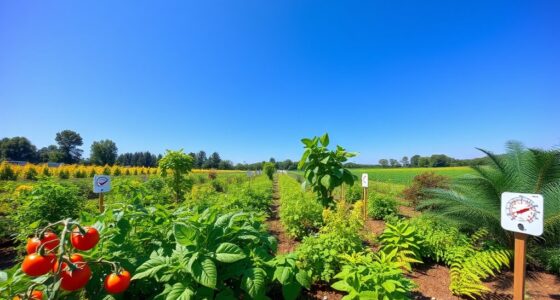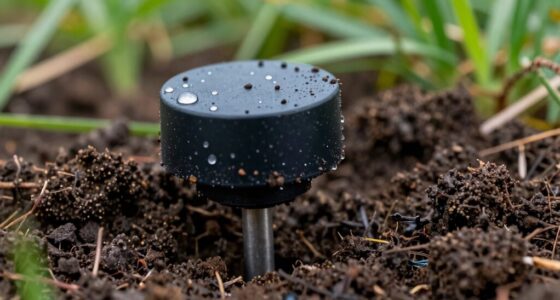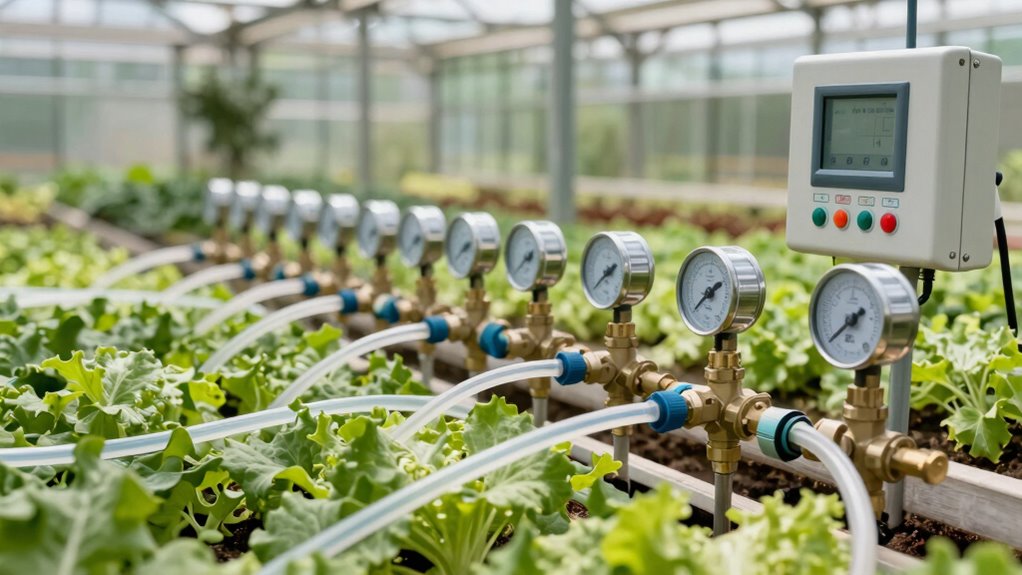

A fertigation system needs a detailed feeding map to deliver nutrients accurately, not just a tank of fertilizer. This map guarantees you target specific zone needs, account for soil variability, and optimize nutrient timing. It helps control water use, reduces runoff, and supports soil health. Relying only on a tank risks uneven distribution and nutrient leaching. If you want to understand how to set up an effective feeding map, you’ll find useful strategies that boost crop performance and sustainability.

Get garden gear delivered free with Prime
- Fast, free delivery on millions of items
- Prime Video, Amazon Music and more included
- Member-only deals all year
Key Takeaways
- A feeding map ensures precise nutrient delivery tailored to soil variability and crop needs.
- Relying solely on a tank risks uneven distribution and nutrient runoff.
- Mapping considers soil pH, nutrient levels, and growth stages for optimal fertilization.
- Continuous updates improve efficiency, reduce environmental impact, and promote soil health.
- Integration of weather data and monitoring optimizes timing and application rates.
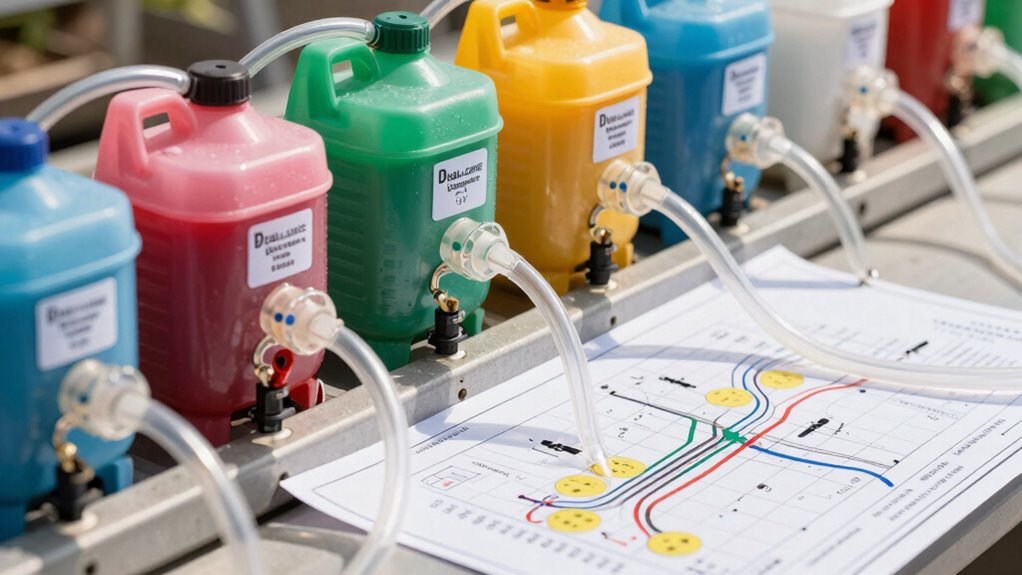
A fertigation systems feeding map is essential for optimizing nutrient delivery in your irrigation setup. Without a clear plan, you risk uneven distribution, which can harm soil health and compromise plant growth. A feeding map ensures that each area receives the right nutrients at the right time, making your water management more efficient and effective. When you understand exactly where and when to deliver nutrients, you improve soil structure and microbial activity, fostering a healthier environment for roots to thrive. This targeted approach minimizes runoff and leaching, protecting local water sources and reducing waste.
Many growers overlook the importance of a detailed feeding map, assuming that simply filling the tank with fertilizer is enough. But a tank alone doesn’t provide the precision necessary for optimal results. You need to identify specific zones within your irrigation system, considering factors like soil variability, crop type, and growth stage. By mapping out these zones, you can tailor nutrient application to meet the unique needs of each section of your field or greenhouse. This precision helps maintain a balanced soil pH and nutrient levels, which are critical for sustained soil health and crop productivity.
Water management is closely tied to this process. When you have a clear fertigation map, you control not just what nutrients are applied, but also when and how much water flows through your system. Proper water management ensures nutrients are evenly dispersed, reducing the chances of over- or under-fertilizing. This consistency supports healthy root development and prevents issues like salt buildup or soil compaction. It also conserves water by eliminating unnecessary runoff, which is especially vital in areas facing water scarcity. With a precise feeding map, you can synchronize nutrient delivery with irrigation schedules, making your entire system more sustainable. Additionally, understanding soil variability can help you tailor your fertigation approach to different zones, enhancing overall efficiency. Incorporating soil testing data into your map allows for more accurate adjustments and better long-term results. Recognizing soil health is vital to maintaining a resilient and productive agricultural system. A well-designed fertigation map also considers environmental impact, helping reduce chemical runoff and protect surrounding ecosystems.
Creating a fertigation feeding map involves evaluating your soil’s current health, understanding crop requirements, and monitoring environmental conditions. You should regularly update this map based on soil tests and plant performance. This ongoing process allows you to adapt your nutrient strategy, ensuring your soil remains fertile and your plants stay healthy. Properly integrating weather patterns into your planning can further optimize nutrient timing and water use. Ultimately, a feeding map transforms your fertigation system from a simple tank of fertilizer into a sophisticated tool that promotes soil vitality, efficient water use, and robust crop growth. It emphasizes that successful fertigation depends less on quantity and more on precision, enabling you to grow more with less waste and environmental impact.
As an affiliate, we earn on qualifying purchases.
Frequently Asked Questions
How Often Should I Update My Fertigation Feeding Map?
You should update your fertigation feeding map whenever you notice changes in crop needs or after soil testing reveals nutrient deficiencies. Regular updates guarantee proper nutrient timing, optimizing plant growth. Soil testing helps identify imbalances, guiding adjustments in your map. Typically, review and update your map at least once each planting season or more frequently if conditions change, so your plants get the right nutrients precisely when they need them.
Can a Feeding Map Be Customized for Different Crop Types?
Absolutely, you can customize your feeding map for different crop types. With crop variability, no two fields are the same, so your nutrient customization should be just as adaptable. Think of your map as a dynamic blueprint that evolves with each crop’s unique needs, ensuring best growth and yield. By tailoring your fertigation plan, you maximize efficiency, minimize waste, and give each crop exactly what it needs to thrive.
What Are Common Signs of Incorrect Nutrient Application?
You’ll notice signs of incorrect nutrient application, like leaf burn, stunted growth, or yellowing leaves, which point to nutrient imbalance. If you see those symptoms, it’s likely due to application errors—either over-fertilizing or under-fertilizing. Monitoring plant responses closely helps you catch these issues early. Regularly adjusting your fertigation schedule based on a detailed feeding map guarantees proper nutrient balance and prevents these common problems.
How Do I Troubleshoot Uneven Nutrient Distribution?
Think of your fertigation system as a symphony, where each instrument must play in harmony. To troubleshoot uneven nutrient distribution, first check for nutrient imbalance—if some plants thrive while others lag, imbalance is likely. Then, focus on pump calibration; misadjusted pumps can cause uneven flow. Regularly monitor and fine-tune these elements, ensuring consistent, balanced nutrient delivery for a healthy, thriving crop.
Is a Feeding Map Necessary for Small-Scale Farms?
Yes, a feeding map is essential even for small-scale farms. It helps you plan nutrient application based on soil testing results, ensuring your crops get what they need without over-application. Incorporate crop rotation strategies too, to maintain soil health and reduce nutrient imbalances. A feeding map guides precise fertigation, improves yields, and promotes sustainable farming practices, making it a worthwhile investment for small-scale growers.
Conclusion
Remember, a fertigation system isn’t just about filling the tank—it’s about creating a precise feeding map. It’s about understanding your plants’ needs, adjusting your approach, and ensuring every drop counts. It’s about planning your nutrients, monitoring your progress, and fine-tuning your system. Because a well-designed feeding map isn’t just a plan—it’s the key to healthy growth, abundant yields, and sustainable success. Without it, your fertigation system is only half as effective.
Fall yard work Picks
leaf blowers
As an affiliate, we earn on qualifying purchases.