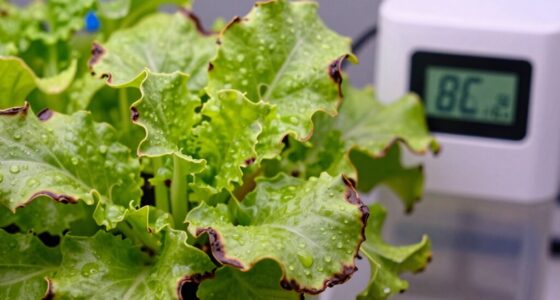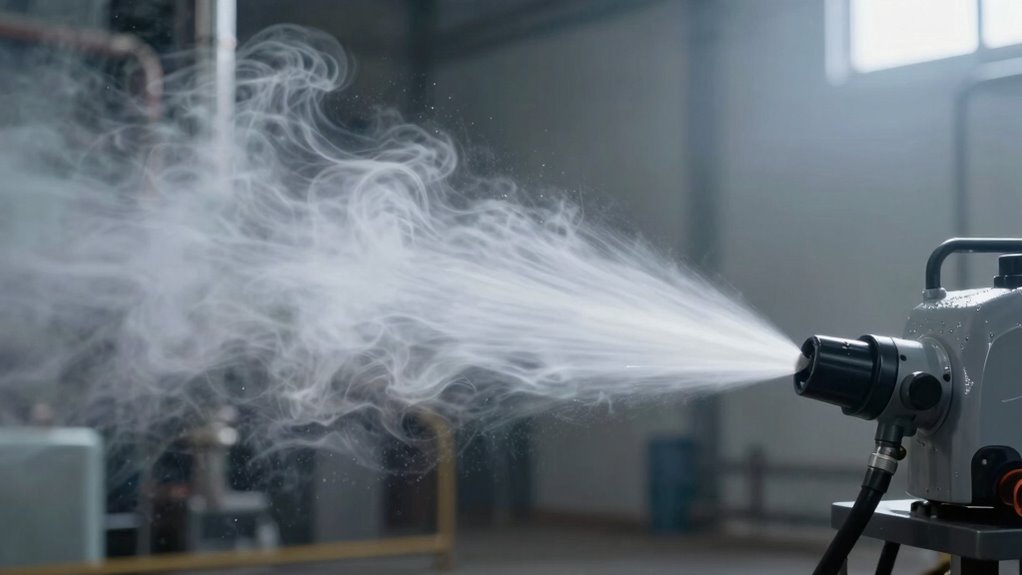
Fogging systems cool your space quickly by producing a fine mist that evaporates rapidly, absorbing heat and lowering temperatures fast. However, controlling humidity is essential because too much moisture can cause discomfort, mold, and equipment damage, while too little can dry the air and reduce cooling efficiency. Proper humidity sensors and smart controls help maintain a balanced environment, ensuring cooling is effective and comfortable. Keep exploring to learn how you can optimize your fogging system’s performance.

Get garden gear delivered free — and shop member deals
- Fast, free delivery on millions of items
- Access to Prime Big Deal Days deals on October 6–7
- Prime Video, Amazon Music and more included
Key Takeaways
- Rapid cooling from fogging systems is effective but requires proper humidity control to prevent excessive moisture buildup.
- Humidity sensors allow fogging systems to adjust output, maintaining a balanced environment during cooling.
- Without humidity regulation, over-humidification can lead to mold, corrosion, and discomfort.
- Combining fogging with humidity management ensures quick cooling without compromising air quality.
- Reliable sensors and intelligent controls are essential for optimal, safe, and efficient fogging performance.
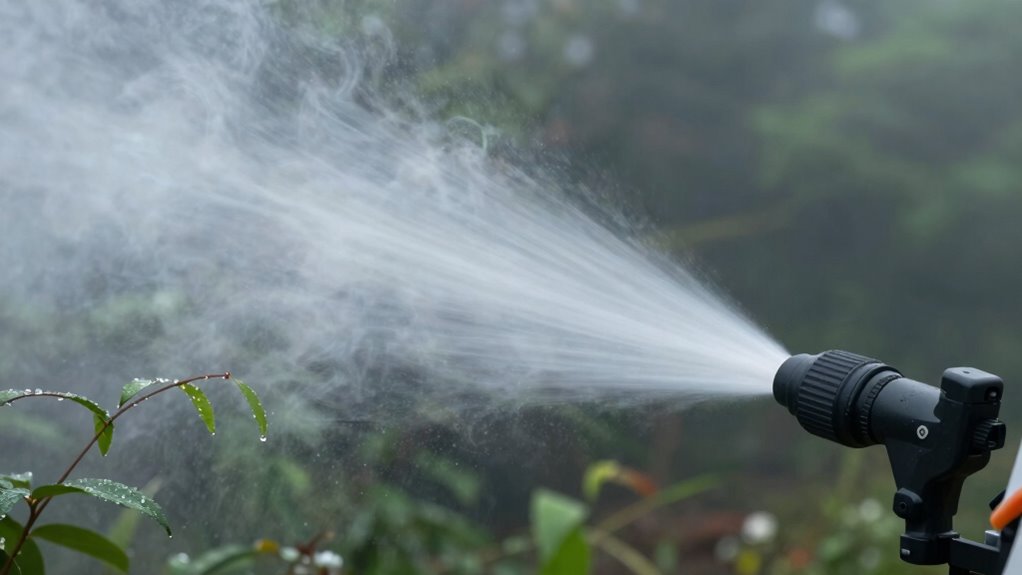
Fogging systems are gaining popularity for their ability to rapidly cool large spaces, making them an efficient solution for quick temperature reduction. When you’re considering installing one, it’s vital to understand that while these systems excel at lowering temperatures quickly, controlling humidity remains equally important. This is where humidity sensors come into play. They monitor the moisture levels in the air, enabling the fogging system to adjust its output accordingly. Without proper humidity sensors, you might end up with an environment that’s too damp or too dry, which can lead to discomfort or even damage to equipment and products.
Proper humidity control with sensors ensures fogging systems cool effectively without causing excess dampness or dryness.
Temperature regulation is the central benefit of fogging systems, especially in environments like warehouses, factories, or outdoor events. They produce a fine mist of water droplets that evaporate rapidly, absorbing heat from the surrounding air. This process cools the space efficiently, often in just minutes. However, if the system isn’t calibrated properly with accurate humidity sensors, it can inadvertently increase humidity levels beyond comfortable or safe ranges. High humidity can cause mold growth, corrosion, and make the space feel sticky or oppressive. As a result, integrating reliable humidity sensors ensures the fogging system responds dynamically to environmental conditions, maintaining a balanced blend between cooling and moisture. Proper calibration and sensor accuracy are essential for optimal performance.
You need to pay close attention to how your fogging system manages humidity because it directly impacts the comfort and safety of the space. Modern systems come equipped with controllers that use data from humidity sensors to modulate water output. This means that as the ambient humidity rises, the system reduces fog production to prevent excess moisture. Conversely, if the air is dry, it can increase output to achieve the desired cooling effect without over-humidifying the environment. This real-time adjustment is vital for maintaining consistent temperature regulation without sacrificing air quality or comfort. Additionally, selecting a system with advanced control features can further enhance environmental management. Incorporating reliable humidity sensors ensures the system maintains optimal performance over time, reducing maintenance needs and preventing issues caused by inaccurate readings.
In essence, the combination of fogging technology and humidity sensors creates a smart cooling solution. It allows you to enjoy rapid temperature reductions while keeping humidity levels in check. This prevents the common pitfalls of fogging systems, such as over-humidification or ineffective cooling. As you explore options, prioritize systems that feature advanced humidity sensors and intelligent controls. Doing so ensures you’re not only cooling quickly but also maintaining a healthy, comfortable environment. Remember, effective temperature regulation isn’t just about lowering the air temperature—it’s about creating a balanced space where humidity control is kept in ideal ranges, and that’s exactly what these integrated sensors help you achieve.
humidity sensor for fogging systems
As an affiliate, we earn on qualifying purchases.
As an affiliate, we earn on qualifying purchases.
Frequently Asked Questions
How Does Fogging Impact Indoor Air Quality?
Fogging improves indoor air quality by reducing airborne particles and odors quickly. As you use fogging systems, you’ll notice a decrease in dust, bacteria, and other pollutants floating in the air. It also helps eliminate unpleasant smells, creating a fresher environment. However, keep in mind that while fogging offers fast results, maintaining proper humidity levels remains essential for long-term air quality and comfort.
What Maintenance Is Required for Fogging Systems?
Think of your fogging system as a high-maintenance pet dragon—requires regular checkups. You need to regularly calibrate the system to keep it breathing fire efficiently and clean the nozzles to prevent clogs. If you ignore these tasks, your system might spew out more fog than intended or stop working altogether. Keep up with calibration and nozzle cleaning, and your fogging system will stay a reliable, cool companion.
Are Fogging Systems Safe for Food Storage Areas?
Yes, fogging systems are safe for food storage areas when used correctly. They support food safety by controlling humidity and microbial growth, which helps prevent mold and bacteria. You should make certain the system uses food-grade, non-toxic solutions and follow manufacturer instructions carefully. Regular maintenance and monitoring are essential to maintain effective microbial control, ensuring the environment remains safe for food storage without risking contamination or safety issues.
Can Fogging Be Used in Outdoor Environments?
Yes, fogging can be used in outdoor environments, but you need to take into account environmental factors like wind, temperature, and humidity. These elements influence how effectively the fog disperses and cools the area. For outdoor applications, you should adjust the fogging system to account for these factors to guarantee ideal cooling. Proper planning helps prevent fog drift and maximizes the system’s efficiency in open spaces.
What Are the Energy Costs of Fogging Systems?
While fogging systems cool quickly, their energy consumption varies, impacting your costs. You might expect high energy use, but a detailed cost analysis reveals they’re surprisingly efficient for their cooling power. Compared to other cooling methods, fogging often reduces overall energy costs. However, consider humidity control needs, as running the system longer or at higher settings can increase energy use, affecting your budget.
Conclusion
While fogging systems zip through cooling like a lightning strike, don’t forget humidity’s gentle hand guides the process. It’s like a maestro conducting an orchestra—too much or too little can throw everything off-key. Keep humidity in check, and you’ll turn a quick frost into a harmonious dance of comfort. Remember, technology gets you there fast, but your touch keeps the environment perfectly in tune. That’s when cooling truly sings.
Fall Picks
fall essentials
As an affiliate, we earn on qualifying purchases.