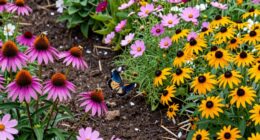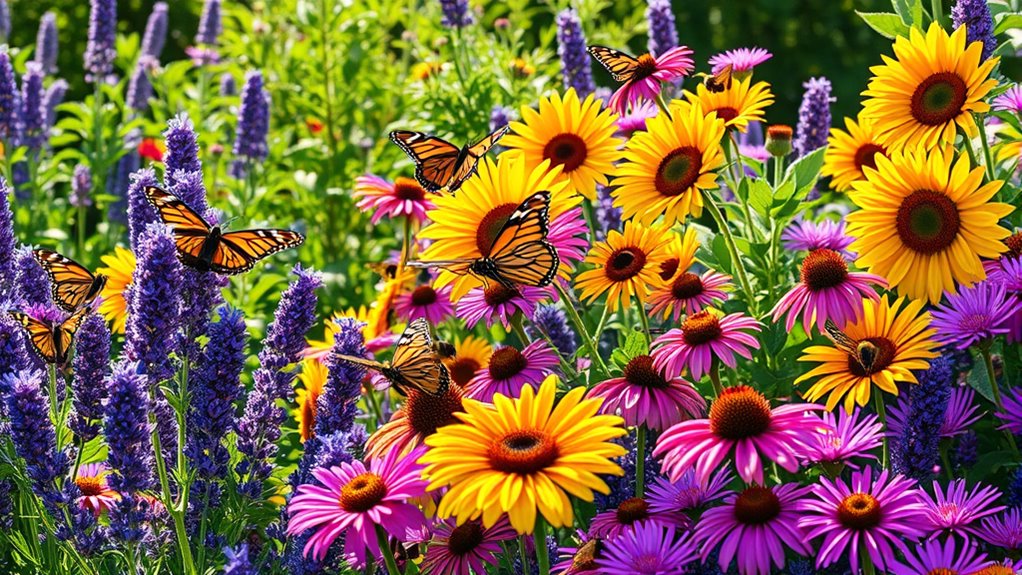
To attract bees and butterflies to your garden, choose native plants like milkweed, coneflowers, and goldenrod that provide essential nectar and pollen. Plant in clusters and include a variety of species with different bloom times and heights to guarantee continuous food sources. Avoid chemicals, provide shelter such as bee hotels, and keep water nearby. If you keep exploring, you’ll discover how to create a thriving habitat that supports and sustains pollinator populations.
Key Takeaways
- Plant a diverse selection of native flowers with staggered blooming times to provide continuous nectar and pollen.
- Group plants in clusters to make it easier for pollinators to locate food sources.
- Avoid pesticides; use organic methods to protect bees, butterflies, and their larvae.
- Incorporate shelter options like bee hotels and leave undisturbed areas for ground-nesting pollinators.
- Provide nearby water sources to support pollinator hydration and cooling needs.
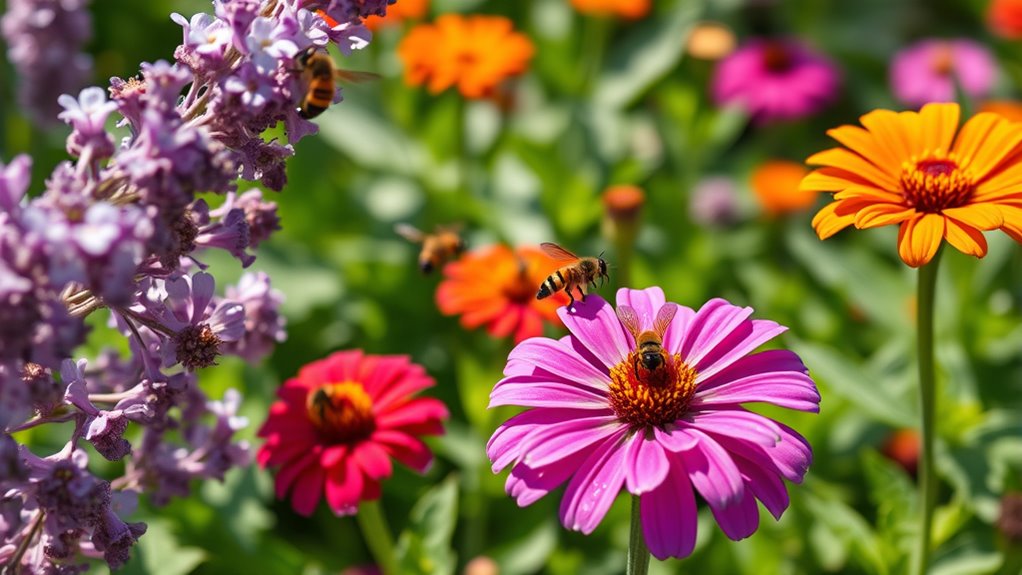
Creating a pollinator-friendly garden is one of the most effective ways to support the health of bees, butterflies, and other essential pollinators. When you start designing your garden, focusing on native plant selection makes a significant difference. Native plants are adapted to your local environment, which means they thrive with less water and care, and they provide the most nutritious nectar and pollen for pollinators. By choosing plants that naturally grow in your area, you create a sustainable habitat that attracts a diverse array of pollinators year-round. Consider plants like milkweed for monarchs, coneflowers for bees, or goldenrod for late-season pollinators. Incorporating a variety of species ensures continuous blooms, offering food sources throughout different seasons and supporting pollinator populations at every stage of their lifecycle.
Once you’ve selected your native plants, maintaining your garden becomes essential. Garden maintenance tips include regular deadheading to promote continuous flowering, which keeps nectar sources available longer. Avoid using pesticides or herbicides, as these chemicals can harm beneficial insects, including pollinators. Instead, opt for organic or natural pest control methods. Mulching around your plants helps retain soil moisture, suppress weeds, and create a stable environment for pollinator larvae and ground-nesting bees. Watering should be deep and infrequent, encouraging deep root growth and providing nearby water sources for pollinators to drink and cool off. Additionally, incorporating pollinator-friendly practices such as planting in clusters and providing shelter options can greatly enhance habitat quality.
Creating diverse habitats within your garden invites a broader range of pollinators. Incorporate different plant heights, textures, and flowering times to mimic natural landscapes. Providing shelter options, such as bee hotels or brush piles, offers safe nesting sites. Leaving some areas undisturbed allows ground-nesting bees to burrow safely. Additionally, planting in clusters rather than single plants makes it easier for pollinators to locate and efficiently collect nectar and pollen. Remember, consistency is key—regularly tending to your garden ensures it remains an inviting haven.
Ultimately, your efforts in native plant selection and diligent garden maintenance can transform your outdoor space into a vibrant sanctuary for pollinators. By creating a habitat that supplies ample nectar, pollen, shelter, and water, you support essential ecosystems and help combat pollinator declines. With thoughtful planning and care, your garden becomes a thriving hub of activity, buzzing with bees and fluttering with butterflies, all while enhancing your landscape’s beauty and resilience.

American Wildflower Seeds for Planting – 24 Variety Pack of Native Plants
- Native Plant Variety: 24 native wildflower seeds for planting
- Supports Local Ecosystems: Helps pollinators, birds, and beneficial insects
- Easy to Grow: Drought-tolerant, pest-resistant, suitable for various conditions
As an affiliate, we earn on qualifying purchases.
As an affiliate, we earn on qualifying purchases.
Frequently Asked Questions
Which Native Plants Are Best for Local Pollinators?
You should choose native plants based on regional pollinator preferences to attract local bees and butterflies effectively. Native plant selection is essential because these plants provide the nectar and pollen that regional pollinators rely on. Research your area’s native species, such as coneflowers, milkweeds, and goldenrod, to create a thriving, pollinator-friendly garden. By focusing on regional preferences, you’ll support local ecosystems and enjoy a vibrant, lively garden all season long.
How Can I Reduce Pesticide Use Safely?
You can reduce pesticide use safely by adopting integrated pest management and organic gardening techniques. Start by monitoring your garden daily—spotting pests early helps you act precisely. Use natural predators, like ladybugs, and organic solutions such as neem oil. Keep your plants healthy with compost, and avoid broad-spectrum chemicals. This proactive approach protects pollinators, ensures a thriving garden, and keeps pesticides at bay, all while safeguarding the environment.
What Are the Best Planting Times for Pollinator Gardens?
You should plan your pollinator garden around seasonal planting and bloom timing to maximize its benefits. Plant early spring bloomers like crocuses and native wildflowers, then add summer favorites such as coneflowers and bee balm. Include late-season blooms like asters to provide food through fall. By understanding these bloom timings, you guarantee continuous nectar sources for bees and butterflies, encouraging healthy pollinator activity throughout the growing season.
How Do I Attract Specific Butterflies or Bees?
Imagine catching a glimpse of a rare butterfly or native bee—how special that moment is! To attract specific pollinators, plant their favorite native species and create habitats like bee hotels or butterfly puddling stations. Position your garden along butterfly migration corridors and in native bee habitats, ensuring they have food and shelter. This thoughtful approach draws targeted pollinators, turning your garden into a true sanctuary.
Can Urban Gardens Support Diverse Pollinator Species?
Urban gardens can support diverse pollinator species by promoting urban biodiversity and focusing on pollinator habitat enhancement. You should plant a variety of native flowers, provide shelter, and avoid pesticides to attract bees and butterflies. Incorporate diverse plant structures and flowering times to guarantee year-round resources. Your efforts create a crucial oasis, helping pollinators thrive amidst city landscapes and boosting overall urban ecosystem health.
Conclusion
Now that you’ve learned how to create a pollinator-friendly garden, imagine the vibrant life you’ll soon attract. But remember, the true magic lies in what’s yet to come—unexpected visitors, secret blooms, and the delicate dance of nature’s harmony. Will your garden become a sanctuary for pollinators? Keep nurturing your space, and you might just discover a world of surprises, transforming your garden into a thriving haven where nature’s most enchanting moments quietly unfold.