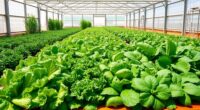
To start a hydroponic system, choose a nutrient solution tailored for your plants, either pre-mixed or custom-made, and follow the instructions carefully. Maintain balanced nutrients to promote healthy growth and monitor levels regularly with a TDS meter. Guarantee your lighting provides enough energy for photosynthesis, using energy-efficient LEDs placed properly. Keep an eye out for pests and maintain cleanliness to prevent problems. If you keep these tips in mind, you’ll set a solid foundation for growing successfully.
Key Takeaways
- Use pre-mixed or custom nutrient solutions with balanced macro and micronutrients for healthy plant growth.
- Regularly monitor nutrient levels with a TDS meter to prevent deficiencies or over-fertilization.
- Choose energy-efficient LED grow lights and maintain proper distance and lighting schedules for optimal development.
- Inspect plants frequently for pests and maintain cleanliness to prevent infestations.
- Adjust lighting and nutrient delivery as plants grow to ensure steady growth and maximize yield.

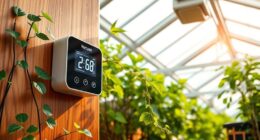
Getting started with hydroponic systems is an exciting way to grow plants without soil. As a beginner, setting up your system might seem overwhelming at first, but understanding the essentials—especially nutrient solutions and lighting—can make the process smooth and rewarding. One of the key factors for success is guaranteeing your plants receive the right nutrients in the correct balance. Hydroponic nutrient solutions are specially formulated mixes containing essential macro and micronutrients that plants need to thrive. You’ll want to choose a reputable pre-mixed solution designed for the type of plants you’re growing, or craft your own if you feel confident. Always follow the instructions carefully, since over- or under-fertilizing can hinder growth or cause issues like nutrient lockout. Regularly monitor the concentration of nutrients using a TDS (total dissolved solids) meter to keep the solution within ideal ranges. This ongoing attention guarantees your plants get consistent nourishment, promoting healthy development.
Another essential aspect is pest control. Since hydroponic systems are often kept indoors or in controlled environments, pests are less common than in traditional gardening, but they can still pose problems. Vigilance is key; inspect your plants regularly for signs of pests like aphids, spider mites, or fungus gnats. Introducing natural predators or using organic pest control methods can help manage infestations without harming your plants or your environment. Keeping your setup clean and well-maintained also reduces pest attraction.
Lighting enhancement is equally important, especially if you’re growing indoors. Plants need sufficient light to perform photosynthesis efficiently, which directly influences growth and yield. Invest in proper grow lights—LEDs are popular because they’re energy-efficient and customizable. Position the lights at the right distance from your plants to prevent stretching or burning, typically about 12-24 inches depending on the light’s intensity. Ensure your lighting schedule mimics natural daylight cycles, usually around 16 hours of light and 8 hours of darkness for most vegetables and herbs. This setup not only encourages vigorous growth but also helps prevent issues like etiolation, where plants become spindly due to inadequate light.
hydroponic nutrient solution for beginners
As an affiliate, we earn on qualifying purchases.
As an affiliate, we earn on qualifying purchases.
Frequently Asked Questions
How Often Should I Change the Nutrient Solution?
You should change your nutrient solution every 1 to 2 weeks to maintain proper nutrient concentration and prevent buildup of salts and toxins. Keep an eye on solution timing, as fresh solutions provide ideal nutrients for your plants. Regularly monitor pH levels and EC readings to guarantee nutrient availability. Changing the solution on schedule helps keep your hydroponic system healthy, promoting vigorous growth and preventing issues caused by stagnant or imbalanced solutions.
Can I Use Tap Water for Hydroponic Systems?
Using tap water in your hydroponic system is like sailing into uncharted waters—you need to be cautious. You should filter it to remove chlorine and other chemicals, and always check the pH balance. Water filtration guarantees your plants get clean water, while pH balancing keeps nutrient uptake smooth sailing. Test your tap water regularly, and consider a water treatment method to keep your plants healthy and thriving.
What Are Common Signs of Nutrient Deficiencies?
You’ll notice signs of nutrient deficiencies through changes in plant health, like yellowing leaves, stunted growth, or leaf spots. These symptoms often indicate a nutrient imbalance, where essential elements are lacking or excess. If your plants look weak or show irregular coloring, it’s a clear sign to check your nutrient solution. Regular monitoring and adjusting nutrient levels help prevent deficiencies and keep your plants thriving.
How Do I Prevent Algae Growth in My System?
To prevent algae growth in your hydroponic system, focus on algae prevention by controlling light exposure and managing your system’s environment. Keep your nutrient solution covered to block light, as algae thrive in light-rich areas. Use opaque containers or covers, reduce excess light around the system, and ensure proper water circulation. Regularly clean your setup to remove algae spores, and maintain a stable environment for healthy plant growth.
Is It Necessary to Ph Test My Nutrient Solution Regularly?
Do you know if you really need to pH test your nutrient solution regularly? Yes, you should, because pH fluctuation can throw off nutrient balance and stunt your plants’ growth. Regular testing helps you catch changes early, ensuring your plants get the right nutrients. It’s a simple step that keeps your hydroponic system running smoothly and keeps your plants healthy and thriving.
Conclusion
Now that you’re familiar with hydroponic systems and nutrient solutions, you’re ready to plunge into this rewarding journey. Think of your setup as a garden in the clouds—floating on the promise of fresh growth. With patience and care, your plants will thrive like a symphony, each note perfectly tuned. Remember, every mistake is just a stepping stone toward mastering this art. Embrace the process, and watch your green thumb blossom in this exciting world of soilless gardening.