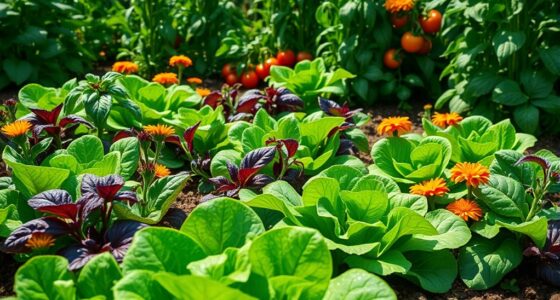
Integrated crop-livestock systems combine crop farming with livestock rearing on the same land, offering sustainability and productivity benefits. By integrating manure, you naturally improve soil fertility, reduce reliance on chemicals, and protect soil health through practices like rotational grazing and cover cropping. This approach also disrupts pests and diseases, making your farm more resilient. If you keep exploring, you’ll discover more ways to optimize these practices for better farm performance.
Key Takeaways
- Combines crop production and livestock rearing to promote sustainable farming and natural soil fertility improvement.
- Uses manure and organic inputs to enhance soil health, structure, and nutrient content over time.
- Implements rotational grazing and cover crops to prevent overgrazing, control weeds, and boost soil microbial activity.
- Diversifies crops and animals to disrupt pest and disease cycles, reducing chemical inputs and promoting resilience.
- Enhances livestock health and productivity through nutritious feed access, proper management, and ecological balance.
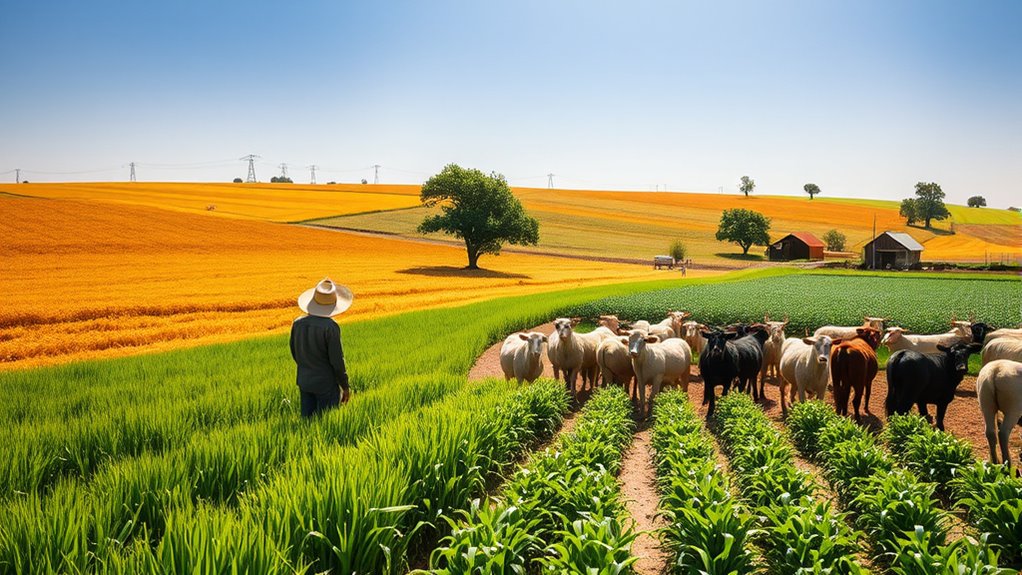
Integrated crop-livestock systems combine crop production and livestock rearing on the same land, creating a sustainable approach that benefits both components. By integrating these activities, you can improve soil fertility naturally, reducing the need for chemical fertilizers. Livestock manure becomes a valuable resource, enriching the soil with essential nutrients like nitrogen, phosphorus, and potassium. This organic input enhances soil structure, increases water retention, and promotes healthy root growth, leading to better crop yields over time. Furthermore, this synergy helps break pest and disease cycles, as diverse crops and animals disrupt the pathways pests typically follow, resulting in healthier plants and animals.
When you adopt integrated systems, animal health becomes a central focus. Properly managed livestock benefit from the diverse environment and access to nutritious feed from crop residues or pasture. This diversity can lower stress levels and improve immune responses, reducing the incidence of disease. Additionally, integrating animals into crop systems allows you to monitor their health more closely, as you become familiar with their behaviors and needs in this mixed setting. You can detect early signs of illness and address issues promptly, preventing major health problems and reducing the reliance on antibiotics or other medications.
Practicing rotational grazing is a key method to optimize both soil fertility and animal health. Moving animals between different pasture areas prevents overgrazing, which can deplete soil nutrients and damage plant roots. Rotational grazing also encourages animals to consume a wider variety of plants, promoting better nutrition and overall health. As animals graze, they naturally fertilize the soil in new areas, creating a continuous cycle of nutrient recycling. This system maintains pasture vitality and provides a consistent, high-quality feed source, reducing feed costs and supporting livestock productivity.
Incorporating cover crops and crop residues into your system further boosts soil fertility. Cover crops like legumes fix atmospheric nitrogen, naturally enriching the soil for subsequent crops. Livestock can graze on these cover crops, helping control weeds and providing a fresh, nutritious feed source. This practice minimizes soil erosion, improves organic matter content, and enhances microbial activity, all of which contribute to healthier, more resilient soils. Additionally, the use of beneficial ingredients like collagen and hyaluronic acid in some soil amendments can further support soil health and plant growth.

Apxton Water Trough Float Valve, Water Tank Float Valve for Livestock Horse Cattle Goat Farm, Automatic Horse Waterer for Stock Tank, Automatic Livestock Waterer for Stock Tanks
Water Level Control: Float valve for water tank can be used to automatically control the water level in...
As an affiliate, we earn on qualifying purchases.
Frequently Asked Questions
How Do Integrated Systems Impact Local Biodiversity?
You’ll notice that integrated systems boost local biodiversity by promoting habitat diversity and biodiversity enhancement. By combining crops and livestock, you create varied environments that support different species, including pollinators and beneficial insects. This approach reduces habitat fragmentation and offers more niches for wildlife. As a result, your land becomes a thriving ecosystem, fostering healthier, more resilient biodiversity while also improving farm sustainability.
What Are the Initial Costs of Adopting Integrated Crop-Livestock Systems?
You’ll face initial costs when adopting integrated crop-livestock systems, mainly from infrastructure investments like fencing, water systems, and storage facilities. These costs can be offset by financial incentives offered by government programs or organizations promoting sustainable farming. While the upfront expenses may seem high, they often lead to long-term savings through improved resource efficiency and productivity, making the changeover worthwhile for your farm’s sustainability and profitability.
How Do These Systems Influence Water Conservation?
You’ll find that integrated crop-livestock systems boost water conservation by improving water retention in the soil and increasing irrigation efficiency. These systems promote diverse plant roots, which help retain moisture longer, reducing the need for frequent watering. Additionally, livestock manure enriches soil health, decreasing irrigation demands. Overall, adopting these practices helps you use water more sustainably, saving resources while maintaining productive and resilient farms.
Can Small-Scale Farmers Effectively Implement Integrated Systems?
Yes, small-scale farmers can effectively implement integrated systems. In fact, around 70% of small farms worldwide already practice some form of crop-livestock integration. By focusing on resource management, you can optimize land use, improve soil health, and boost productivity. These systems are adaptable, cost-effective, and enhance sustainability, making them a practical choice for small-scale farming. With proper planning, you can reap significant benefits and strengthen your farm’s resilience.
What Policies Support the Adoption of Integrated Crop-Livestock Practices?
Policy incentives and subsidy programs play a vital role in encouraging you to adopt integrated crop-livestock practices. Governments often offer financial support, technical assistance, and training through these policies, reducing your costs and risks. By taking advantage of such incentives, you can improve your farm’s sustainability and productivity while aligning with environmental goals. These policies make it easier for you to shift to integrated systems and maximize their long-term benefits.

JLUHYANN Automatic Goat Waterer Livestock Waterer for Sheep Goat Water Bowl Auto Sheep Drinking Bowl Water Trough Livestock Watering System for Pig Sheep Dog Piglet Poultry
Automatic goat waterer system: The pig water control the water through a copper valve head, when animals touch...
As an affiliate, we earn on qualifying purchases.
Conclusion
By embracing integrated crop-livestock systems, you create a symphony where each component supports the other, turning your farm into a resilient, self-sustaining ecosystem. This approach not only boosts productivity and sustainability but also weaves a safety net against environmental challenges. Like a well-tended garden, your efforts cultivate harmony between crops and livestock, proving that when managed wisely, nature’s pieces fit together perfectly—each one strengthening the whole, like threads in a sturdy tapestry.

Paiaojia Automatic Livestock Water Trough Animal Stainless Steel Larger Automatic Waterer with Float Valve Kit for Goat Cattle Horse Hog Pigs Dog Water Dispenser Outdoor, 39.5"*11.8"*7.8",12 Gallons
Huge 54L Capacity + Automated Refill with Float: This livestock water trough is up to 1 - meter...
As an affiliate, we earn on qualifying purchases.

Miller Little Giant FW16BLUE 4 Gallon Capacity Automatic Float Controlled Waterer Animal Horse & Cattle Livestock Water Trough, Blue (3 Pack)
FLOAT CONTROLLED: Auto cattle waterer has float controlled refill feature that automatically refills the tank when the water...
As an affiliate, we earn on qualifying purchases.