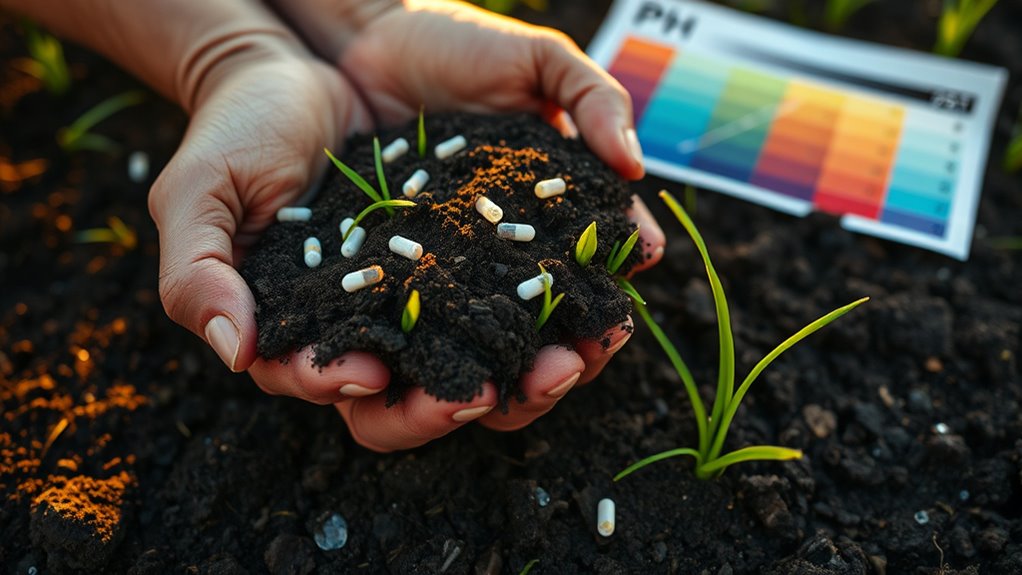

Understanding soil pH is essential for your crop growth and nutrient accessibility. Most plants thrive between a pH of 6.0 and 7.0. If your soil pH drops below 6.0, you may face nutrient deficiencies, while pH levels above 7.0 can lead to toxicities. Regular soil testing lets you know how to adjust pH effectively, using lime or sulfur as needed. There's so much more to learn about achieving ideal soil conditions for your plants.

Get garden gear delivered free with Prime
- Fast, free delivery on millions of items
- Prime Video, Amazon Music and more included
- Member-only deals all year
Key Takeaways
- Soil pH affects nutrient availability; optimal range for most crops is between 6.0 and 7.0.
- Regular soil testing every 3 to 5 years helps manage soil acidity or alkalinity effectively.
- To raise soil pH, apply lime; to lower it, use elemental sulfur based on test results.
- Acidic soils lead to nutrient deficiencies, while alkaline soils can cause deficiencies in iron and other micronutrients.
- Monitor and adjust soil pH to enhance crop yield and quality, especially for acid-sensitive or acid-loving plants.
As an affiliate, we earn on qualifying purchases.
The Importance of Soil Ph in Agriculture
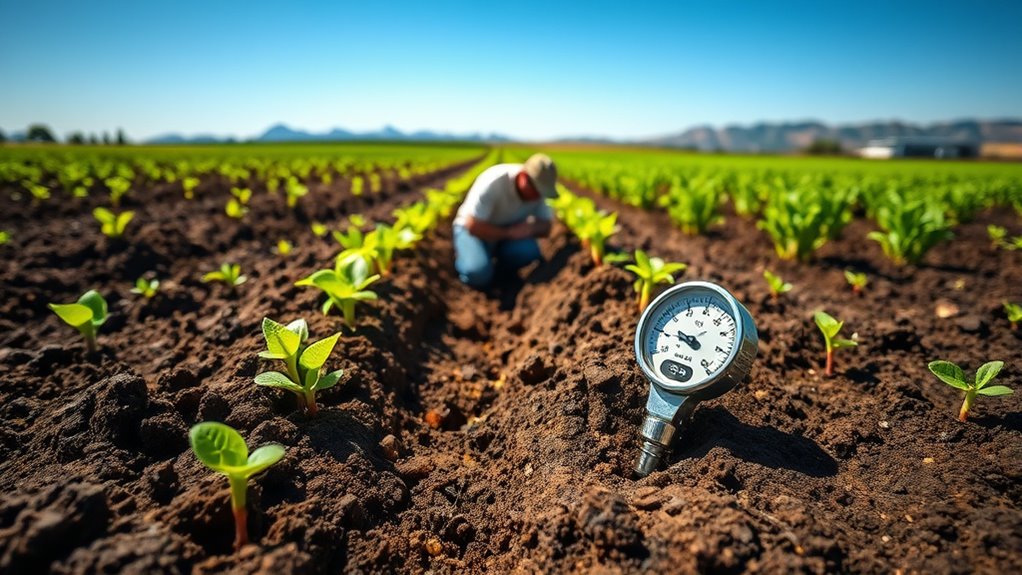
Soil pH plays a significant role in agriculture, as it directly impacts the availability of essential nutrients for your crops. Most plants thrive at a pH of 6.0 to 7.0, ensuring ideal nutrient availability.
Soil pH is vital for agriculture, influencing nutrient availability and ensuring optimal growth for crops.
However, when the soil becomes too acidic or alkaline, you can face serious issues. For instance, a pH below 6.0 reduces potassium, calcium, and magnesium while increasing toxic metals like aluminum.
Regular soil testing every 3 to 5 years helps you monitor these levels. If your test reveals imbalances, you can adjust the pH using lime to raise it or sulfur to lower it.
Proper soil fertility is essential for healthy plants, so ensuring the right pH is crucial for maximizing crop yield and quality.
How to Test Soil Ph Effectively
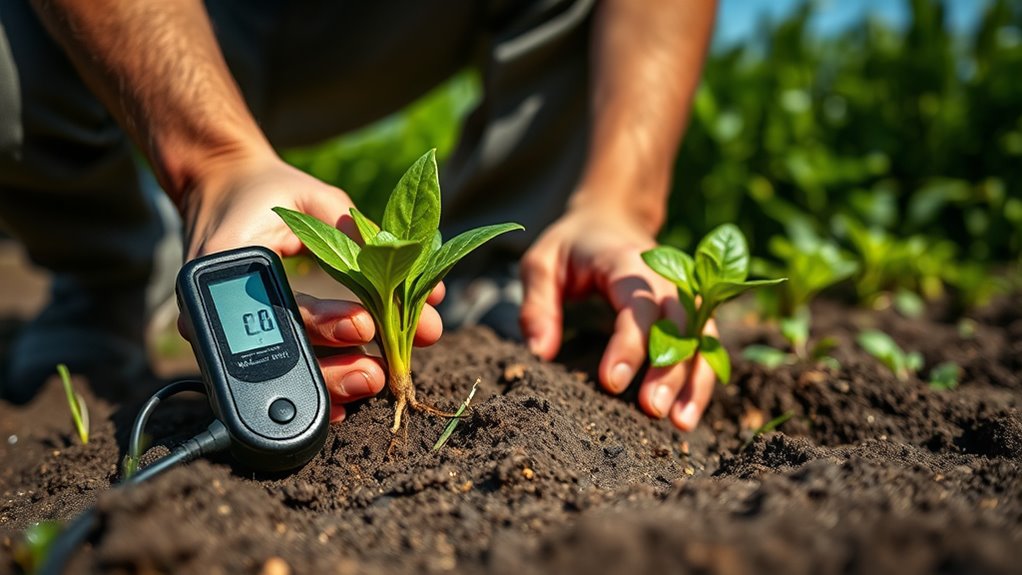
Understanding how to test soil pH effectively is key to maintaining the right conditions for your crops. You can use a soil test kit from your local garden center or send samples to a professional lab.
Make sure to collect multiple soil samples from different areas for a representative average. Avoid testing within three months after applying liming materials or fertilizers, as this can skew your pH values.
To check for free calcium carbonate, add vinegar to the soil; fizzing indicates its presence.
Regular soil testing every 3 to 5 years helps you monitor soil acidity or alkalinity and adjust your amendments accordingly, ensuring ideal plant health and productivity.
Understanding and Interpreting Soil Ph Results
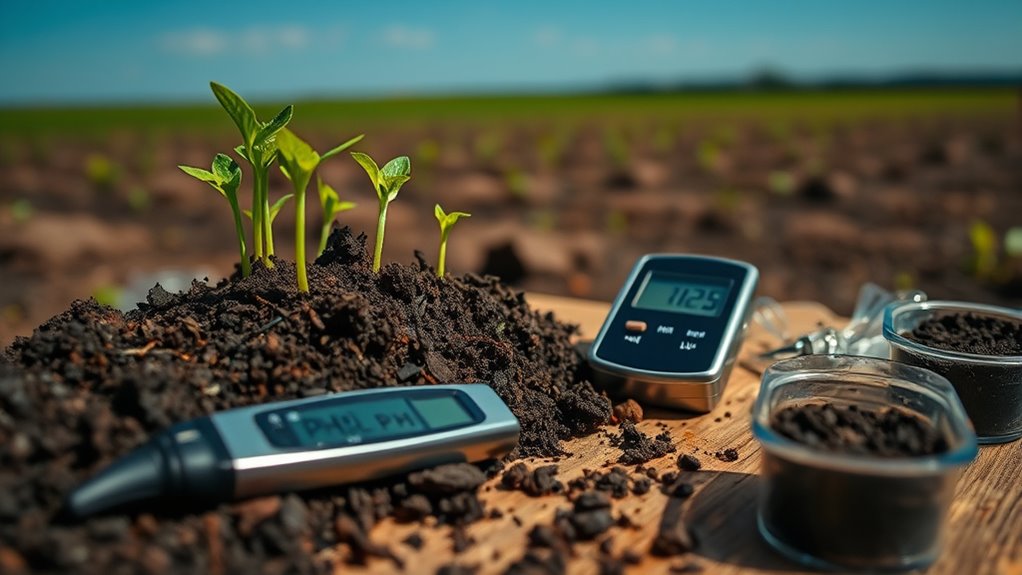
When you receive your soil pH test results, it's essential to interpret them correctly to make informed decisions about soil amendments and plant health.
Soil pH ranges from 0 to 14, with 7 being neutral. Most plants thrive at a pH between 6.0 and 7.0. If your soil is acidic (pH 3.0 to 5.0) or alkaline (pH 7.1 to 8.0), it can affect nutrient availability.
Regular soil testing helps identify these imbalances, pointing out when to use liming materials or acidifying agents. A moderately acidic pH of 6.1 to 7.0 is ideal for many crops, while extreme levels can hinder essential plant nutrients like potassium and calcium, impacting overall plant health.
Adjusting Soil Ph for Optimal Crop Growth
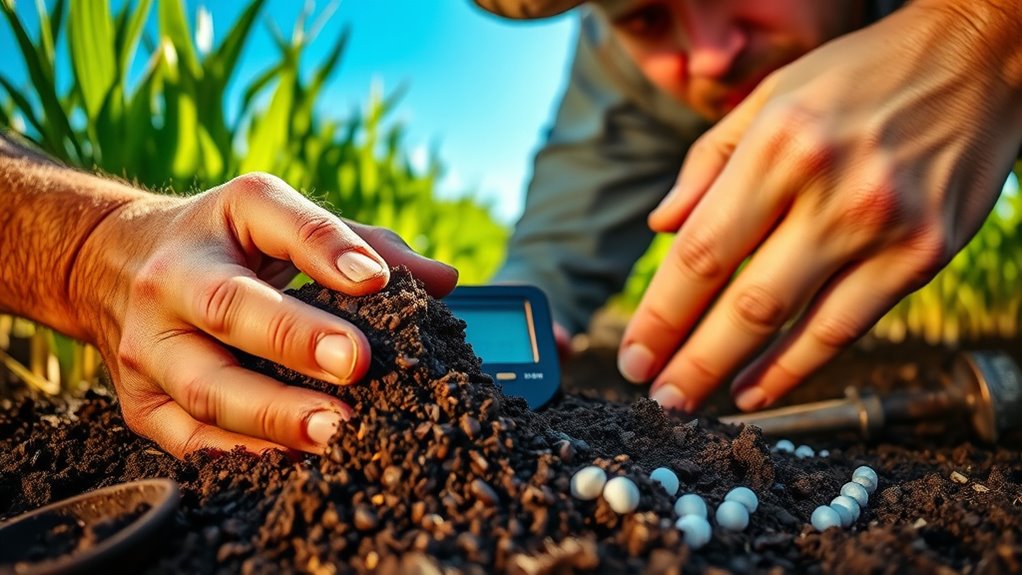
Adjusting soil pH is vital for nurturing healthy crops, as it directly influences nutrient availability and plant growth. To raise the pH and reduce acid soil conditions, apply calcium carbonate or dolomitic lime, mixing it into the top 6-8 inches of soil at least 3-6 months before planting. For lowering pH, use elemental sulfur, capping at 20 lbs per 1000 square feet. Regular soil testing every 3 to 5 years is important, especially for acid-loving plants like blueberries. Delaware's median soil pH of 6.1 may require lime for ideal crop growth.
| Action | Material Used | Application Rate |
|---|---|---|
| Raise the pH | Agricultural limestone | 3-6 months before planting |
| Lower the pH | Elemental sulfur | 20 lbs/1000 sq ft (bare soil) |
| Soil Testing | – | Every 3 to 5 years |
| Acid-loving plants | – | pH 4.0 – 6.0 |
Common Soil Ph Problems and Solutions
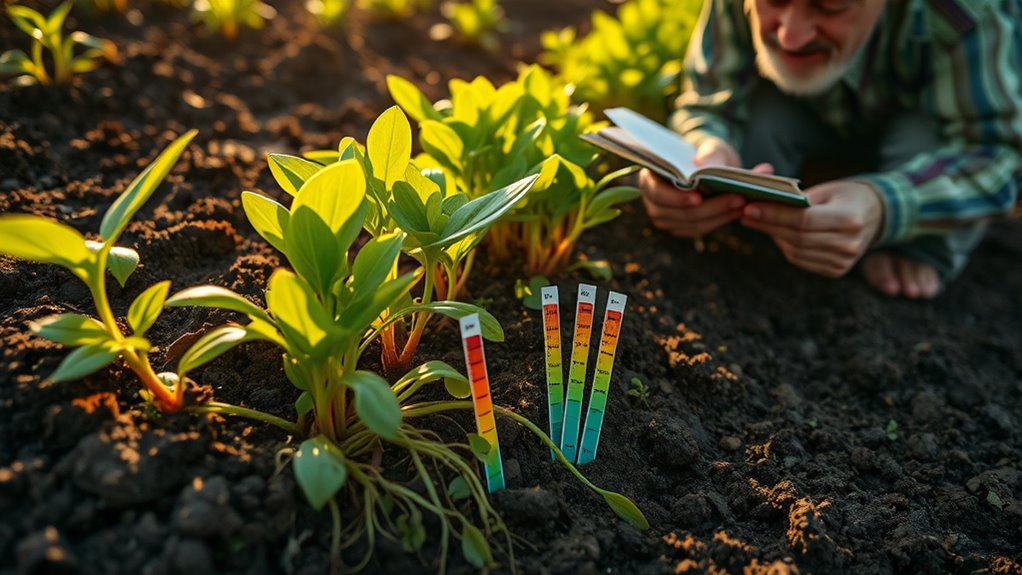
What common soil pH problems should you be aware of?
Acidic soil, with a pH below 6.0, often leads to nutrient deficiencies, limiting essential nutrients like potassium, calcium, and magnesium. This can result in poor plant health and increased toxicities from elements like aluminum.
Acidic soil below pH 6.0 can cause nutrient deficiencies, harming plant health and increasing toxicities.
On the other hand, alkaline soil, with pH levels above 7.0, can cause deficiencies in iron, manganese, zinc, and boron.
Regular soil testing every 3 to 5 years helps you identify these issues.
To correct acidic soil, consider lime applications based on your soil test results. For acid-loving plants like blueberries, sulfur applications may be necessary to lower excessively alkaline soil conditions.
Addressing these pH problems guarantees healthier crops and peak growth.
Frequently Asked Questions
How Can the Farmer Determine the Ph of a Soil?
You can determine the pH of your soil by using either a professional testing service or a home soil test kit.
Mix soil with distilled water and use pH test strips or a meter for quick results. It's best to test every 3 to 5 years, especially before planting or if you notice poor plant growth.
Just remember to wait three months after applying any amendments to get accurate readings.
What Is the Best Ph for Farming Soil?
The best pH for farming soil typically falls between 6.0 and 7.5, as this range boosts nutrient availability and supports robust plant growth.
If you're growing acid-loving plants, aim for a pH between 4.0 and 6.0.
For vegetables, a pH of 5.5 to 8.0 works well, but specific crops like potatoes thrive at 4.8 to 6.5.
Regular soil testing every few years helps you maintain ideal pH levels for your crops.
How Do Farmers Adjust the Ph of Soil?
Think of soil pH as the key to a garden's secret door.
To adjust it, you'll start with soil testing to know where you stand. If your soil's too acidic, you can sprinkle lime to raise the pH, enriching it with calcium and magnesium.
For lowering pH, elemental sulfur's your go-to, but remember, it takes time to work.
Regular monitoring every few years keeps your soil in tip-top shape for thriving plants.
Does Epsom Salt Raise Ph in Soil?
No, Epsom salt doesn't raise soil pH.
In fact, it can slightly acidify the soil due to sulfate ions. While it provides magnesium, which some plants need, it doesn't contain the materials that effectively increase pH.
If you're aiming to raise your soil's pH, you're better off using lime.
Regular soil testing will help you understand your soil's needs and guide you in making the right amendments for ideal growth.
Conclusion
In summary, understanding soil pH is vital for maximizing your crop yields. Did you know that nearly 80% of soil nutrient availability depends on pH levels? By regularly testing your soil and making necessary adjustments, you can guarantee your plants are thriving. Remember, maintaining a favorable pH not only boosts growth but also improves soil health over time. So, take charge of your soil today, and watch your farm flourish!
Fall Picks
fall essentials
As an affiliate, we earn on qualifying purchases.