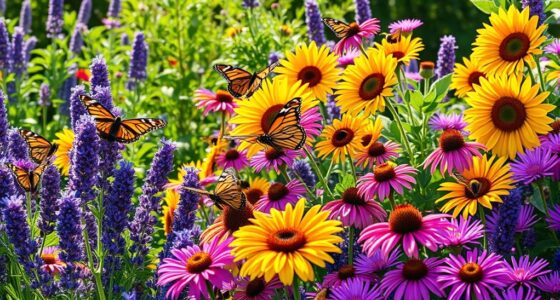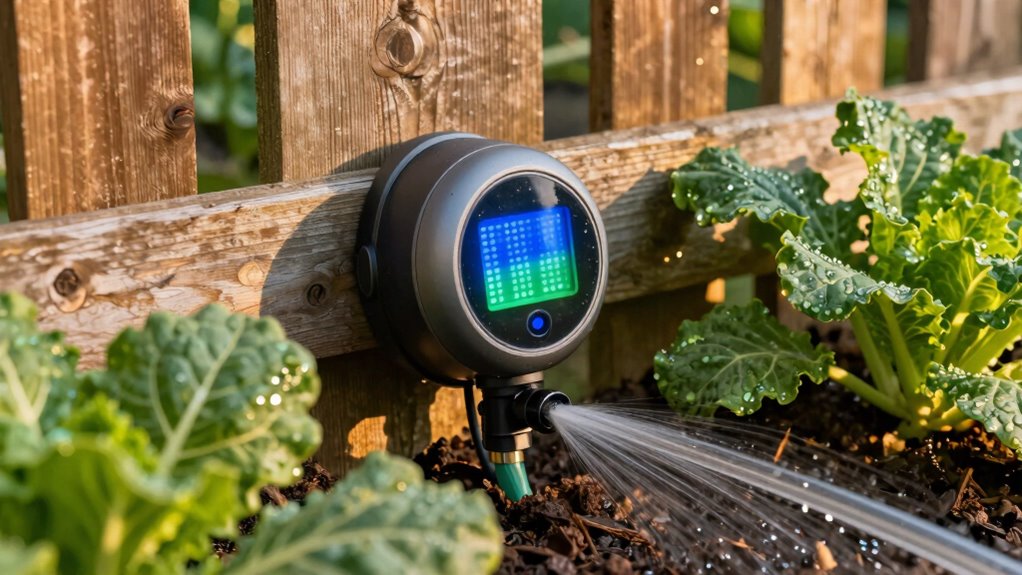
To beat drought, set your irrigation timer to water early in the morning, when evaporation is minimal. Adjust schedules based on season, weather, and soil type, using moisture sensors if possible. Avoid overwatering or underwatering by monitoring soil conditions and updating your program regularly. Incorporate weather forecasts and seasonal changes to optimize water use. Keep these tips in mind, and you’ll discover more ways to develop an efficient, drought-resistant watering pattern.
Key Takeaways
- Schedule watering early in the morning to reduce evaporation and promote deep soil moisture.
- Adjust watering frequency based on weather conditions, decreasing during rainy or cloudy periods.
- Use soil moisture sensors to tailor watering durations and prevent over- or underwatering.
- Program longer, less frequent sessions in hot, dry seasons to promote drought resilience.
- Regularly calibrate and maintain the system to ensure consistent, efficient watering patterns.
Why Proper Irrigation Timer Scheduling Saves Water and Supports Drought Resistance
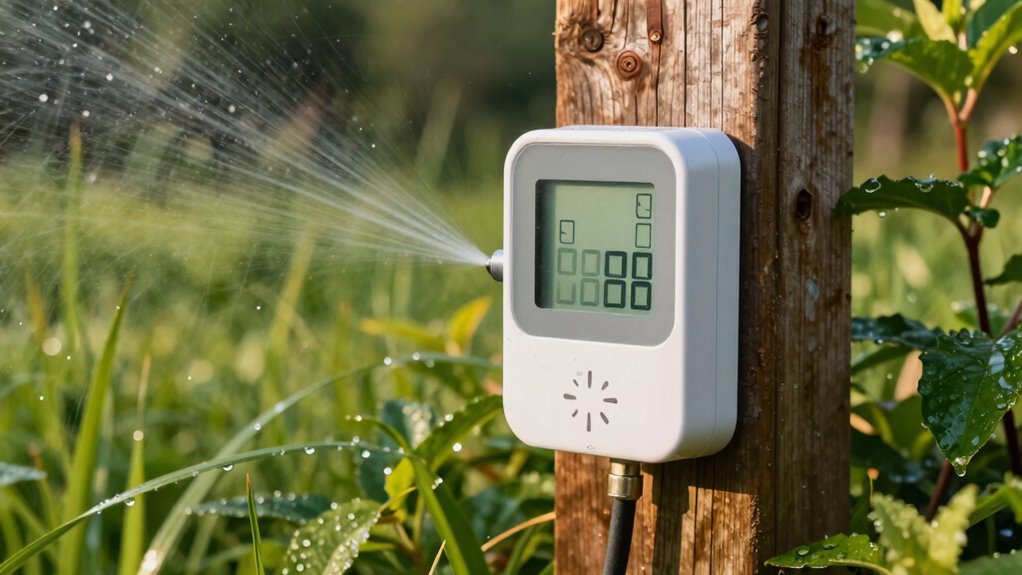
Proper irrigation timer scheduling is essential because it guarantees your landscape receives just the right amount of water without waste. When you schedule watering correctly, soil moisture levels stay ideal, preventing both drought stress and overwatering. Consistent moisture helps plants develop strong roots and improves overall plant health, making them more resilient to drought conditions. By avoiding excessive watering, you conserve water and reduce runoff, which benefits the environment. Proper timing also ensures water penetrates deeply, encouraging roots to grow deeper and access more nutrients. This balance supports drought resistance by maintaining healthy soil moisture levels, so your plants stay vigorous even during dry spells. Effective scheduling is a smart way to save water while promoting a healthy, thriving landscape. Additionally, understanding the watering cycle helps optimize the effectiveness of your irrigation schedule, ensuring each watering session delivers maximum benefits. Implementing smart scheduling techniques can further enhance water efficiency and plant health.
How to Find the Best Watering Times for Your Garden

Finding the best watering times for your garden requires paying attention to your local climate and your plants’ specific needs. Check soil moisture levels regularly to determine when your garden needs water, rather than relying on a fixed schedule. Early morning is usually ideal because it allows plants to hydrate before the heat of the day, reducing evaporation. Avoid watering late in the evening, as excess moisture can promote disease. Observe how quickly the soil dries out between watering sessions to adjust timing accordingly. Consistent soil moisture ensures proper plant hydration and healthy growth. Proper watering practices can also prevent overwatering and runoff, which wastes water and can harm your plants. Additionally, understanding the local climate patterns can help you optimize your watering schedule to better suit seasonal changes and weather fluctuations. Monitoring soil moisture levels throughout the season enables you to fine-tune your watering times for optimal plant health. Incorporating smart irrigation systems can further enhance water efficiency by automating adjustments based on real-time data. By observing these factors, you can optimize watering times, conserve water, and support your garden’s resilience against drought conditions.
Programming Your Irrigation Timer for Water-Efficient Gardening

To maximize water efficiency, programming your irrigation timer correctly is essential. Proper setup helps maintain ideal soil moisture and supports plant health without overwatering. Start by: 1. Setting watering durations based on your soil type—sandy soil needs shorter, more frequent watering, while clay retains moisture longer. 2. Choosing the right frequency, ensuring your plants don’t dry out or become waterlogged. 3. Using a soil moisture sensor to fine-tune scheduling, preventing unnecessary watering. Soil moisture levels can vary depending on weather conditions, so adjusting your schedule accordingly is important. 4. Avoiding watering during the hottest part of the day to reduce evaporation loss and promote healthy plant growth. Additionally, automatic systems can make managing your watering schedule easier and more consistent, helping you achieve a water-efficient garden. 5. Incorporating smart irrigation technology allows for real-time adjustments based on weather forecasts and soil data, further enhancing water conservation efforts. Including water-saving tips can further optimize your irrigation practices and reduce water waste.
Adjust Your Watering Schedule for Weather and Seasonal Changes
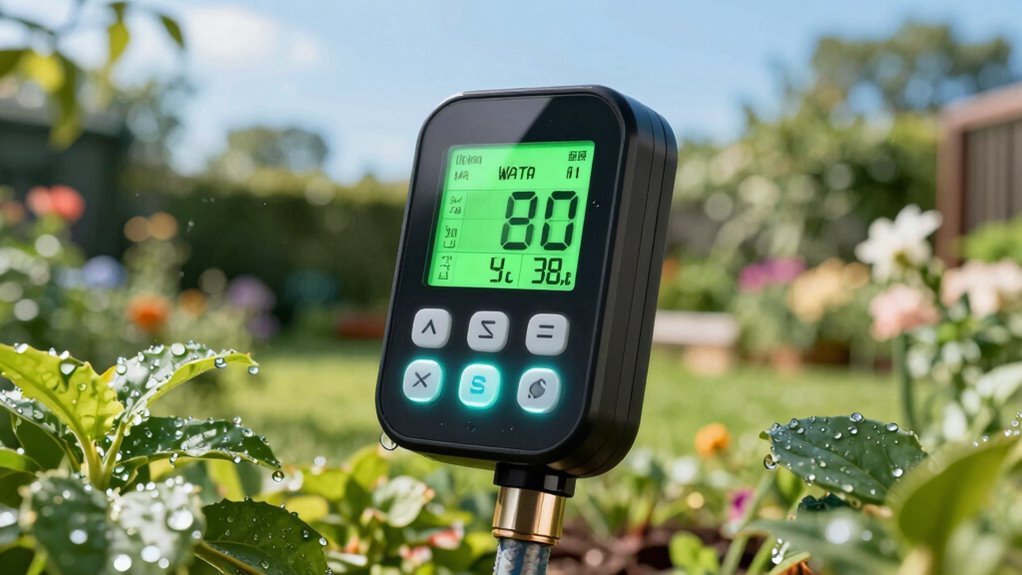
Adjusting your watering schedule to match changing weather and seasons helps guarantee your garden stays healthy and conserves water. As weather shifts, soil moisture levels fluctuate, so modify your timer accordingly. For example, during rainy periods, reduce watering; in hot, dry weather, increase it. Different plant types also require tailored watering—succulents need less frequent watering than vegetables. Keep an eye on soil moisture to prevent over- or under-watering. Use this quick reference:
| Weather/Season | Adjusted Watering Frequency |
|---|---|
| Rainy/Cloudy | Decrease watering or skip days |
| Summer/Hot | Increase duration or frequency |
| Spring/Fall | Moderate watering |
| Winter | Minimize or pause watering |
Matching your schedule guarantees healthy plants while conserving water. Proper irrigation management can prevent water waste and promote plant health year-round.
Troubleshooting Common Irrigation Timer Problems to Save Water
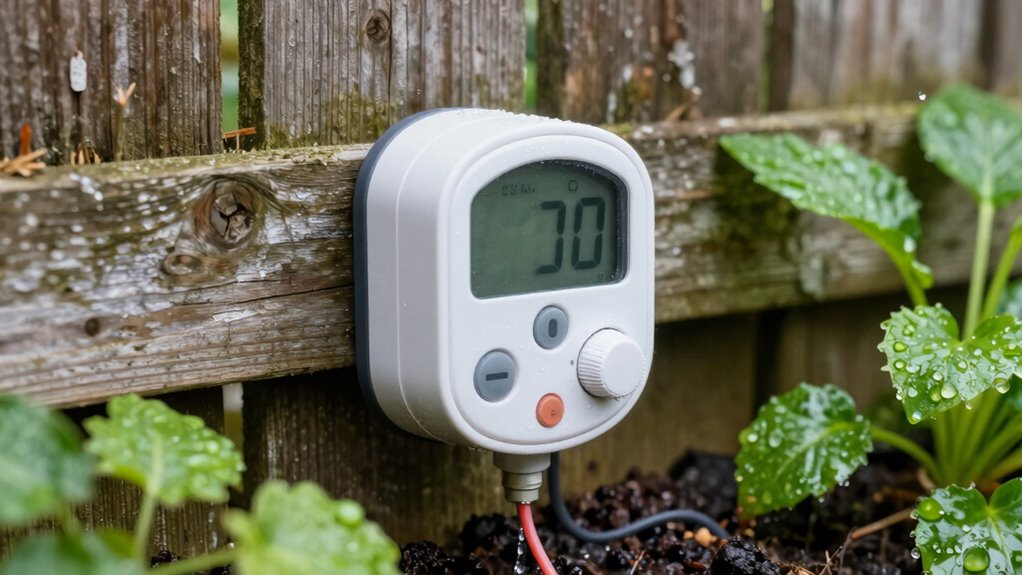
Irrigation timers are essential for maintaining an efficient watering schedule, but when they malfunction, you risk wasting water and harming your garden. To troubleshoot common problems and save water, start by checking the power supply issues—ensure the timer is plugged in securely and batteries are fresh. Next, verify sensor calibration; an incorrectly calibrated sensor can cause overwatering or underwatering. Then, inspect the wiring for damage or loose connections that could disrupt operation. Finally, review the programming settings to confirm they match your desired schedule. Regularly testing these components helps prevent water waste, guarantees your garden gets the right amount of water, and keeps your irrigation system running smoothly. Proper troubleshooting keeps your watering pattern effective and eco-friendly. Additionally, understanding system maintenance and performing routine checks can extend the lifespan of your irrigation system and ensure consistent performance. Incorporating smart technology features can also enhance control and improve water efficiency over time. Paying attention to irrigation system components and their proper functioning is key to preventing issues before they occur. A thorough understanding of system diagnostics can help you identify and fix issues more quickly when they arise. Utilizing proper troubleshooting techniques can help you resolve problems swiftly and efficiently.
Frequently Asked Questions
How Does Soil Type Influence Irrigation Scheduling?
Soil type substantially influences your irrigation schedule because it affects drainage and moisture retention. Sandy soils drain quickly, so you need to water more frequently but with less volume. Conversely, clay soils retain moisture longer, requiring less frequent watering. Understanding your soil’s drainage and moisture retention helps you set an efficient schedule, preventing overwatering or underwatering, and ensuring your plants stay healthy and hydrated.
Can Smart Timers Adapt Automatically to Changing Weather?
Imagine you install a smart timer with weather integration; it automatically adjusts your watering schedule based on forecast data. This technology guarantees you’re watering just enough, even as weather changes. Yes, smart timers can adapt automatically, reducing waste and conserving water. By leveraging weather integration, they respond to rain, humidity, or temperature shifts, optimizing irrigation without manual intervention, making your watering more efficient and drought-resistant.
What Are Signs of Overwatering or Underwatering in Plants?
You can tell if you’re overwatering or underwatering your plants by checking for signs like wilting or yellowing leaves, which indicate drought stress or root rot. Overwatering often causes soggy soil and foul smells, while underwatering leads to dry, crispy foliage. Consistently monitor soil moisture; too much water can drown roots, and too little can cause drought symptoms. Adjust your watering schedule to keep plants healthy and avoid these issues.
How Often Should I Recalibrate My Irrigation Timer?
You should recalibrate your irrigation timer regularly to match soil composition and watering frequency changes. Check your system every few months, especially after seasonal shifts or significant weather events. Adjust the schedule if you notice uneven watering, dry patches, or soggy soil. By staying attentive and recalibrating consistently, you guarantee your plants get the right amount of water, avoiding drought stress or overwatering that can harm their health.
Are There Eco-Friendly Alternatives to Traditional Irrigation Timers?
Yes, you can opt for eco-friendly alternatives like rain sensors and drip systems. Rain sensors automatically pause watering when it rains, saving water and energy. Drip systems deliver water directly to plant roots, reducing runoff and evaporation. Both options minimize water waste and lower your environmental impact. Installing these eco-friendly tools makes your irrigation more sustainable, helping conserve resources while keeping your garden healthy.
Conclusion
By mastering your irrigation timer schedule, you can minimize water use by up to 30% while keeping your garden healthy. Proper timing not only conserves water but also boosts drought resistance, especially as climate patterns shift. Remember, adjusting your schedule for weather changes guarantees efficiency year-round. When in doubt, troubleshooting common issues can prevent waste. Take control today—your garden and the planet will thank you for it.