
To keep your crops in better shape after harvest, guarantee the storage area is clean, dry, and well-ventilated, and inspect crops carefully for pests or damage. Harvest at the right maturity and handle crops gently during transfer, avoiding injuries. Use natural deterrents or barriers to prevent pest infestations and monitor storage conditions regularly. Proper preparation and maintenance are key—continue with us to discover more tips to maximize your crops’ shelf life.

Get garden gear delivered free with Prime
- Fast, free delivery on millions of items
- Prime Video, Amazon Music and more included
- Member-only deals all year
Key Takeaways
- Ensure crops are fully dry and clean before storage to prevent mold and spoilage.
- Maintain a cool, dry, and well-ventilated storage environment to extend shelf life.
- Regularly inspect stored crops for pests, damage, or signs of deterioration.
- Use natural deterrents and barriers to prevent pest infestations in storage areas.
- Handle crops carefully during transfer to minimize physical damage and contamination.
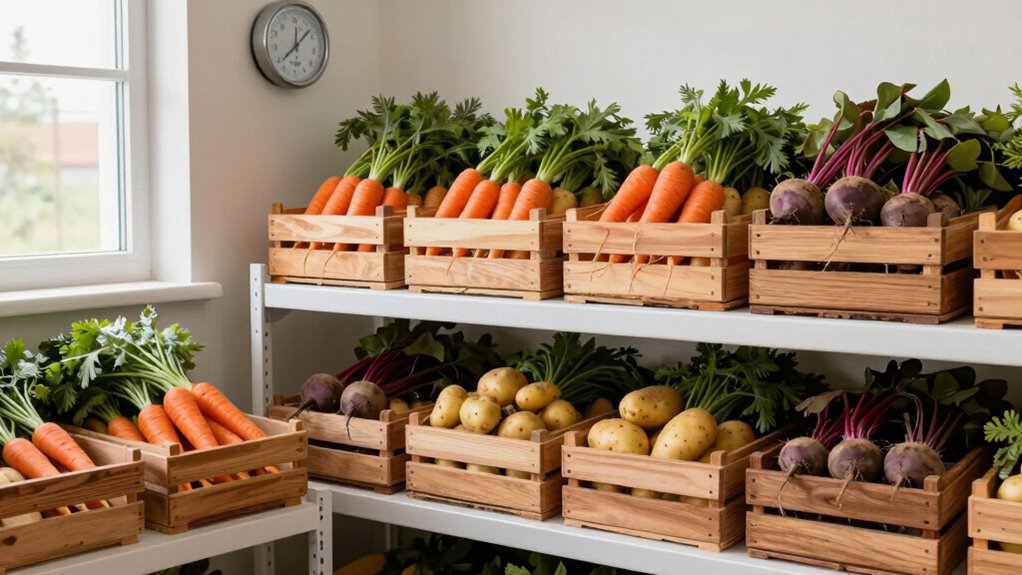
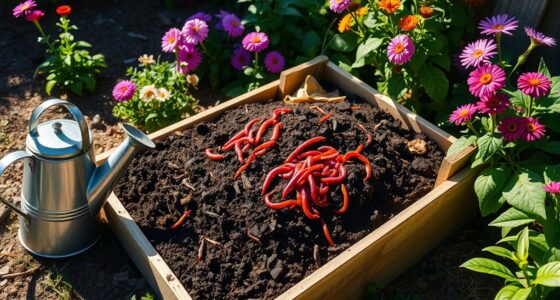
After harvesting your crops, proper storage is essential to maintain their freshness and prevent spoilage. To do this effectively, you need to pay attention to the conditions in which you store your produce. One of the first steps is ensuring that your storage area is well-prepared. Soil preparation isn’t just for planting; it plays a role in post-harvest success too. If you’re storing crops directly in the ground or in soil-adjacent areas, make sure the soil is dry, well-drained, and free of weeds and debris that could harbor pests. Proper soil prep minimizes the risk of pests infiltrating your stored crops and keeps the environment less hospitable for spoilage-causing organisms.
Pest control is a critical aspect of maintaining crop quality after harvest. Before you store your crops, inspect them carefully for any signs of pests or damage. Even a small breach can lead to rapid spoilage or infestations that ruin your entire batch. Implement pest control strategies proactively—use natural deterrents, traps, or barriers to keep insects, rodents, and other pests at bay. Keep storage areas clean, dry, and well-ventilated to discourage pests from settling in. Sealing cracks, gaps, and entry points also helps prevent pests from sneaking in and infesting your stored crops. Additionally, understanding harvest timing can influence how well your crops store, as crops harvested at the right maturity are less prone to spoilage. Proper post-harvest handling techniques are also vital to reduce damage and contamination during transfer and storage. Ensuring proper crop maturity at harvest can significantly improve storage longevity and quality. Regular monitoring of storage conditions is essential to catch any issues early and extend the shelf life of your crops.
Popular right now

KitchenAid Artisan 5-Quart Tilt-Head Stand Mixer, Almond Cream

De’Longhi Classic Matte Black Espresso Machine with Milk Frother

Samsung 48-Inch S90H OLED 4K Smart TV (2026)
As an affiliate, we earn on qualifying purchases.
Frequently Asked Questions
How Long Can Storage Crops Typically Last?
Storage crops typically last several months if stored properly, but their lifespan varies based on type. To maximize freshness, practice crop rotation to prevent disease buildup and guarantee healthy storage conditions. Pest control is essential; inspect crops regularly and keep storage areas clean. Proper ventilation, cool temperatures, and humidity control also help prolong storage life. By following these steps, you can considerably extend the shelf life of your crops.
What Signs Indicate Storage Crop Spoilage?
Did you know that nearly 25% of stored crops get spoiled due to improper storage? You’ll notice spoilage signs like mold, unpleasant odors, soft or discolored spots, and sprouting. To prevent this, choose the right storage container—airtight and pest-proof—and apply pest prevention techniques, such as regular inspections and natural repellents. These steps help maintain crop quality and reduce waste, keeping your harvest fresh longer.
Are There Natural Preservatives for Storage Crops?
Yes, natural preservatives like organic coatings can help extend your storage crops’ freshness. You might consider applying edible waxes or natural oils, such as beeswax or coconut oil, to create a protective barrier against moisture loss and spoilage. These organic coatings are safe, eco-friendly, and effective in maintaining crop quality. Using natural preservatives not only keeps your crops fresh longer but also reduces reliance on chemical preservatives.
How Do Storage Conditions Vary for Different Crops?
You need to tailor storage conditions based on each crop’s specific humidity and temperature needs. For example, root vegetables like carrots require high humidity to stay fresh, while apples need cooler temperatures to prevent spoilage. Always monitor crop-specific humidity levels and temperature considerations closely to prevent rot or dehydration. Adjust your storage environment accordingly, ensuring ideal conditions for each crop to maximize shelf life and maintain quality.
Can Storage Crops Be Stored in Refrigerated Environments?
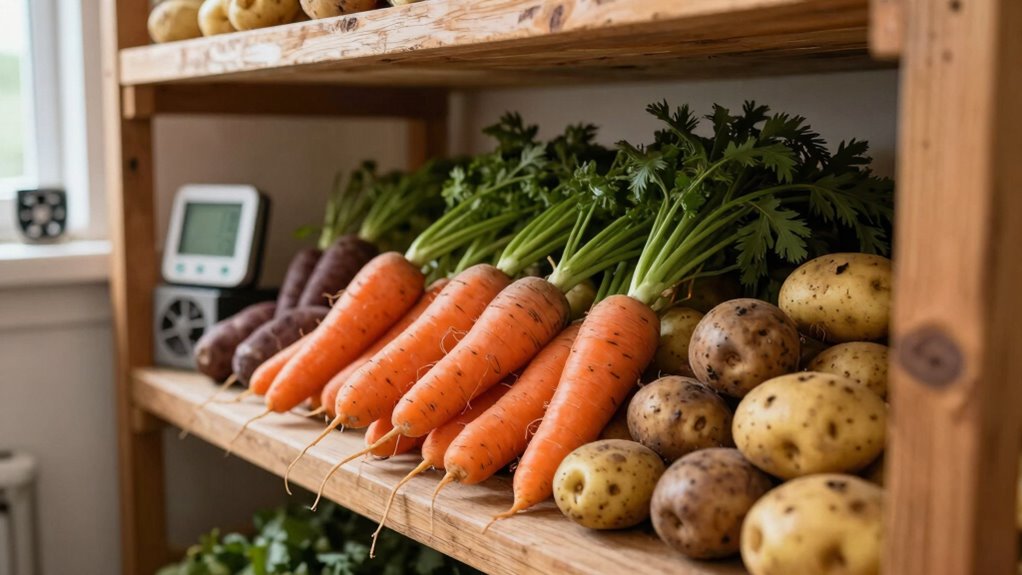
Yes, you can store crops in refrigerated environments. Refrigeration benefits include slowing spoilage and maintaining freshness. Cold storage techniques involve controlling temperature, humidity, and airflow to keep crops like carrots, potatoes, and beets in prime condition. By implementing these methods, you prevent pests and decay while preserving flavor and texture. Proper refrigeration guarantees your crops stay crisp, colorful, and delicious for longer, making your harvest last even longer.
Conclusion
By following these simple tips, you’ll turn your harvest into a lasting treasure rather than a fleeting moment. Proper storage acts as a guardian, protecting your crops like a fortress against spoilage and pests. Think of it as nurturing a delicate flame—attention and care keep it burning bright long after harvest. With a little effort, your crops will stay fresh and bountiful, allowing you to enjoy their flavors and benefits for weeks to come.