When you apply too much mulch, it can trap moisture and heat, suffocating roots and causing soil compaction that blocks nutrients and water delivery. Leaving mulch too close to plant stems creates damp conditions that promote rot and pests. Over time, mulch breaks down and becomes compacted, reducing its effectiveness. Choosing the wrong mulch or neglecting maintenance can hinder growth. Keep these mistakes in mind to guarantee your plants thrive—there’s more to discover to keep your garden healthy.
Key Takeaways
- Applying excessive mulch creates a heat and moisture barrier, suffocating roots and hindering growth.
- Mulching too close to plant stems promotes rot and fungal diseases.
- Using low-quality or overly thick mulch can compact soil and restrict nutrient and water access.
- Neglecting regular mulch maintenance causes decomposition, reducing its effectiveness.
- Failing to monitor and manage pest-friendly mulch can lead to pest infestations that damage plants.
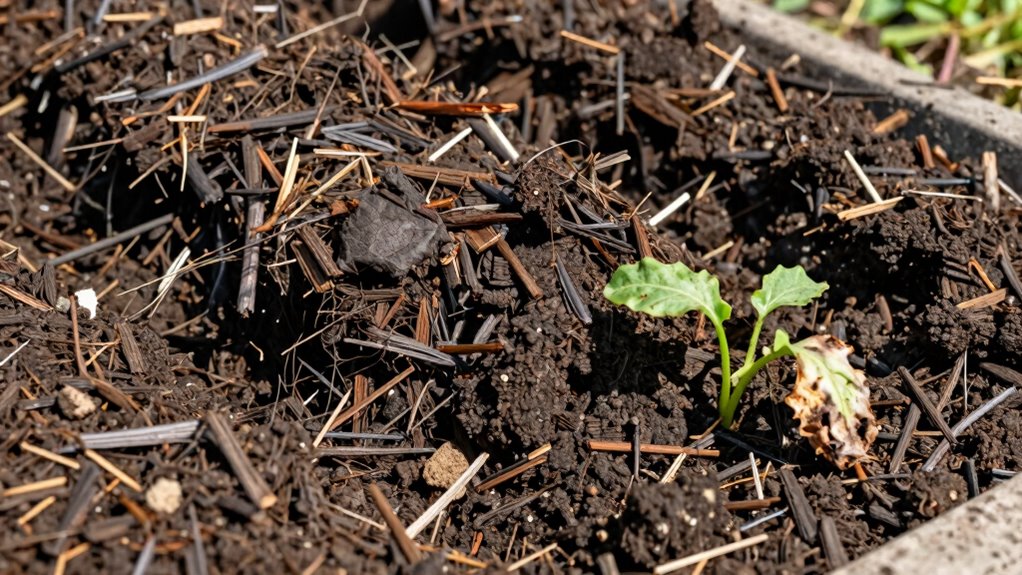
Mulching is an essential gardening practice that can promote healthy plant growth, but if done incorrectly, it can do more harm than good. One common mistake is applying too much mulch or layering it too thickly around your plants. When you pile on excessive mulch, it can create a barrier that traps moisture and heat, leading to soil compaction. Soil compaction makes it difficult for roots to expand and access critical nutrients and water, ultimately stunting plant growth. Additionally, thick mulch layers can suffocate beneficial soil organisms, disrupting the natural balance that keeps your garden healthy.
Another mistake that can hinder plant growth involves ignoring the presence of garden pests. Mulch can serve as a haven for pests like slugs, snails, or even certain insects, if not managed properly. Pests often hide in mulch, laying eggs or feeding on your plants, which can lead to widespread damage. If you notice an increase in garden pests, it may be due to overly thick or poorly maintained mulch. Regularly inspecting and raking back mulch near vulnerable plants can help reduce pest hiding spots. You should also avoid mulching with organic materials that attract pests, such as certain types of wood chips or straw, unless you’re prepared to monitor and control their presence. Proper mulching can also support soil health by promoting beneficial microbial activity when done correctly. In addition, using mulch that retains moisture without creating overly damp conditions can help prevent disease development in your plants. Proper mulch management can prevent these issues and support a thriving garden ecosystem.
Another issue is using mulch that’s too close to the plant stems or trunks. When mulch touches the base of your plants, it can create a damp environment that encourages rot and fungal diseases. This moist environment also attracts garden pests, who find it easier to invade the plant’s defenses. Keep the mulch a few inches away from the crown or trunk to promote good airflow and reduce the risk of pest infestation and disease. Proper mulching not only protects your plants but also helps maintain soil aeration, preventing compaction caused by heavy, poorly-placed mulch. Ensuring proper mulch placement can also improve water absorption and reduce runoff, benefiting overall plant health. Also, choosing the right type of mulch suited for your garden’s specific needs can further enhance plant growth and health.
Finally, failing to replace or refresh mulch regularly can be a mistake that slows down plant growth. Over time, mulch decomposes and compacts, losing its ability to retain moisture and suppress weeds. When mulch breaks down, it can lead to uneven soil moisture levels and create pockets where pests and weeds thrive. Regularly topping up or replacing mulch ensures it remains effective, providing a protective layer that promotes healthy roots and prevents soil compaction. This ongoing maintenance can significantly improve your garden’s productivity by ensuring optimal conditions for plant development. By paying attention to the quality and thickness of your mulch, you help your plants grow stronger and faster, avoiding the pitfalls that come with neglecting this essential gardening practice.

Back to the Roots 100% Organic Mulch, 58 Quart (2 Cubic ft), Expanding Coconut Husk Block for Gardening
- Includes 10lb Coconut Husk Block: Expands to over 2 cubic feet
- Organic and Peat-Free: OMRI Listed for organic use
- Versatile Gardening Use: Suitable for gardens, beds, pet bedding
As an affiliate, we earn on qualifying purchases.
As an affiliate, we earn on qualifying purchases.
Frequently Asked Questions
How Often Should I Replace Mulch to Maintain Its Effectiveness?
You should replace mulch every 1 to 2 years to maintain its effectiveness. Mulch longevity depends on factors like material type and weather conditions, so keep an eye on its appearance and thickness. A good replacement schedule helps prevent issues like compaction or decomposition, which can hinder plant growth. Regularly topping off or replacing mulch guarantees your garden retains moisture, suppresses weeds, and stays healthy.
Can Mulching Attract Pests to My Garden?
Yes, mulch can attract pests if you’re not careful. Think of your garden as a pest magnet if you ignore pest prevention strategies. Mulch barriers help keep bugs away, but thick, damp mulch can turn into a pest paradise. To avoid this, maintain a clean mulch layer, avoid piling it against plant stems, and choose pest-resistant mulch. These steps keep pests at bay and protect your garden’s health.
What Are the Signs of Over-Mulching Damaging Plants?
Over mulching damage often shows up as yellowing leaves, stem rot, or stunted growth, signaling excess mulch. If you notice mulch piled against plant stems or roots, it can suffocate roots and cause rot. Signs of excess mulch also include soil that’s too wet or dry despite watering. To prevent this, keep mulch layers to about 2-3 inches and avoid piling it directly on plant crowns.
Is Organic Mulch Better Than Inorganic Mulch for Plant Growth?
Think of organic mulch as a nurturing rain, providing better soil moisture and weed suppression than inorganic options. Organic materials, like bark or compost, break down over time, enriching your soil naturally. In contrast, inorganic mulch like plastic or rubber doesn’t decompose, often hindering water absorption and aeration. For healthier, more resilient plants, organic mulch helps foster a thriving environment, much like a gentle rain nourishing the earth.
How Do I Choose the Right Mulch Type for Different Plants?
You choose the right mulch by considering your plants’ needs and environment. For example, light-colored mulch reflects heat, ideal for heat-sensitive plants, while dark mulch retains warmth. Focus on mulch thickness; around 2-3 inches works well to suppress weeds and conserve moisture. Adjust your choice based on plant type—perennials may need thicker mulch, while delicate seedlings thrive with thinner layers for better airflow.
Conclusion
Avoiding these mulch mistakes means you’ll foster flourishing foliage and fabulous flowers. By balancing beneath and beyond, banishing bark blunders, and being mindful of moisture, you’ll master the art of mulch mastery. Remember, mindful mulching makes a monumental difference—missteps may mean sluggish growth and soggy setbacks. So, stay savvy, steer clear of common errors, and watch your plants prosper with potent, perfect mulch practices. Your garden’s growth will glow grandly, guiding you to garden greatness.