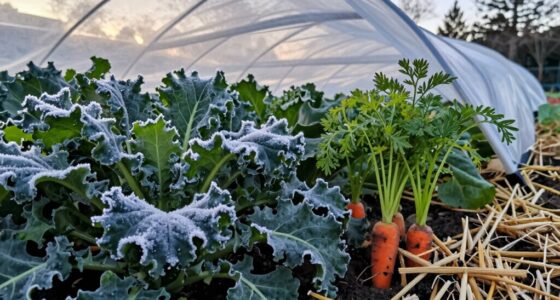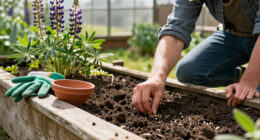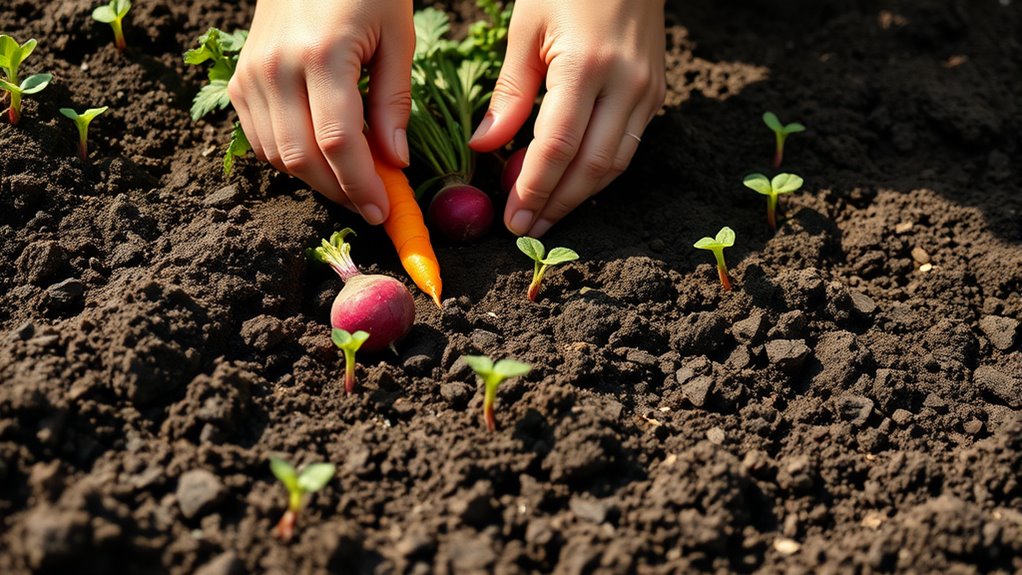

To grow carrots, beets, and radishes successfully, start by preparing loose, well-drained soil with organic matter, keeping it between pH 6.0 and 7.0. Sow seeds early when soil warms, spacing them properly for root expansion. Keep the soil consistently moist, mulch to retain moisture, and monitor for pests. Proper timing, good soil, and careful watering set a strong foundation—continue to explore these techniques to maximize your harvest.

Get garden gear delivered free with Prime
- Fast, free delivery on millions of items
- Prime Video, Amazon Music and more included
- Member-only deals all year
Key Takeaways
- Prepare loose, well-draining soil with organic matter and maintain a pH of 6.0-7.0 for optimal root development.
- Sow seeds early in spring or late summer when soil is warm, spacing according to each vegetable’s requirements.
- Keep soil consistently moist but not waterlogged, using mulch to retain moisture and regulate soil temperature.
- Thin seedlings to prevent overcrowding, allowing ample space for roots to expand.
- Monitor for pests and weeds regularly, implementing crop rotation and natural controls to protect root crops.
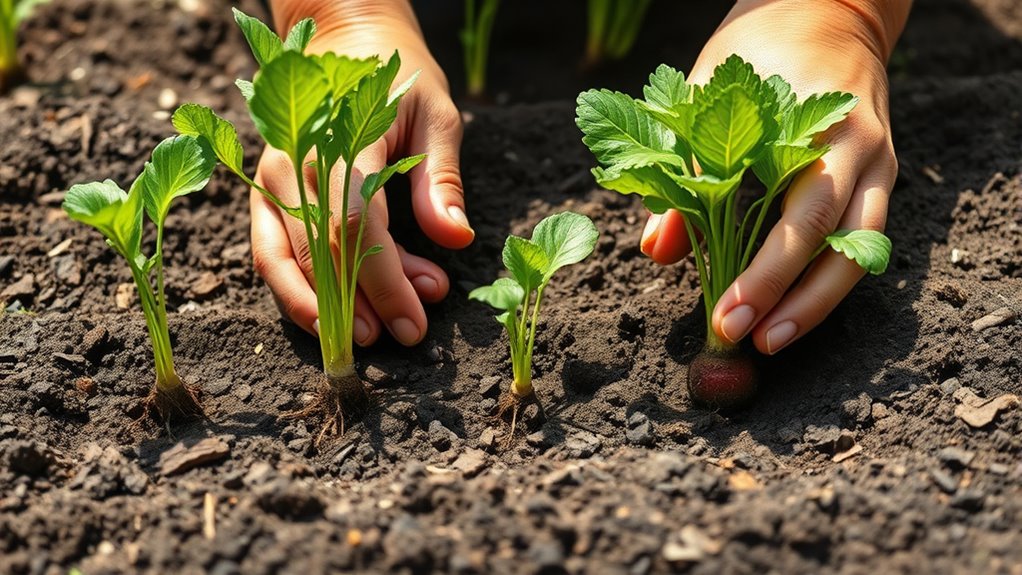
Planting root vegetables requires careful technique to guarantee healthy growth and a good harvest. The first step is preparing your soil properly, which plays a vital role in the development of carrots, beets, and radishes. You want the soil to be loose, well-draining, and free of large clumps or rocks that could impede root growth. To achieve this, loosen the soil several inches deep and mix in organic matter like compost to improve fertility. This creates a soft, aerated environment that allows roots to penetrate easily and grow uniformly. Avoid compacted soil, as it can cause misshapen roots or stunted growth. Additionally, ensure the soil’s pH is slightly acidic to neutral, around 6.0 to 7.0, since extremes in pH can hinder nutrient uptake.
Pest management is another crucial aspect of successful root vegetable planting. These crops can be vulnerable to pests like root maggots, aphids, and nematodes, which can damage or destroy your harvest. To minimize pest problems, start by inspecting your garden area and removing any debris or weeds that might harbor pests. Using crop rotation helps prevent the buildup of pests and diseases in the soil. For example, avoid planting root vegetables in the same spot year after year. Covering your plantings with row covers or insect netting can also keep pests at bay while allowing sunlight and water to reach the plants. Consider introducing beneficial insects, like ladybugs, to control aphids naturally. Proper pest management also means keeping an eye out for early signs of trouble, such as chewed leaves or irregular root shapes, so you can take action promptly. Avoid overwatering, which can create a damp environment conducive to fungal issues and attract pests.
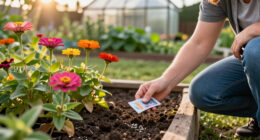
Timing your planting is equally important. Sow seeds when the soil has warmed sufficiently, typically in early spring or late summer, depending on your climate. Make sure to space your seeds according to the specific needs of each vegetable, allowing enough room for roots to expand. Water consistently to keep the soil moist but not waterlogged. Mulching around the plants helps retain moisture, suppress weeds, and maintain a stable soil temperature. Remember, healthy soil preparation combined with proactive pest management sets the foundation for thriving root vegetables. By paying attention to these details, you’ll give your carrots, beets, and radishes the best chance for robust growth and a bountiful harvest.
As an affiliate, we earn on qualifying purchases.
Frequently Asked Questions
How Can I Prevent Pests From Damaging My Root Vegetables?
To prevent pests from damaging your root vegetables, choose pest-resistant varieties whenever possible. You should also practice organic pest control methods, like introducing beneficial insects or using homemade neem oil sprays. Keep your garden clean by removing debris and weeds, which attract pests. Mulching helps deter pests and maintains soil moisture. Regularly inspect your plants for early signs of pests, so you can act quickly and protect your harvest effectively.
What Are the Best Companion Plants for Carrots, Beets, and Radishes?
Think of your garden as a well-oiled machine, where the right companion plants keep pests at bay. Marigolds and nasturtiums are excellent for pest deterrents around carrots, beets, and radishes. Lettuce and spinach also make great companions, enhancing growth through companion planting. By choosing these plants, you create a natural defense, making your garden healthier and reducing the need for chemical pest control.
How Do I Store Harvested Root Vegetables for Long-Term Use?
To store harvested root vegetables for long-term use, you should use proper storage methods that preserve freshness. Keep carrots, beets, and radishes in a cool, dark, and humid place like a root cellar or a refrigerator crisper drawer. Remove greens, if attached, to prevent moisture loss. Store them in perforated plastic bags or mesh containers to guarantee good airflow. Regularly check for spoilage to keep your vegetables fresh longer.
Can I Grow Root Vegetables in Containers or Raised Beds?
Yes, you can grow root vegetables in container gardening and raised bed planting. Choose deep, wide containers with good drainage for carrots, beets, and radishes. Fill them with nutrient-rich soil, and make certain they get plenty of sunlight. Raised beds work great because they offer better soil control and drainage. Keep the soil loose and moist, and you’ll enjoy fresh, homegrown root vegetables right from your container or raised bed.
What Signs Indicate My Root Vegetables Are Ready to Harvest?
You’ll know your root vegetables are ready to harvest by observing maturity indicators like size and color. For carrots, look for a deep orange hue and the desired length; beets should have a round, firm shape, and radishes will develop a firm, smooth skin. Harvest timing varies—usually a few weeks after thinning—so check maturity indicators regularly to guarantee you pick at peak flavor and texture.
Conclusion
By mastering these planting techniques, you’re planting more than just roots; you’re cultivating patience, nourishment, and growth. Each seed you sow symbolizes your commitment to nurturing life beneath the surface, reminding you that progress often begins unseen. As your carrots, beets, and radishes take root, so too does your confidence in tending nature’s quiet miracles. Keep your hands in the earth, and watch your garden—and your perseverance— blossom into vibrant, rewarding life.
Columbus Day / Indigenous Peoples' Day Picks
long weekend sales
As an affiliate, we earn on qualifying purchases.