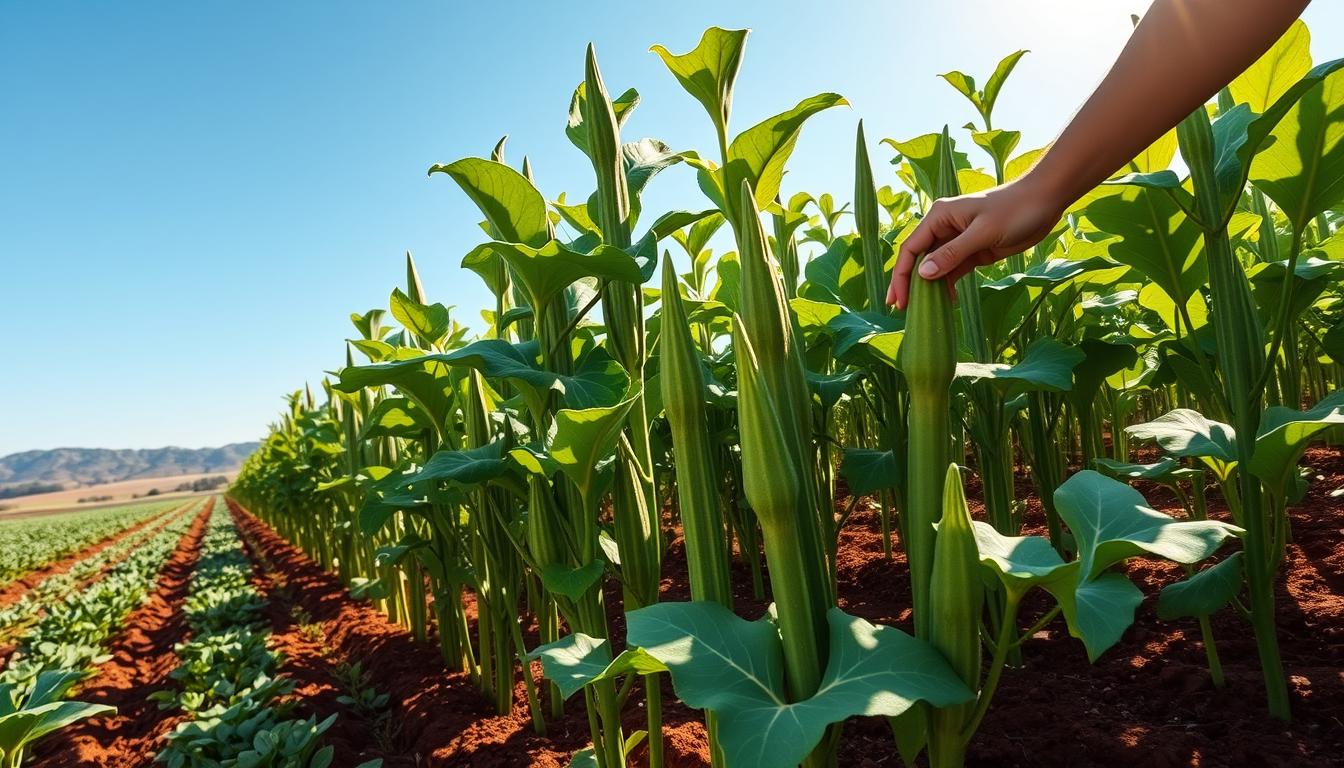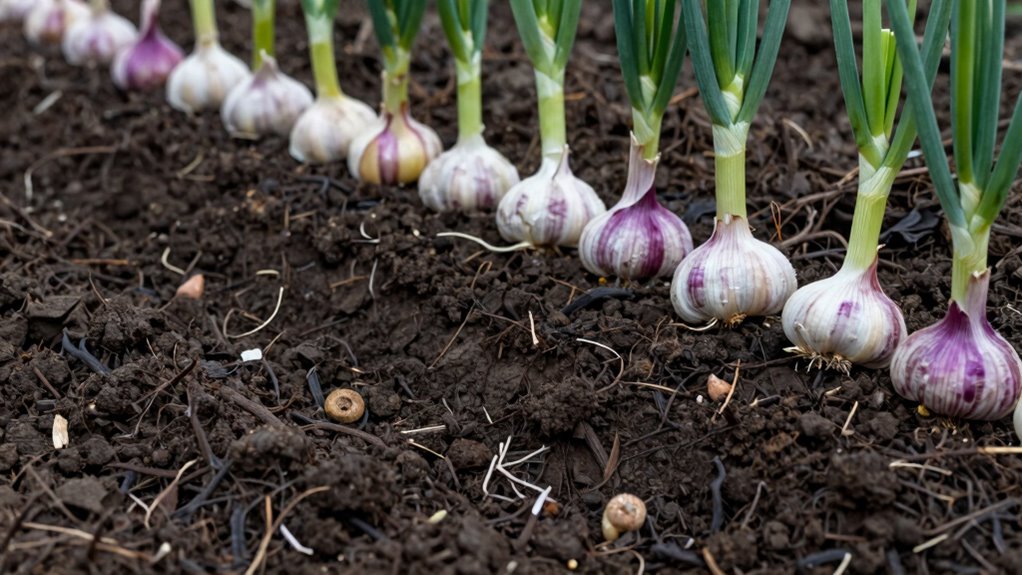

To prep soil for garlic, onions, and overwinter crops, start with soil testing to check nutrient levels and pH, then amend as needed with compost or manure to improve fertility and structure. Make certain of proper drainage by adding organic matter or using raised beds, and adjust the pH to 6.0-7.0 with lime or sulfur. Clear debris, weeds, and pests, then mulch to insulate and regulate soil temperature. Keep these steps in mind to boost your overwinter crop success.

Get garden gear delivered free with Prime
- Fast, free delivery on millions of items
- Prime Video, Amazon Music and more included
- Member-only deals all year
Key Takeaways
- Conduct soil tests to determine nutrient levels and pH, then amend accordingly for optimal overwinter crop growth.
- Incorporate compost or organic matter to improve soil structure, fertility, and moisture retention.
- Adjust soil pH to 6.0–7.0 using lime or sulfur based on test results for better nutrient availability.
- Improve drainage with organic amendments or raised beds to prevent waterlogging and root rot.
- Clear debris and mulch with straw or leaves to insulate soil and suppress weeds before planting.
As winter approaches, preparing your soil for overwinter crops is essential to guarantee healthy growth come spring. You want to start by assessing your soil’s condition through soil testing. This step reveals nutrient levels and pH balance, helping you understand what adjustments are necessary. Knowing your soil’s health allows you to make informed decisions about amendments, ensuring your garlic, onions, and other overwinter crops have the best possible foundation. If tests show deficiencies, you can adjust accordingly before planting.
Once you’ve tested your soil, focus on enriching it with organic amendments. These natural additions improve soil structure, boost fertility, and promote beneficial microbial activity. Compost, well-rotted manure, or organic matter like leaf mold are excellent choices. Incorporating these amendments not only supplies essential nutrients but also enhances the soil’s ability to retain moisture and drain well—crucial factors for overwinter crops that need to withstand cold temperatures. Mix the amendments thoroughly into the top 6-8 inches of soil, ensuring even distribution. Additionally, understanding your soil’s nutrient content can guide you in selecting the right amendments for optimal results. Conducting a thorough soil analysis helps tailor your soil preparation to specific crop needs.
Next, consider adjusting your soil’s pH if needed. Most overwinter crops like garlic and onions prefer slightly acidic to neutral soil, around 6.0 to 7.0. If your soil is too acidic or alkaline, you can amend it with lime or sulfur respectively, based on your soil test results. Proper pH levels improve nutrient availability, so your plants can absorb what they need during the cold months. After amending, give the soil time to settle and stabilize, ideally a few weeks before planting. Soil pH adjustment is a key step to ensure nutrient uptake and healthy crop development.
Drainage is another key factor to address. Overwinter crops are vulnerable to waterlogged soil, which can cause rot and other issues. If your soil tends to hold water, incorporate organic matter to improve drainage. Raised beds are also a practical solution, especially in heavy clay soils, as they promote better airflow and reduce the risk of standing water during winter storms. Additionally, understanding the soil’s natural drainage capacity can help you plan proper soil management strategies. Proper drainage prevents root diseases and helps overwinter crops survive through cold, wet conditions.
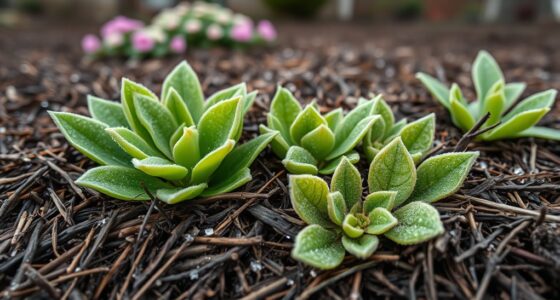
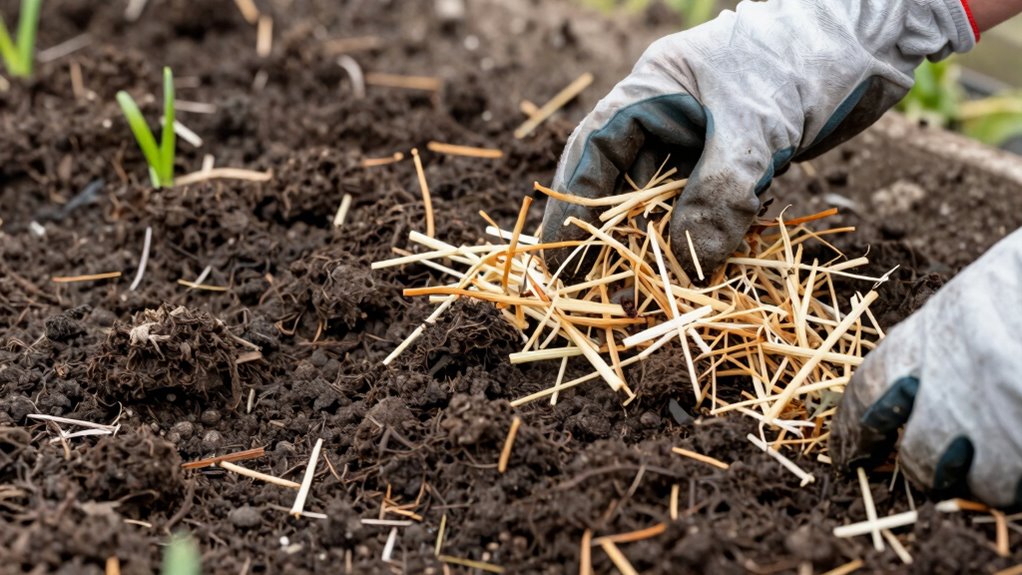
Finally, clear your planting area of debris, weeds, and pests. Mulching with straw or shredded leaves can insulate the soil, regulate temperature, and prevent weed growth. Mulch also acts as an extra layer of protection against harsh winter conditions. With your soil tested, amended, and properly prepared, you’re set to plant garlic, onions, and other overwinter crops confidently, knowing your soil is primed for a vigorous start once spring arrives.
As an affiliate, we earn on qualifying purchases.
Frequently Asked Questions
When Is the Best Time to Prepare Soil for Overwinter Crops?
You should prepare your soil in early fall, giving it time for winter soil insulation before cold weather arrives. This allows you to incorporate cover crop benefits, which improve soil health and protect against erosion. Mixing compost and organic matter now helps the soil stay warm and fertile through winter, ensuring your overwinter crops like garlic and onions have a healthy start come spring. Preparing early maximizes protection and soil robustness.
How Do I Test Soil pH Before Planting Garlic or Onions?
To evaluate your soil pH before planting garlic or onions, use a soil testing kit or send a sample to a lab. Follow the kit instructions carefully for accurate results. Once you know your soil’s pH, you can make pH adjustments if necessary by adding lime to raise pH or sulfur to lower it. Regular soil testing helps guarantee ideal conditions for healthy overwinter crops.
Can I Use Compost From My Kitchen for Overwinter Crop Soil?
They say “waste not, want not,” so you can definitely use kitchen compost for your overwinter crop soil. Just make sure it’s well-decomposed and balanced with organic amendments to avoid nitrogen deficiency or pathogens. Incorporate it into your soil, mixing thoroughly. This sustainable approach enriches your soil naturally, providing nutrients for healthy garlic, onions, and other overwinter crops, while reducing waste and supporting organic gardening.
What Are Common Soil Pests Affecting Overwinter Crops?
Common soil pests that affect overwinter crops include root maggots, wireworms, and nematodes. To identify these pests, look for damaged roots, stunted plants, or unusual soil activity. For organic pest control, introduce beneficial nematodes, apply diatomaceous earth, or use crop rotation strategies. Regular soil pest identification helps you catch problems early, preventing damage and ensuring healthy growth of your garlic, onions, and other overwinter crops.
How Do I Prevent Soil Compaction Over Winter?
Think of your soil as a sponge that needs to breathe. To prevent winter compaction, loosen the ground with gentle aeration, allowing air and water to flow freely. Incorporate organic amendments like compost to improve soil structure and resilience. This way, you keep the soil’s energy alive beneath the surface, ensuring your overwinter crops have a healthy, crumbly foundation to grow when spring arrives.
Conclusion
By giving your soil the right prep, you’re setting yourself up for a bountiful harvest come spring. Make sure to enrich, aerate, and clear your beds so your overwinter crops can thrive. Remember, a stitch in time saves nine—taking these steps now prevents bigger problems later. With a little effort today, you’ll reap the rewards tomorrow. So roll up your sleeves and get your soil in tip-top shape; your future self will thank you!
Halloween Picks
halloween
As an affiliate, we earn on qualifying purchases.