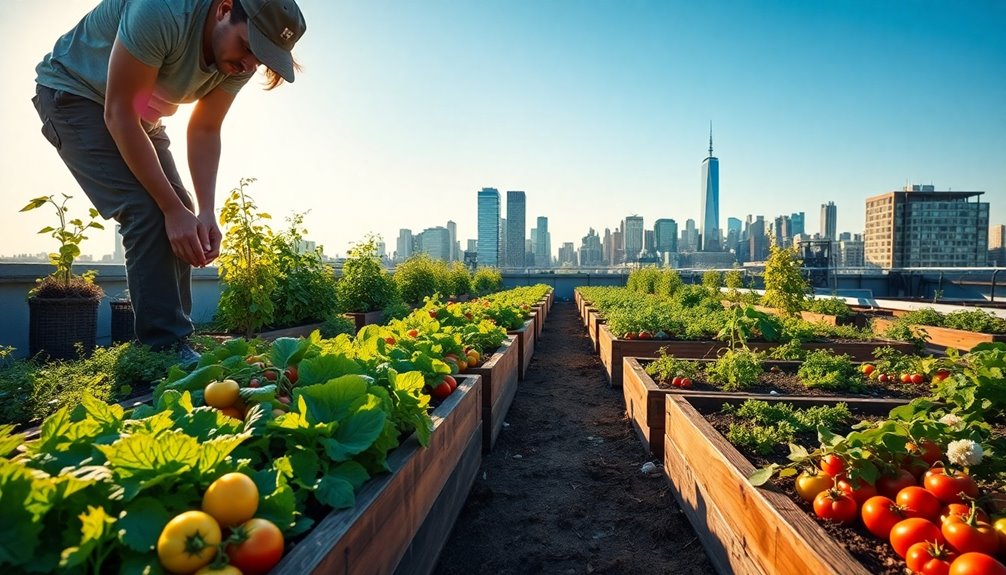
To start a vegetable garden from scratch, begin by preparing your soil—test its pH, remove weeds, and add compost for nutrients. Plan your layout around plant needs, ensuring proper spacing and pest defenses like companion plants and barriers. Maintain a consistent watering schedule, mulch to retain moisture, and keep your garden free of debris. With careful planning and ongoing care, you’ll set a strong foundation; exploring more tips will help your garden thrive.

Get garden gear delivered free — and shop member deals
- Fast, free delivery on millions of items
- Access to Prime Big Deal Days deals on October 6–7
- Prime Video, Amazon Music and more included
Key Takeaways
- Assess your site, clear weeds and debris, and improve soil with organic matter for optimal planting conditions.
- Plan your layout by grouping plants with similar needs and ensuring proper spacing for healthy growth.
- Prepare for pests using physical barriers, companion planting, and encouraging beneficial insects naturally.
- Establish a consistent watering schedule and mulch to retain moisture, suppress weeds, and protect plant roots.
- Regularly test and amend soil, keep the garden clean, and monitor plants for pests and diseases for ongoing success.
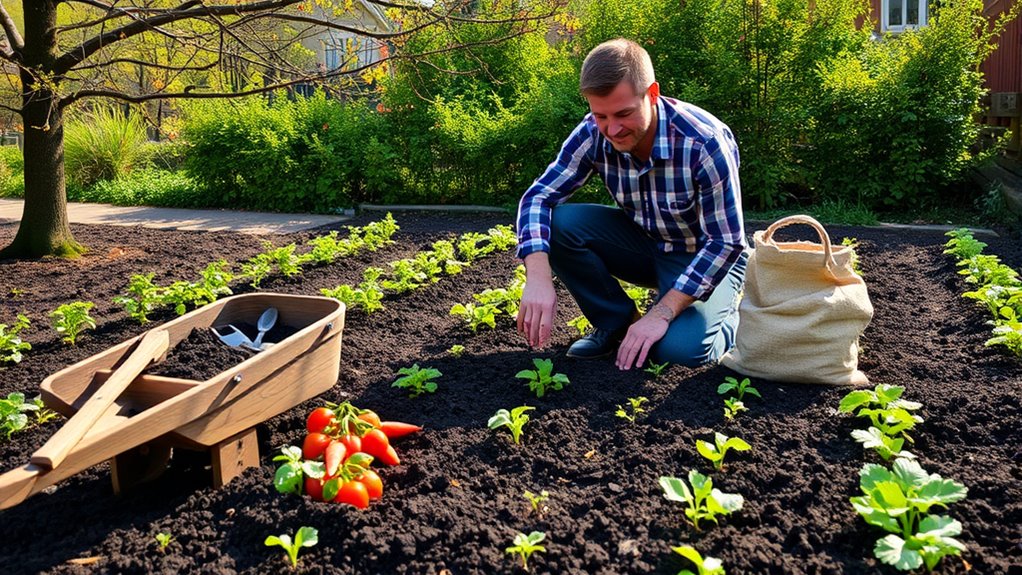
Starting a vegetable garden from scratch can be a rewarding way to enjoy fresh produce and connect with nature. Before you plant your first seed, you need to focus on soil preparation. Healthy soil is the foundation for a thriving garden, so take the time to assess your site. Remove any weeds, rocks, or debris that could hinder root growth. Loosen the soil with a garden fork or tiller to improve aeration and drainage, which are essential for healthy roots. Mixing in organic matter like compost or aged manure enriches the soil, providing essential nutrients for your plants. Aim for a soil pH between 6.0 and 7.0, and consider testing your soil to determine its nutrient levels and pH balance. Adjust accordingly, adding amendments if necessary, to create an ideal environment for your vegetables. Understanding the importance of soil quality helps ensure your plants will grow strong and healthy.
Healthy soil foundation is key; assess, clear, loosen, and enrich with organic matter for thriving vegetables.
Once your soil is prepared, you need to plan your planting layout. Group plants with similar water and sunlight needs together, and consider the spacing requirements for each crop. Proper planning helps maximize space and ensures each plant has enough room to grow healthily. As you prepare your planting beds, it’s also vital to think about pest control from the start. A proactive approach saves you headaches later. Use physical barriers such as row covers or floating row hoops to keep pests like aphids, cabbage worms, and beetles at bay. You can also plant companion plants—such as marigolds near tomatoes or basil with peppers—that naturally repel pests. Regularly inspect your plants for signs of pests or disease, and remove affected leaves or pests promptly. Keeping your garden clean and free of debris also reduces hiding spots for unwanted visitors. Additionally, incorporating beneficial insects like ladybugs and lacewings can naturally help control pest populations. To further improve your garden’s resilience, consider integrated pest management strategies that combine biological, cultural, and mechanical controls to reduce reliance on chemical pesticides. Developing a watering schedule is crucial for maintaining consistent soil moisture and healthy plant growth. Water your garden consistently, ensuring the soil stays moist but not waterlogged. Overwatering can lead to root rot, while underwatering stresses plants and makes them more vulnerable to pests and disease. Mulching around your plants helps retain moisture, suppress weeds, and regulate soil temperature. Also, focusing on soil testing can help you make more precise amendments tailored to your garden’s needs. As your garden grows, stay vigilant about pest control by encouraging beneficial insects like ladybugs and lacewings, which naturally control pest populations. If pests become a problem, consider organic solutions such as neem oil or insecticidal soap. Avoid chemical pesticides whenever possible, as they can harm beneficial insects and contaminate your produce.
Starting your vegetable garden from scratch requires effort and planning, but with proper soil preparation and pest control strategies, you’ll set yourself up for success. As your plants develop, you’ll enjoy the satisfaction of harvesting fresh, homegrown vegetables that you nurtured from the very beginning.
As an affiliate, we earn on qualifying purchases.
Frequently Asked Questions
What Are the Easiest Vegetables for Beginners to Grow?
When choosing easy vegetables to grow, you should consider crops like lettuce, radishes, and green beans. These plants thrive with minimal effort and are forgiving for beginners. To boost your success, practice companion planting and guarantee proper soil preparation by adding compost. This helps your plants grow strong and healthy, making gardening more enjoyable and rewarding as you learn the basics of vegetable cultivation.
How Much Sunlight Do Different Vegetables Need Daily?
Different vegetables need varying amounts of sunlight daily, so plan your garden layout accordingly. For example, tomatoes and peppers thrive with 6-8 hours of direct sun, while leafy greens prefer 4-6 hours. Before planting, focus on soil preparation to guarantee your plants get essential nutrients. Adjust your garden layout to maximize sun exposure and consider shading for sensitive crops, helping your vegetables grow healthy and strong.
When Is the Best Time to Start Planting?
Imagine the warm, enthusiastic sun signaling the start of growth; now’s the perfect time to begin planting. You should wait until the last frost date passes, ensuring your garden soil preparation is complete. Use your chosen garden tools to loosen and enrich the soil. This timing gives your vegetables the best chance to thrive, with ideal sunlight and soil conditions, setting the stage for a bountiful harvest.
How Often Should I Water My Garden?
You should water your garden regularly, keeping a consistent watering schedule to maintain ideal soil moisture. Aim to water deeply about once or twice a week, depending on weather conditions, so the roots grow strong. Check soil moisture by feeling the top inch; if it feels dry, it’s time to water. Avoid overwatering, which can lead to root rot, and ensure your plants receive enough hydration for healthy growth.
What Are Common Pests and How to Control Them?
You might encounter pests like aphids, beetles, and caterpillars. To control them, choose pest resistant varieties and encourage natural pest deterrents like beneficial insects or companion planting. Regularly inspect your plants and remove pests by hand or use organic sprays. Keeping your garden healthy also helps prevent pests naturally. Combining these strategies ensures your garden stays productive and pest-free without relying on harsh chemicals.
Conclusion
Now that you’re ready to plant, remember that your garden is like a blank canvas waiting for your touch. With a little patience and care, your veggies will grow strong and vibrant, turning your yard into a colorful masterpiece. Just stay committed, nurture each plant, and watch as your efforts bloom into a delicious harvest. Your garden’s success depends on your dedication—think of it as planting seeds today for a bountiful tomorrow.
Fall Picks
fall essentials
As an affiliate, we earn on qualifying purchases.