To thin seedlings without wasting a tray, use small scissors to snip excess seedlings at soil level, avoiding root damage to remaining plants. This precise method keeps soil intact, promotes healthy root development, and minimizes disturbance. Planning proper spacing early helps reduce overcrowding, making thinning easier and more efficient. By following this technique, you’ll promote stronger, healthier seedlings and make future care simpler. Keep going to discover even more tips for efficient seedling management.

Get garden gear delivered free with Prime
- Fast, free delivery on millions of items
- Prime Video, Amazon Music and more included
- Member-only deals all year
Key Takeaways
- Use small scissors to precisely snip excess seedlings at soil level, minimizing tray waste and root disturbance.
- Plan seed spacing carefully to reduce the need for extensive thinning later.
- Thin seedlings early to prevent overcrowding and avoid damaging healthy plants.
- Remove only the excess seedlings, leaving strong ones intact to maximize tray use.
- Consider transplanting removed seedlings to other containers instead of discarding them.
Thinning seedlings is an essential step in gardening, but it often feels like a waste of space and resources. You’ve carefully planted your seeds, only to find too many sprouting in each cell or container. It’s tempting to leave them all, hoping they’ll grow stronger, but overcrowding stunts root development and leads to weak, unhealthy plants. The challenge is figuring out how to thin seedlings effectively without sacrificing the entire tray or causing unnecessary soil disturbance.
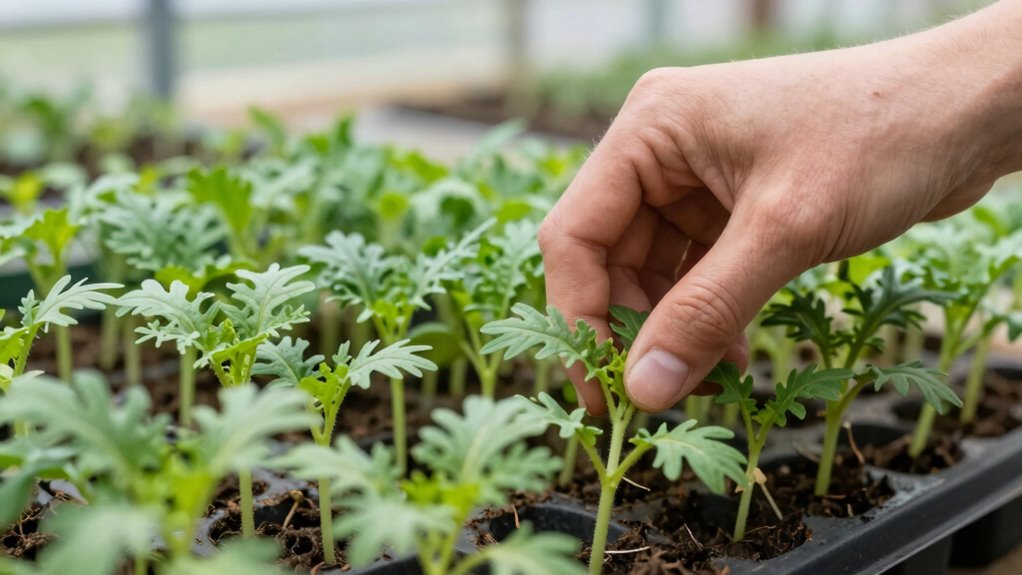
Traditional thinning methods often involve pulling out excess seedlings, which can disturb the soil around the remaining plants. This soil disturbance can damage delicate roots, slowing down root development for the seedlings you want to keep. When roots are jostled or torn, they take longer to establish, making seedlings more vulnerable to drought and disease. Plus, disturbing the soil can create gaps that make subsequent watering uneven, complicating your care routine.
Pulling seedlings can damage roots, slowing growth and causing uneven watering. Use scissors for gentle, precise thinning.
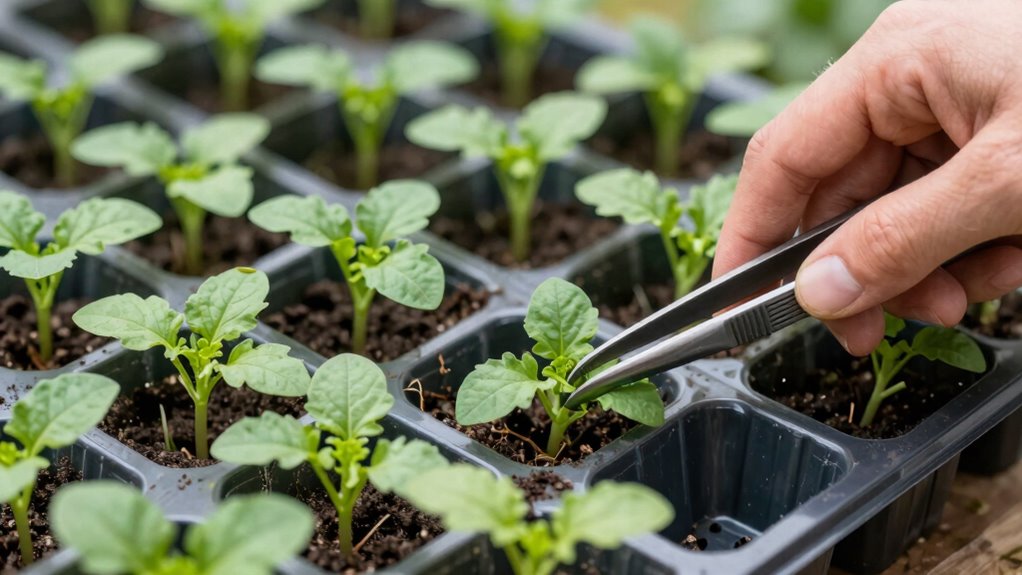
A better approach is to remove excess seedlings carefully, ideally by snipping or using small scissors instead of pulling. This technique minimizes soil disturbance and preserves the integrity of the root systems of your chosen seedlings. When you snip the unwanted plants at the soil line, you avoid disturbing the roots of the remaining seedlings, which keeps their root development on track. This method ensures that the nutrients in the soil go directly to the healthy plants, giving them a better start as they grow stronger and more resilient. Additionally, precise seed removal helps prevent the spread of soil-borne diseases that can occur when uprooting or pulling seedlings. Proper seedling management is crucial to ensure healthy growth and avoid future problems in your garden.
Another key to thinning without wasting a tray is to plan your seed placement with precision. When you seed, space your seeds according to the recommended distance. This reduces the number of seedlings you’ll need to thin later and makes it easier to identify which plants to keep. If you notice overcrowding early on, you can thin out extra seedlings gradually, giving the remaining ones enough room to develop robust roots. This process also makes watering and fertilizing more efficient, as each plant gets more access to soil nutrients and moisture. Plus, understanding seedling growth stages can help you determine the best time to thin and give your plants optimal conditions for healthy development.
In the end, thinning seedlings isn’t just about making space; it’s about fostering healthy root development and maintaining soil health. By taking care to avoid soil disturbance and removing excess plants with precision, you give your seedlings the best chance to grow into vigorous, productive plants. Incorporating proper seed spacing into your planning can significantly improve your overall success rate. This thoughtful approach saves you time and effort in the long run, leading to a stronger, more fruitful garden.
small gardening scissors for seedling thinning
As an affiliate, we earn on qualifying purchases.
As an affiliate, we earn on qualifying purchases.
Frequently Asked Questions
What Tools Are Best for Thinning Seedlings Efficiently?
You should use precise tools like scissors or tweezers for thinning seedlings efficiently. Focus on maintaining proper seedling spacing by carefully removing weaker or overcrowded plants. Root pruning helps encourage healthy growth in remaining seedlings and makes thinning easier. With sharp, clean tools, you can quickly thin seedlings without damaging roots or wasting space, ensuring your garden gets the right density for ideal growth.
How Can I Avoid Damaging Healthy Seedlings During Thinning?
Think of your seedlings as a delicate dance; gentle movements keep the healthy ones thriving. To avoid damage, use a light touch and tools like tweezers or fingers, working carefully around each plant. Incorporate companion planting to strengthen soil nutrition, helping seedlings grow robustly. This approach minimizes stress and injury during thinning and encourages a healthy, resilient garden, giving each plant room to flourish.
When Is the Ideal Time to Thin Seedlings?
You should thin seedlings when they’re about 2-3 inches tall, ensuring proper seedling spacing for healthy growth. This timing allows you to carefully root prune the weaker plants, which encourages stronger roots in the remaining seedlings. By thinning at this stage, you minimize damage to healthy plants and promote better airflow. Always handle seedlings gently to avoid unnecessary stress and give your strongest plants the best start.
How Do I Determine Which Seedlings to Keep?
Choosing seedlings is like selecting the brightest stars in the sky. Focus on seedling selection by picking the ones with the strongest, healthiest growth—vibrant color, sturdy stems, and well-developed leaves. Remove weaker or spindly plants to give your better seedlings room to thrive. Trust your judgment, and remember that healthy growth in your chosen seedlings guarantees a stronger, more productive garden later on.
Can Thinning Be Done With Minimal Root Disturbance?
Yes, thinning can be done with minimal root disturbance by focusing on root preservation and gentle removal. Use your fingers or small tools to carefully loosen the soil around each seedling, then gently lift it out, minimizing root damage. This approach guarantees seedlings are thinned efficiently without harming their roots, helping the remaining plants stay healthy and vigorous. Patience and gentle handling are key to successful thinning with minimal root disturbance.
Conclusion
Now, picture yourself gently grasping each tiny seedling, like holding a delicate pearl, and carefully removing the weaker ones without disturbing their neighbors. By thinning wisely, you create a lush, vibrant jungle of healthy plants, all reaching toward the sun with plenty of space to grow strong. This mindful touch transforms a simple task into a nurturing act, ensuring your garden flourishes beautifully without wasting a single precious tray.
Fall Picks
fall essentials
As an affiliate, we earn on qualifying purchases.