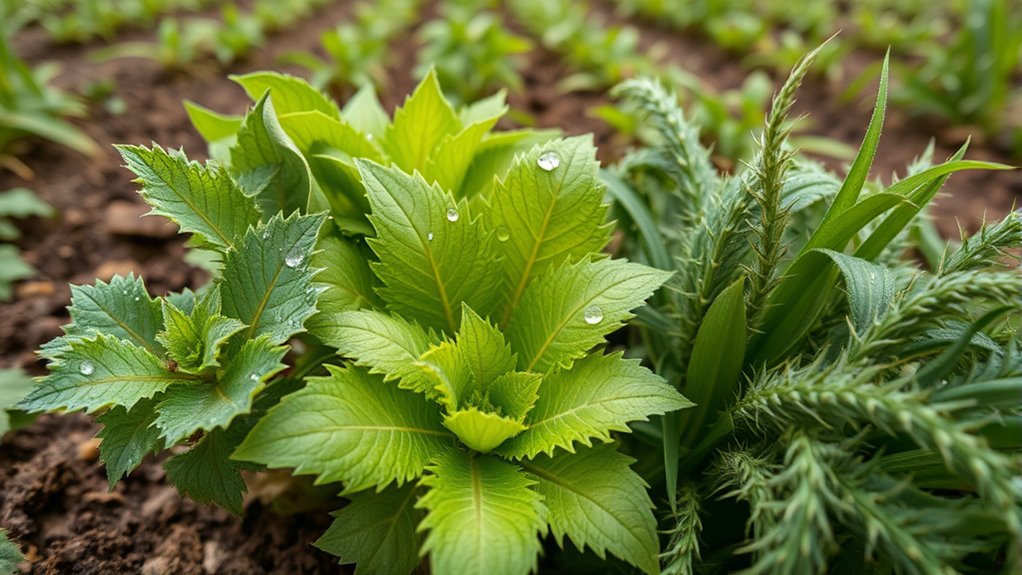

To identify common farm weeds, start by observing their leaf shape, growth pattern, and flowers. Recognize broadleaf weeds like dandelions and grassy types such as crabgrass, as each requires different control methods. Use cultural practices like mulching and crop rotation to suppress these weeds, and rotate herbicides to prevent resistance. Fine-tuning your approach improves effectiveness and sustainability. Keep exploring, and you’ll discover how tailored strategies can help manage weeds more efficiently.
Key Takeaways
- Accurate weed identification, including distinguishing broadleaf and grassy species, informs targeted control strategies.
- Recognizing common farm weeds like dandelions and crabgrass helps select effective chemical and cultural controls.
- Understanding weed biology and resistance patterns guides integrated management approaches.
- Combining mechanical removal, proper mowing, and crop rotation enhances weed suppression efforts.
- Early detection and consistent monitoring prevent widespread infestations and resistance development.
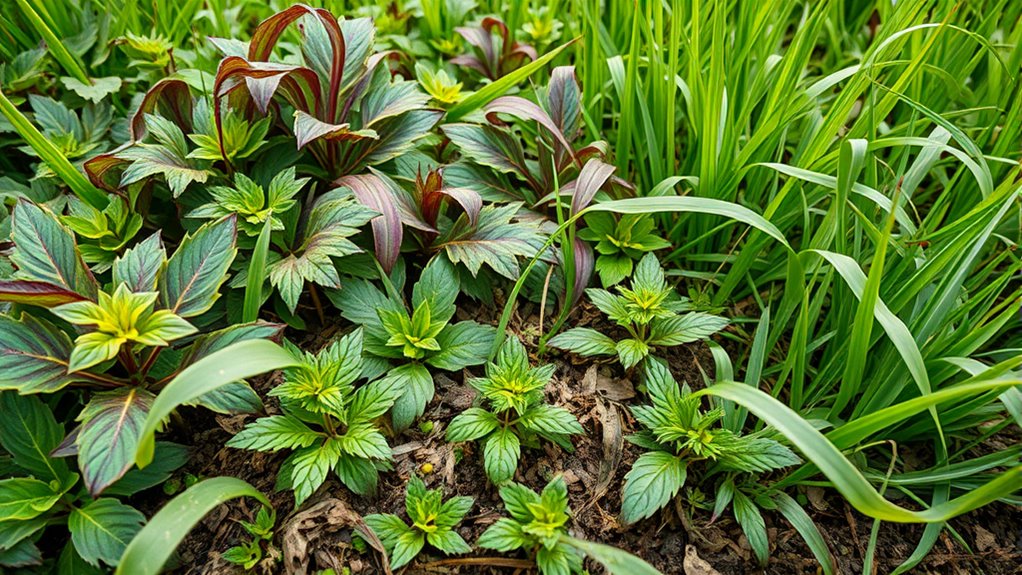
Have you ever wondered how to tell different weeds apart in your garden or lawn? Identifying weeds accurately is the first step toward effective control. Many weeds develop herbicide resistance over time, making chemical control more challenging. But understanding their growth habits and implementing cultural control methods can markedly reduce weed problems. When weeds become resistant to herbicides, simply applying more chemicals often doesn’t work. Instead, you need to adapt your approach by rotating herbicides with different modes of action or combining chemical treatments with other strategies. Cultural control methods are especially useful here; they involve altering your gardening practices to suppress weed growth naturally. For instance, maintaining healthy, dense turf or crop cover can outcompete weeds for nutrients, light, and space, reducing their ability to establish. Proper soil preparation, such as aeration and fertilization, encourages vigorous growth of desired plants, which can shade out or crowd out weeds. Mulching is another effective cultural control method—laying down a thick layer of organic or synthetic mulch blocks sunlight and hampers weed seed germination. Additionally, adjusting planting times to outpace weeds can give your crops or lawn a head start, making it harder for weeds to take hold. Recognizing the specific weeds in your area is vital, because different species respond differently to control methods. For example, broadleaf weeds like dandelions require different management strategies than grassy weeds such as crabgrass. If a weed shows signs of herbicide resistance—like persistent growth despite chemical treatment—you should consider integrating cultural methods into your weed management plan instead of relying solely on herbicides. Combining mechanical removal, proper mowing, and crop rotation with targeted herbicide use provides a more sustainable, long-term solution. Remember, consistent monitoring and early intervention are key. The sooner you identify and address weeds, the easier it becomes to control them before they spread and become more resistant. Cultivating good practices, like removing weeds before they seed, can prevent future infestations. Ultimately, understanding the biology of weeds and employing a multifaceted approach—integrating cultural control methods with herbicide strategies—gives you the best chance to keep your garden or lawn healthy and weed-free. By staying vigilant and adaptable, you can manage even resistant weed populations effectively, ensuring a lush, thriving landscape for years to come.
Amazon Product B0F9P3LYCJ
As an affiliate, we earn on qualifying purchases.
Frequently Asked Questions
How Do Weather Conditions Influence Weed Growth and Spread?
Weather conditions directly impact weed growth and spread. Favorable weather patterns, like warm temperatures and adequate rainfall, promote rapid weed development. Climate variability can lead to unpredictable weed outbreaks, making control more challenging. Droughts may slow growth temporarily, but some weeds adapt quickly to changing conditions. By monitoring weather patterns, you can anticipate weed outbreaks and time your control strategies more effectively, reducing their impact on your crops.
What Are the Most Effective Organic Weed Control Methods?
Think of organic weed control like tending a garden fortress. You can use mulching techniques, like laying down a blanket of straw or wood chips, to block weeds’ sunlight. Crop rotation acts as a strategic shield, disrupting weed cycles. Together, these methods create a natural barrier, making it difficult for weeds to invade, so your crops stay healthy and thriving without chemicals.
Can Weeds Develop Resistance to Herbicides Over Time?
Yes, weeds can develop resistance to herbicides over time due to weed adaptation. When you rely heavily on the same herbicide, it creates selective pressure, allowing resistant weeds to survive and reproduce. This herbicide resistance makes control more difficult. To prevent this, you should rotate herbicides, combine mechanical methods, and use integrated weed management strategies. Staying proactive helps minimize weed adaptation and maintains effective control.
How Often Should I Inspect My Farm for New Weed Infestations?
Think of your farm as a fortress, and weeds as sneaky invaders trying to breach your defenses. You should inspect your farm for new weed infestations at least every 1-2 weeks during the weed lifecycle’s peak, especially in spring and early summer. Regular inspections help catch weeds early, preventing them from spreading and establishing strongholds that are tougher to control later. Stay vigilant, and your crops will thank you.
Are There Specific Weeds That Are More Harmful to Certain Crops?
Yes, certain weeds are more harmful to specific crops due to crop-specific weeds and weed crop interactions. For example, bindweed severely impacts tomatoes, while nutsedge mainly affects rice. You should identify these weeds early to prevent damage, as they compete for nutrients, water, and space, reducing yields. Regular inspections and targeted control strategies help manage these weeds effectively, protecting your crops and ensuring healthy growth.

Halo Collar 5 Wireless Dog Fence & GPS Dog Collar, Keep Your Dog Safely Contained Outdoors with App-Controlled Boundaries and Real-Time Tracking, One Size, Midnight
#1 Most Dogs Protected: Powered by PrecisionGPS technology, Halo Collar 5 connects to six satellite constellations using dual-frequency...
As an affiliate, we earn on qualifying purchases.
Conclusion
By learning to identify common farm weeds and applying effective control strategies, you’re better equipped to keep your fields healthy. Stay vigilant, act early, and don’t let weeds get a foothold. Remember, a stitch in time saves nine—addressing problems now prevents bigger headaches later. With consistent effort and proper management, you’ll turn the tide in your favor and maintain a thriving, productive farm. Keep your eyes open and stay proactive!

PetSafe Guardian GPS 2.0 Dog Fence + Tracking - Wireless GPS Dog Fence - Real-Time Tracking - Custom Boundaries System - Waterproof Collar - Comfortable Fit
Protect Dog Safely: The PetSafe Guardian GPS 2.0 Dog Fence + Tracking delivers a wireless GPS dog fence...
As an affiliate, we earn on qualifying purchases.
Amazon Product B0GF16QFZP
As an affiliate, we earn on qualifying purchases.