To calibrate your ATV sprayer accurately, gather essential tools like a measuring container, stopwatch, and safety gear. Measure nozzle output by running the sprayer for a set time and noting the spray volume, then determine your ground speed using a known distance and timing. Adjust your pump pressure and nozzles accordingly, then repeat to confirm accuracy. If you want step-by-step guidance on perfect calibration, keep going—you’re about to learn more.
Key Takeaways
- Measure nozzle output accurately with a measuring container over a set time to determine flow rate.
- Use a stopwatch to record travel time over a known distance and calculate ground speed precisely.
- Adjust pump pressure based on test data to ensure the correct application rate and spray volume.
- Regularly inspect and replace nozzles to maintain consistent spray pattern and prevent calibration drift.
- Repeat calibration periodically and analyze results to optimize spray performance and chemical accuracy.
Gather Your ATV Sprayer Calibration Tools
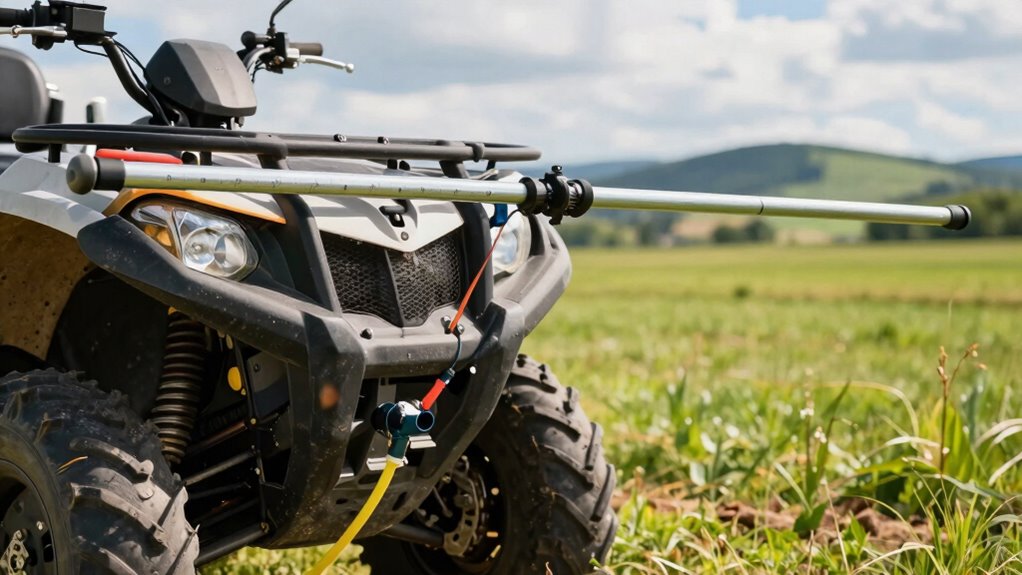
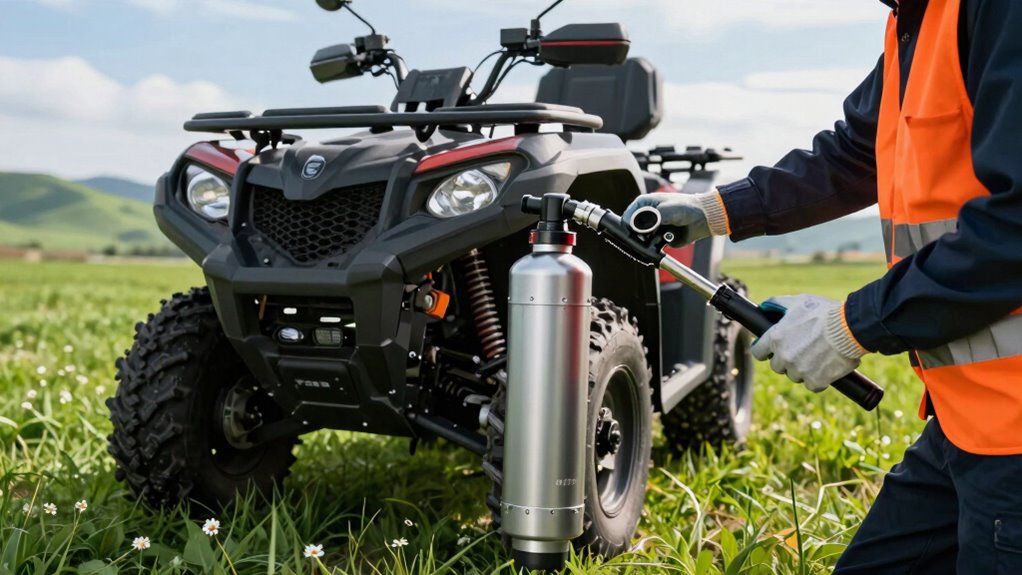
Before you begin calibrating your ATV sprayer, gather all the necessary tools to guarantee an accurate process. Proper sprayer maintenance starts with having the right equipment on hand, ensuring you can complete each step safely and effectively. You’ll need a clean container to measure the spray output, a stopwatch or timer, and a calculator to help with calculations. Don’t forget safety precautions—wear gloves and eye protection to prevent contact with chemicals. Double-check that your sprayer is in good condition, with no leaks or clogs. Having these tools ready before you start saves time and minimizes errors, making your calibration more precise. Additionally, understanding the Free Floating nature of spray patterns can help you adjust your technique for optimal coverage. Ensuring your equipment is properly calibrated before use reduces the risk of overspray or missed areas, ultimately saving you time and resources. Proper sprayer maintenance also includes inspecting nozzles and filters regularly to maintain consistent spray quality. Regularly checking your equipment condition can help identify potential issues early, preventing costly repairs and ensuring reliable operation. Maintaining a consistent spray pattern is essential for achieving uniform coverage and efficient application. Prioritizing safety and sprayer maintenance ensures a smooth, safe calibration process that delivers ideal spraying results.
Measure Nozzle Output to Ensure Proper Spray Volume
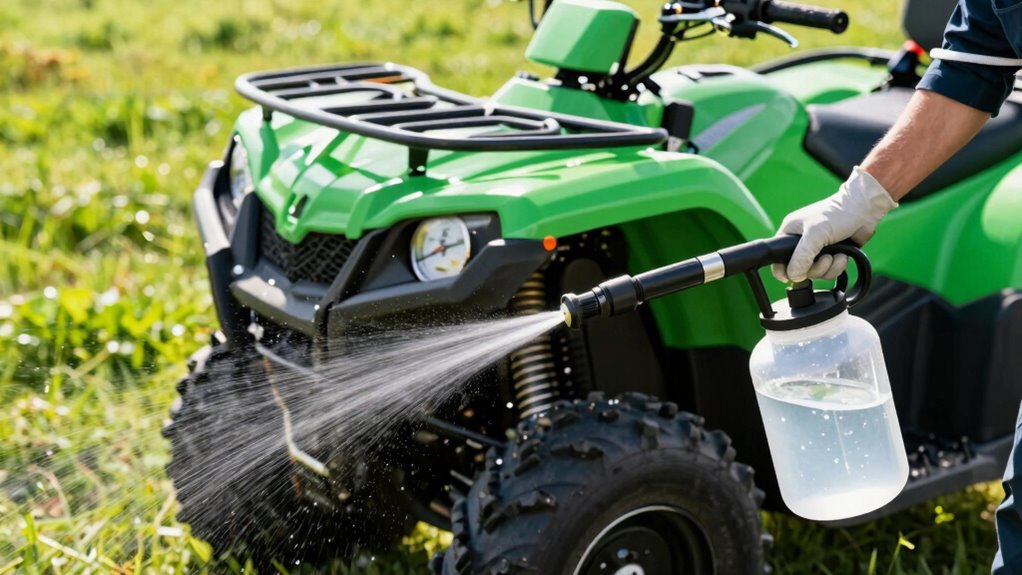
To verify that your ATV sprayer is delivering the correct amount of liquid, you need to measure each nozzle’s output directly. Fill a measuring container with a specific volume, then run the sprayer for a set time to collect flow from each nozzle. Check for nozzle clogging, which can restrict flow and cause uneven application. If a nozzle isn’t spraying correctly, clean or replace it. Also, verify the nozzles are compatible with your chemicals to prevent damage or inaccurate spray volume. Proper measurement confirms each nozzle delivers the intended volume, helping you adjust your calibration accurately. Regularly testing nozzle output keeps your spraying consistent, prevents chemical waste, and ensures even coverage across your treatment area. Calibration procedures are essential for maintaining accurate spray volumes and optimizing application efficiency. Ensuring your equipment is well-maintained and calibrated is essential for proper application, and understanding your nozzle specifications can help you select the correct nozzles for your specific needs and chemicals. Performing routine checks on nozzle flow rates can prevent issues before they affect your entire application. Additionally, understanding flow rate accuracy helps in making precise adjustments to your system for optimal results.
Calculate Your Ground Speed for Accurate Calibration
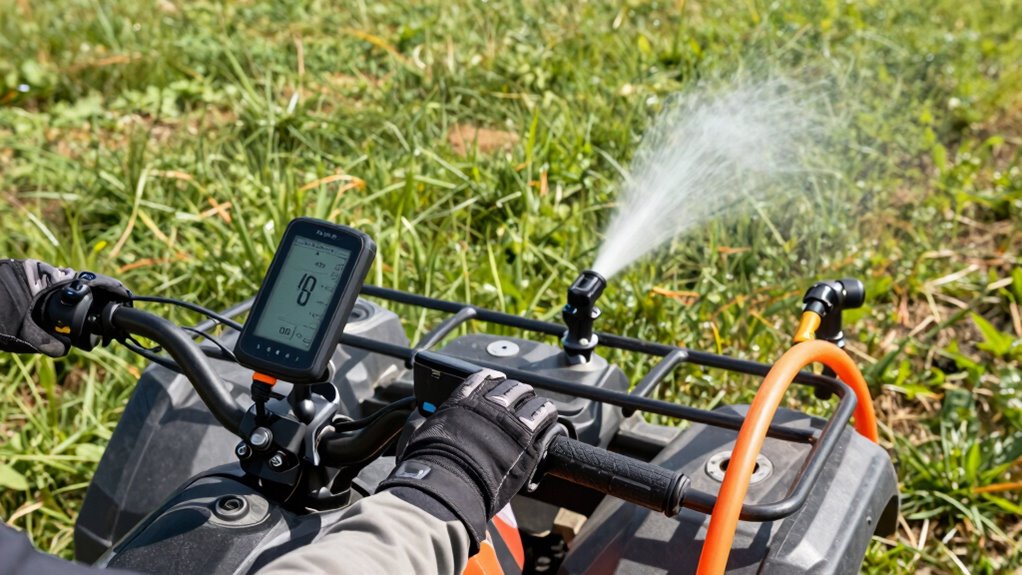
To get your ground speed right, start by measuring your wheel circumference accurately. Use a stopwatch to time how long it takes to travel a known distance, then calculate your speed precisely. Getting these points correct guarantees your calibration is spot-on for effective spraying. Additionally, understanding your machine weight can help prevent accidents during transportation and setup. Knowing your equipment’s essential oil applications can also optimize spray efficiency and safety during operation. Incorporating energy-efficient cloud solutions into your data management can further enhance operational safety and environmental responsibility. Proper calibration techniques are crucial for consistent application rates, ensuring you achieve the desired coverage without waste.
Measure Wheel Circumference Precisely
Accurately measuring your wheel’s circumference is essential for calculating your ground speed and ensuring proper sprayer calibration. Precise wheel measurement guarantees circumference accuracy, which directly impacts calibration accuracy. To do this, mark a point on your tire, roll the ATV in a straight line for one full rotation, and measure the distance traveled. Use a tape measure for the most accurate results. Here’s a simple way to visualize it:
| Step | Action |
|---|---|
| 1 | Mark a point on the tire |
| 2 | Roll the ATV one full rotation |
| 3 | Measure the distance traveled in inches or cm |
| 4 | Record the measurement for wheel circumference |
This process ensures your wheel measurement is precise, leading to accurate ground speed calculations.
Use Stopwatch for Timing
Have you ever wondered how to quickly and precisely determine your ground speed during sprayer calibration? Using a stopwatch is a simple yet effective timing technique. To achieve accurate results, you need good stopwatch precision and correct timing methods. Here are key steps:
- Pick a known distance, like 100 feet, to measure your travel.
- Start the stopwatch as you begin moving and stop it once you’ve covered that distance.
- Record the time, then divide the distance by the elapsed seconds to find your ground speed.
This method helps you avoid guesswork and ensures consistent calibration. Proper timing techniques with a precise stopwatch give you reliable data, making your ground speed calculation straightforward and accurate.
Calculate Speed Accurately
Once you’ve timed your travel over a known distance, calculating your ground speed becomes straightforward. To verify accurate calibration techniques, use your stopwatch to determine how long it takes to cover that distance. Divide the distance by the time in hours to find your speed measurement in miles per hour or kilometers per hour. For example, if you travel 100 feet in 5 seconds, convert the distance and time to compatible units before dividing. Precise speed measurement is essential for proper calibration, as it directly impacts the accuracy of your sprayer application rates. Double-check your timing and measurements to avoid errors. This simple calculation provides the critical data needed to set your sprayer’s flow rate accurately, leading to effective and efficient coverage. Accurate calibration is crucial for achieving consistent and reliable application results.
Conduct a Calibration Test Run to Collect Data
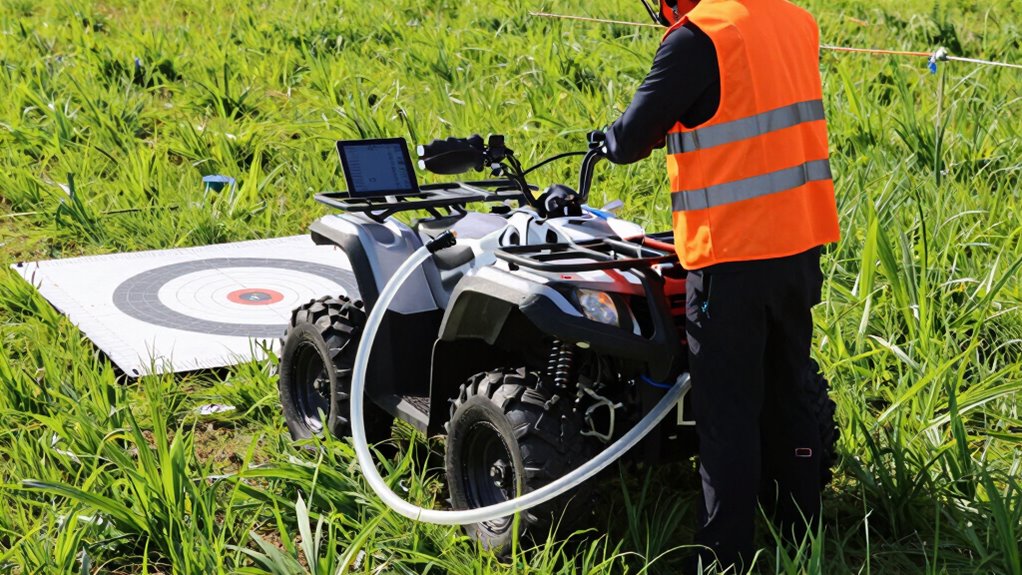
Before you begin your calibration test run, make sure your sprayer is properly prepared and all settings are adjusted to your target application rate. Perform sprayer maintenance to ensure no clogs or leaks, and review safety precautions to prevent accidents. Once ready:
- Fill the sprayer with water or a calibration solution.
- Drive your ATV over a known distance at your typical spraying speed.
- Record the time it takes to cover that distance.
- Ensure your sprayer’s filter system is clean and functioning properly to avoid inaccurate measurements. Maintaining your equipment and understanding your connected technology can help improve calibration accuracy. Additionally, verifying pressure settings can further enhance the precision of your calibration process. Regularly inspecting your nozzle condition also contributes to consistent application rates and spray quality. Properly monitoring sprayer output can help detect any issues early and maintain accurate calibration over time.
This test helps you gather accurate data without risking crop damage or safety hazards. Conducting this step carefully ensures your equipment functions correctly and provides reliable results. Remember, a well-maintained sprayer and adherence to safety precautions are essential for an effective calibration process.
Adjust Pump Pressure and Nozzle Settings Based on Results
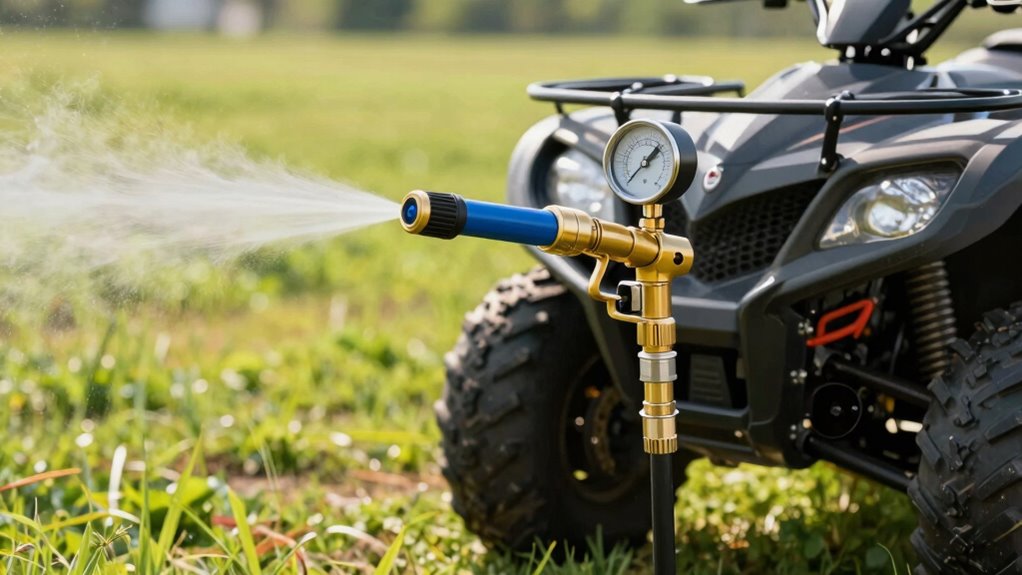
After completing your calibration test run, analyze the data to determine if your sprayer is applying the correct volume. If it’s over- or under-delivering, adjust the pump pressure accordingly. Keep in mind that nozzle wear can affect spray patterns and flow rates, so inspect nozzles regularly and replace worn ones for consistent application. Additionally, verify that your nozzles are compatible with the chemicals you’re using, as incompatible nozzles can cause clogging or chemical reactions that alter flow. Regular nozzle maintenance and fine-tuning pressure and nozzle settings based on your test results help ensure accurate, uniform coverage. Regular checks for nozzle wear and chemical compatibility are essential to maintain calibration accuracy and prevent uneven application or equipment damage.
Interpret Your Calibration Data to Improve Accuracy
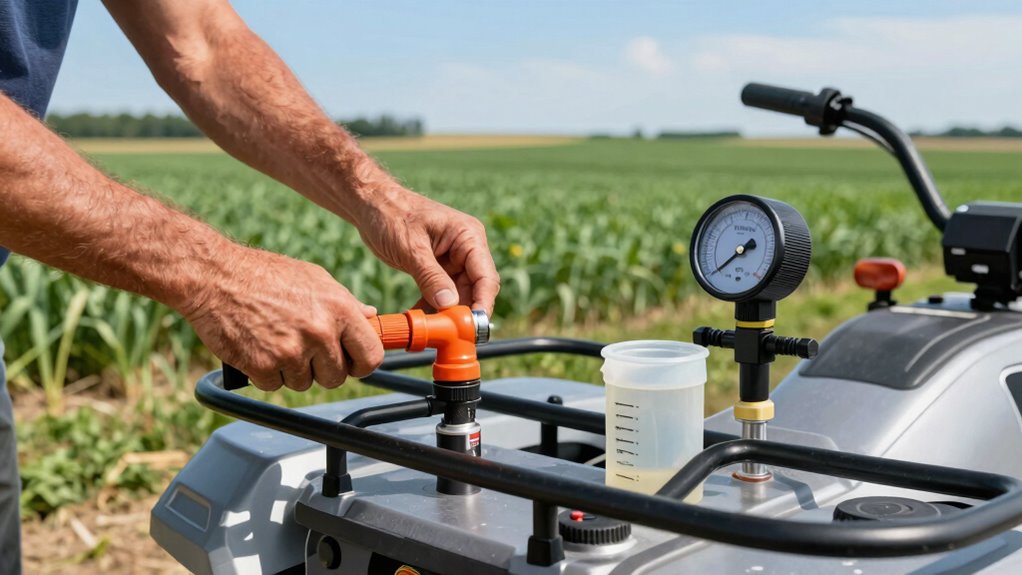
Analyzing your calibration data helps you identify whether your sprayer is delivering the correct amount of chemical. By reviewing your test results, you can determine if adjustments are needed for better accuracy. Consider these steps:
Analyzing calibration data ensures accurate chemical delivery and optimal sprayer performance.
- Check if your spray pattern matches the recommended flow rate for your sprayer nozzle types. Different nozzles deliver varying spray volumes, so matching them to your target application rate is key.
- Adjust calibration frequency based on your findings. Regular calibration ensures consistent performance, especially if you notice discrepancies over time.
- Use the data to fine-tune your pump pressure and nozzle settings. Small changes can considerably improve application accuracy and reduce waste.
- Remember that proper sprayer design influences how well your calibration results reflect real-world conditions. Additionally, understanding how nozzle selection impacts spray distribution can help improve overall application precision.
Interpreting your data effectively helps you optimize spray performance and ensures precise chemical delivery.
Repeat Calibration to Confirm Your Sprayer Is Properly Set
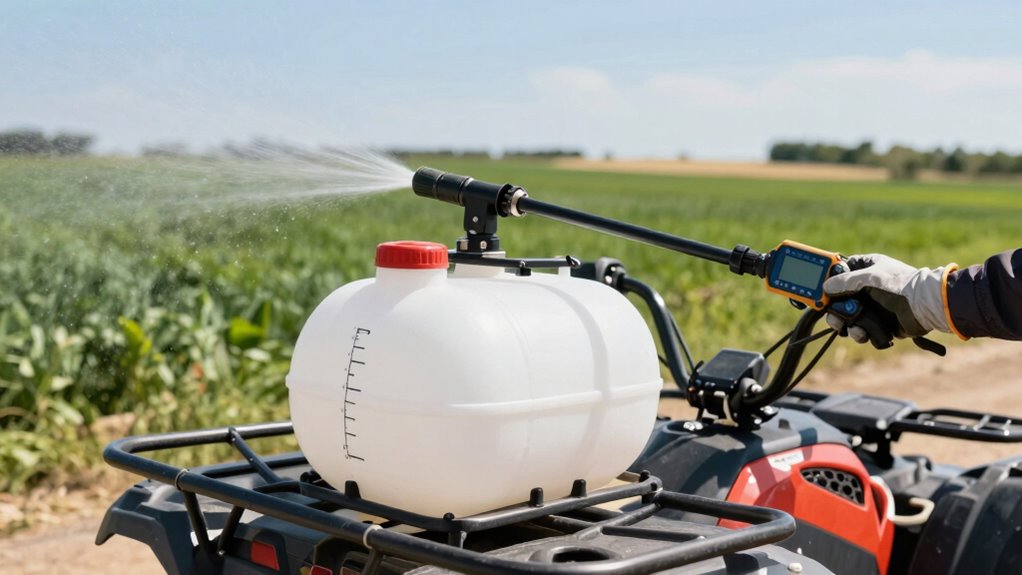
To make certain your sprayer is consistently delivering the correct application rate, it’s important to repeat your calibration process periodically. Regular calibration confirms that your sprayer remains accurate over time, especially after maintenance or parts replacements. Incorporate proper sprayer maintenance routines, such as checking nozzles and hoses, to ensure consistent performance. Adjust your calibration frequency based on usage conditions and observed discrepancies. Repeating calibration helps identify any drift in application rate, preventing under- or over-application. This process keeps your spraying precise and efficient, saving you money and reducing environmental impact. Consistent calibration checks also extend the lifespan of your equipment by catching issues early. Regular calibration is a key part of responsible sprayer maintenance that guarantees your spray coverage stays accurate. Understanding equipment performance from related fields can help optimize your calibration process and improve overall efficiency.
Troubleshoot Common Calibration Problems and Fix Them
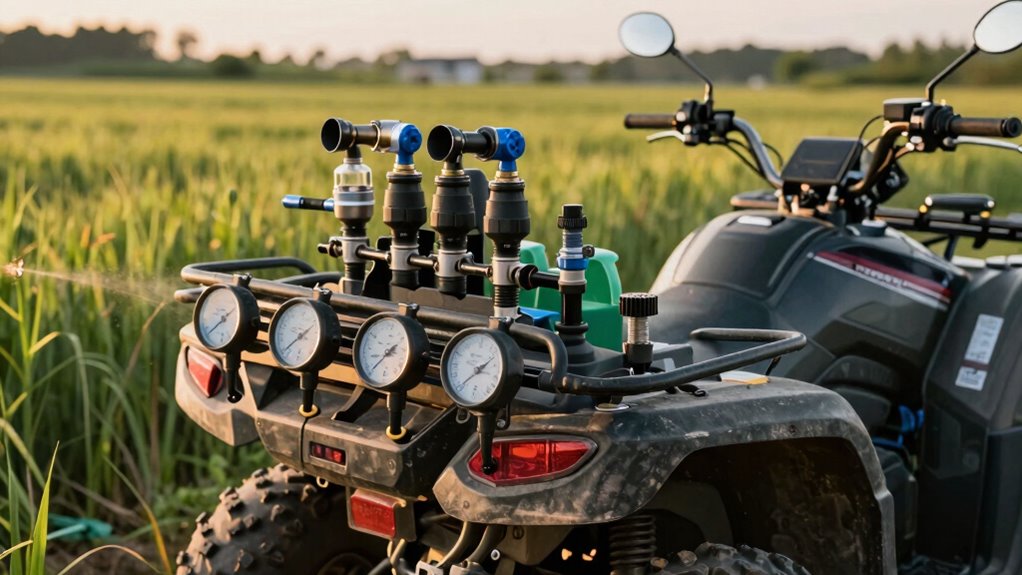
When your calibration results seem off, it’s important to verify where the errors are happening. You may need to check for incorrect spray volume or uneven application. Fixing these issues ensures your sprayer delivers accurate and consistent coverage.
Identifying Calibration Errors
Calibration errors often stem from simple mistakes or overlooked details, making them easier to identify and correct once you know what to look for. First, check your sprayer nozzle for clogs or uneven spray patterns, which can skew calibration results. Second, verify your calibration frequency; calibrate more often if you’re spraying multiple crops or changing products. Third, review your measurement process—small errors in timing or volume measurement can cause significant inaccuracies. Keep an eye on inconsistent spray patterns, unexpected variations in flow rate, or difficulty maintaining steady pressure, as these are signs of calibration issues. Addressing these common problems ensures your sprayer delivers the correct volume each time and helps maintain accurate calibration.
Correcting Spray Volume
If your sprayer isn’t delivering the correct volume, it’s essential to identify and fix common issues quickly. First, check the sprayer nozzle for clogs or damage, as a faulty nozzle can alter spray volume. Regular calibration frequency helps you catch problems early, ensuring accurate application. If the volume is too high or low, adjust the nozzle size or replace it if necessary. Re-calibrate your sprayer to confirm the changes are effective. Make sure you follow a consistent calibration process to maintain accuracy. Keep an eye on pressure settings too, since incorrect pressure can impact volume. Correcting spray volume involves inspecting hardware, adjusting components, and maintaining a proper calibration schedule. These steps ensure you apply the right amount of product every time, saving you money and protecting your crops.
Tips for Maintaining Accurate Calibration Over Time
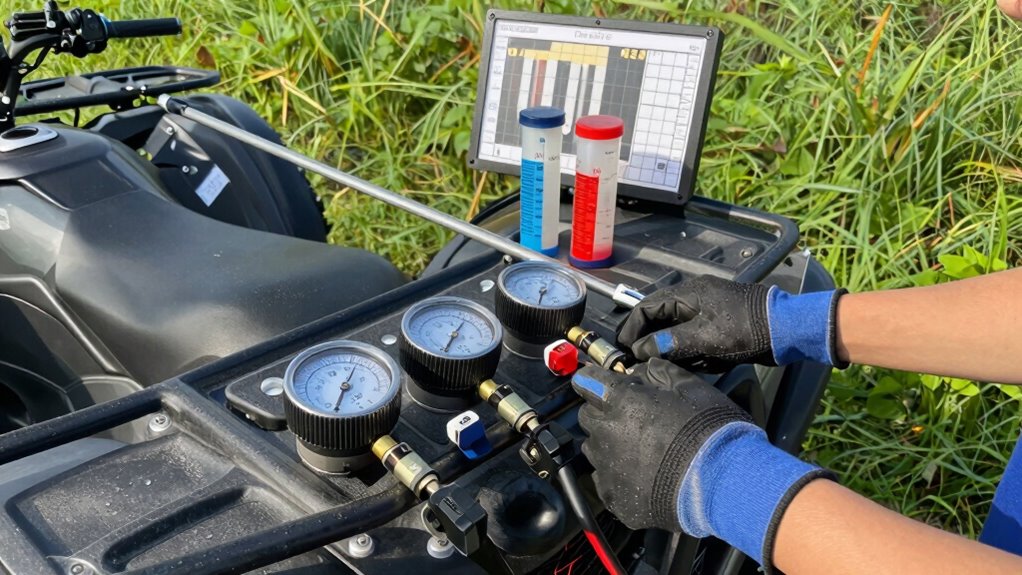
Maintaining accurate calibration over time requires regular attention and proactive adjustments. To guarantee consistent spray results, you should focus on sensor maintenance and adjusting calibration frequency as needed.
Here are three tips to help you stay on track:
- Regularly inspect and clean sensors to prevent buildup that could affect calibration accuracy.
- Adjust calibration frequency based on usage; more frequent spraying may require more frequent calibrations.
- Keep a calibration log to track changes over time, helping you identify when recalibration is necessary before issues arise.
Final Checklist to Ensure Your ATV Sprayer Is Ready
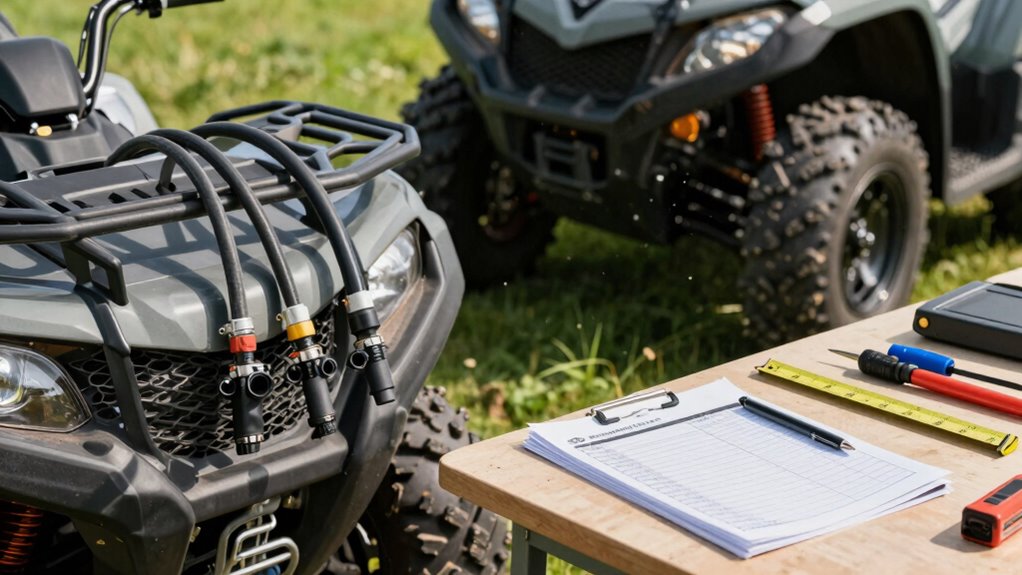
Before heading out for your spraying session, it’s vital to go through a final checklist to guarantee everything is in top condition. First, inspect your equipment safety by checking hoses, nozzles, and connections for leaks or damage. Confirm that the sprayer is clean and free of clogs to ensure proper application. Review your calibration documentation to verify you’ve set the correct flow rates and coverage. Make sure your spray tank is filled to the appropriate level and that all controls are functioning smoothly. Double-check that safety gear is available and in good condition. Lastly, confirm your calibration records are up to date, so you can track performance over time. This quick but thorough check helps prevent misapplication and ensures your sprayer operates safely and accurately.
Frequently Asked Questions
How Often Should I Recalibrate My ATV Sprayer?
You should recalibrate your ATV sprayer at least once a season or after any significant maintenance. Regular calibration ensures accuracy and efficient application. When recalibrating, use proper calibration tools to measure your spray output precisely. If you notice inconsistent coverage or changes in spray patterns, perform calibration immediately. Following a maintenance schedule that includes calibration checks helps keep your sprayer functioning correctly and prevents wastage of chemicals or uneven application.
What Safety Precautions Should I Take During Calibration?
Think of calibration like tuning a musical instrument—you want everything precise. During calibration, you should wear proper personal protective equipment, including gloves, goggles, and a mask, to prevent chemical exposure. Always have emergency procedures in place, like knowing how to quickly rinse chemicals from your skin or eyes. Stay alert, follow safety guidelines, and never bypass protective gear; your safety is the key to accurate, safe calibration.
Can Calibration Be Affected by Changes in Temperature or Humidity?
Yes, calibration can be affected by temperature effects and humidity influence. When temperatures rise or fall, your spray pressure and flow rate may change, leading to inaccurate calibration. High humidity can cause water vapor to affect solution measurements, impacting spray volume. You should calibrate your ATV sprayer under consistent weather conditions whenever possible, and be aware that changing temperatures and humidity can alter spray accuracy.
What Are Common Signs of a Miscalibrated ATV Sprayer?
You’ll notice signs of a miscalibrated ATV sprayer if it leaks excessively or if the spray pattern shows uneven coverage. Leaks waste product and indicate connection issues, while uneven coverage results in inconsistent application of chemicals. These signs suggest you should recheck your calibration. Regularly inspecting your sprayer helps catch problems early, ensuring efficient operation and effective treatment of your target area.
Is Professional Calibration Necessary for Small-Scale Spraying Tasks?
You don’t necessarily need professional calibration for small-scale spraying tasks. With DIY adjustments and calibration tools, you can accurately set your ATV sprayer to guarantee proper application. Proper calibration helps you avoid waste, prevent over-application, and achieve even coverage. Investing a little time in calibration ensures your sprayer operates efficiently, saves resources, and delivers effective results. If you’re comfortable with basic tools, you can handle calibration yourself without needing a professional.
Conclusion
Now that you’ve mastered the no-guesswork method, your ATV sprayer will work like clockwork—precision at your fingertips. Think of calibration as tuning an instrument; a small adjustment guarantees perfect harmony in every spray. Keep your tools handy, stay diligent with your tests, and troubleshoot promptly. With this approach, you’ll turn a once-daunting task into effortless confidence—your secret weapon for a flawless, efficient spray every time.