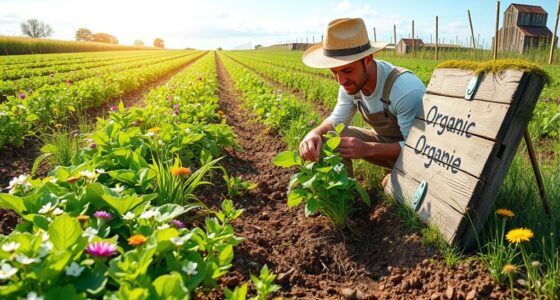
To build soil organic matter, incorporate compost, biochar, and manure into your soil. Compost provides nutrient-rich organic material that supports microbial activity and improves soil structure. Biochar adds stable carbon, boosts water retention, and creates habitat for beneficial microbes. manure supplies nutrients, organic matter, and microbes that enhance soil stability and fertility. Using these inputs consistently helps create resilient, healthy soil. If you want to discover effective ways to optimize your soil building efforts, keep exploring.

Get garden gear delivered free with Prime
- Fast, free delivery on millions of items
- Prime Video, Amazon Music and more included
- Member-only deals all year
Key Takeaways
- Compost enriches soil with decomposed organic matter, improving structure, water retention, and nutrient availability.
- Biochar adds stable carbon, enhances nutrient retention, and provides habitat for beneficial microbes.
- Manure supplies nutrients, organic matter, and microbial diversity, boosting soil fertility and stability.
- Combining compost, biochar, and manure creates a resilient, nutrient-rich soil environment supporting microbial activity.
- Proper management, such as composting manure, maximizes benefits and prevents soil contamination.

Have you ever wondered how to improve your soil’s health and productivity? Building soil organic matter is essential for fostering a thriving garden or farm, and understanding the role of soil carbon and organic inputs can make a noteworthy difference. When you add compost, biochar, or manure, you’re not just providing nutrients; you’re enhancing the very structure of your soil, boosting its capacity to hold water, and encouraging beneficial microbial activity. The key to healthy soil is increasing its organic matter content, which directly influences soil carbon levels. Organic inputs serve as the foundation for this process, supplying the raw materials that microbes break down and convert into stable organic matter.
Compost is one of the most accessible and effective organic inputs you can incorporate into your soil. It’s rich in decomposed plant material, kitchen scraps, and other organic waste, which together create a nutrient-dense, carbon-rich amendment. When you apply compost, you’re adding organic matter that feeds soil microbes, helping them thrive and perform essential functions. As microbes process these inputs, they release nutrients in forms your plants can absorb, while also building soil organic matter and increasing soil carbon levels. This process improves soil structure, enhances aeration, and facilitates better water retention, making your soil more resilient and productive over time.
Biochar is another powerful organic input that can markedly build soil organic matter. It’s created through pyrolysis, a process that heats organic material in low-oxygen conditions, producing a stable form of carbon that lasts in the soil for hundreds to thousands of years. When you mix biochar into your soil, it acts like a sponge, enhancing its ability to retain water and nutrients. More importantly, biochar provides a habitat for beneficial microbes, fostering a healthy soil ecosystem. Its highly porous structure helps increase soil carbon, which is fundamental for maintaining long-term soil fertility. Adding biochar is an excellent way to sequester carbon and improve soil health simultaneously.
Manure is another organic input that has been used for centuries to enrich soil. Well-composted manure supplies essential nutrients, organic matter, and microbes that support soil health. When you incorporate manure into your soil, you’re not only boosting nutrient levels but also increasing soil carbon. This organic input helps improve soil structure, enhances microbial diversity, and promotes the formation of stable soil organic matter. Just be sure to use properly composted manure to avoid introducing pathogens and excessive nutrients that could harm your plants or disrupt the soil balance.
As an affiliate, we earn on qualifying purchases.
Frequently Asked Questions
How Long Does It Take to See Improvements in Soil Organic Matter?
You can expect to see improvements in soil organic matter within a few months to a year, depending on your amendments and conditions. Timeframe expectations vary, but noticeable changes often show through increased soil fertility, better structure, and higher organic matter indicators like improved moisture retention. Consistent application of compost, biochar, or manure accelerates these benefits, so stay patient and monitor your soil’s response regularly.
Can Compost, Biochar, and Manure Be Used Together Effectively?
Yes, you can use compost, biochar, and manure together effectively. Their synergistic effects enhance soil health by improving nutrient retention and microbial activity. To maximize benefits, pay attention to application timing—adding compost and manure during planting and incorporating biochar beforehand allows each to work ideally. This combined approach boosts soil organic matter efficiently, leading to healthier, more productive plants over time.
What Are the Signs of Depleted Soil Organic Matter?
You notice your soil’s importance waning—plants struggle, growth stalls, and yields drop, revealing depleted organic matter. Signs include a soil pH imbalance, making nutrients less available, and visible nutrient deficiencies like yellowing leaves or poor fruiting. You might also see compaction or poor water retention. These signs indicate your soil needs organic matter replenishment, so adding compost, biochar, or manure can restore its health and fertility.
How Do Climate and Weather Affect Soil Organic Matter Buildup?
Climate variability and changing weather patterns directly impact soil organic matter buildup. You might find slower decomposition during droughts, reducing organic matter formation, while heavy rains can cause erosion, washing away nutrients. Wet, warm conditions promote microbial activity, boosting organic matter, but extreme weather can disrupt this balance. To maintain healthy soil, adapt practices to these climate and weather fluctuations, like adding compost or biochar to compensate for organic matter loss.
Are There Specific Crops That Benefit Most From Increased Organic Matter?
Oh, absolutely, some crops just can’t get enough of organic matter’s love! Legumes thrive on organic matter preferences, soaking up nutrients like sponges, while root vegetables like carrots and potatoes love loose, rich soil. These crops benefit most from increased organic matter because it improves soil structure and fertility. So, if you want your favorite crops to perform their best, boost that soil organic matter and watch them flourish!
Conclusion
By adding compost, biochar, and manure, you craft a richer, more resilient soil that’s ready for the challenges of tomorrow’s garden. Think of it as planting a seed for future abundance, much like the ancient farmers who fertilized their fields with natural materials. Keep nourishing your soil with these organic wonders, and you’ll be cultivating a thriving garden that’d make even a medieval peasant proud. Remember, your efforts today build the fertile grounds of tomorrow.
Halloween Picks
halloween
As an affiliate, we earn on qualifying purchases.