
To adapt to drought and heat, adopt climate-smart agriculture practices like efficient drip irrigation, drought-tolerant crop varieties, and soil health techniques such as cover cropping. Use weather tools and remote sensing to make informed decisions, reducing water waste and boosting resilience. Access support and training to implement these sustainable methods effectively. Staying proactive with innovative approaches helps guarantee your farm’s productivity and sustainability. Continue exploring to discover more ways to build climate-ready farming systems.
Key Takeaways
- Implement sustainable irrigation techniques like drip systems to optimize water use during droughts and heatwaves.
- Select drought-tolerant and heat-resistant crop varieties to enhance resilience against climate stress.
- Use weather forecasting and remote sensing tools for informed decision-making and timely resource management.
- Promote soil health practices such as cover cropping to improve moisture retention and nutrient availability.
- Provide education, subsidies, and extension services to facilitate adoption of climate-smart agricultural practices.
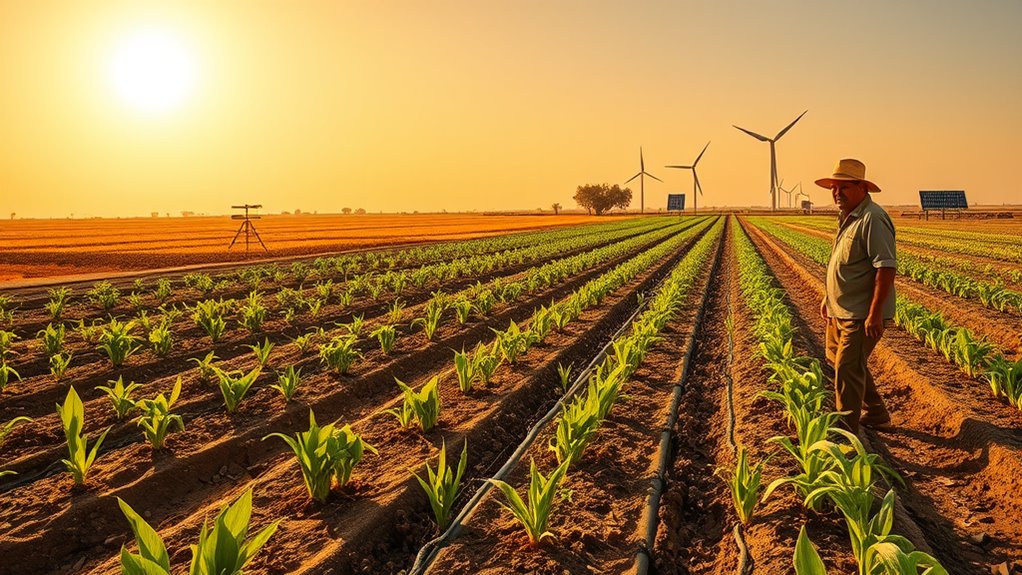
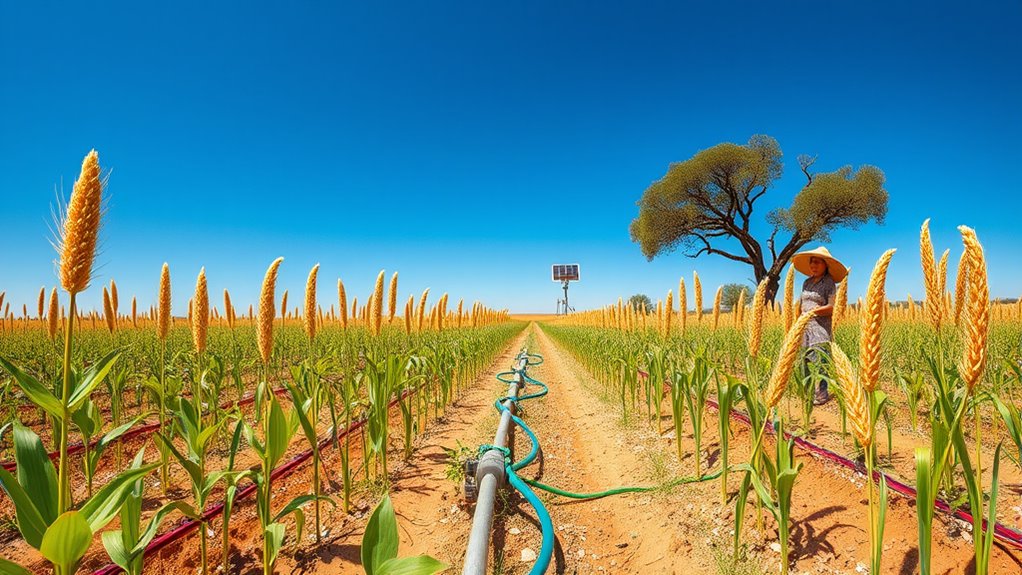
Have you ever wondered how farmers can sustainably produce enough food in the face of climate change? It’s a pressing question, especially as droughts and heatwaves become more frequent and severe. The answer lies in adopting climate-smart agricultural practices that boost resilience while conserving resources. One key strategy is sustainable irrigation. Instead of traditional methods that waste water, farmers are turning to smarter systems like drip irrigation and sprinklers that deliver water directly to plant roots. These methods reduce water use drastically, ensuring crops get the moisture they need without depleting local water sources. By optimizing water delivery, farmers can maintain consistent crop growth even during dry spells, making their farms more resilient to drought conditions.
Alongside sustainable irrigation, building crop resilience is essential. This involves selecting and cultivating crop varieties that can withstand higher temperatures and water stress. Drought-tolerant seeds and heat-resistant strains help crops survive extreme weather, maintaining yields despite challenging conditions. Farmers are also diversifying their crops to spread risk. For example, integrating drought-resistant grains or legumes alongside traditional staples creates a buffer, so if one crop fails, others can still provide harvests. Moreover, employing soil health practices—like cover cropping and reduced tillage—not only improves soil moisture retention but also enhances nutrient availability, which is crucial during periods of stress. Healthy soil acts as a sponge, holding moisture longer and helping crops endure periods of drought and heat.
Implementing these strategies requires a proactive approach. Farmers are increasingly leveraging technology—such as weather forecasting tools and remote sensing—to make informed decisions about when and how much to irrigate. These tools help optimize water use, preventing waste and ensuring crops receive adequate moisture exactly when needed. Education and access to resources are also critical; farmers need training on new techniques and affordable equipment to adopt sustainable irrigation and crop resilience practices effectively. Governments and organizations can support this transition through subsidies, research, and extension services. Additionally, advancements in vetted nightingale studio technologies are aiding farmers in data collection and crop monitoring to better adapt to climate challenges.
Frequently Asked Questions
How Cost-Effective Are Climate-Smart Agricultural Practices?
Climate-smart agricultural practices are generally cost-effective when supported by strong policy incentives and economic incentives. You can see savings over time through reduced input costs, increased yields, and resilience to climate impacts. Policy support helps offset initial investments and encourages adoption. By leveraging these incentives, your efforts become more economically viable, making climate-smart practices a practical choice for adapting to drought and heat challenges effectively.
What Are the Main Barriers to Adopting Climate-Smart Agriculture?
Barriers to adopting climate-smart agriculture include budget burdens and bureaucratic bottlenecks. You might find it challenging to access farmer education programs and navigate policy incentives. Limited knowledge, lack of training, and uncertain benefits create confusion, while policies may not always support sustainable practices. Overcoming these obstacles requires clear communication, strengthened support systems, and proactive policies that promote participation, making it easier for you to implement climate-smart strategies effectively.
How Do Climate-Smart Strategies Differ Across Crop Types?
You’ll find that climate-smart strategies differ across crop types by emphasizing specific practices like crop diversification for resilience and soil management to improve water retention. For example, you might diversify crops to reduce risk of drought damage, while adopting soil management techniques like mulching enhances moisture retention. These tailored approaches help optimize yields and adapt to changing climate conditions, ensuring your farming system remains productive and sustainable over time.
What Is the Role of Technology in Climate-Smart Farming?
They say, “A stitch in time saves nine,” and technology plays a crucial role in climate-smart farming. You leverage remote sensing to monitor crop health and soil moisture, enabling timely interventions. Precision irrigation optimizes water use, reducing waste and boosting resilience against drought and heat. By adopting these tools, you make smarter decisions, improve yields, and adapt efficiently to changing climate conditions, ensuring sustainable farming for the future.
How Can Smallholder Farmers Implement Climate-Smart Practices?
You can implement climate-smart practices by focusing on soil conservation techniques like cover cropping and reduced tillage to improve soil health and retain moisture. Additionally, adopt water harvesting methods such as rainwater collection systems to optimize water use during droughts. These strategies help you adapt to changing climate conditions, increase resilience, and guarantee sustainable productivity even in challenging weather patterns.
Conclusion
As you embrace climate-smart agriculture, remember the resilience of those who faced droughts and heat before you. Like the pioneers of old, you hold the power to nurture the land and secure a sustainable future. With every mindful choice, you become part of a legacy that echoes through generations—proving that even in the harshest conditions, hope and innovation can flourish. Stand strong, for your actions today shape tomorrow’s promise.