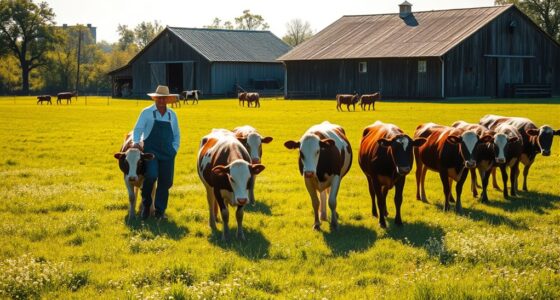
To guarantee your farm’s future, focus on honest conversations with your family about succession plans and estate management. Clarify who’s interested and capable of taking over, and use legal tools like wills and trusts to protect your assets. Promote ongoing education for successors and preserve your farm’s culture and traditions. Proper planning reduces conflicts and guarantees farm continuity. Exploring these strategies further will help you build a strong legacy that lasts for generations.
Key Takeaways
- Open family communication clarifies interests, investments, and readiness of successors, reducing conflicts and ensuring farm continuity.
- Establish clear estate plans using wills or trusts to define asset division and minimize legal disputes.
- Emphasize preserving farm heritage, traditions, and cultural values through succession discussions and education.
- Engage professionals for legal, tax, and estate planning to optimize asset protection and compliance.
- Provide hands-on training and mentorship to prepare successors for future farm management challenges.
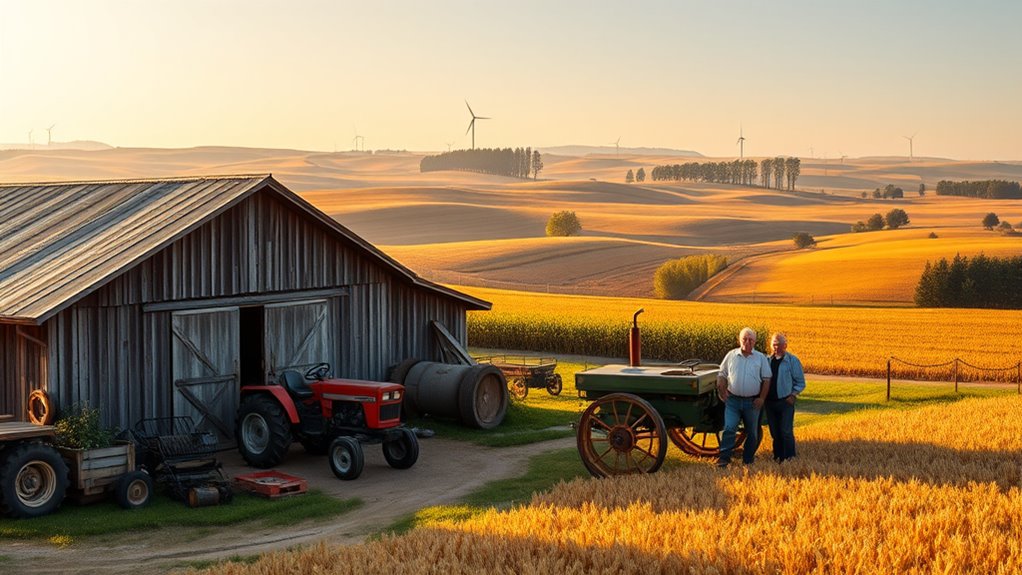
Planning for the future of your farm can be complex, but it’s essential to guarantee the longevity of your operation and preserve your legacy. One of the most important aspects of this planning involves ensuring a smooth generational transfer of your farm’s assets and knowledge. You want to pass down more than just land and equipment; you aim to safeguard your heritage preservation—your farm’s history, traditions, and values—so they continue to thrive through your successors. This process requires thoughtful preparation, open communication, and strategic decision-making to prevent conflicts and guarantee the farm remains sustainable.
Begin by having honest conversations with your family members about their interest and capability to take on the farm. Not everyone may want the responsibility, and that’s okay. Identifying who is genuinely invested helps you plan accordingly, whether that means training a successor or exploring alternative options. As you prepare for the transfer, consider establishing clear estate management plans that detail how assets are divided, how liabilities are handled, and how future costs will be managed. Such clarity minimizes disputes and guarantees your farm’s continuity.
Open honest family discussions to identify committed successors and create clear estate plans to ensure farm continuity.
Incorporating heritage preservation into your succession plan is crucial. Your farm isn’t just a business—it’s a legacy built on generations of hard work, traditions, and community ties. Highlight these aspects when discussing succession with your heirs, emphasizing the importance of maintaining the farm’s identity and core values. This approach helps ensure that the next generation respects and continues the farm’s unique culture, fostering a sense of pride and responsibility.
Legal and financial planning also plays a critical role. Establishing wills, trusts, or estate plans tailored to agricultural assets can provide tax advantages and protect the farm from potential legal issues. Engage professionals like estate planners and tax advisors who understand rural property laws and can help craft thorough plans. These measures help safeguard your farm’s assets and make the transition smoother for your heirs. Additionally, understanding GMC tuning techniques can be valuable in maintaining and improving farm equipment performance, ensuring operational efficiency.
Finally, don’t underestimate the power of education and mentorship. Preparing your successors through hands-on experience, mentorship, and ongoing training helps ensure they’re ready to face the challenges ahead. This proactive approach not only preserves your farm’s operational integrity but also strengthens the legacy you’ve built over the years. By thoughtfully planning for generational transfer and emphasizing heritage preservation, you set the stage for your farm’s continued prosperity and enduring legacy for generations to come.
Frequently Asked Questions
How Do I Choose the Right Successor for My Farm?
To select the right successor for your farm, you need to evaluate their farm leadership qualities and how well they handle succession challenges. Look for someone committed, knowledgeable, and willing to learn. Talk openly about expectations and responsibilities. Trust your instincts, but also consider their ability to adapt and lead. This way, you ensure your farm continues thriving under someone who genuinely cares and can navigate future challenges effectively.
What Are Common Legal Hurdles in Farm Estate Transfer?
You might find that steering land valuation and legal documentation can be tricky, as these are common hurdles in farm estate transfers. Ensuring accurate land valuation helps prevent disputes, while proper legal documentation safeguards your intentions. You’ll want to work closely with legal professionals to clarify ownership transfers, estate taxes, and inheritance laws. Addressing these issues early on smooths the process, making sure your farm’s future stays secure and your wishes are respected.
How Can I Minimize Estate Taxes on Farm Assets?
To minimize estate taxes on farm assets, you should utilize farm gift strategies and estate valuation techniques. By gifting portions of your farm during your lifetime, you can reduce the estate’s overall value and lower tax liability. Additionally, accurate estate valuation helps you identify opportunities for tax savings and proper estate planning. Consult with a financial advisor or estate planner to implement these strategies effectively and guarantee your farm’s legacy remains intact.
When Should I Start Estate Planning for My Farm?
You should start estate planning for your farm now, especially if you want to protect your farm’s land preservation and guarantee smooth transfer of farm financials. Early planning helps you identify tax strategies, set up trusts, and involve family members. The sooner you start, the better you can address potential issues, minimize taxes, and secure your farm’s future for generations to come.
What Are the Best Ways to Involve Family Members in Succession Planning?
Think of involving family members in succession planning like building a sturdy bridge—you need strong, clear connections. Start with open family communication, encouraging honest discussions about goals and expectations. Create a succession team with key family members and advisors to guide decision-making. Regular meetings foster trust and transparency, ensuring everyone feels heard and involved. This collaborative approach keeps the family united and sets a solid foundation for future farm success.
Conclusion
By planning your farm’s future, you’re planting seeds for generations to come. Think of your estate as the sturdy oak, rooted in strong decisions and clear visions. As you nurture this legacy, you guarantee it stands tall beyond your years, weathering life’s storms. Remember, your careful stewardship now becomes the guiding sun that helps the next harvest flourish. With thoughtful succession and estate management, you’re cultivating a lasting legacy that endures like the timeless trees on your land.