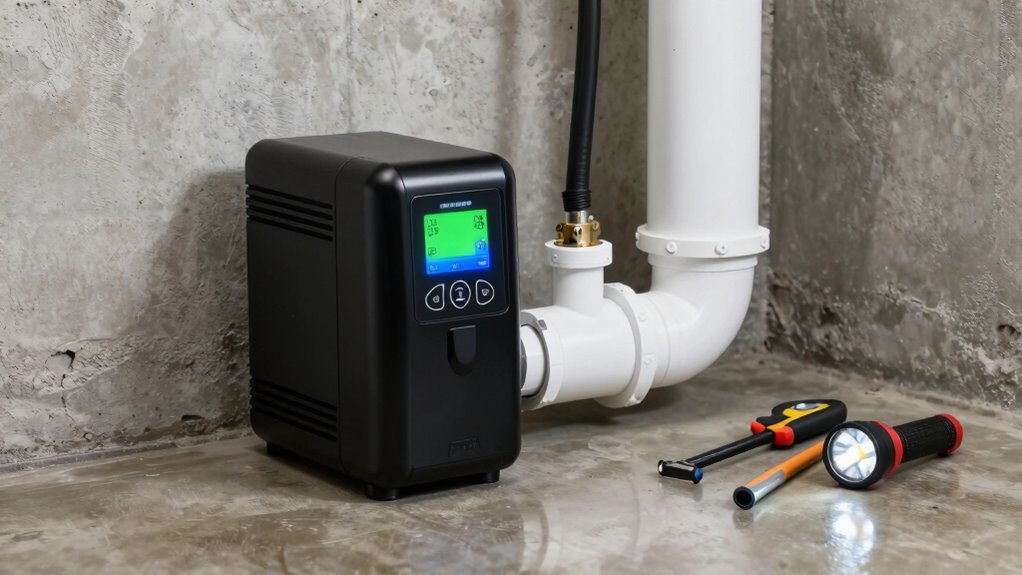

A sump pump battery backup system keeps water moving when a power outage disables your primary pump. My best overall pick is the Wayne WSS30VN, a preassembled primary-and-backup combo that suits buyers who want both pumps in one system; the Zoeller Aquanot 508 stands out for a dedicated backup setup, while the 2500W pure sine wave inverter systems offer flexible battery-based power for compatible pumps. The main choice is between an integrated pump-and-backup package and an inverter system that relies on your existing pump and a separate battery. Pump capacity, battery compatibility, transfer behavior, and monitoring matter as much as the wattage printed on the unit. Read on for the full breakdown of where each system fits and what to check before buying.

Get garden gear delivered free with Prime
- Fast, free delivery on millions of items
- Prime Video, Amazon Music and more included
- Member-only deals all year
Complete the kit


Key Takeaways
- Integrated combo systems such as the Wayne WSS30VN and Basement Watchdog CITS-50 pair primary and backup pumps, while inverter-only options such as the VEVOR models depend on a separately compatible pump.
- Inverter wattage is not a runtime guarantee: the VEVOR 1500W, 2000W, 2500W, and 3000W choices differ in rated output, but battery capacity, pump startup demand, and cycling determine how long backup operation lasts.
- Battery inclusion and compatibility vary: several inverter systems explicitly require a separate battery, so buyers need to account for battery type, capacity, charging needs, and installation space.
- Monitoring separates feature-rich pump systems: the Basement Watchdog CITE-33 has a monitoring controller, and the Special CONNECT adds Wi-Fi capability through an add-on module; these features may be less useful to buyers who only need local alerts.
- The right pick depends on the existing setup: preassembled combos favor a unified replacement or installation, while standalone backup pumps and inverter systems can make more sense when the primary pump is already in place and compatible.


More Details on Our Top Picks
Wayne WSS30VN Preassembled Primary & Battery Backup Sump Pump Combo System
The WSS30VN combines a primary pump and battery backup in one preassembled unit, making it a practical choice for buyers replacing an existing setup or outfitting a basement from scratch. Its stated capacity of up to 5,100 GPH gives the primary pump substantial water-moving capability, while the top-suction design helps limit clogging and avoids the need for a weep hole. Compared with the separate inverter systems here, such as the 2500W Pure Sine Wave Inverter Charger, this Wayne is a more integrated pump-focused package rather than a general-purpose power source. The tradeoff is less flexibility: you must supply a compatible deep-cycle battery, and the unit weighs 44 pounds. I’d choose it for a coordinated pump-and-backup installation, but skip it if you only need backup power for a pump you already own.
Pros:- Combines primary pumping and battery backup in one preassembled system.
- Primary pump is rated for up to 5,100 GPH.
- Top-suction design helps reduce clogging and removes the need for a weep hole.
- Tested for one million cycles, according to the product information.
Cons:- Requires a separately purchased 40 Ah or 75 Ah deep-cycle battery.
- At 44 pounds, the assembly can be awkward to position in a sump basin.
- Less adaptable than a standalone inverter if the buyer wants to keep an existing primary pump.
Best for: Homeowners installing or replacing an indoor sump setup who want a preassembled primary-and-backup combination and can provide a compatible deep-cycle battery.
Not ideal for: Owners who only need an inverter for an existing pump, or anyone unable to handle a 44-pound assembly during installation.
- Model:WSS30VN
- Primary pump power:0.5 HP
- Flow rate:Up to 5,100 GPH (85 GPM)
- Backup voltage:12 V
- Battery requirement:40 Ah or 75 Ah deep-cycle battery; not included
- Dimensions:13.5 x 9 x 15.5 inches
- Weight:44 lb
- Warranty:3 years
Our verdict“Choose the WSS30VN if you want a preassembled primary-and-backup pump package; choose a standalone inverter instead if you already have a pump to protect.”
2500W Sump Pump Battery Backup System with Pure Sine Wave Inverter Charger, 25A Fast Charging, Auto Transfer Switch, LCD Remote, 12V Deep Cycle Compatible
This system suits buyers who want backup power beyond a dedicated sump-pump unit. Its 2500W pure sine wave output, three AC outlets, and USB and Type-C ports can support a sump pump alongside selected essential devices, while automatic transfer handles a grid outage without requiring a manual changeover. The 25A multi-stage charger is a stronger charging provision than the VEVOR 1500W models listed here, though actual runtime still depends on the separately purchased battery and the connected load. An LCD remote makes system status easier to monitor without standing beside the inverter. Unlike the Wayne WSS30VN, this is not a pump-and-primary combo; it relies on your existing pump and installation. Its 12-month warranty and missing battery make it a less turnkey choice.
Pros:- 2500W pure sine wave output supports a broader load range than the 1500W VEVOR units.
- Automatic transfer switches to battery power during a grid outage.
- 25A multi-stage charging provides a comparatively high charging rate.
- LCD remote and multiple AC, USB, and Type-C connections aid monitoring and device flexibility.
Cons:- Battery is not included, so backup runtime depends on a separate battery purchase.
- The 12-month warranty is shorter than the three-year warranty listed for the Wayne WSS30VN.
- It does not include a primary pump, unlike the WSS30VN combo system.
Best for: Homeowners with an existing sump pump who want a higher-output inverter, automatic outage transfer, and the option to power a few other essential devices.
Not ideal for: Buyers seeking a complete pump-and-backup assembly, or those who do not want to select and purchase a compatible 12V deep-cycle battery.
- Continuous output:2500 W
- Peak output:5000 W
- Waveform:Pure sine wave
- AC output:120 V
- Battery compatibility:12 V deep-cycle battery; not included
- Charging current:25 A
- Connections:3 AC outlets, USB, and Type-C
- Standby efficiency:91%
- Warranty:12 months
Our verdict“Pick this inverter if your existing pump needs high-output, automatically switched backup and you value extra outlets; skip it if you want an all-in-one pump system.”
VEVOR 1500W Sump Pump Battery Backup System with LCD Display and Auto Switch to Battery Inverter Power (Battery Not Included)
The standout here is battery compatibility: this 1500W inverter supports 12V lead-acid, AGM, gel, and LiFePO4 batteries, giving owners more choice than a system tied to one battery type. Its plug-and-play connection and LCD status screen make it approachable for someone backing up an existing pump without adding a primary-pump assembly. Built-in electrical and temperature protections add useful safeguards, but the listed output is lower than the 2500W inverter in this roundup, so buyers should match it carefully to their pump’s running and startup demands. Compared with the other VEVOR 1500W model, this version specifies three-stage charging and a wider range of battery chemistries; the other lists dual outlets and a 20A charging current. The battery remains an extra purchase, and it is limited to 12V systems.
Pros:- Supports four listed 12V battery chemistries, including LiFePO4.
- Pure sine wave output is suited to pump and other sensitive electrical loads.
- Plug-and-play setup avoids complex wiring.
- LCD display reports voltage, battery level, and operating status.
Cons:- Battery is not included.
- 1500W output is lower than the 2500W inverter option in this roundup.
- Limited to 12V batteries, so it will not suit other battery-system voltages.
Best for: Owners of a compatible pump who want a plug-in backup inverter and flexibility to use an existing 12V lead-acid, AGM, gel, or LiFePO4 battery.
Not ideal for: Buyers with a pump whose power demands exceed the stated 1500W output, or anyone using a battery system other than 12V.
- Power output:1500 W, pure sine wave
- Compatible pump size:Up to 3/4 HP
- Battery voltage:12 V
- Battery compatibility:Lead-acid, AGM, gel, and LiFePO4
- Charging:Three-stage: bulk, absorption, and float
- Display:LCD screen with LED indicators
- Connections:AC outlet and USB port
- Protection features:Overcurrent, overvoltage, short circuit, reverse polarity, and high temperature
Our verdict“Choose this VEVOR if battery-chemistry flexibility matters more than the higher output of the 2500W inverter, and first check your pump’s power requirements.”
VEVOR 1500W Sump Pump Battery Backup System with Auto Switch, Pure Sine Wave, LCD Display
For a setup that needs two pump connections, this VEVOR offers dual outlets and automatic battery switchover in a compact inverter format. Its 1500W continuous and 3000W peak ratings provide a clear distinction between ordinary output and short-duration peak capacity, while the 20A charging current gives it a stated charging advantage over the other VEVOR 1500W model, which does not list a charging-current figure. The LCD reports voltage, power, and battery status, helping owners keep an eye on the backup system. That second outlet is useful, but it does not raise the inverter’s total capacity: two connected pumps still share its available output. Unlike the 2500W inverter, this model provides less continuous power, and the battery is not included.
Pros:- Two outlets allow connection of two pumps, subject to the inverter’s total capacity.
- 1500W continuous output and 3000W peak output are specified.
- 20A maximum charging current is listed.
- LCD monitoring displays voltage, power, and battery status.
Cons:- Battery is not included.
- 1500W continuous output is below the 2500W inverter option.
- At 9.7 pounds, it may need a sturdy mounting or placement surface.
Best for: Homeowners with two compatible pump connections who want automatic transfer, status monitoring, and a stated 20A charging rate in a standalone backup inverter.
Not ideal for: Buyers whose combined pump load may exceed 1500W, or anyone expecting the two outlets to provide separate full-power capacity.
- Continuous output:1500 W
- Peak output:3000 W
- Waveform:Pure sine wave
- Input voltage:130 V AC
- Output voltage:120 V AC
- Outlets:2
- Maximum charging current:20 A
- Dimensions:16.54 x 7.6 x 5.71 inches
- Weight:9.7 lb
Our verdict“Choose this model when two pump connections and a stated 20A charging rate matter, but confirm the combined load stays within its 1500W continuous output.”
Wayne ESP25n 12 Volt Battery Backup Sump Pump – Up to 2,700 GPH – Heavy Duty Basement Pump (Battery Not Included)
The ESP25n is a dedicated 12V backup pump, not an inverter for your existing AC pump. That distinction makes it a better fit for buyers who want a separate pump to take over during an outage, with a listed flow rate of up to 2,700 GPH and an audible alarm and LED display for system status. Its cast-iron base and epoxy-coated steel housing offer a sturdier construction story than the inverter-only options, which do not include a pump. Against the Wayne WSS30VN, this model focuses on backup pumping alone rather than combining a primary pump and backup in one assembly. It also needs a specific 75 Ah battery, sold separately, and is intended for indoor use. Check basin fit as well: the product calls for a sump basin of 14 inches or larger.
Pros:- Dedicated battery-powered pump provides backup pumping rather than merely powering an existing AC pump.
- Rated for up to 45 GPM (2,700 GPH).
- LED display and audible alarm provide system alerts.
- Cast-iron base and epoxy-coated steel housing are specified.
Cons:- Requires a separate Wayne WSB1275 75 Ah battery.
- Indoor use only limits placement options.
- Requires a sump basin of 14 inches or larger.
Best for: Homeowners with an existing primary sump pump who want a separate indoor 12V backup pump with audible and visual status alerts.
Not ideal for: Buyers who want the primary pump included, need outdoor placement, or do not want to source the specified 75 Ah battery.
- Pump voltage:12 V
- Flow rate:Up to 45 GPM (2,700 GPH)
- Maximum lifting height:10 ft
- Required battery:Wayne WSB1275, 75 Ah; not included
- Construction:Cast-iron base with epoxy-coated steel housing and thermoplastic impeller
- Basin requirement:14 inches or larger
- Dimensions:17 x 10.5 x 14 inches
- Weight:13.5 lb
Our verdict“Choose the ESP25n if you want a separate battery-powered backup pump beside your existing primary unit, not a combo system or inverter.”
Basement Watchdog CITS-50 Combo Preassembled Primary & Battery Backup Sump Pump System
I’d choose the CITS-50 when a basement needs a complete primary-and-backup setup with strong normal-power pumping and clear system alerts. Its 1/2 HP copper-wound PSC motor moves up to 4,400 GPH at zero lift, while the preassembled, preplumbed format cuts down on setup work compared with a separate inverter system such as the VEVOR 2500W. The controller monitors pump, power, and battery conditions, but live Wi-Fi notifications require a separately purchased CONNECT module. During an outage, the backup pump’s 2,890 GPH rating is lower than the primary’s capacity, so buyers should match it to their water-inflow risk rather than assume equal performance on battery. I’d favor this combo over the smaller Basement Watchdog CITE-33 for higher primary-pump capacity, while accepting its larger footprint and 12-volt battery requirement.
Pros:- Preassembled and preplumbed design can simplify installation.
- 1/2 HP copper-wound PSC motor provides up to 4,400 GPH at zero lift.
- Controller monitors pump, power, and battery conditions with alarms and warning lights.
- Cast-iron primary pump construction.
Cons:- Real-time Wi-Fi notifications require a separately purchased CONNECT module.
- Backup flow is lower than primary flow, at 2,890 GPH versus 4,400 GPH at zero lift.
- The 18-inch height and 11.75-inch width may not suit every sump pit.
Best for: Homeowners who want a preplumbed primary-and-battery-backup combo, high normal-power pumping capacity, and built-in system monitoring.
Not ideal for: Buyers seeking Wi-Fi alerts without an add-on, a compact setup for a tight sump pit, or battery backup with the same pumping capacity as the primary pump.
- Model:CITS-50
- Primary motor:1/2 HP copper-wound PSC
- Primary flow rate:73 GPM (4,400 GPH) at 0 ft lift
- Backup flow rate:48 GPM (2,890 GPH) at 0 ft lift
- Maximum lifting height:25 ft
- Power source:AC and 12 VDC battery
- Primary material:Cast iron
- Dimensions:8.75 x 11.75 x 18 in
Our verdict“Choose the CITS-50 for a high-capacity, preassembled combo with system alerts, provided its battery-mode output and footprint fit your needs.”
Cantonape 2000W Sump Pump Backup Battery System – Pure Sine Wave Output
The Cantonape 2000W is a flexible inverter-and-charger option for someone who already has a compatible 12-volt battery or wants to choose one separately. Its pure sine wave output is suited to pump motors, and three AC outlets allow more than one device to be connected, unlike a dedicated pump assembly such as the Zoeller Aquanot 508. The built-in 20A charger and voltage display add useful charging and status information without requiring a preassembled primary pump. That flexibility comes with more responsibility: the battery is not included, and the listing does not specify pump flow or a supported dual-pump configuration. Compared with the higher-output VEVOR 2500W, this unit has less stated wattage, so I’d treat it as a practical single-pump power source rather than a choice for heavier combined loads.
Pros:- Pure sine wave output is designed to run resistive and inductive loads such as pump motors.
- Built-in 20A charger supports faster battery charging.
- Three AC outlets provide flexibility for compatible connected equipment.
- LED display and multiple electrical safeguards provide operating information and protection.
Cons:- A compatible 12-volt battery is required and not included.
- No pump flow capacity or specific dual-pump support is listed.
- Its 2,000W output is below the VEVOR 2500W option’s stated output.
Best for: DIY homeowners who need a pure-sine-wave inverter backup, already own or plan to select a 12-volt battery, and want multiple AC outlets.
Not ideal for: Buyers who want a complete pump-and-battery package, a dedicated backup pump with stated flow rates, or support for demanding dual-pump loads.
- Power output:2,000 W
- Waveform:Pure sine wave
- AC outlets:3
- Built-in charger:20 A
- Display:LED voltage display
- Required battery:12 V GEL, AGM/SLA, or flooded battery; not included
- Cooling:Built-in cooling fan
- Safety protections:Overheat, short circuit, low voltage, overcharge, and overload
Our verdict“Pick the Cantonape if you want a configurable pure-sine-wave backup for a compatible pump and can supply the battery yourself.”
Zoeller Aquanot 508 Battery Backup System
The Zoeller Aquanot 508 suits buyers who want a dedicated 12-volt backup pump rather than an inverter that supplies AC power to a primary pump. Its integrated check valve helps limit backflow, while the quick-disconnect discharge is intended to make maintenance easier. Non-corrosive construction, an aluminum seal pocket, and a cooling plate point to a pump-focused build, unlike the Cantonape 2000W, which offers a charger, display, and multiple outlets but depends on a separate pump. The tradeoff is limited published performance detail: the provided specifications don’t include flow rate, lift capacity, or battery runtime, making it harder to judge fit against water-inflow demands. I’d favor this over a general-purpose inverter when a dedicated backup pump is the priority, but the Basement Watchdog CITE-33 gives more explicit capacity information for comparison.
Pros:- Dedicated 12-volt backup pump avoids relying on an inverter to power the primary pump.
- Non-corrosive construction is intended for durability in sump applications.
- Integrated check valve helps prevent water from flowing back through the discharge.
- Quick-disconnect discharge can simplify service access.
Cons:- Provided product data does not state flow rate, maximum lift, or runtime.
- The listing does not specify battery compatibility or include battery details.
- Offers fewer described monitoring features than the Basement Watchdog CITE-33 controller.
Best for: Homeowners seeking a dedicated 12-volt backup pump with a check valve and quick-disconnect discharge for maintenance.
Not ideal for: Buyers who need published flow and lift figures to size a pump, or who want an inverter with multiple AC outlets and detailed battery monitoring.
- Voltage:12 V
- Pump type:Battery backup
- Construction:Non-corrosive
- Integrated check valve:Yes
- Discharge connection:Quick disconnect
- Seal pocket material:Aluminum
- Cooling plate:Included
- Manufacturing location:USA
Our verdict“Choose the Aquanot 508 if you want a dedicated backup pump and its published product details provide enough information for your installation.”
VEVOR 2500W Sump Pump Battery Backup System with LCD Display, Auto Switch to Battery Inverter Power, Pure Sine Wave (Battery Not Included)
For a setup that may need to power both a primary pump and a backup pump, the VEVOR 2500W offers the clearest stated capacity in this group: pure sine wave output rated for a 1 HP main plus 1/3 HP backup. Its three-stage charger supports several 12-volt battery chemistries, including LiFePO4, while the LCD reports voltage, battery level, and system status. That makes it more adaptable than the Cantonape 2000W, which lists lower output and fewer battery details. Quick plug-in installation may also appeal to buyers who prefer an inverter system over the preassembled pump plumbing of the Basement Watchdog CITS-50. This is still not a complete backup package: the battery is sold separately, and the inverter’s wattage rating does not establish how long a particular pump will run. Buyers need to size the battery and verify their pump loads.
Pros:- 2,500W pure sine wave output is specified for a 1 HP main pump and 1/3 HP backup pump.
- Three-stage charging supports 12 V lead-acid, AGM, Gel, and LiFePO4 batteries.
- LCD screen displays voltage, battery level, and status.
- Multiple safeguards include reverse-polarity, temperature, and circuit-breaker protection.
Cons:- Compatible 12-volt battery is not included.
- Runtime depends on the selected battery and pump load and is not specified.
- Unlike the Basement Watchdog CITS-50, it is not described as a preassembled primary-and-backup pump combo.
Best for: Homeowners with a dual-pump arrangement who want a higher-output pure-sine-wave inverter, broad 12-volt battery compatibility, and on-unit status information.
Not ideal for: Buyers who want the battery included, a fully preassembled pump-and-controller system, or a stated runtime without doing battery and load calculations.
- Power output:2,500 W
- Waveform:Pure sine wave
- Pump support:1 HP main pump plus 1/3 HP backup pump
- Battery compatibility:12 V lead-acid, AGM, Gel, and LiFePO4
- Charging:Three-stage: Bulk, Absorption, Float
- Display:LCD screen with LED indicators
- Connections:USB port and AC outlet
- Safety protections:Overcurrent, overvoltage, short circuit, reverse polarity, high temperature, and circuit breaker
Our verdict“Choose the VEVOR 2500W for a compatible dual-pump setup when you can supply and size the battery separately.”
Basement Watchdog CITE-33 Preassembled Primary & Battery Backup Sump Pump System with Monitoring Controller
The Basement Watchdog CITE-33 earns its place for installations where pit size matters: it is specified for pits as small as 12 inches and arrives preassembled and preplumbed. Its 1/3 HP copper-wound PSC primary pump delivers up to 62 GPM at zero lift, with the controller monitoring operation through alarms and dual float switches. Compared with the larger CITS-50, it gives up primary flow capacity but takes a more compact approach; its backup is also rated lower than its primary, reaching 25 GPM at 10 feet. The system uses a specified Basement Watchdog BW-27AGM battery, so it offers less battery-selection flexibility than the VEVOR 2500W inverter, which accepts several battery types. I’d choose it for a tight pit and integrated monitoring, not for a high-inflow location that calls for greater backup capacity.
Pros:- Compact design is specified to fit sump pits as small as 12 inches.
- Preassembled and preplumbed format can reduce installation work.
- Controller includes alarms and dual float switches for system monitoring.
- Copper-wound PSC motor is designed for energy-efficient operation.
Cons:- Requires the specified Basement Watchdog BW-27AGM battery.
- Backup capacity falls below primary capacity, including 25 GPM at 10 feet versus 51 GPM for the primary.
- The 0.4A charger current is modest compared with the 20A Cantonape charger.
Best for: Homeowners with a sump pit at least 12 inches in diameter who want a preassembled combo and built-in monitoring.
Not ideal for: Buyers with high water-inflow demands, those seeking broad battery compatibility, or anyone who wants battery backup capacity comparable to the primary pump.
- Model:CITE-33
- Primary motor:1/3 HP copper-wound PSC
- Primary capacity:62 GPM at 0 ft lift; 51 GPM at 10 ft lift
- Backup capacity:42 GPM at 0 ft lift; 25 GPM at 10 ft lift
- Minimum pit diameter:12 in
- Charger current:0.4 A
- Battery compatibility:Basement Watchdog BW-27AGM
- System format:Preassembled and preplumbed primary-and-backup system
Our verdict“Pick the CITE-33 for a compact pit and monitored, preassembled backup system if its battery requirements and lower backup flow suit your home.”
VEVOR 3000W Sump Pump Battery Backup System with Pure Sine Wave Inverter and LCD Display
Among these inverter-based backups, this VEVOR gives buyers the most stated output capacity: 3000W continuous power with a 6000W peak rating. That headroom can suit a higher-demand pump or a setup with two pumps, and its two AC outlets make that arrangement more practical than the single-outlet VEVOR 2000W model. Pure sine wave output is designed for motor loads, while automatic transfer and the LCD help keep outage operation and battery status visible. The tradeoff is physical and financial: at 15.9 pounds, it is heavier than the 12-pound Basement Watchdog Special CONNECT pump, and it still needs a separately purchased 12V battery. I’d choose it for capacity, not for a compact or complete out-of-box system.
Pros:- 3000W rated output and 6000W peak capacity provide more stated headroom than the VEVOR 2000W model.
- Two outlets support a two-pump arrangement.
- Pure sine wave output is intended for pump motors and sensitive electronics.
- LCD display shows voltage and battery status.
Cons:- A compatible battery is required and sold separately.
- At 15.9 pounds, handling and mounting may be less convenient than lighter options.
- The supplied data does not state runtime; backup duration depends on the selected battery and pump load.
Best for: Homeowners running a higher-wattage sump pump or planning to connect two pumps who want inverter backup with a live status display.
Not ideal for: Buyers with a tight installation space, a low-power pump, or no separate budget and space for a compatible 12V battery.
- Peak power:6000W
- Output waveform:Pure sine wave
- Input voltage:12V DC
- Output:120V AC, 60Hz
- Outlets:2
- Maximum charging current:30A
- Dimensions and weight:14.88 x 7.68 x 3.78 in; 15.9 lb
- Safety certification:UL
Our verdict“Choose this VEVOR when output capacity and two outlets matter more than a lighter unit or an included battery.”
Basement Watchdog Special CONNECT Battery Backup Sump Pump System with Copper-Wound Motor, 2,890 GPH, Wi-Fi Capable (Add-on Module)
Unlike the VEVOR units, which are inverter systems that power a separate primary pump, the Basement Watchdog Special CONNECT includes its own backup pump, controller, charger, dual float switch, and battery box. Its compact 9-by-5-inch footprint is the main fit advantage for narrow pits where adding a larger pump is difficult. The included control panel and battery-fluid sensor also make it a more purpose-built sump backup than a general inverter, while Wi-Fi monitoring is available with an add-on module. The limits are equally specific: the stated lift height is 10 feet, and its listed flow falls to 1,730 GPH at that lift. It also requires a separate battery, and remote monitoring depends on the add-on. I’d favor it for tight installations, not for greater pumping headroom.
Pros:- Compact pump dimensions can fit narrow sump pits.
- Includes a dedicated backup pump, controller, charger, dual float switch, and battery box.
- Integrated sensor monitors battery fluid levels.
- Wi-Fi remote monitoring is available through an add-on module.
Cons:- Battery is sold separately.
- Maximum stated lifting height is 10 feet.
- Wi-Fi monitoring requires an additional module.
Best for: Homeowners with a narrow sump pit who want a dedicated backup pump, battery-fluid monitoring, and the option to add remote alerts.
Not ideal for: Homes needing backup pumping above a 10-foot lift, or buyers who want Wi-Fi monitoring without purchasing an add-on module.
- Flow rate:Up to 2,500 GPH at zero lift; 1,730 GPH at 10-foot lift
- Maximum lifting height:10 feet
- Motor:0.25 HP copper-wound motor
- Voltage:100V
- Pump materials:Copper-wound motor; thermoplastic housing
- Dimensions:9 x 5 x 7.63 in
- Weight:12 lb
- Battery:Sold separately; battery box included
- Monitoring:Control panel and battery-fluid sensor; Wi-Fi via add-on module
Our verdict“Pick the Special CONNECT when pit space and a dedicated backup pump matter more than lift capacity or built-in remote connectivity.”
VEVOR 2000W Sump Pump Battery Backup System with LCD Display, Auto Switch to Battery Inverter Power, Pure Sine Wave (Battery Not Included)
This VEVOR is the more restrained inverter pick in the lineup: its 2000W pure sine wave output is specified for pumps up to 1 HP, rather than the 3000W VEVOR’s higher output and dual outlets. For buyers whose pump fits that limit, the difference may mean avoiding an oversized unit while keeping automatic battery transfer and an LCD status display. Its practical advantage is battery compatibility: it supports 12V lead-acid, AGM, gel, and LiFePO4 batteries, with three-stage charging intended to manage charging across the cycle. A standard three-prong plug keeps connection simple. The tradeoffs are that the battery is not included and the unit may be bulky in a small basement setup. I’d choose it for battery flexibility; skip it if your pump exceeds the stated 1 HP limit.
Pros:- Pure sine wave output is specified for sump pumps up to 1 HP.
- Compatible with 12V lead-acid, AGM, gel, and LiFePO4 batteries.
- Three-stage charging supports bulk, absorption, and float phases.
- LCD and LED indicators display battery and operating status.
Cons:- Battery is not included and must be sourced separately.
- May take up substantial space in a small basement installation.
- Offers less stated output and fewer outlets than the VEVOR 3000W model.
Best for: Homeowners with a sump pump rated at 1 HP or less who want to choose among several 12V battery chemistries.
Not ideal for: Owners of pumps above 1 HP, or anyone seeking an included battery or a particularly compact installation.
- Output power:2000W pure sine wave
- Maximum pump capacity:Up to 1 HP
- Battery input:12V
- Battery compatibility:Lead-acid, AGM, gel, and LiFePO4
- AC outlet:Yes
- USB port:Yes
- Charging stages:3: bulk, absorption, float
- Plug type:Standard 3-prong
- Protections:Overcurrent, overvoltage, short circuit, reverse polarity, high temperature, and circuit breaker
Our verdict“Choose this model for a pump up to 1 HP and broad 12V battery compatibility, rather than the extra output of the VEVOR 3000W.”
2500 Watt Sump Pump Backup Battery System with Automatic Switching, Pure Sine Wave Output and LCD Remote Controller
The Viopumpo sits between the 2000W and 3000W VEVOR options on stated output, but its defining difference is the LCD remote controller, which displays voltage, power, and charge status away from the inverter itself. That can make routine checks easier when the unit is mounted out of sight. Its 25A built-in charger supports deep-cycle lithium and AGM batteries, and plug-and-play AC/DC connections plus optional wall mounting offer a straightforward installation path. Compared with the VEVOR 2000W, it provides more rated power; compared with the VEVOR 3000W, it has lower output and the supplied data does not list two outlets. The battery must be deep-cycle—non-deep-cycle batteries are expressly unsuitable—and the 12-month warranty is stated. I’d select it for remote monitoring, not broad battery compatibility.
Pros:- Remote LCD shows voltage, power, and charge status.
- 2500W pure sine wave output sits above the VEVOR 2000W model’s stated capacity.
- Built-in 25A charger supports deep-cycle lithium and AGM batteries.
- Plug-and-play connections and optional wall mounting offer flexible placement.
Cons:- Not compatible with non-deep-cycle batteries.
- Battery is not included.
- Its 2500W output is below the VEVOR 3000W system’s stated rating.
Best for: Homeowners who want to mount the backup unit out of the way and check battery and load status from an LCD remote.
Not ideal for: Buyers who need to use a non-deep-cycle battery, want a battery included, or need the highest stated output in this group.
- Output power:2500W
- Output waveform:Pure sine wave
- Battery voltage:12V
- Battery compatibility:Deep-cycle lithium and AGM
- Battery charger:Built-in 25A charger
- Monitoring:LCD remote controller
- Installation:Plug-and-play AC/DC connections; optional wall mounting
- Warranty:12 months
Our verdict“Choose the Viopumpo if remote status checks and deep-cycle lithium or AGM compatibility matter more than maximum output or flexible battery choice.”
1500W Sump Pump Battery Backup System – Pure Sine Wave Inverter Charger with 25A Fast Charging, Auto Transfer Switch, LCD Remote, 12V Deep Cycle Compatible
With 1500W output, this inverter is the lowest-capacity option in this batch, so I’d match it to a pump whose operating demand fits that rating rather than pay for the headroom of the VEVOR 2000W or 3000W units. It still brings the core backup functions: pure sine wave output, automatic transfer to a 12V battery, a 25A multi-stage charger, and an LCD remote for checking voltage, load, and mode. Its unusually broad port selection—three AC outlets plus USB and Type-C—is useful if the backup unit will also power small emergency devices. The listed battery choices include LiFePO4, AGM, gel, and flooded deep-cycle types, but the battery is not included. The product data also labels it solar and battery powered without detailing solar input specifications, so I would not choose it on solar capability alone.
Pros:- Pure sine wave output and automatic transfer support backup operation for a compatible pump.
- 25A multi-stage charger supports several deep-cycle battery types.
- LCD remote displays voltage, load, and operating mode.
- Three AC outlets, USB, and Type-C provide connections for additional devices.
Cons:- 1500W output is lower than the VEVOR 2000W and 3000W systems.
- Battery is not included.
- Solar input details are not provided, despite the listed solar-and-battery power source.
Best for: Owners of lower-demand sump pumps who want a 1500W backup unit with remote monitoring and ports for a few additional emergency devices.
Not ideal for: Buyers with pumps that need more than 1500W, or anyone expecting an included battery or clearly specified solar charging capability.
- Output power:1500W pure sine wave
- Charging current:25A multi-stage charger
- Battery voltage:12V
- Battery compatibility:LiFePO4, AGM, gel, and flooded deep-cycle
- Automatic transfer:Yes
- AC outlets:3
- Other ports:USB and Type-C
- Weight:500 g
- Warranty:12 months
Our verdict“Pick this model for a pump within its 1500W capacity when extra device ports matter; choose a higher-output option for more pump headroom.”

How We Picked
I ranked these sump pump battery backup systems by how well their design matches common basement needs, not by wattage alone. I weighed whether each option includes a primary pump, a backup pump, or only an inverter; how clearly the listed specifications address power conversion and automatic switching; and whether the system offers practical monitoring or a defined battery arrangement. I also considered the likely installation and maintenance burden, since a powerful inverter is less useful if it does not match the pump or battery a homeowner already owns.
The order gives priority to complete, clearly defined systems that can serve a broad set of buyers, followed by specialized pumps and inverter options that make sense for narrower setups. Models with higher rated inverter output are not automatically ranked higher: startup demand, battery capacity, and pump compatibility shape real backup performance. Where product names provide limited detail, I avoid assuming runtime, flow under a specific head height, included battery, or compatibility beyond the stated information.
Factors to Consider When Choosing Sump Pump Battery Backup System
Before choosing a model, separate the job you need it to do from the features that sound impressive on a listing. A backup system can be a second pump, an inverter that powers an existing pump, or a preassembled package combining primary and backup equipment. The best fit depends on your current sump setup, the likely outage duration, and how much installation and monitoring responsibility you want to take on.
Choose Between a Combo, Backup Pump, and Inverter
A combo system includes primary and backup pump components, which can simplify a new installation or a full replacement. A dedicated backup pump is a more targeted option when your primary pump already works and you want another pump to take over during an outage. An inverter system instead supplies battery power to a compatible pump, so it can suit an existing installation but requires careful electrical matching. A common mistake is buying an inverter by wattage alone without checking the pump’s running and startup requirements. Before shopping, identify what you already own and decide whether you want to replace, supplement, or power it.
Match Pump Capacity to Your Sump and Discharge Setup
A pump’s advertised flow figure does not tell the whole story because actual delivery changes with lift height, pipe size, bends, and discharge restrictions. Compare the pump’s performance information at a head height close to your installation, rather than treating a maximum gallons-per-hour figure as the expected result. A system that suits a shallow sump may not clear water fast enough in a basement with a high discharge lift or frequent inflow. Check that the backup discharge route will not freeze, clog, or send water back toward the foundation. If your water problem is severe, prioritize pump performance at your actual lift over extra inverter features.
Size the Battery for the Outage You Need to Cover
Runtime comes from the battery and pump workload, not from inverter wattage alone. A larger battery can provide more stored energy, but the pump’s power draw, cycling frequency, and conversion losses all affect how long it lasts. Estimate how often the pump runs during wet weather and decide whether you need coverage for brief outages or extended interruptions. Check whether the battery is included; several systems in this roundup specify that it is not. Avoid assuming that a battery advertised as compatible will provide a particular number of hours without a runtime estimate based on your pump and conditions.
Verify Startup Demand, Waveform, and Automatic Transfer
Pumps often need more power to start than they use while running, so confirm that the inverter can handle startup surge as well as continuous load. Pure sine wave output may suit sensitive or motor-driven equipment, but it does not replace checking the pump maker’s electrical requirements. Automatic transfer can move a compatible load to battery power when utility power fails, while a system without the right transfer arrangement may require another setup step. Confirm what the system switches, how the pump reconnects to normal power, and whether the installation needs a qualified electrician. These checks prevent a high-wattage unit from becoming an expensive mismatch.
Decide How Much Monitoring You Will Use
Monitoring features can help you spot a fault or power loss before water becomes visible, but their usefulness depends on how you respond to alerts. A local controller may be enough if you regularly check the basement, while Wi-Fi capability can help when you are away, provided the required module and home connectivity are in place. Ask what conditions the system reports, whether alerts require an add-on, and how it behaves during an internet outage. Do not treat remote monitoring as a substitute for a working pump, charged battery, or periodic inspection. Buyers who want a simpler setup may prefer a clear local alarm over connected features they will not maintain.
Plan Installation, Testing, and Maintenance
Measure the sump basin, check the discharge piping, and confirm that the pump and float can move freely before ordering a system. Battery backups need routine checks because an old, depleted, or disconnected battery can leave the pump without useful reserve power. Follow the manufacturer’s testing and replacement schedule, and verify that the backup activates when utility power is interrupted. A preassembled system can reduce the number of components to coordinate, but it still needs correct placement and plumbing. Leave enough room to reach the battery, controller, and pump for inspection instead of squeezing everything into an inaccessible corner.
Frequently Asked Questions
Should I buy a complete combo system or an inverter for my existing sump pump?
Choose a combo system if you are installing a new setup or want primary and backup pumps designed to work together. An inverter can be a better fit when your existing pump is reliable and its electrical requirements match the inverter’s output and transfer setup. Check startup surge, voltage, battery compatibility, and how the inverter connects before deciding. Also compare the work involved: a combo may mean changing pump and plumbing arrangements, while an inverter still requires battery selection and electrical setup. If you cannot confirm compatibility from the product and pump documentation, ask a qualified installer before buying.
How do I estimate how long a battery backup will run my pump?
Start with the battery’s usable capacity and the pump’s electrical draw, then account for inverter losses and how frequently the pump cycles. A pump that runs continuously will use stored energy much faster than one that activates briefly as water enters the pit. The inverter’s wattage rating alone does not state runtime, and a larger rating does not mean a longer backup period. Look for runtime data tied to a named battery and load, or calculate a conservative estimate using the battery and pump specifications. For a basement with frequent water inflow, plan around shorter runtime than a light-duty scenario suggests.
Is a higher-wattage inverter always the safer choice for a sump pump?
No. The inverter needs enough continuous output for the pump and enough surge capacity to start its motor, but a higher headline wattage does not guarantee the right startup performance or battery runtime. You also need the correct voltage, compatible transfer arrangement, and a battery that can supply the required current. Compare the pump’s electrical specifications with the inverter’s continuous and surge ratings, not just the model number. If two systems both meet those requirements, weigh battery flexibility, monitoring, and installation fit rather than choosing solely by the largest wattage figure.
Do I need Wi-Fi monitoring for a sump pump battery backup?
Wi-Fi monitoring can be useful if you travel or want alerts while away, but it is not required for the pump to provide backup power. Confirm whether remote reporting needs an add-on module, a working home network, or a separate service before treating it as part of the system. A local alarm or controller may be more practical if someone can check the basement and respond to alerts. Connected alerts also cannot fix a failed battery or blocked discharge line, so regular physical checks remain necessary. Choose remote monitoring for a specific response need, not simply because it is available.
What should I check before installing a battery backup in an existing sump pit?
Measure the pit and confirm that the backup pump, float switch, and piping can fit without obstructing the primary pump. Check the discharge route, check valve arrangement, power access, and whether the system’s control equipment needs a dry, reachable location. For inverter-based options, verify that your existing pump’s startup and running demands match the system and that the battery type is supported. Make a plan for battery access and routine testing before installation, since cramped placement makes maintenance less likely. When plumbing, wiring, or pump compatibility is uncertain, have a qualified installer review the setup.
Conclusion
For most buyers seeking one package, I would start with the Wayne WSS30VN as best overall because it combines primary and backup pumping. The VEVOR 1500W inverter systems are the best value-oriented starting point for buyers whose existing pump is compatible and who are comfortable sourcing a battery separately; compare the two listings closely before choosing. For a premium, feature-led choice, consider the Basement Watchdog Special CONNECT if its Wi-Fi capability through an add-on fits how you monitor your home. The Basement Watchdog CITE-33 is a strong beginner choice for buyers who favor a preassembled system with a monitoring controller. If you already have a dependable primary pump and want a dedicated backup pump, look at the Wayne ESP25n or Zoeller Aquanot 508; if your priority is higher inverter output, compare the VEVOR 2500W and 3000W models against your pump’s surge needs and battery plan. I would make the final choice only after matching the system to the sump, pump, battery, and outage you need to cover.
Halloween Picks
halloween
As an affiliate, we earn on qualifying purchases.