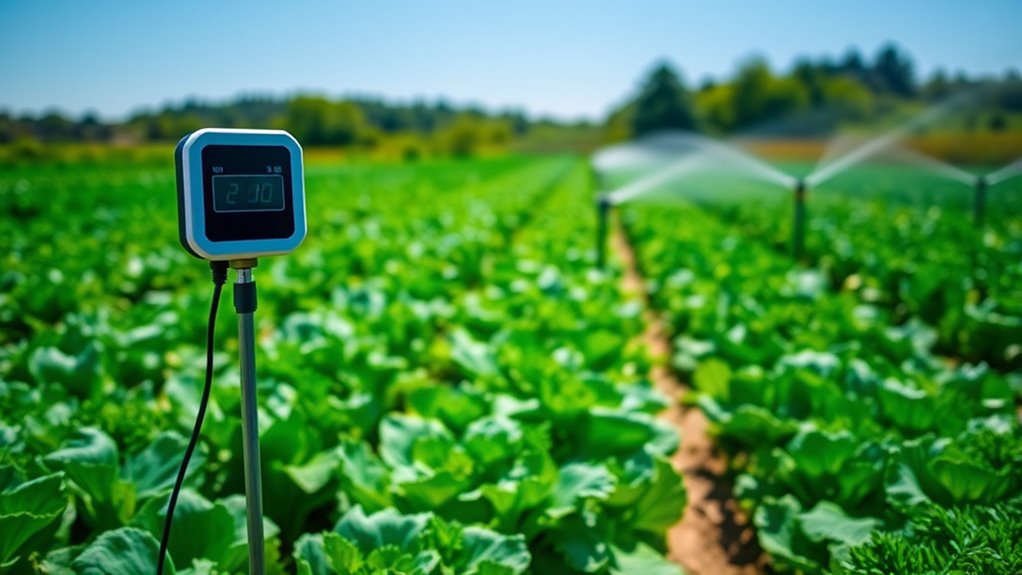
Smart irrigation systems use soil moisture sensors and weather data to automate watering, ensuring your plants get the right amount of water while conserving resources. They adjust schedules based on rain forecasts and soil conditions, preventing overwatering and runoff. With easy control options, you can monitor and fine-tune your system to boost plant health and save water. Keep exploring to discover how these smart solutions can transform your gardening or farming efforts.
Key Takeaways
- Sensors continuously monitor soil moisture levels to inform precise watering needs.
- Automation adjusts watering schedules based on real-time weather forecasts to conserve water.
- Smart systems activate irrigation only when soil is dry and no rain is predicted, preventing overwatering.
- Integration of sensors and automation reduces water waste, lowers bills, and promotes sustainable use.
- User-friendly interfaces enable easy management, tracking, and optimization of water consumption for healthier plants.

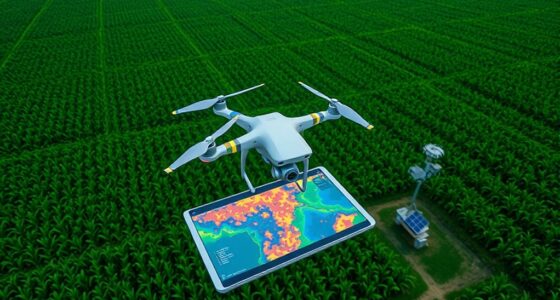
Smart irrigation systems are transforming the way we water our gardens and farms by using technology to enhance water use. They do this by continuously monitoring soil moisture levels and integrating weather forecasting data to determine the ideal watering schedule. When you install a smart system, sensors placed in the soil measure its moisture content in real-time, providing immediate feedback about when and how much water your plants need. This prevents overwatering, which can lead to root rot and nutrient runoff, and underwatering, which stresses plants and reduces yields. By combining soil moisture data with accurate weather forecasts, these systems can predict upcoming rain or dry spells, adjusting watering schedules accordingly. If rain is forecasted, the system might skip a scheduled watering to conserve water and prevent waterlogging. On sunny, dry days, it increases watering frequency to keep plants healthy. This smart integration ensures your garden or farm receives precisely what it needs, neither too much nor too little, enhancing plant health and productivity.
You’ll find that automation is a key feature of these systems, simplifying water management and reducing manual effort. Once you set your preferences and connect the system to your smartphone or control panel, it takes over. Sensors send real-time soil moisture readings to the central controller, which then calculates the most effective watering times based on current weather data. If the soil is moist enough or rain is expected soon, the system will hold off on watering. Conversely, if soil moisture drops below the desired threshold and no rain is forecasted, it will activate sprinklers or drip lines automatically. This automation not only saves you time but also ensures consistent watering, leading to healthier plants and better crop yields. Additionally, understanding hydraulics principles can help optimize system performance and efficiency.
Conservation is at the heart of smart irrigation systems. By precisely applying water only when necessary, you considerably reduce waste and lower your water bills. These systems help you adhere to sustainable practices, especially in areas facing water scarcity. They also promote environmental health by minimizing runoff and leaching of fertilizers. Over time, you’ll notice a reduction in water consumption without sacrificing plant vitality. Additionally, many systems come with user-friendly interfaces, allowing you to track your water usage and make adjustments easily. With these tools, you gain better control over your watering practices, making your gardening or farming efforts more eco-friendly and efficient. Ultimately, smart irrigation combines soil moisture sensors, weather forecasting, and automation to help you conserve water, improve plant health, and simplify your gardening experience.
Frequently Asked Questions
How Do Sensors Detect Soil Moisture Levels Accurately?
You can trust sensors to detect soil moisture levels accurately by ensuring proper sensor calibration. Regular calibration aligns the sensor’s readings with actual moisture content, enhancing data accuracy. When calibrated correctly, sensors respond precisely to changes in soil moisture, providing reliable data for your irrigation system. This way, you conserve water and avoid overwatering, making your irrigation smarter and more efficient.
What Are the Initial Costs of Installing Smart Irrigation Systems?
The initial costs of installing smart irrigation systems vary based on size and features, but you can expect installation expenses to range from a few hundred to several thousand dollars. You’ll need to budget for sensors, controllers, and setup, which can be an upfront investment. While these costs might seem high initially, they often lead to long-term savings through water conservation and efficiency improvements.
Can Automation Systems Be Customized for Specific Crops?
Yes, automation systems can be customized for specific crops. You can implement crop-specific automation to tailor irrigation schedules based on each plant’s unique water needs. This guarantees precise, efficient watering, reducing waste and promoting healthy growth. By configuring tailored irrigation settings, you optimize water use and boost crop yields. So, your smart system adapts seamlessly to various crops, providing the right amount of water exactly when they need it.
How Do Smart Systems Handle Power Outages or Connectivity Issues?
Power outages or connectivity issues won’t stop your smart system in its tracks; it’s built to be a fortress of reliability. You’ll benefit from a robust battery backup that keeps your irrigation running smoothly, and offline functionality guarantees your system continues to operate seamlessly when the internet drops out. So, even in the worst storms or network blackouts, your crops stay healthy, and water conservation remains in your control.
What Are the Long-Term Savings Associated With Smart Irrigation?
You’ll see significant long-term savings with smart irrigation systems through improved water conservation and cost efficiency. By precisely watering only when needed, you reduce water bills and minimize waste. Over time, these systems lower your maintenance costs and extend the lifespan of your irrigation infrastructure. Plus, efficient water use helps protect the environment, making your investment not only economical but also eco-friendly, delivering ongoing benefits year after year.
Conclusion
By now, you see how smart irrigation systems revolutionize water management. With sensors and automation, you can save up to 30% of your water usage while maintaining healthy landscapes. Imagine reducing your water bills and conserving this essential resource effortlessly. As technology advances, adopting smart irrigation becomes smarter—literally. Embrace these innovative solutions today, and join the movement toward sustainable and efficient watering practices that benefit both your environment and your wallet.