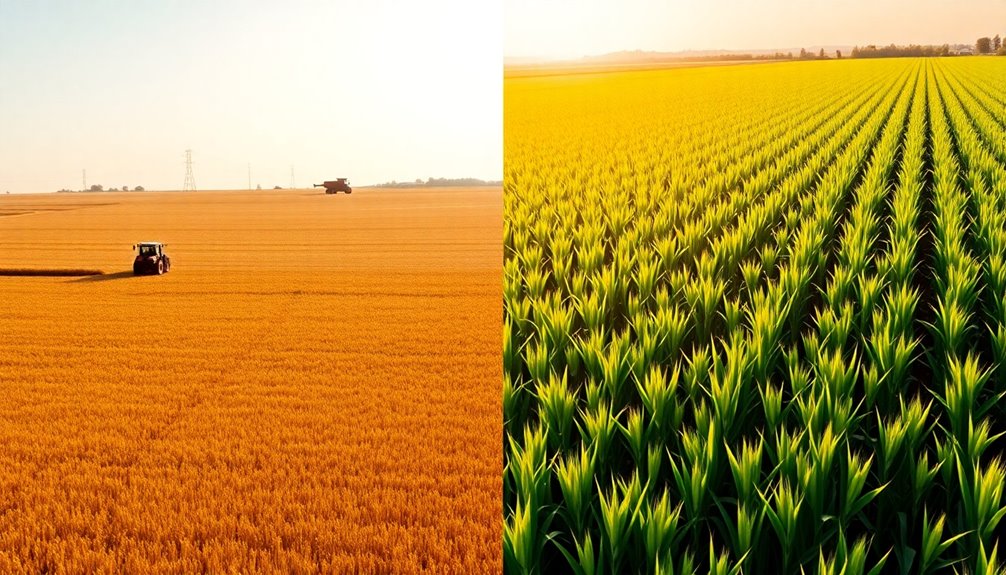
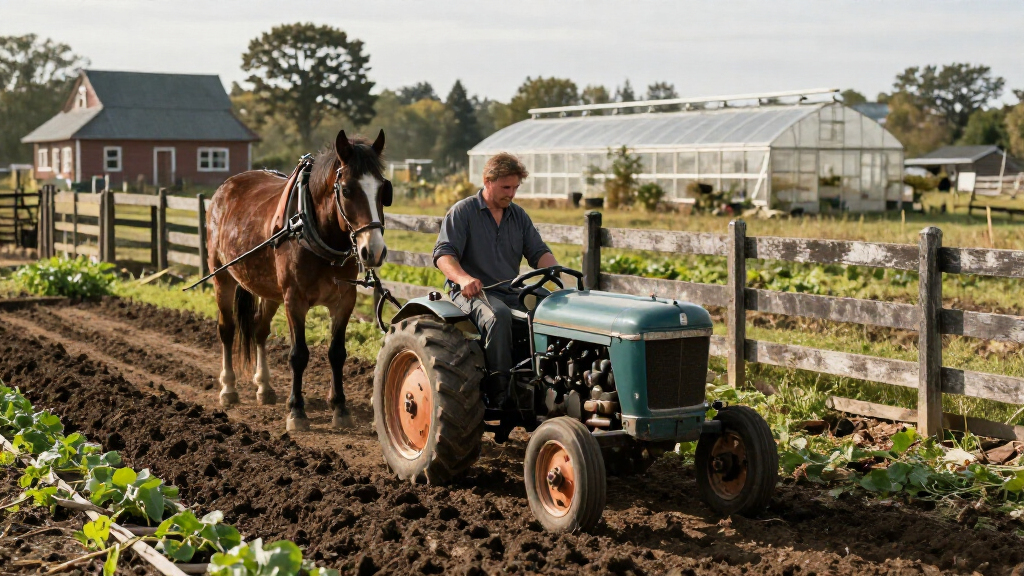
🔍 Read the full analysis: Tractor Vs. Horse: What Happened To 26.7 Million Working Animals on ThorstenMeyerAI.com

Get garden gear delivered free with Prime
- Fast, free delivery on millions of items
- Prime Video, Amazon Music and more included
- Member-only deals all year
TL;DR
U.S. farms had an estimated 26.7 million horses and mules in January 1918. As tractors and other machinery spread, their numbers fell to 3.1 million by 1960, while farm employment also declined; the episode’s comparison with today’s automation is an analogy, not a prediction.
A November 4 report on the history of agricultural automation traces how U.S. farm horses and mules fell from an estimated 26.7 million in January 1918 to 3.1 million in 1960, as tractors replaced animal power. The change freed cropland previously used to grow feed, but it also coincided with a long decline in farm employment, making the episode a useful historical comparison—not proof of what automation will do to workers today.
The figures cited in the report come from the U.S. Census Bureau’s 1975 volume Historical Statistics of the United States, Colonial Times to 1970, which reproduces Department of Agriculture estimates. Horses alone peaked at 21.4 million in 1915; the combined horse-and-mule count reached 26.7 million a year later, comprising 21.2 million horses and 5.5 million mules.
Those animals required substantial feed. The report says about 93 million acres of harvested cropland grew feed for horses and mules in 1915, out of 340 million harvested acres overall. The estimate was still 90 million acres in 1920. By 1960, the land used for their feed had fallen to about 5 million acres, according to the source material.
Tractor numbers rose as the animal count fell: the report lists about 1,000 tractors on U.S. farms in 1910, 246,000 in 1920 and 4.69 million in 1960. Around 1955, its figures show tractors slightly outnumbering farm horses and mules. The animal total then stood at 3.1 million in 1960, nearly 90% below the 1918 peak. The report says farmers generally stopped breeding replacements; it describes no single mass event that removed the animals.
Machinery Changed Farm Labor
The replacement of animal power altered more than how fields were ploughed. The acreage once devoted to feed could be used for other crops, while machinery helped farms produce more with fewer workers. The source material cites a Department of Agriculture estimate that one farm worker supplied 7.1 people in 1910, compared with 47.1 in 1970. That 1970 figure includes people abroad supplied by U.S. farm exports.
Farm employment fell from a reported peak of 13.6 million in 1916 to 4.5 million in 1970, even as the overall U.S. labor force doubled. Those figures show a major shift in work and production, but they do not by themselves explain what happened to every worker or establish that machinery alone caused each change. The report says new jobs emerged in cities and workers had to move, but does not provide a detailed account of their individual paths.
The history matters to current debates because machines can replace particular tasks and reshape where work is done. But horses were not people: workers have political rights and can move among occupations, while the timing and scale of modern job changes depend on technology, policy and economic conditions.
Popular right now

Dyson Car+Boat Cordless Handheld Vacuum

Vitamix Nano Personal Blender with SmoothiePilot, Black

Shark Pet Cordless Stick Vacuum, Up to 40-Minute Runtime, Lightweight, Ocean Blue, IX141
As an affiliate, we earn on qualifying purchases.
From Fordson to Field Robots
Tractors existed before the First World War, but the report describes early models as heavy, expensive and better suited to large farms. In 1917, Ford introduced the Fordson. The Henry Ford museum calls it the first mass-produced, inexpensive lightweight tractor designed to meet small farmers’ needs. The museum says it quickly became the most popular tractor in the United States; on February 21, 1920, the 100,000th Fordson left the assembly line.
Mechanization extended beyond tractors. The report counts about 4,000 combine harvesters on U.S. farms in 1920, 190,000 in 1940 and more than 1 million in 1960. Corn pickers, balers and milking machines also spread, alongside fertilizer and improved seed. Together, these developments changed farm production, so the horse-to-tractor shift was part of a broader transformation rather than a one-machine story.
The report links that history to current farm automation but describes present-day systems as limited in scope. It says John Deere’s 16-camera autonomy kit, introduced in February 2025, performs tillage on selected large tractors. It also reports that China said about 74% of ploughing, sowing and harvesting was mechanized in 2023. The article supplies no further details on how those measures were defined.
Limits of the Horse Comparison
The historical counts document the decline in working animals, but the supplied material does not quantify how many horses and mules were sold, retired, or otherwise removed from farm work. It says farmers stopped breeding replacements and the population aged out; that account should not be expanded into a more specific fate for each animal without further evidence.
The source also does not establish how much of the decline in farm employment was caused by tractors alone, as opposed to combines and other machinery, changing farm economics, or wider shifts in the economy. Nor does it provide a complete account of workers’ occupations after leaving farms.
Modern examples remain bounded as described: the John Deere system is used for tillage on select large tractors, not presented as a system that automates every farm task. China’s reported 74% mechanization figure is attributed to the country, and the source does not define its measure. The comparison with future human employment is consequently an interpretation, not a confirmed outcome.
How Automation Comparisons Develop
The report does not announce a new policy, research finding or scheduled follow-up. Its immediate contribution is a historical account that places current farm robots beside a past shift from animal to machine power.
Further assessment of the modern comparison would require clearer data on which tasks current systems perform, how widely they are adopted, and what happens to workers as those tasks change. For the historical episode, the source’s figures end with the farm-horse and mule count falling to 3.1 million in 1960; it says the Department of Agriculture stopped its annual estimates soon afterward. No further milestone or updated series is given.
Key Questions
When did U.S. farm horses and mules reach their peak?
The combined estimate peaked at 26.7 million on January 1, 1918, according to the historical statistics cited in the report. Horses alone had peaked at 21.4 million in 1915.
How much did their numbers fall by 1960?
The reported farm count fell to 3.1 million horses and mules in 1960, nearly 90% below the 1918 peak.
What replaced the animals on farms?
Tractors replaced much of the animals’ work, while combines and other machinery also spread. The report lists 4.69 million tractors on U.S. farms in 1960, compared with 3.1 million horses and mules.
Does the history prove that automation will replace human workers?
No. It documents a historical change in farm power and employment, but does not prove what will happen to workers today. The report presents the horse comparison as an analogy and identifies important differences between animals and people.
Source: ThorstenMeyerAI.com