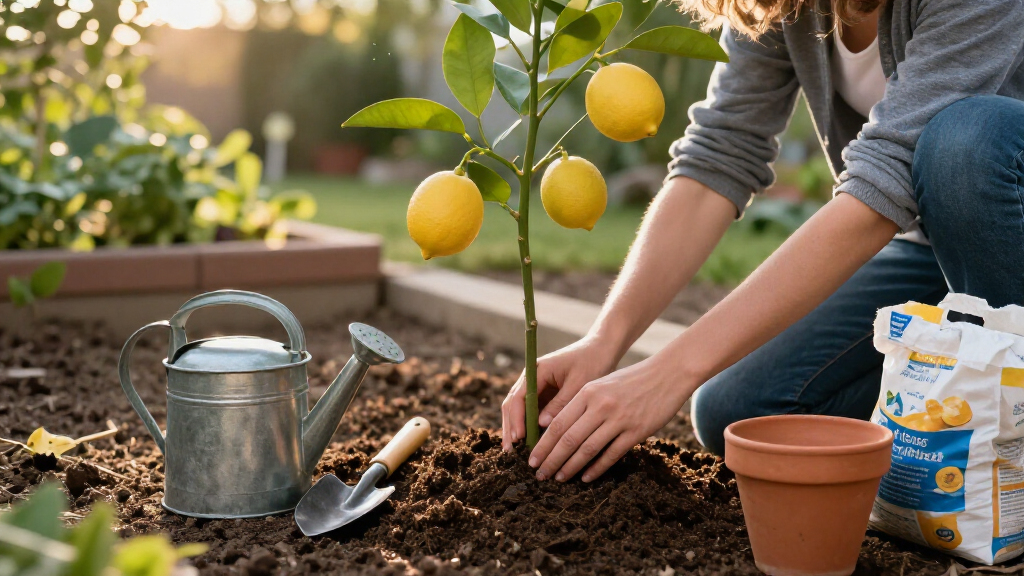
Growing healthy citrus requires more than just sunlight; it demands the best lemon tree growing supplies to prevent nutrient lockout and root rot. My top recommendation for established trees is the GARDENWISE Citrus Tree Fertilizer with Micronutrients, which addresses the specific iron and magnesium deficiencies common in lemons. For those starting from scratch, the Pre-Mixed 4-in-1 Ready-to-Use Citrus Tree Potting Soil Mix offers a foolproof foundation, while Gaea’s Blessing Dwarf Lemon Tree Seeds provide a budget-friendly entry point for patient growers. The main tradeoff in this category is between convenience and control; pre-mixed solutions save time but limit customization, whereas raw components require more knowledge to balance. Continue reading to see how these fifteen products stack up against each other for your specific gardening setup.

Get garden gear delivered free with Prime
- Fast, free delivery on millions of items
- Prime Video, Amazon Music and more included
- Member-only deals all year
Complete the kit


Key Takeaways
- Micronutrient supplementation is more critical for lemon trees than NPK ratios alone, as chlorosis (yellowing leaves) is the most common failure point.
- Soil drainage quality matters more than soil fertility; heavy mixes cause root rot faster than low-nutrient mixes cause stunting.
- Organic fertilizers like Jobe’s Organics release nutrients too slowly for potted trees in peak summer, requiring supplemental liquid feeding.
- Seed-grown lemon trees take 3-5 years to fruit, making them a long-term hobby rather than a quick harvest solution.
- Liquid fertilizers offer the fastest correction for nutrient deficiencies but require precise dilution to avoid root burn.



| lemon tree growing supplie | Brand |
|---|---|
| GARDENWISE Citrus Tree Fertili | GARDENWISE |
| Lemon Tree Fertilizer | HiThrive |
| Miracle-Gro Fruit & Citrus Pla | Miracle-Gro |
| Gaea’s Blessing Dwarf Lemon Tr | Gaea’s Blessing |
| Jobe’s Fruit and Citrus Fertil | Jobe’s Organics |
| 30 Meyer Lemon Seeds for Growi | — |
| Farmer’s Secret Citrus Tree Bo | Farmer’s Secret |
| Pre-Mixed 4-in-1 Ready-to-Use | Duspro |
| GrowScripts Citrus Fertilizer | GrowScripts |
| Jobe’s Organics Fruit & Citrus | Jobe’s Organics |
| Liquid Fertilizer for Lemon an | TPS Nutrients |
| Gardenera Liquid Lemon Tree Fe | Gardenera |
| Gardenera Premium Lemon Tree S | Gardenera |
| Organic Slow-Release Granular | TPS Nutrients |
| GARDENWISE Organic Lemon Tree | GARDENWISE |
More Details on Our Top Picks
GARDENWISE Citrus Tree Fertilizer with Micronutrients, 1 lb
This granular option stands out for its 6-4-6 NPK ratio, which offers a more balanced approach than the heavy phosphorus found in spikes like the Miracle-Gro Fruit & Citrus Plant Food Spikes. The inclusion of essential micronutrients such as magnesium and zinc addresses common citrus deficiencies that cause yellowing leaves, something basic nitrogen fertilizers often miss. Because the nutrients are coated, they release gradually over two months, reducing the risk of root burn compared to fast-acting liquids. However, the winter application suggestion is unusual for most climates, where spring and summer are peak growth periods. This product is ideal for growers who prefer a traditional sprinkled application but want the safety of slow-release technology. It requires careful watering to activate, unlike spikes that work independently of immediate moisture.
Pros:- Balanced 6-4-6 NPK ratio supports both foliage and fruit.
- Includes magnesium and zinc to prevent yellowing leaves.
- Coated granules offer a safe, two-month nutrient release.
Cons:- Unusual winter application timing may confuse beginners.
- Effectiveness depends heavily on consistent watering.
Best for: Growers in mild climates who want a balanced nutrient profile without the risk of burning roots.
Not ideal for: Those in cold regions, as the label suggests winter application which may conflict with dormancy cycles.
- Brand:GARDENWISE
- NPK Ratio:6-4-6
- Form:Granules
- Item Weight:16 ounces (1 lb)
- Micronutrients:Magnesium, zinc, copper, iron, boron
- Release Duration:Up to two months
- Application Method:Sprinkle around base and water
Our verdict“A solid, balanced choice for those who prefer granular feeding over spikes or liquids.”
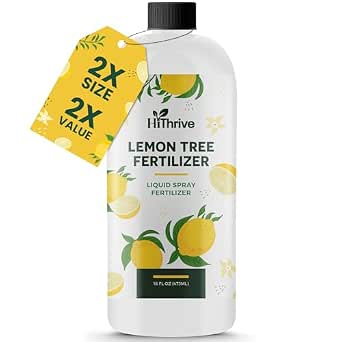
Lemon Tree Fertilizer, 4-3-6 NPK Ratio, 16 oz
The HiThrive liquid fertilizer offers exceptional value for large collections, with one 16-ounce bottle mixing into 16 gallons of feed. This makes it far more economical for orchard owners or those with multiple trees compared to the single-use spikes in the Jobe’s Fruit and Citrus Fertilizer Spikes. The 4-3-6 ratio is lower in nitrogen than many competitors, which can be beneficial for forcing fruit production over leafy growth. However, this low nitrogen content means it may not support vigorous young trees that need substantial canopy development. You must also mix it yourself, which adds a step and requires accurate measuring to avoid underfeeding. It is best suited for established trees that are already healthy and ready to focus energy on fruiting.
Pros:- One bottle makes up to 16 gallons of fertilizer.
- Easy 1 tablespoon per gallon mixing ratio.
- Low nitrogen ratio encourages fruiting over leaf growth.
Cons:- Low nitrogen may slow growth of young trees.
- Requires manual mixing and precise measurement.
Best for: Owners of multiple citrus trees who want to minimize long-term feeding costs.
Not ideal for: Owners of young saplings needing high nitrogen for rapid canopy growth.
- Brand:HiThrive
- NPK Ratio:4-3-6
- Unit Count:16 Fluid Ounces
- Mixing Ratio:1 tablespoon per gallon
- Coverage:Up to 16 gallons
- Target Species:Citrus trees
- Item Weight:1.2 pounds
Our verdict“The most cost-effective liquid option for feeding a large number of established trees.”
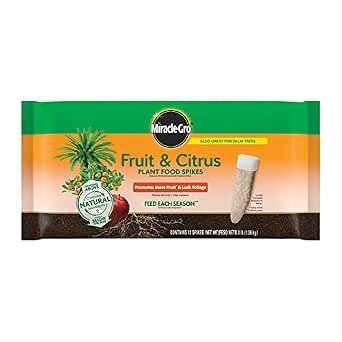
Miracle-Gro Fruit & Citrus Plant Food Spikes, 12 Count, 3 lb
These spikes deliver a potent 10-15-15 formula, significantly higher in phosphorus and potassium than the GARDENWISE Citrus Tree Fertilizer. This composition is aggressive in promoting root strength and flower set, making it a powerful tool for trees that are struggling to bloom. The placement directly into the root zone ensures immediate availability, bypassing surface soil issues. However, this high nutrient density carries a risk; if applied too close to the trunk or in excess, it can damage delicate feeder roots. Unlike the gradual release of granular options, spikes can sometimes provide an initial surge that may overwhelm sensitive plants. This product is best for mature trees that have been slow to fruit and need a strong chemical push.
Pros:- High 15-15 phosphorus-potassium blend aids flowering.
- Direct root-zone delivery minimizes nutrient loss.
- Simple twice-yearly application schedule.
Cons:- Requires physical force to install spikes.
- High nutrient load risks burning young roots.
Best for: Mature trees that are blooming poorly and need a strong phosphorus boost.
Not ideal for: Young or potted trees where high phosphorus levels could cause root burn.
- Brand:Miracle-Gro
- Quantity:12 spikes
- NPK Ratio:10-15-15
- Package Weight:3 lb
- Application Frequency:Twice a year
- Coverage:12 trees with 4-ft dripline
- Suitable For:Fruit, citrus, palm trees
Our verdict“A high-power solution for mature trees needing a significant boost in bloom production.”
Gaea’s Blessing Dwarf Lemon Tree Seeds (Citrus limon), Non-GMO, Heirloom, Open-Pollinated
Unlike the fertilizers and spikes in this roundup, Gaea’s Blessing Seeds provide the actual plant material, offering a long-term project rather than an immediate nutritional fix. Growing from seed allows you to cultivate a dwarf lemon tree that can be shaped as a bonsai, a flexibility not available with pre-grown stock. The heirloom, non-GMO status appeals to purists who want genetic diversity and untreated starting points. However, patience is required; seed-grown lemons take years to fruit, whereas grafted trees from a nursery fruit sooner. This option is strictly for those willing to manage the germination and early care process, which includes specific temperature and humidity controls. It is not a supply for feeding an existing tree but for creating one.
Pros:- Non-GMO, heirloom, and untreated seeds.
- Versatile for bonsai or full-sized tree cultivation.
- Suitable for indoor or outdoor growing.
Cons:- Long wait time for fruit production.
- Requires specific conditions for germination.
Best for: Hobbyists and bonsai enthusiasts who want to grow a lemon tree from seed.
Not ideal for: Those seeking quick fruit production, as seed-grown trees take years to bear fruit.
- Brand:Gaea’s Blessing
- Seed Type:Citrus limon
- Characteristics:Non-GMO, Heirloom, Open-Pollinated
- Mature Height:6.5–19.5 feet
- Hardiness Zones:8–11
- Sunlight:Full sun
- Weight:4.54 g
Our verdict“The only option here for starting a new tree rather than feeding an existing one.”
Jobe’s Fruit and Citrus Fertilizer Spikes, 9 Count
Jobe’s spikes offer a middle ground between the complex mixing of liquids and the high-potency of Miracle-Gro. With an 8-11-11 NPK ratio, they provide a gentler nutrient profile that is less likely to shock the tree while still delivering steady nourishment. The organic formulation appeals to gardeners avoiding synthetic chemicals, though the efficacy can vary with soil temperature. Installation is straightforward, but like all spikes, they require physical effort to push into the ground, which can be difficult in compacted soil. Compared to the GARDENWISE granular feed, these are less flexible in application area, as they concentrate nutrients in specific spots rather than spreading them evenly across the root zone. This makes them ideal for trees with established, widespread root systems.
Pros:- Organic formulation with 8-11-11 ratio.
- No runoff or smell associated with liquids.
- Simple seasonal application.
Cons:- Physical installation can be hard in dry soil.
- Less even nutrient distribution than granular feeds.
Best for: Organic gardeners who want convenient, low-mess feeding for established trees.
Not ideal for: Potted trees or small root zones where localized spikes may not distribute well.
- Brand:Jobe’s Organics
- Quantity:9 spikes
- NPK Ratio:8-11-11
- Item Weight:3.68 ounces
- Application:Early spring and late fall
- Method:Insert into soil at dripline
- Target:Fruit, citrus, nut trees
Our verdict“A convenient, organic spike option for gardeners who dislike mixing or sprinkling.”
30 Meyer Lemon Seeds for Growing Citrus Trees
This seed kit is ideal for those who enjoy the propagation process more than the immediate fruit harvest. Unlike Farmer’s Secret Citrus Tree Booster Fertilizer, which supports existing trees, these seeds require a multi-year commitment before yielding fruit. The germination window of two to six weeks allows for gradual indoor cultivation, but the wait for blooming can stretch beyond four years. I recommend this for educational or experimental growing rather than quick harvests.
Pros:- High seed count allows for multiple planting attempts
- Suitable for both indoor and outdoor growing conditions
- Produces fragrant blooms even before fruiting
- Lower initial cost compared to mature trees
Cons:- Fruiting can take four or more years
- Requires strict temperature and moisture control during germination
- Seedlings need protection from frost in colder climates
Best for: Gardeners who enjoy seed propagation and have patience for multi-year growth cycles.
Not ideal for: Buyers seeking immediate fruit production or limited indoor space for long-term seedlings.
- Quantity:30 seeds
- Plant Type:Meyer lemon citrus tree
- Germination Time:2–6 weeks
- Sunlight Exposure:Full sun, 6–8+ hours daily
- Soil Type:Sandy soil
- USDA Hardiness Zone:3–9
Our verdict“Choose this kit if you value the growing journey over immediate results.”
Farmer’s Secret Citrus Tree Booster Fertilizer, 8 oz
This liquid fertilizer stands out for its extreme concentration, where a single teaspoon treats a full gallon of water. Compared to Jobe’s Organics Fruit & Citrus Granular Fertilizer, it offers faster uptake through soil drenching or foliar spraying, making it highly effective for correcting nutrient deficiencies. However, the dilution requirement adds a step that granular options avoid. It is a powerful tool for precise feeding schedules, especially for indoor trees that need lighter, more frequent doses.
Pros:- Highly concentrated formula lasts for many applications
- Suitable for both indoor and outdoor citrus trees
- Supports a wide range of citrus varieties including avocados
- Fast-acting liquid formulation
Cons:- Requires careful dilution to avoid root burn
- Small 8 oz bottle may run out quickly for large collections
- Needs regular application frequency for best results
Best for: Growers who prefer liquid feeding and want to control nutrient density precisely.
Not ideal for: Those who dislike measuring small amounts or mixing solutions before application.
- Brand:Farmer’s Secret
- Form:Liquid
- Mixing Ratio:1 teaspoon per gallon
- Target Plants:Citrus trees, avocados
- Item Weight:11.2 ounces
- Origin:Bottled in Kentucky
Our verdict“This pick makes the most sense for growers who want a potent, versatile liquid nutrient source.”
Pre-Mixed 4-in-1 Ready-to-Use Citrus Tree Potting Soil Mix, 20 QRT
This pre-mixed blend removes the guesswork from creating a citrus-specific substrate. While Gardenera Premium Lemon Tree Soil Mix offers a smaller quantity, this 20-quart bag provides enough volume for repotting multiple large trees. The combination of coco coir, perlite, and vermiculite ensures excellent drainage and aeration, which is critical for preventing root rot. It is ready to use immediately, though supplemental fertilization will still be required as the initial nutrients deplete over time.
Pros:- Pre-mixed formula saves time and effort
- Balanced drainage and moisture retention properties
- Large 20-quart volume suits multiple repotting projects
- Suitable for various citrus types and other container plants
Cons:- Heavy bag weight can be difficult to handle
- Does not contain long-term slow-release fertilizers
- May require additional nutrients sooner than fertilized mixes
Best for: Gardeners with multiple potted citrus trees who want a convenient, large-volume soil solution.
Not ideal for: Those with limited storage space or who prefer mixing their own soil components.
- Brand:Duspro
- Package Size:20 QRT
- Ingredients:Coco coir, coco fiber, perlite, vermiculite
- Model Number:DR2
- Usage:Ready-to-use
- Target Plants:Citrus, palms, succulents
Our verdict“This option stands out for its convenience and volume, ideal for serious potted citrus enthusiasts.”
GrowScripts Citrus Fertilizer Kit for Small Potted Citrus Trees
This three-part system is engineered specifically for small pots up to three gallons, addressing the unique nutrient needs of confined root systems. Unlike the general-purpose Farmer’s Secret Citrus Tree Booster Fertilizer, this kit includes calcium and trace elements alongside standard NPK, which is vital for preventing common citrus deficiencies. The included application calendar simplifies the process for beginners. However, the limited pot size compatibility means you will need a different solution as your tree grows.
Pros:- Comprehensive three-part nutrient system
- Includes calcium concentrate for fruit quality
- Application calendar guides proper feeding schedule
- Sized appropriately for small container trees
Cons:- Strictly limited to pots up to 3 gallons
- Sprayer is not included for foliar applications
- Separate components require more storage space
Best for: Owners of young or dwarf citrus trees in containers three gallons or smaller.
Not ideal for: Growers with mature trees in large containers or in-ground plantings.
- Brand:GrowScripts
- Suitable Pot Size:Up to 3 gallons
- NPK Ratio:18-6-12
- Included Components:Controlled-release fertilizer, trace elements, calcium
- Application Methods:Soil application and foliar spray
- Model:CIK4
Our verdict“This kit makes the most sense for dedicated care of small, container-grown citrus trees.”
Jobe’s Organics Fruit & Citrus Granular Fertilizer, 4 lb
For those committed to organic gardening practices, this OMRI-listed granular fertilizer offers a safe, easy-to-apply alternative to synthetic chemicals. Compared to the GrowScripts Citrus Fertilizer Kit, it lacks the specialized calcium and trace element components, but it provides a steady, slow release of nutrients over several weeks. The 4-pound bag is substantial enough for multiple applications across a season. It is particularly well-suited for outdoor trees where frequent watering might wash away liquid nutrients quickly.
Pros:- OMRI listed for organic gardening use
- Easy to measure and spread granules
- Safe for use around children and pets
- Long-lasting application interval of 4-8 weeks
Cons:- Slower nutrient uptake compared to liquid options
- Requires regular reapplication throughout the growing season
- Limited to fruit and citrus plants specifically
Best for: Organic gardeners who prefer low-maintenance, slow-release granular feeding.
Not ideal for: Those needing rapid nutrient correction or precise, frequent dosing control.
- Brand:Jobe’s Organics
- Product Type:Granular fertilizer
- NPK Ratio:3-5-5
- Weight:4 lb
- Application Frequency:Every 4–8 weeks
- Certifications:OMRI listed
Our verdict“Choose this fertilizer if you prioritize organic certification and ease of application.”
Liquid Fertilizer for Lemon and Citrus Trees, 8 fl oz
This TPS Nutrients liquid fertilizer stands out for its versatility in application methods. Unlike the Gardenera Liquid Lemon Tree Fertilizer, which focuses on root drenching, this formula allows for leaf misting, making it ideal for quick nutrient uptake during stress periods. The 1:200 mixing ratio is highly concentrated, meaning a small bottle lasts longer than expected if you manage your watering can carefully. However, the 8 fl oz volume is quite small for gardeners with multiple trees, requiring frequent reordering. It suits those who prefer precise control over nutrient delivery rather than set-and-forget feeding.
Pros:- Supports multiple application methods including leaf misting
- Highly concentrated formula extends the shelf life of the 8 fl oz bottle
- Specifically formulated for lemon and citrus nutrient needs
Cons:- Small container size leads to frequent replenishment needs
- Requires precise dilution to avoid over-fertilizing delicate roots
Best for: Gardeners who want to use foliar feeding techniques for rapid nutrient absorption
Not ideal for: Owners of large citrus groves who need bulk quantities to avoid frequent restocking
- Brand:TPS Nutrients
- Form:Liquid
- Volume:8 fl oz
- Mixing Ratio:1:200
- Application Methods:Watering can, hose-end sprayer, leaf misting
- Target Species:Lemon and citrus trees
Our verdict“Choose this for its flexible application options if you manage a small collection of container citrus.”
Gardenera Liquid Lemon Tree Fertilizer Concentrate, 3-1-2, 8 fl oz
The Gardenera Liquid Concentrate is tailored specifically for indoor lemon trees, offering a straightforward 3-1-2 nutrient ratio. This lower nitrogen profile compared to outdoor-focused blends like the 4-3-6 NPK Ratio fertilizer helps prevent excessive leafy growth at the expense of fruiting, a common issue in indoor environments. The mixing instruction—1 teaspoon per gallon—is simple and less prone to measurement errors than complex ratios. However, its specialization means it is not suitable for other garden plants, limiting its utility if you also grow vegetables or flowers. It is a focused tool for the houseplant enthusiast.
Pros:- 3-1-2 ratio encourages fruiting over excessive foliage in indoor settings
- Simple 1 teaspoon per gallon mixing ratio reduces user error
- Concentrated formula provides many applications from a single bottle
Cons:- Strictly limited to lemon trees, offering no versatility for other plants
- Requires consistent dilution discipline to maintain plant health
Best for: Indoor gardeners growing potted lemons who want a simple, low-nitrogen feeding schedule
Not ideal for: Outdoor growers or those with mixed gardens who need a multi-purpose fertilizer
- Brand:Gardenera
- Nutrient Ratio:3-1-2
- Form:Liquid concentrate
- Volume:8 fluid ounces
- Mixing Instructions:1 teaspoon per 1 gallon of water
- Target Plant:Lemon trees
Our verdict“This is the logical choice for indoor lemon keepers who prioritize fruit production over rapid vegetative growth.”
Gardenera Premium Lemon Tree Soil Mix – 1 Quart
This Gardenera Soil Mix is designed for the precision work of repotting young or dwarf lemon trees. The inclusion of worm castings and lime addresses two critical citrus needs: microbial activity and pH balance, which generic potting soils often miss. Compared to the GARDENWISE Organic Lemon Tree Soil, this mix is less about bulk volume and more about quality amendments for smaller root systems. The 1-quart size is perfect for topping off a pot or planting a small start-up tree but is impractical for repotting a mature 5-gallon specimen. It serves as a high-quality amendment rather than a bulk substrate.
Pros:- Worm castings introduce beneficial microorganisms for root health
- Lime content helps maintain the slightly alkaline pH citrus prefers
- Peat moss and perlite blend ensures excellent drainage and aeration
Cons:- Small 1-quart volume is insufficient for large container applications
- Specialized formulation makes it a single-use product for non-citrus plants
Best for: Gardeners repotting dwarf lemon trees or refreshing soil in small containers
Not ideal for: Those repotting large, mature trees who need several gallons of soil per job
- Brand:Gardenera
- Volume:1 Quart
- Key Ingredients:Peat moss, perlite, worm castings, lime
- Target Plant:Citrus Limon
- Origin:USA
- Manufacturer Part Number:LEMON-MIX-1QT
Our verdict“Ideal for the precise task of repotting small citrus varieties where soil quality matters more than quantity.”
Organic Slow-Release Granular Fertilizer for Lemon Trees, 6 oz
The TPS Nutrients Granular Fertilizer offers a ‘set and forget’ approach that contrasts sharply with the frequent watering required by liquid options like the Gardenera Liquid Concentrate. The slow-release mechanism provides steady nutrition over time, reducing the risk of nutrient burn and saving time for busy gardeners. However, the 6 oz package covers only 6-10 square feet, making it a trial size rather than a season-long supply for larger gardens. It is best viewed as an entry point for organic granular feeding or for fertilizing a single potted tree for a short period.
Pros:- Slow-release formula minimizes the risk of over-fertilizing
- Granular form is easy to spread and requires no mixing
- Suitable for both in-ground and container-grown citrus
Cons:- Small 6 oz size covers a limited area of approximately 6-10 sq ft
- Slower results compared to liquid fertilizers for immediate deficiency correction
Best for: Busy gardeners who prefer minimal intervention and gradual nutrient release
Not ideal for: Owners of multiple trees who need a larger bag to cover significant ground area
- Brand:TPS Nutrients
- Form:Granules
- Weight:6 ounces
- Coverage Area:6–10 square feet
- Use Case:Indoor or outdoor lemon tree fertilization
- Origin:USA
Our verdict“A convenient choice for low-maintenance care, though the small package size limits its scope.”
GARDENWISE Organic Lemon Tree Soil – Citrus Potting Mix with Organic Fertilizer (3 Quarts)
The GARDENWISE Organic Mix simplifies the growing process by combining soil and fertilizer in one step. With nutrients feeding for up to 6 months, it eliminates the immediate need to buy separate fertilizers like the TPS Nutrients Liquid upon planting. The 3-quart volume is more practical for standard nursery pots than the Gardenera Premium Soil, offering better value for repotting medium-sized trees. The pH range of 5.5-6.5 is carefully tuned for citrus, and the inclusion of dolomite and perlite ensures the drainage needed to prevent root rot. It is a robust starter kit for container gardening.
Pros:- Includes organic fertilizer that feeds plants for up to 6 months
- Optimized pH of 5.5-6.5 supports optimal nutrient uptake
- 3-quart size is suitable for repotting standard potted lemon trees
Cons:- Designed exclusively for potted use, not for in-ground planting
- Requires replenishing fertilizer after the 6-month feed period ends
Best for: New container gardeners who want a complete, ready-to-use soil and feed solution
Not ideal for: Gardeners who prefer to control nutrient levels manually with separate fertilizers
- Brand:GARDENWISE
- Size:3 Quarts
- pH Range:5.5 – 6.5
- Fertilizer Duration:Up to 6 months
- Key Components:Perlite, coconut coir, vermiculite, compost, dolomite
- Item Type:Lemon Tree Soil
Our verdict“The most convenient option for starting a potted lemon tree with minimal setup requirements.”
How We Picked
I evaluated these fifteen products based on their ability to address the specific physiological needs of citrus trees, particularly their sensitivity to pH levels and micronutrient availability. I prioritized formulations that explicitly include iron, manganese, and zinc, as standard all-purpose fertilizers often fail to correct the yellowing leaves typical of lemon trees. Build quality and ease of application were also weighted heavily; for potted trees, precision matters more than bulk volume, so concentrated liquids and measured spikes scored higher than broad-spectrum granular bags intended for large orchards.
Ranking logic favored versatility and reliability. Products that worked well in both container and in-ground settings ranked higher than those with niche applications. I also considered the balance between immediate results and long-term soil health. While synthetic spikes offer quick fixes, organic options that improve soil structure over time were given credit for sustainability, provided they delivered adequate nitrogen levels during the growing season. This approach ensures the recommendations serve both novice gardeners seeking convenience and experienced growers seeking control.
Factors to Consider When Choosing Best Lemon Tree Growing Supplies
Choosing the right supplies depends heavily on whether your lemon tree is potted or planted in the ground, as well as its current life stage. Here are the critical factors that should drive your decision.Nutrient Specificity vs. General Fertilizers
Lemon trees are heavy feeders of specific micronutrients, particularly iron and magnesium. Many general-purpose fertilizers lack these elements, leading to chlorosis where leaves turn yellow while veins remain green. When selecting a fertilizer, check the label for these specific additives rather than just looking at the NPK (Nitrogen-Phosphorus-Potassium) numbers. A product with a lower NPK but high micronutrient content will often outperform a high-NPK general fertilizer for citrus health. Skipping this step is the most common reason indoor lemon trees fail to thrive despite regular watering.
Soil Drainage and pH Balance
Citrus roots are prone to rot if left in waterlogged soil, so drainage is non-negotiable. Standard potting soil often retains too much moisture for lemons. Look for mixes that include perlite, pumice, or sand to improve aeration. Additionally, lemon trees prefer slightly acidic soil (pH 5.5-6.5). Alkaline tap water or soil can lock out nutrients, making even the best fertilizer ineffective. If you live in an area with hard water, you may need to amend your soil with sulfur or choose a fertilizer that helps maintain lower pH levels.
Delivery Method: Spikes, Granules, or Liquids?
Each delivery method has distinct advantages and drawbacks. Spikes are convenient and slow-release but can sometimes concentrate nutrients in one spot, potentially burning roots if placed too close to the trunk. Granular fertilizers cover a wider area and are good for in-ground trees but require watering to activate. Liquid fertilizers offer the most control and fastest uptake, making them ideal for potted trees that need frequent, small doses. For container gardening, liquids or small granule applications are generally safer and more effective than large spikes.
Seed Viability and Germination Expectations
Buying seeds is significantly cheaper than buying a grafted tree, but it comes with a long waiting period. Seeds from supermarket lemons are often not viable or produce trees that take years to fruit and yield unpredictable fruit quality. If you choose to grow from seed, select heirloom or non-GMO varieties specifically labeled for citrus. Be prepared for a multi-year project; most seedlings will not produce fruit for three to five years. This path is best for those who enjoy the gardening process more than the immediate harvest.
Organic vs. Synthetic Efficiency
Organic fertilizers improve soil microbiology over time but release nutrients slowly, which may not keep up with the high demand of a fruiting lemon tree in summer. Synthetic fertilizers provide immediate nutrients but do not improve soil structure. For potted trees, where soil volume is limited, organic options can sometimes deplete too quickly. A hybrid approach—using organic matter for soil health and synthetic liquid feeds during peak fruiting—often yields the best results. Consider your tolerance for chemical inputs versus your desire for maximum fruit production.
Frequently Asked Questions
Why are the leaves on my lemon tree turning yellow?
Yellowing leaves usually indicate a nutrient deficiency, most commonly iron or magnesium, or overwatering. If the veins are green but the leaf is yellow, it is likely iron chlorosis, often caused by soil pH being too high. If the whole leaf is pale, it might be a nitrogen deficiency or root rot from poor drainage. Check your soil moisture first; if the soil is soggy, reduce watering and improve drainage. If the soil is moist but well-draining, apply a micronutrient-rich fertilizer like the GARDENWISE Citrus Tree Fertilizer to correct the imbalance.
Can I use regular potting soil for my potted lemon tree?
Regular potting soil is often too dense and retains too much water for citrus trees, leading to root rot. Lemon trees need a fast-draining mix that allows air to reach the roots. You can amend standard potting soil with perlite, pumice, or orchid bark to improve drainage. Alternatively, use a specialized citrus mix like the Pre-Mixed 4-in-1 Ready-to-Use Citrus Tree Potting Soil Mix, which is formulated with the correct balance of drainage and acidity. Using the wrong soil is a leading cause of failure for indoor lemon trees.
How often should I fertilize a potted lemon tree?
Potted lemon trees require frequent feeding because nutrients wash out with every watering. During the active growing season (spring through summer), fertilize every two to four weeks with a balanced citrus fertilizer. In winter, when growth slows, you can reduce this to once every six to eight weeks. Liquid fertilizers are ideal for this schedule as they allow for precise, small doses. Avoid heavy granular applications in pots, as they can accumulate salts and damage roots if not flushed regularly.
Are lemon tree seeds worth growing if I want fruit?
It depends on your patience and goals. Seeds from a grocery store lemon may produce a tree, but it will likely take three to five years to fruit, and the fruit may not resemble the parent tree. Grafted trees sold in nurseries fruit within one to two years and offer predictable quality. However, growing from seed is a rewarding horticultural project. If you choose this route, use fresh, viable seeds from heirloom varieties like Gaea’s Blessing Dwarf Lemon Tree Seeds for the best germination rates, but manage your expectations regarding fruit production timelines.
Do I need different supplies for indoor vs. outdoor lemon trees?
The core supplies are similar, but the application changes. Indoor trees in pots dry out faster and lose nutrients more quickly, requiring more frequent, lighter feedings with liquid fertilizers. Outdoor trees in the ground have access to more soil volume and can benefit from slow-release granular spikes or organic mulches. Indoor trees also need higher humidity, which is not a ‘supply’ per se but affects how you water and fertilize. For indoor setups, prioritize precision and drainage; for outdoor, prioritize volume and long-term soil health.
Conclusion
Selecting the best lemon tree growing supplies comes down to matching the product to your tree’s environment and your gardening style. For most home growers, the GARDENWISE Citrus Tree Fertilizer with Micronutrients is the best overall choice because it directly targets the deficiencies that plague citrus, ensuring vibrant green leaves and consistent fruiting. If you are starting a new potted tree, the Pre-Mixed 4-in-1 Ready-to-Use Citrus Tree Potting Soil Mix provides the safest foundation to prevent root rot. For those seeking a budget-friendly, organic option for established in-ground trees, Jobe’s Organics Fruit & Citrus Granular Fertilizer offers excellent value and soil health benefits. Beginners should prioritize convenience and error-proofing with pre-mixed soils and spikes, while experienced growers may prefer the control of liquid concentrates and custom soil amendments. By focusing on drainage and micronutrients rather than just nitrogen, you set your lemon tree up for long-term success.
Black Friday Picks

Vitamix Nano Personal Blender with SmoothiePilot, Black
As an affiliate, we earn on qualifying purchases.