TL;DR
Hardneck garlic often suits cold-winter gardens and produces edible scapes; softneck garlic often suits milder winters and stores longer after curing. Those are general patterns, not guarantees: variety, local weather, harvest timing and storage conditions all affect results.
A gardening guide comparing hardneck and softneck garlic recommends choosing varieties according to local winter conditions and whether a gardener values edible scapes or longer storage. Hardnecks often suit colder climates, while softnecks tend to suit milder winters and generally keep longer after proper curing; the guide cautions that variety and growing conditions matter.

Get garden gear delivered free with Prime
- Fast, free delivery on millions of items
- Prime Video, Amazon Music and more included
- Member-only deals all year
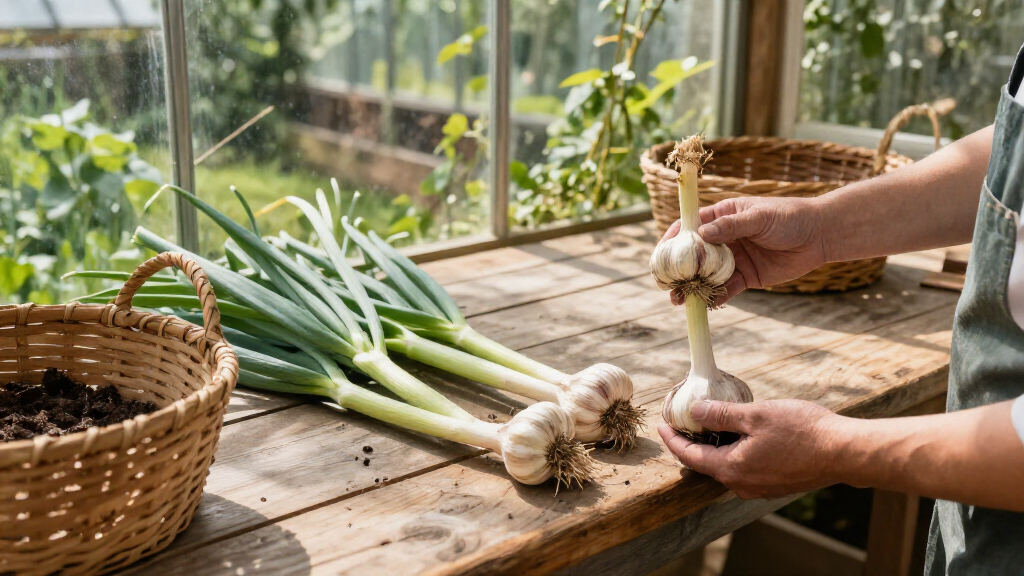
The main physical distinction is the stalk at the center of the bulb. Hardneck garlic has a firm central stalk and often forms a ring of relatively large cloves around it. During growth, it typically sends up a flowering stem called a scape, which can be harvested and eaten. Softneck bulbs usually lack a rigid central stalk and tend to have several layers of cloves, with sizes that can vary within one bulb.
Those traits can inform planting and kitchen choices, but the comparison is not a guarantee of performance. The guide says hardnecks often fare well where winters are cold, while softnecks tend to perform well in areas with milder winters. It also says softnecks generally store longer after curing. Typical room-temperature estimates cited in the source, attributed to Wisconsin Extension, are six to eight months for softnecks and three to four months for hardnecks; actual keeping time can vary by variety and storage conditions.
Gardeners are advised to check variety-level guidance and ask nearby growers which garlic performs well locally. The source suggests starting with a small planting of suitable varieties, then recording bulb quality and storage results. It also notes that skin color alone does not identify garlic type: a purple wrapper, for example, is not proof that a bulb is hardneck.
Hardneck or Softneck Garlic How to Choose
Match garlic to local winter conditions and how you plan to use and store the harvest. These are general patterns; variety and growing conditions matter.
Match Type to Winter
Local variety performance is a better guide than category-wide expectations.
- Often suits colder winters
- Produces edible scapes
- Tends to suit milder winters
- Generally stores longer after curing
Recognize the Bulb
Check the center stalk and clove arrangement; skin color alone does not identify the type.
Firm central stalk
Often has a ring of relatively large cloves and sends up an edible scape.
Cloves in layers
Usually lacks a rigid central stalk; clove sizes can vary within one bulb.
Plan for the Harvest
Growing and storage practices affect bulb quality regardless of type.
Garlic is commonly planted in fall; check local guidance for timing and depth.
Remove tender hardneck scapes while leaving leaves intact. Check bulbs as lower leaves brown.
Dry bulbs in a sheltered, well-ventilated place, then keep them cool, dry and ventilated.
Choose Varieties to Trial
Try a small planting before committing to a larger order.
Climate and Storage Shape the Choice
The choice affects both what a gardener can harvest and how the crop may fit into a household’s plans. In colder areas, a locally successful hardneck variety may be a practical starting point; in milder areas, a softneck may be a better match. These are broad tendencies rather than rules, so a variety’s performance in a particular garden remains the more useful guide.
Storage life can matter as much as winter hardiness. A gardener hoping to keep bulbs for several months may favor softneck varieties, which generally store longer under suitable conditions. But curing and storage practices also affect keeping quality: bulbs should be dried in a sheltered, well-ventilated place, then kept somewhere cool, dry and ventilated. Bruised or damaged bulbs should be used first, and soft or decaying ones removed.
Garlic type also affects harvest tasks. Hardneck scapes can be used in cooking, while the stiff dried stems of hardnecks are difficult to braid. Softneck stems are more flexible and can be braided after drying. These differences help gardeners plan, but neither category is guaranteed to taste stronger: flavor varies by variety and preparation, and cooking changes how garlic tastes.
Popular right now

KitchenAid 5.5-Qt Bowl-Lift Stand Mixer, Porcelain White

Dyson Cyclone V10 Origin Cordless Vacuum

Breville Barista Touch Espresso Machine, Brushed Stainless Steel
As an affiliate, we earn on qualifying purchases.
Recognizing Garlic Types and Varieties
The guide describes two main categories of true garlic, each containing multiple groups and cultivars. Hardneck groups include Porcelain, Rocambole and Purple Stripe; examples named include Music, Spanish Roja and Chesnok Red. Softneck groups include Artichoke and Silverskin, with Early Purple Italian given as an example of a softneck despite its colorful name. The range of cultivars means the decision is not simply between two individual varieties.
For planting, the source says garlic is commonly planted in fall, but recommends following local timing rather than using one date nationwide. Garlic seed usually means cloves intended for planting, not botanical seed. The guide advises using healthy planting garlic, separating bulbs shortly before planting, keeping the clove skins intact and setting cloves pointed end up in a sunny, well-drained bed. It cites Minnesota Extension guidance to plant the clove base two to three inches deep, while advising gardeners to follow local recommendations where they differ.
Seasonal care can affect the harvest regardless of type. The guide recommends removing tender hardneck scapes while leaving the leaves intact. As harvest approaches, gardeners can check bulbs when lower leaves turn brown but upper leaves remain green. Curing typically takes several weeks in a dry place with good airflow. These steps, along with the variety and weather, influence bulb quality and storage.
“Start with hardneck if your winters are cold or you want edible scapes. Start with softneck if your winters are mild or longer storage matters.”
— The gardening guide
Variety Results Vary by Garden
The source does not identify a single variety that will suit every climate, nor does it provide test results comparing cultivars across growing regions. Winter chill, spring weather and day length can all affect bulb growth, and a USDA growing zone is only one planning tool. The general climate patterns should not be treated as a guarantee that a particular type will thrive in an individual garden.
Storage estimates are also not promises. The source gives typical ranges but does not specify that every bulb will last that long; curing, damage, temperature, humidity and airflow can affect how well a harvest keeps. It does not provide a universal flavor ranking, and it says neither hardneck nor softneck is always stronger. Gardeners may need to compare varieties grown and prepared under similar conditions.
Trial Varieties Through a Full Season
Before ordering a large quantity, gardeners can check local planting guidance and ask nearby growers about varieties suited to their conditions. A small trial of suitable hardneck and softneck options can reveal which produces well, what the cloves are like to prepare and how long the cured bulbs keep.
For a useful comparison, keep variety labels with each batch and record planting dates, harvest condition and storage results. Follow local advice on planting depth and timing, then check bulbs as they mature. The next decision can be based on the garden’s own harvest rather than category-wide expectations alone.
Key Questions
Which garlic type generally stores longer?
Softneck garlic generally stores longer after proper curing. The source cites typical room-temperature estimates of six to eight months for softnecks and three to four months for hardnecks, while warning that variety and storage conditions affect results.
Does hardneck garlic always taste stronger?
No. Flavor depends on the variety and preparation, and cooking changes garlic’s taste. The guide recommends comparing varieties prepared in the same way rather than assuming one category is always stronger.
How can I tell hardneck garlic from softneck garlic?
Look at the bulb’s center and clove pattern. Hardnecks have a firm central stalk and often one ring of larger cloves; softnecks usually lack a rigid central stalk and have cloves arranged in layers. Skin color alone does not identify the type.
When should garlic be planted?
Garlic is commonly planted in fall, but planting time varies by location. Follow local growing guidance rather than relying on one nationwide date.
Is elephant garlic hardneck or softneck?
Elephant garlic is neither category of true garlic. The source identifies it as a relative of leeks, rather than true garlic.
Source: groworganic.com