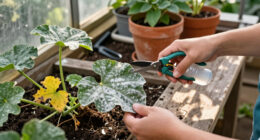
If your roots turn brown in DWC, it’s often due to low oxygen levels, poor water quality, or nutrient imbalances. Stagnant water and lack of aeration can stress roots and promote diseases like root rot. Ensuring proper oxygenation with air stones, maintaining clean, balanced nutrient solutions, and monitoring water temperature and pH can prevent browning. Keep these factors in check, and you’ll discover more ways to keep your roots healthy and vibrant.

Get garden gear delivered free with Prime
- Fast, free delivery on millions of items
- Prime Video, Amazon Music and more included
- Member-only deals all year
Key Takeaways
- Insufficient oxygen in the nutrient solution causes roots to weaken, brown, and become susceptible to decay.
- Adding air stones and ensuring proper aeration increases oxygen levels, preventing root browning.
- Maintaining water temperature between 65-70°F enhances oxygen solubility and root health.
- Regularly cleaning the system and removing decayed roots reduces disease risk and promotes oxygen flow.
- Monitoring and balancing pH, nutrients, and water quality prevents oxygen depletion and root damage.
As an affiliate, we earn on qualifying purchases.
What Causes Roots to Turn Brown in DWC Hydroponics?
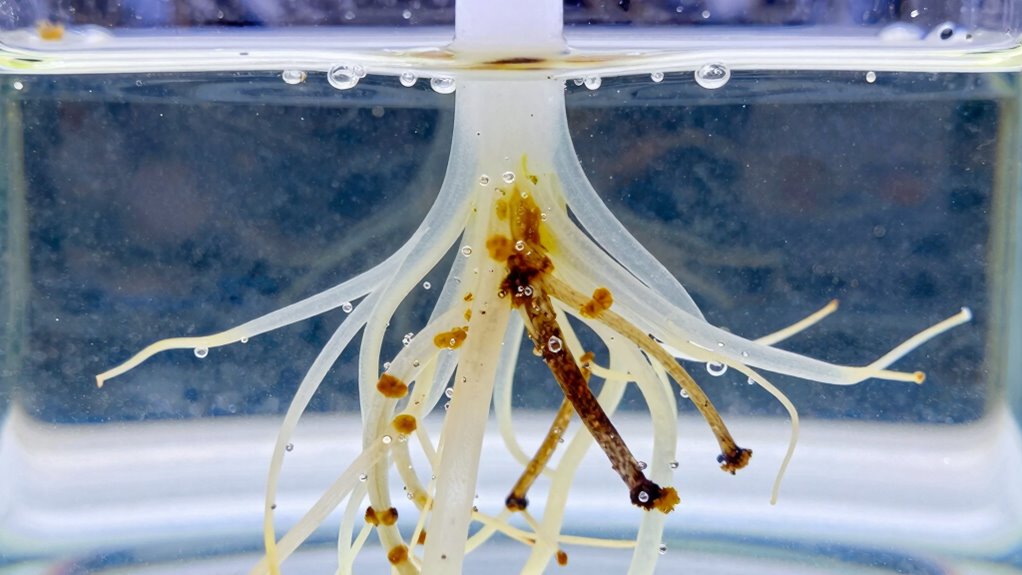
Roots can turn brown in DWC hydroponics when they’re exposed to poor oxygen levels or disease. When oxygen is limited, roots struggle to access the plant nutrients they need, causing them to weaken and become susceptible to root diseases. These diseases, like root rot, thrive in stagnant, oxygen-deprived environments and further damage the roots, turning them brown and mushy. Additionally, if the nutrient solution isn’t properly balanced or becomes contaminated, it can lead to nutrient deficiencies or toxic buildup, stressing the roots and promoting disease. Without enough oxygen, roots can’t effectively absorb nutrients, leading to discoloration and decay. Ensuring proper oxygenation and maintaining clean nutrient solutions are vital steps to prevent the browning of roots in DWC systems. Innovative European cloud servers can support monitoring systems that alert growers to oxygen level fluctuations, helping prevent root problems.
How Do Oxygen Levels Affect Root Browning?

Oxygen is essential for healthy roots, helping them stay strong and resist damage. When oxygen levels drop, roots become stressed and prone to browning or decay. Keeping oxygen high ensures your roots stay healthy and prevent browning issues. Using proper oxygenation techniques can significantly improve root health and overall plant vitality. Additionally, maintaining optimal oxygen levels supports natural filtration systems, which help keep water clean and balanced for healthy root growth. Proper aeration practices ensure that water and soil are well-oxygenated, preventing stagnant conditions, which often lead to root problems. Ensuring proper oxygenation practices are vital for supporting the plant’s natural defenses and promoting vigorous root development.
Oxygen’s Role in Roots
When oxygen levels in the soil drop, roots struggle to breathe, which can lead to browning and decay. Oxygen is crucial for root respiration, the process that converts nutrients into energy. Without enough oxygen, roots can’t perform this process efficiently, weakening their structure. Oxygen diffusion from the surrounding water or air into the root zone becomes limited, further depriving roots of this essential element. When oxygen diffuses poorly, roots become stressed and more prone to browning. This lack of oxygen hampers their ability to fight off pathogens and maintain healthy growth. Additionally, proper oxygenation can prevent root rot and other diseases associated with poor aeration. Ensuring adequate oxygen levels supports root health and helps maintain robust plant growth. To keep roots healthy, you need to guarantee adequate oxygen diffusion in your DWC setup, supporting root respiration and preventing brown, damaged roots. Maintaining proper oxygen levels also promotes overall plant vitality, leading to healthier and more vigorous growth.
Low Levels Cause Damage
As oxygen levels in the soil or nutrient solution drop, roots struggle to perform respiration effectively. Without enough oxygen, roots can’t generate the energy needed to stay healthy, leading to oxygen deficiency. This deficiency increases the risk of root decay, as dead or damaged roots become vulnerable to pathogens. When roots begin to decay, their ability to absorb nutrients and water diminishes, which stresses the plant further. Low oxygen levels slow down essential metabolic processes, causing roots to turn brown and rot. If oxygen isn’t replenished, the damage worsens, leading to widespread root deterioration. Ensuring sufficient oxygen prevents this cycle, promotes healthy root systems, and stops browning caused by oxygen deficiency. Proper aeration is crucial for avoiding these damaging effects.
Maintaining Optimal Oxygenation
Maintaining ideal oxygen levels is essential for preventing root browning, as insufficient oxygen directly hampers root health. When roots lack oxygen, they struggle with nutrient uptake, leading to poor plant nutrition and weakened root structure. To maximize oxygenation, ensure your DWC setup has proper aeration and water movement. Proper oxygen levels support healthy root development, reducing the risk of browning caused by anaerobic conditions.
| Oxygen Level | Effect on Roots |
|---|---|
| Adequate | Healthy root structure, optimal plant nutrition |
| Insufficient | Root browning, nutrient deficiencies |
What Water Quality Issues Lead to Root Damage?
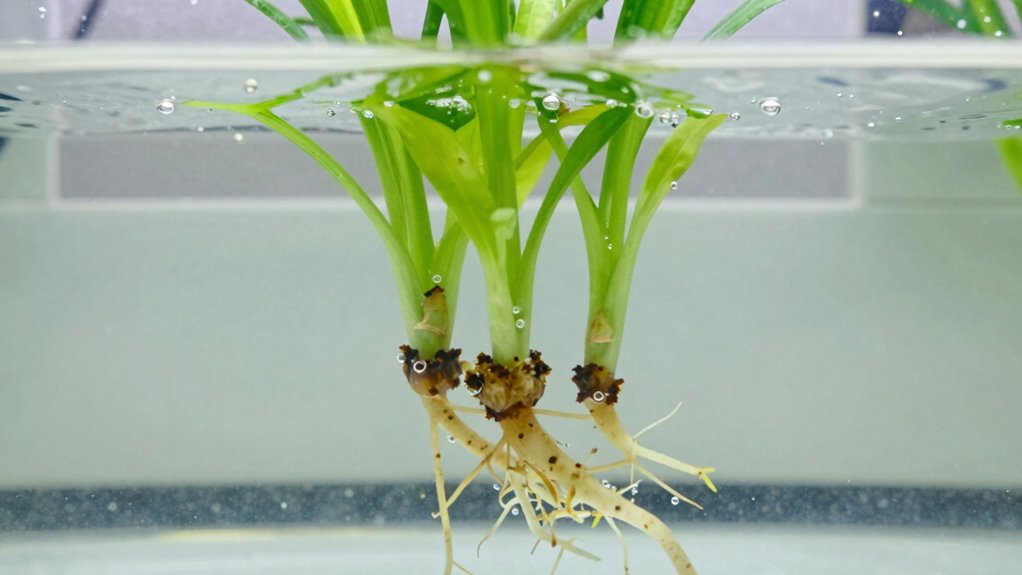
Water quality issues can quickly harm your roots if you’re not careful. Imbalanced pH levels, chlorine or chloramine presence, and nutrient contamination all pose risks that can damage your plants. Staying aware of these factors helps protect your roots and maintain healthy growth. Additionally, understanding the chemical properties of water can help you better assess and address potential problems before they affect your plants. Monitoring water chemistry regularly can prevent many issues related to root browning. Recognizing water testing techniques is essential for early detection of issues that could harm your plants. Implementing proper testing procedures can identify contaminants and imbalances before they cause irreversible damage. Being familiar with water quality standards can guide you in maintaining optimal conditions for healthy root development.
Water pH Imbalances
When water pH levels stray outside the ideal range, it can cause serious root damage in your plants. pH fluctuations make it harder for roots to absorb essential nutrients, leading to deficiencies and stress. If the water is too acidic or alkaline, it disrupts nutrient uptake and weakens root membranes. Water temperature also plays a role; warmer water can intensify pH swings, worsening imbalances. Consistent pH levels within the preferable range (around 5.5 to 6.5) help maintain healthy root environments. Regularly test your water and adjust pH as needed to prevent harmful fluctuations. Keep water temperature stable to minimize pH swings, ensuring your plants’ roots stay healthy and resilient. Proper water pH management is key to preventing root browning caused by imbalances.
Chlorine and Chloramine Levels
Chlorine and chloramine are common disinfectants added to municipal water supplies to make certain, but they can pose problems for your plants’ roots. These chemicals can inhibit beneficial microbial activity and damage root tissues, leading to browning and decay. To prevent this, you need effective chlorine removal methods, such as water filtration systems designed for this purpose. Not all filters are equal; some only remove chlorine, while others also eliminate chloramine. Use the right system to ensure your water is safe for your plants. Here’s a quick comparison:
| Filter Type | Removes Chlorine | Removes Chloramine |
|---|---|---|
| Activated Carbon | Yes | Yes |
| Catalytic Carbon | Yes | Yes |
| Reverse Osmosis | Yes | Yes |
Proper water filtration keeps your roots healthy. Additionally, understanding these water quality issues can help you select the most effective filtration system for your needs. For example, municipal water treatment often involves chlorination processes that can persist through standard filtration methods if not specifically addressed. Being aware of water disinfection methods helps in choosing the appropriate filtration to protect your plants’ roots from damage.
Nutrient Contamination Risks
Nutrient contamination can quickly threaten your plants’ health by introducing imbalances and harmful substances into their growing environment. When water quality is compromised, it disrupts pH stability, causing fluctuations that make nutrient uptake difficult. Excess nutrients, like too much nitrogen or phosphorus, upset the nutrient balance, leading to root stress and brown, damaged roots. Contaminants such as heavy metals or residual chemicals can accumulate and poison your plants if not properly managed. Ensuring clean water, testing regularly, and maintaining stable pH levels help prevent nutrient contamination risks. By keeping water quality in check, you support ideal nutrient absorption and healthy root development, ultimately reducing the chances of root browning and ensuring your DWC system thrives.
How Can Nutrient Imbalances Harm Your Roots?

Nutrient imbalances can directly threaten the health of your plant’s roots, disrupting their ability to absorb essential elements. When nutrients are out of balance, nutrient deficiencies occur, leaving roots starved and weak. For example, a lack of nitrogen or potassium hampers root development and overall plant vigor. pH fluctuations further complicate matters, making nutrients less available or more toxic. If the pH drifts outside the ideal range, roots can become stressed, develop deficiencies, or even rot. These imbalances weaken the root system, reducing oxygen uptake and making your plant more susceptible to diseases. Maintaining proper nutrient balance is crucial for preventing these issues. To prevent damage, monitor nutrient levels carefully, maintain stable pH, and ensure your solution provides a balanced mix of nutrients tailored to your plant’s needs. Using vetted tools like proper lighting and quality nutrient solutions can help maintain optimal root health.
How Can You Improve Oxygenation in Your DWC System?

Ensuring your roots receive enough oxygen is vital for healthy growth, especially in a Deep Water Culture (DWC) system where roots are submerged in nutrient-rich water. To improve oxygenation, focus on enhancing oxygen diffusion into the water. You can do this by adding an air stone connected to a reliable air pump, which increases root aeration and promotes efficient oxygen transfer. Regularly stirring or agitating the water also helps prevent stagnation and boosts oxygen levels. Maintaining proper water temperature—ideally between 65-70°F—further improves oxygen solubility. Additionally, avoid overfeeding, which can cause oxygen-depleting root rot. Optimizing oxygen levels is essential for preventing brown roots and ensuring vigorous, healthy growth. Consistently monitoring dissolved oxygen levels ensures your roots stay well-oxygenated, reducing the risk of brown roots and encouraging vigorous, healthy growth. Using oxygenation techniques such as aeration devices can significantly enhance oxygen levels in your system, supporting overall root health. Incorporating oxygenating devices that increase dissolved oxygen can also help maintain ideal conditions for root vitality. Implementing proper aeration methods can further prevent stagnation and ensure continuous oxygen supply to your roots. Employing oxygen monitoring tools can help you keep track of oxygen levels and make adjustments as needed to optimize root health.
Troubleshooting Persistent Root Browning: What Should You Do?
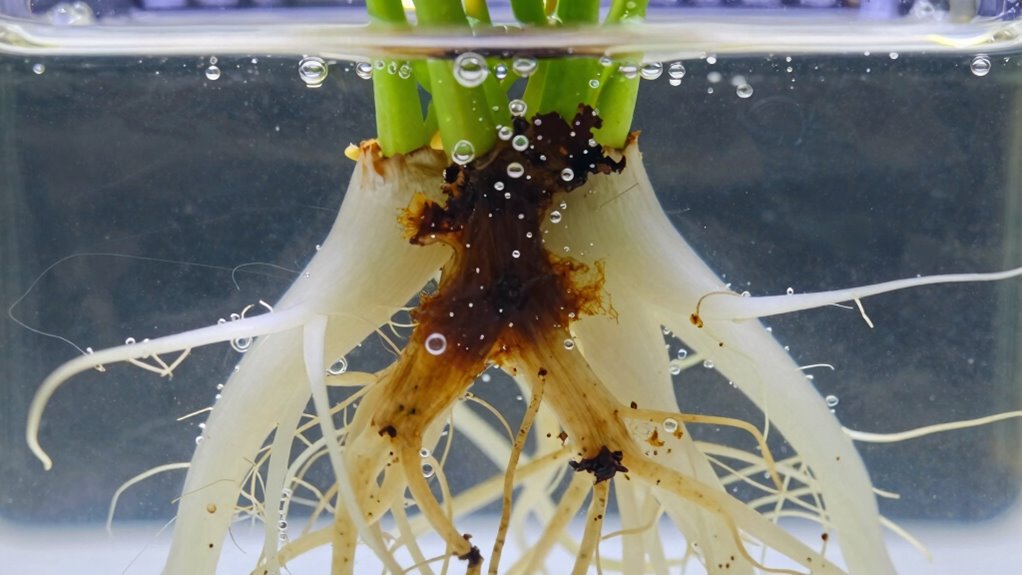
Persistent root browning is a common issue in DWC systems that signals underlying problems with oxygenation, cleanliness, or pathogen control. If you notice your roots turning brown, act quickly to prevent root rot and oxygen deficiency from worsening. First, check your water’s oxygen levels and increase aeration if needed. Clean your system thoroughly to remove any decaying roots or slime that could harbor pathogens. Consider adding beneficial microbes to fight off root rot. Monitor your nutrient solution for imbalances. Finally, maintain ideal environmental conditions to promote healthy root growth.
- Feel the panic of seeing your roots decay
- The frustration of battling stubborn root rot
- The worry about your plants’ future
- The urgency to fix oxygen deficiency now
- The relief of restoring healthy, green roots
How Can You Prevent Root Browning and Keep Roots Healthy?

Preventing root browning starts with maintaining ideal system conditions and practicing good hygiene. Keep your nutrient solution clean and well-oxygenated to prevent root disease, which often causes browning. Regularly check and adjust pH levels to avoid stress on the roots. Practice root pruning carefully—removing dead or decaying roots encourages healthy growth and prevents disease spread. Ensure your DWC system has proper aeration, as oxygen-rich water keeps roots healthy and less susceptible to browning. Avoid overfeeding, which can cause nutrient imbalances and promote root issues. Sanitize equipment regularly to prevent contamination. By maintaining a clean environment, practicing careful root pruning, and ensuring adequate oxygen levels, you can considerably reduce root browning and promote a healthy, vigorous root system.
Frequently Asked Questions
Can Root Browning Occur Without Visible Signs of Plant Stress?
Yes, root discoloration can occur without visible signs of plant stress. Silent stress from poor oxygenation or nutrient imbalance might cause roots to brown subtly, even if the plant looks healthy above ground. You might not notice any obvious issues, but the roots could be silently suffering. Regularly check root health and oxygen levels to catch early signs of browning, preventing long-term damage and ensuring your plant stays strong.
How Does Temperature Influence Root Health in DWC Systems?
You need to keep a close eye on temperature because fluctuations can make your roots catch a cold. Warmer temperatures boost microbial activity, which can lead to oxygen depletion, while cooler temps slow growth and can cause root browning. Maintaining a stable temperature helps preserve microbial balance, ensuring your roots stay healthy and oxygenated. Don’t let temperature swings catch you off guard; steady conditions are key for thriving DWC systems.
Are Certain Plant Varieties More Prone to Root Browning?
Yes, certain plant varieties are more prone to root browning due to variety susceptibility and genetic traits. Some strains naturally have weaker root systems or are more sensitive to oxygen levels, increasing their risk. You should research specific strains’ tendencies and select those with stronger, more resilient genetics. Monitoring your system closely and maintaining ideal oxygenation helps prevent browning, especially in vulnerable varieties.
What Role Do Beneficial Microbes Play in Preventing Root Issues?
Sure, beneficial microbes are like your plant’s tiny bodyguards, maintaining microbial balance and keeping pathogens at bay. They actively compete with harmful invaders, suppressing disease and encouraging healthy root growth. By adding these microbial superheroes to your DWC setup, you create a resilient environment that fights off root issues naturally. So, don’t underestimate the power of good microbes—they’re your plants’ best defense against root browning.
How Often Should Nutrients Be Adjusted to Prevent Root Problems?
You should adjust your nutrient schedule every one to two weeks, depending on your plants’ growth and health. Monitoring your plants closely helps determine the right adjustment frequency, ensuring nutrients stay balanced. Regularly checking for signs of deficiencies or excess allows you to fine-tune the nutrient levels, preventing root problems like browning. Consistent adjustments keep your roots healthy, promoting vigorous growth and preventing issues caused by nutrient imbalances.
Conclusion
Maintaining proper oxygen levels is essential, as studies show that roots need at least 6 mg/L of dissolved oxygen to stay healthy. If you ignore root browning, your plants could suffer significant growth setbacks or even die. By regularly checking your water quality, balancing nutrients, and ensuring good oxygenation, you can prevent brown roots and keep your DWC system thriving. Stay vigilant—healthy roots mean healthier, more productive plants.
Columbus Day / Indigenous Peoples' Day Picks
long weekend sales
As an affiliate, we earn on qualifying purchases.