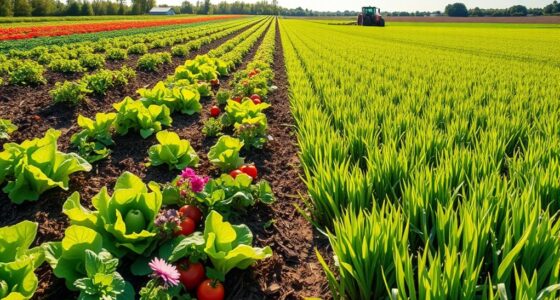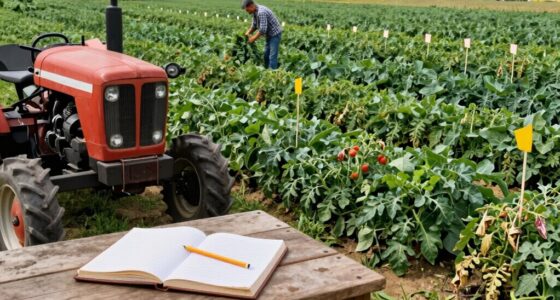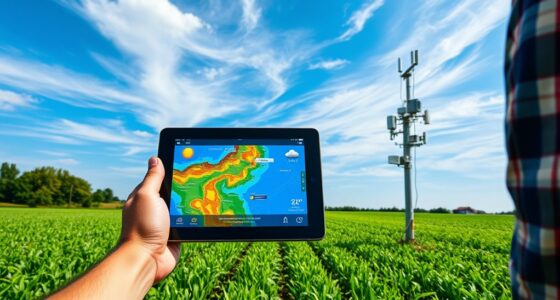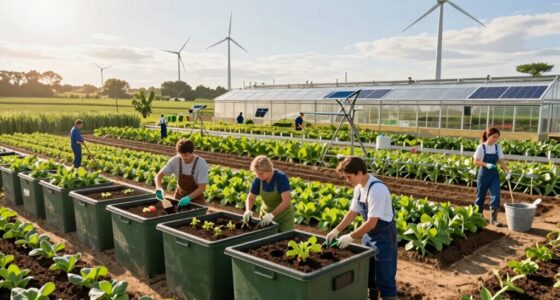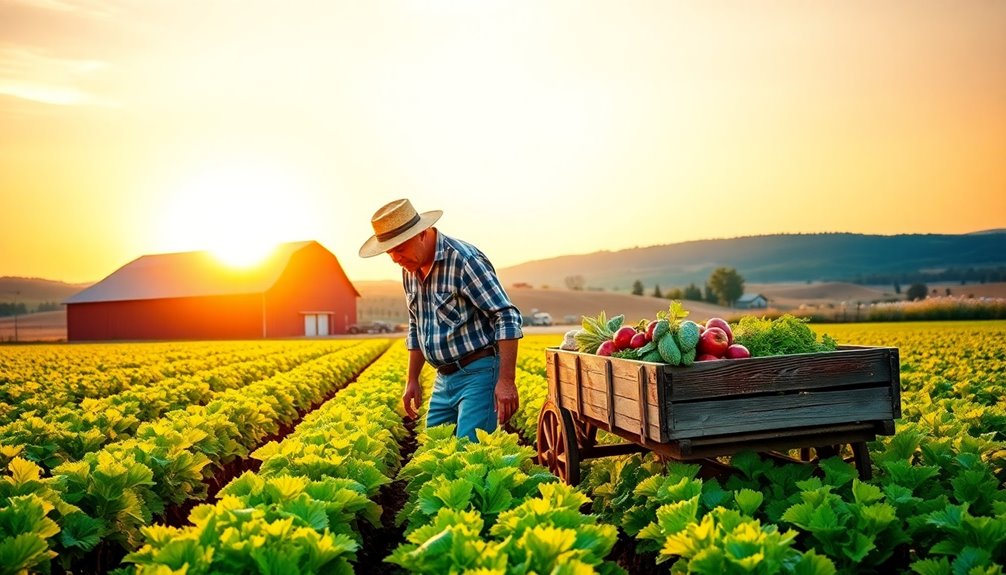
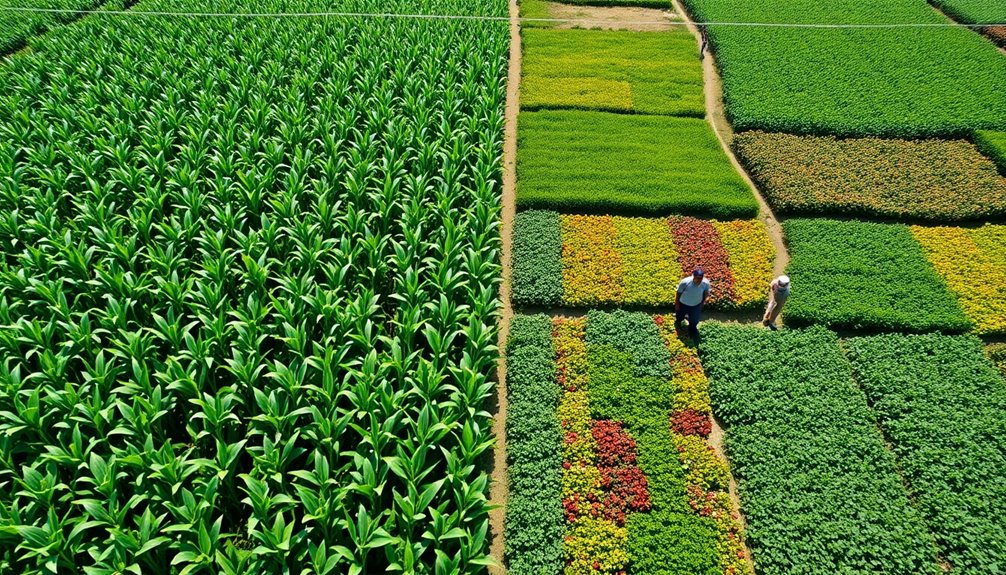
Farming is the heart of agriculture, turning land into essential resources like food, fiber, and fuel. You engage in practices such as crop farming, livestock raising, and aquaculture to sustain communities. With various methods available—ranging from conventional to organic and sustainable farming—you have choices that affect the environment and society. Modern farming faces challenges like climate change, rising costs, and water scarcity, but it also holds promise through innovations. As you explore further, you'll uncover how farming adapts to meet future demands while being mindful of sustainability and ecological health.

Get garden gear delivered free with Prime
- Fast, free delivery on millions of items
- Prime Video, Amazon Music and more included
- Member-only deals all year
Key Takeaways
- Farming transforms land into essential products like food and fiber, employing methods such as crop farming, livestock raising, and aquaculture.
- Sustainable farming prioritizes environmental health, economic viability, and social equity, addressing challenges while ensuring future resource availability.
- Various farming practices exist, including conventional, organic, sustainable, and permaculture, each with unique benefits and challenges for agriculture.
- Modern agriculture faces significant challenges, including climate change, rising costs, soil degradation, and reduced water access, necessitating resilient practices.
- The future of farming includes innovations like precision agriculture and urban farming to meet increasing global food demand projected to rise by 70% by 2050.
As an affiliate, we earn on qualifying purchases.
Definition of Farming
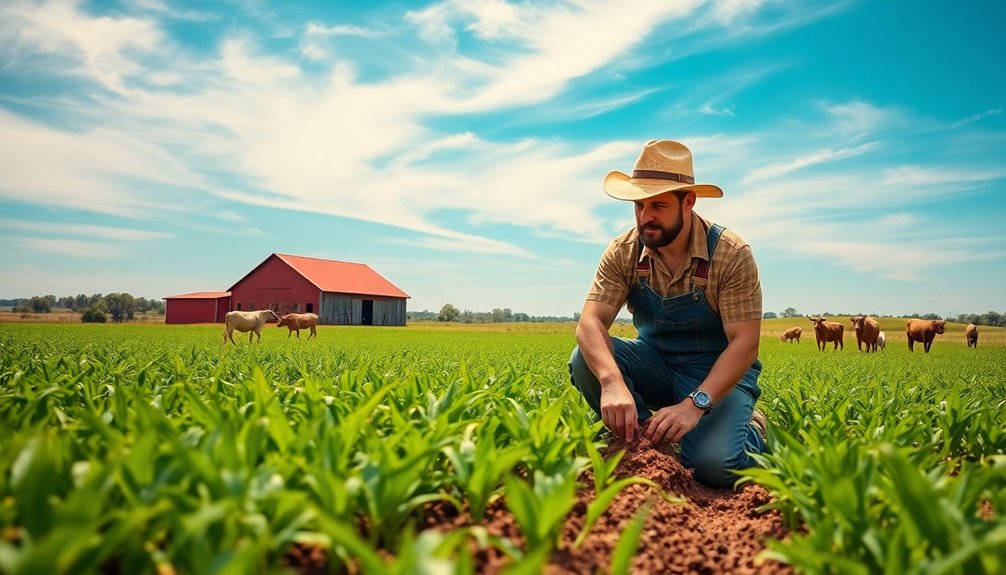
Farming, at its core, is the practice of transforming land into a source of food, fiber, and other indispensable products for human life. It includes various methods like crop farming, livestock raising, and aquaculture, all contributing to the global food supply.
Sustainable farming plays a significant role in this process. By prioritizing environmental health, economic viability, and social equity, sustainable farming practices aim to meet today's food needs without compromising future generations' resources.
With agriculture employing around 1 billion people worldwide, its significance is evident. However, it's important to recognize that the sector contributes to roughly 10% of global greenhouse gas emissions, making the adoption of sustainable practices necessary to combat climate change and guarantee a healthier planet.
Types of Farming Practices
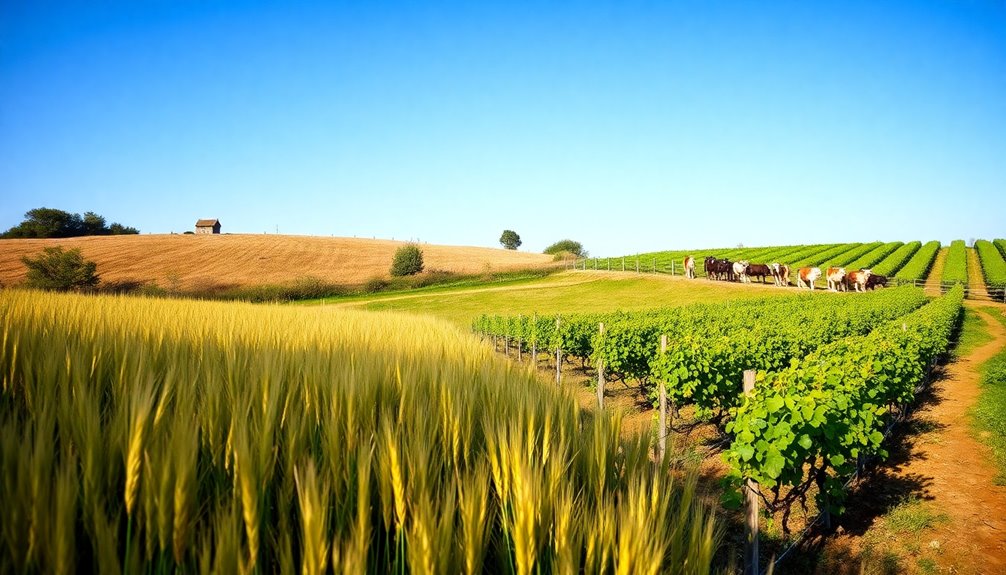
Several farming practices exist, each with its unique approach and impact on the environment and food production. You can choose from various methods based on your goals and values:
- Conventional Farming: Focuses on high yields using synthetic fertilizers and pesticides, raising sustainability concerns.
- Organic Farming: Prioritizes natural processes, banning synthetic chemicals and GMOs, while enhancing soil health and biodiversity.
- Sustainable Farming: Aims to meet current needs without jeopardizing future generations, improving soil health and reducing energy use.
- Permaculture: Designs agricultural systems that mimic natural ecosystems, enhancing sustainability and biodiversity.
Each practice offers different benefits and challenges, so it's crucial to evaluate what aligns best with your vision for sustainable agriculture.
Importance of Sustainable Agriculture
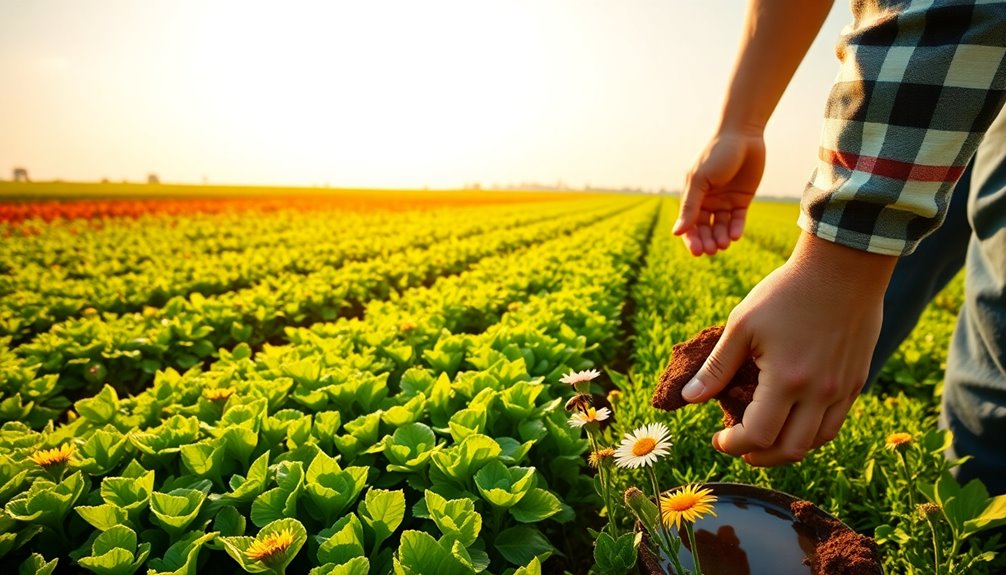
Sustainable agriculture plays an essential role in addressing today's pressing environmental and social challenges. It aims to meet the needs of both current and future generations while ensuring profitability, environmental health, and social equity.
By adopting sustainable practices, you can greatly reduce energy use—up to 56% less per crop unit—lower greenhouse gas emissions by 64% per hectare, and promote biodiversity. These benefits help create resilient ecosystems while minimizing reliance on harmful chemicals.
Sustainable agriculture also works to reduce water pollution and preserve soil health, aligning with global initiatives like the Sustainable Development Goals and Zero Hunger.
Embracing sustainable agriculture not only fosters a healthier planet but also supports a thriving agricultural community for generations to come.
Challenges in Modern Farming
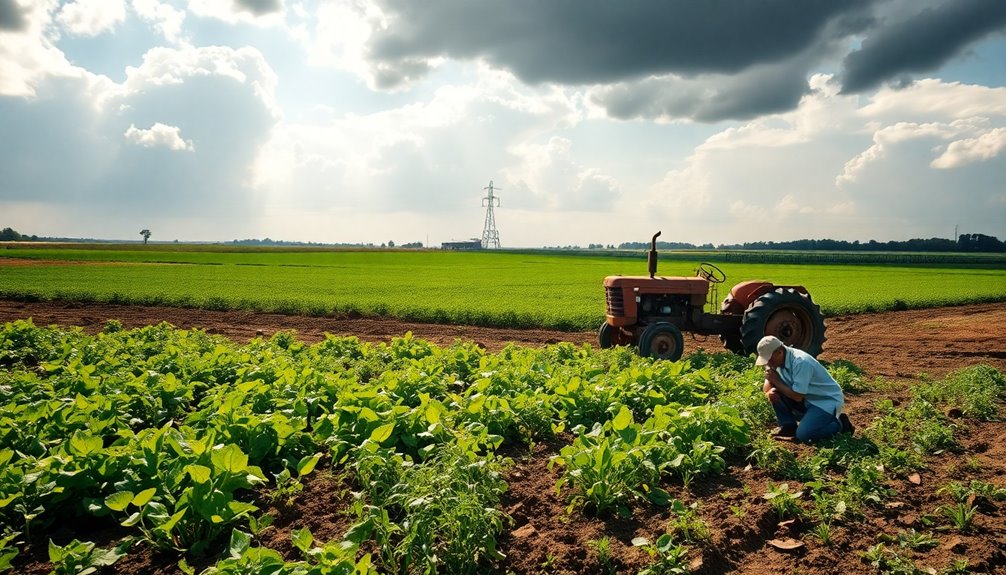
Modern farming frequently encounters a myriad of challenges that threaten its viability and productivity.
For beginning hobby farmers, understanding these obstacles is essential for success. Here are some key challenges you may face:
- Climate Change: Increased weather variability impacts crop yields and livestock health.
- Rising Costs: Input costs, like fertilizers and fuel, have surged by 20% over the past decade, straining budgets.
- Soil Degradation: Unsustainable practices and urbanization have degraded 33% of global soils, reducing arable land.
- Water Access: Droughts and competing demands have led to a 30% reduction in available freshwater for agriculture over the last 50 years.
Navigating these challenges requires resilience and adaptability, vital traits for any aspiring farmer.
Future of Agriculture

The future of agriculture holds immense potential, with innovations poised to transform how we grow food and manage resources.
If you bought this book, you're already exploring the technologies driving precision farming and data analytics, which could boost yields by up to 30% while cutting resource consumption.
Sustainable practices are crucial too; they can slash greenhouse gas emissions by 56% per crop unit compared to traditional methods.
As global food demand is set to soar by 70% by 2050, urban agriculture, with its vertical farms and community gardens, will play a key role in enhancing food security.
However, climate change threatens crop yields, making adaptive practices essential to guarantee a resilient future for agriculture.
Frequently Asked Questions
Why Is Farming Important to Agriculture?
Farming's essential to agriculture because it directly impacts food production and economic stability.
When you engage in farming, you contribute to feeding billions and supporting nearly a billion jobs worldwide.
It also plays a key role in land management and environmental stewardship.
By adopting sustainable practices, you can enhance biodiversity and soil health, ensuring long-term productivity and sustainability.
Plus, implementing eco-friendly methods helps reduce greenhouse gas emissions, benefiting the planet.
What Is Farming?
You might think farming's just about plowing fields and raising cows, but it's so much more.
It's the art of cultivating land and nurturing animals to produce food and materials that sustain life. You grow crops, tend to livestock, and engage in practices that can either harm or heal the environment.
Farming's essential, feeding billions and shaping economies, but it's also a delicate balance of responsibility and innovation for future generations.
Which Is Essential for Agriculture?
To thrive in agriculture, you need several essentials.
First, quality soil is essential for healthy crops; it provides nutrients and supports root systems.
Water management is also key, as plants require adequate hydration.
Additionally, effective pest control helps protect your yields from harmful insects.
Finally, adopting sustainable practices guarantees you're not just meeting today's needs but also preserving resources for future generations.
Each element plays a significant role in your success.
What Are the 3 Things to Consider When Farming?
When you think farming, you might picture a peaceful life surrounded by crops and animals, but let's be real—it's more like a juggling act with three flaming torches!
First, you've gotta consider your financial needs, from land to equipment.
Next, pick the right crops based on your climate and market.
Finally, don't forget about your livestock's care; their health directly impacts your success.
Balancing these factors can lead to a thriving farm!
Conclusion
To sum up, farming isn't just about growing food; it's about cultivating communities, nurturing the environment, and sustaining our future. By embracing sustainable practices, tackling modern challenges, and innovating for change, you can play a crucial role in shaping agriculture. Whether you're a seasoned farmer or a curious beginner, remember that your choices matter. Let's prioritize sustainability, support local practices, and invest in the future of agriculture together. The earth depends on it, and so do we.
Fall yard work Picks
leaf blowers
As an affiliate, we earn on qualifying purchases.