
TL;DR
A Gardening Know How report recommends taking soft stem cuttings from herbs in early fall and rooting them in water indoors. It gives detailed advice for mint, but the supplied source excerpt ends before naming the other herbs or completing the instructions.
The report says early fall can be a useful time to take cuttings because stems are still actively growing and have not yet hardened for winter. It recommends choosing tender green shoots near the top of a plant, rather than older, rigid stems. The article describes water propagation as an inexpensive way to keep herbs growing indoors and watch roots form through clear glass.

Get garden gear delivered free with Prime
- Fast, free delivery on millions of items
- Prime Video, Amazon Music and more included
- Member-only deals all year
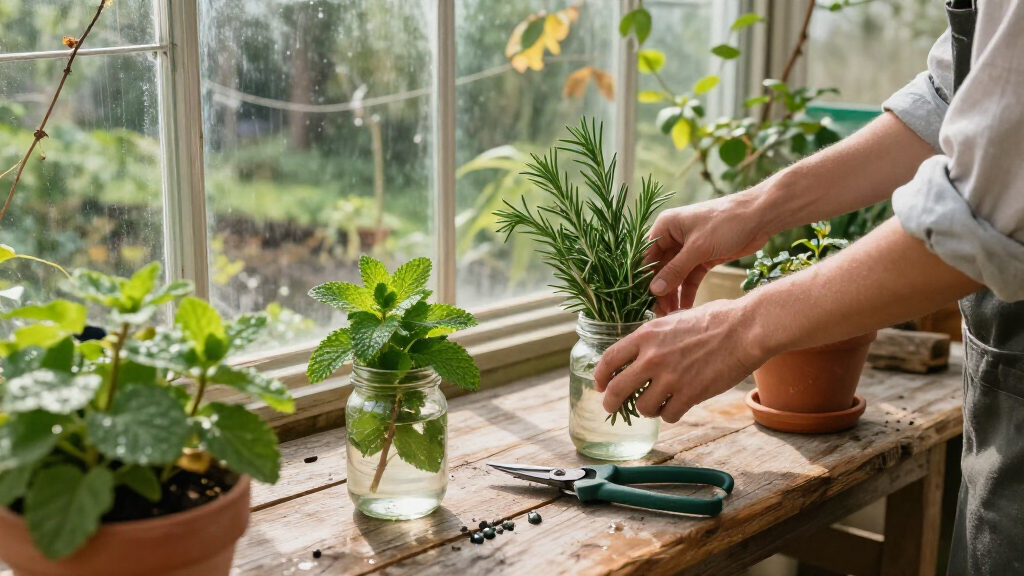
For preparation, the guide advises making a cut just below a leaf node with sharp scissors or pruning snips. Remove leaves from the lower two inches of the stem so none sit underwater, and change the water every few days. It says a drop of liquid kelp can be added to a larger glass of water, while emphasizing that water cleanliness should be monitored.
The excerpt singles out mint, including spearmint, peppermint and specialty varieties, as a beginner-friendly choice. It recommends 4-to-6-inch cuttings with foliage removed from the lower half, and says tall jars can help keep top-heavy stems upright. If a stem is flowering or setting seed, the writer advises removing flower buds or choosing a leafy shoot.
Keeping Herbs Growing Indoors
For gardeners facing colder weather, rooting cuttings offers a way to carry selected herbs indoors instead of letting the season’s outdoor growth end. The guide frames the method as a low-cost way to preserve favorite plants and continue harvesting fresh leaves, though it does not quantify success rates or promise that every cutting will root.
The visible roots also let growers track progress without digging up a cutting. Following the article’s advice on clean cuts, submerged leaves and water changes may help reduce common problems such as rotting stems, but the source excerpt provides no controlled comparison of techniques.
Popular right now

Bose QuietComfort Wireless Headphones – Twilight Blue (Limited Edition)

Hisense 55-Inch E6SR Series Hi-QLED 4K UHD Smart Roku TV (55E6SR, 2026 Model)

Ninja Foodi DZ201 8-Quart DualZone 6-in-1 Air Fryer
As an affiliate, we earn on qualifying purchases.
The Guide’s Fall Propagation Advice
The article presents fall water propagation as a response to the approaching end of the outdoor growing season. It says softwood stems retain active growth and may root more readily than hardened lower stems, while describing the timing as particularly useful in early autumn.
The author also recounts rooting a mint sprig in a water mister after a night out, saying a visible root appeared in a little over a week. That is a personal anecdote, not a measured trial. The supplied material includes the mint section but cuts off during its windowsill advice; it does not identify the other herbs promised by the headline.
““Early fall is a great time for starting stem cuttings in water.””
— Gardening Know How report
Success Rates and Missing Herb Picks
The provided excerpt does not show the complete article. Although its headline promises three easy herbs and one easier option, only the mint section is present; the remaining plant recommendations and the article’s full instructions cannot be confirmed from this material. The publication date is also absent.
The guide does not provide measured rooting rates, specify the range of indoor temperatures or light levels needed, or compare water propagation with other methods. Its statement that mint roots in days is the author’s assessment, not a result supported by data in the supplied text.
Steps for Trying Mint Cuttings
Readers following the excerpt can start by taking a 4-to-6-inch leafy mint shoot, cutting below a node with clean, sharp snips and removing leaves from the portion that will sit in water. Set the stem upright in a clean jar, place it on a warm windowsill with bright light, and replace the water every few days.
The supplied text ends before completing that windowsill instruction and does not explain when to transfer rooted cuttings into soil. Gardeners should monitor their cuttings for root growth and stem condition; further steps and the other promised herb choices would require the complete report.
Key Questions
Which herb does the excerpt recommend for beginners?
It recommends mint, including spearmint, peppermint and specialty varieties. The supplied excerpt does not include the other herbs named in the full guide.
When does the guide suggest taking cuttings?
It recommends early fall, when soft green stems may still be actively growing before winter hardens them.
How should I prepare a cutting for water?
Use sharp, clean snips to cut just below a leaf node. Remove foliage from the lower two inches so no leaves remain underwater, and keep the water clean by changing it every few days.
How long does mint take to root?
The writer says mint can root in days and describes seeing a root after a little over a week in one personal example. The excerpt does not provide data establishing a typical rooting time.
Source: rss