TL;DR

Get garden gear delivered free with Prime
- Fast, free delivery on millions of items
- Prime Video, Amazon Music and more included
- Member-only deals all year
A Gardening Know How report identifies six fall garden tasks to complete before a hard freeze: harvest tender crops, lift vulnerable tubers, protect plants, and prepare outdoor water systems, among other steps. Timing varies by region, and the report says hardy crops such as kale and carrots can generally tolerate colder conditions.
Gardening Know How has published a six-task fall checklist for gardeners preparing for the first hard freeze, urging them to harvest tender crops, lift vulnerable bulbs and tubers, and protect water lines before temperatures fall. The report says a hard freeze can damage plants and plumbing, while the timing of that risk depends on local climate and weather.
The report defines a hard freeze as 28°F (-2°C) or lower lasting several hours, distinguishing it from a light frost near 32°F (0°C). It says tender plants can be damaged at temperatures above the hard-freeze threshold, while cold-tolerant crops including kale, collards, Brussels sprouts, carrots, and parsnips can withstand colder conditions.
For tender crops, the article recommends picking tomatoes, peppers, and eggplants before freezing weather. It says mature green tomatoes with a glossy, pale-green appearance can be brought indoors to ripen, while small, hard fruits may not mature. Basil can be harvested for processing or dried indoors.
Gardeners in colder areas, typically USDA hardiness zones 7 and below, are advised to lift tender summer-flowering plants such as dahlias, cannas, calla lilies, caladiums, gladioli, and tuberous begonias. The report advises curing lifted tubers in a dry, frost-free place and storing them in dry packing material at 40–50°F (4–10°C). It also flags outdoor faucets and irrigation lines as freeze risks because water inside them can freeze.
Preventing Plant and Pipe Damage
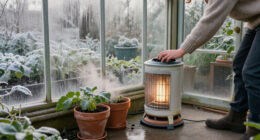
These jobs have a weather-driven deadline: once a hard freeze arrives, tender produce may be lost, stored plant parts can be damaged in frozen soil, and water-filled outdoor plumbing can freeze. Some damage may not become apparent until spring, the report says, when gardeners discover failed tubers or problems with pipes and hoses.
The guidance also helps distinguish plants that need immediate attention from those that can remain outdoors. Acting on local forecasts rather than treating every garden task as urgent can help gardeners focus on vulnerable crops and equipment while leaving hardy vegetables in place.
Popular right now

Breville Barista Express Espresso Machine with Built-In Grinder, Black Truffle

Dyson V8 Cyclone Cordless Vacuum

Bose QuietComfort Headphones (2nd Gen), Wireless Over-Ear Noise-Cancelling Headphones, Eucalyptus Green
As an affiliate, we earn on qualifying purchases.
Freeze Dates Vary by Region
The report says a light frost and a hard freeze are not the same. A light frost forms near 32°F (0°C) and can blacken tender annuals, while a hard freeze involves lower temperatures sustained for several hours. The article says frozen ground generally develops later, after a longer period of sub-freezing weather.
Timing differs substantially across the United States. According to Gardening Know How, gardens in northern USDA zones 3–5 often face hard freezes by mid-October, while milder zones 7–9 may not reach 28°F until late December or January. These are broad regional ranges, not a forecast for any particular location.
“A hard freeze is more aggressive.”
— Gardening Know How
Local Freeze Timing Remains Uncertain
The report does not give a forecast for a specific city or date. When the first hard freeze will arrive depends on location and changing weather, so its zone-based ranges should not be read as exact predictions. The source material also provides only partial detail on the full six-task list; it specifically describes harvesting tender crops and lifting tender tubers, and flags outdoor plumbing protection.
Whether particular plants can stay in the ground also depends on local winter conditions, soil drainage, and plant hardiness. The article says dahlias may remain in the ground in zone 8 and warmer when soil drains freely and plants are protected, but that does not guarantee success in every garden.
Check Forecasts and Secure the Yard
Gardeners should check local forecasts and prepare supplies before overnight temperatures drop, rather than relying only on a general calendar date. The report recommends having items such as insulated spigot covers, frost fabric, garden forks, and storage crates available.
Before acting, identify which crops and plants are vulnerable in the local garden, harvest tender produce, and protect water-holding fixtures and lines ahead of freezing conditions. For plant-specific decisions, gardeners should follow local extension guidance and the care requirements for each variety.
Key Questions
What temperature counts as a hard freeze?
The Gardening Know How report describes a hard freeze as 28°F (-2°C) or lower for several hours. A light frost occurs near 32°F (0°C).
Which vegetables should be harvested before freezing weather?
The report recommends harvesting tender crops such as tomatoes, peppers, eggplants, and basil. It says hardy crops including kale, collards, carrots, and parsnips can tolerate colder conditions.
Should dahlias be dug up before the first frost?
In colder regions, the report recommends lifting dahlias after an initial light frost blackens the foliage, but before the ground freezes. It says dahlias may remain in the ground in zone 8 and warmer when soil drainage and protection are suitable.
When should outdoor faucets and irrigation lines be protected?
Protect water-holding outdoor fixtures and lines before freezing temperatures arrive. The report warns that water inside pipes, faucets, and irrigation systems can freeze during a hard freeze.
Source: gardeningknowhow.com