
TL;DR
Spooky outdoor string lights are decorative lights for porches, patios, trees, and walkways, and the best set fits both your Halloween look and its outdoor location. Measure the illuminated length, check the outdoor-use label and power requirements, then hang the lights with suitable clips and store them dry after the season.
One purple bulb above the porch can make a familiar front step feel like the entrance to a haunted house. The trick is choosing spooky outdoor string lights that fit the space, look good after sunset, and are rated for the weather they’ll face.
You’ll learn how to pick colors and bulb styles, measure the real lit area, compare plug-in, battery, and solar power, and hang everything with care. A few checks before you buy can save you from a short strand, a tangled mess, or lights that don’t suit the spot.
Match bulb size and spacing to the display: larger bulbs stand out across open rooflines, while mini lights suit railings and shrubs.
Measure the illuminated section and allow extra length for corners and routing to power.
Choose plug-in, battery, or solar power based on outlet access, cord paths, and the panel’s access to sunlight.
Check the outdoor-use label, follow installation instructions, and connect strands only within the manufacturer’s stated limit.
Dry, inspect, and loosely coil lights before storing them in a dry container.
Choose colors that make your porch feel haunted
Spooky outdoor string lights create a Halloween atmosphere by adding color and small pools of light to porches, patios, fences, trees, and walkways. Orange and warm white give you a classic pumpkin-and-candle look, while purple, green, and blue bring a more theatrical glow. For example, orange bulbs around a doorway with a short purple strand along the railing make a clear Halloween scene without turning your whole porch into a rainbow.
Start with the mood you want. Orange and warm white feel familiar and cozy; purple, green, and blue look eerie against dark shrubs or a painted fence. Some sets twinkle, fade, or switch colors, but a steady glow can make carved pumpkins and decorations easier to see. This is a practical tradeoff: movement attracts attention, while steady light makes shapes and steps easier to read. If the lights are near a path, use calm illumination there and reserve effects for a wall, tree, or other feature away from foot traffic.
Think about what the lights will sit beside. Warm white can soften a stone wall, while purple stands out against a hedge; green may disappear into dense leaves. The surrounding surface changes how much contrast you get, so a color that looks vivid in its packaging may fade into the background at home. Try holding a colored bulb near the surface before you decorate the whole area. Check it after dark too, since daylight gives a misleading impression of the final effect.
Match bulb size and spacing to the space
Use larger bulbs when you want a bold outline, and choose mini lights or closely spaced bulbs for bushes, narrow railings, and small balconies. Spooky outdoor string lights can look dramatic across a roofline, but the same oversized bulbs may crowd a slim porch post. A strand of mini orange lights woven through a potted shrub gives you a more even glow than a few large bulbs lost among the leaves. Bulb size affects both visual scale and how concentrated the light appears: large bulbs read clearly from the street, while many small points of light create texture at closer range.
Check two measurements on the package: the illuminated length and the distance between bulbs. Overall cord length may include an unlit section between the plug and the first bulb, which won’t decorate your railing. Bulb spacing also determines how the line reads: wide gaps can leave a long railing looking sparse, while tight spacing can feel busy on a small post. If your porch edge measures 12 feet, allow extra for the route to the outlet and around corners before choosing a set.
Here’s a quick way to plan your layout:
- Measure the area you want to outline, wrap, or drape.
- Compare it with the lit length, not just the full cord length.
- Add routing room for corners and the path to power.
- Check spacing to see whether the bulbs will look crowded or sparse.
For example, if a 12-foot railing needs a strand routed another 3 feet to a power source, you need more than 12 illuminated feet. A dry run with string or a tape measure helps you see where the last bulb will land. It also reveals whether the route leaves enough slack to reach the outlet without pulling the strand tight, which can strain connectors and make the display harder to secure.
Pick power that suits your outlet, shade, and schedule
Plug-in, battery-powered, and solar sets each work best in different spots, so match the power source to the light’s location and your routine. A plug-in strand can give you steady light by a suitable outdoor outlet, while batteries free you from nearby sockets. Solar lights can avoid extension cords, but their runtime depends on sunlight at the panel. The convenience of avoiding a cord comes with a planning cost: batteries need checking or replacing, and a solar panel needs a spot with enough daylight.
Picture a balcony with no convenient outlet: battery lights can wrap the railing without a cord crossing the doorway. For a long fence, plug-in lights may be easier to run if you have an appropriate outdoor outlet and route the cord safely. A solar set can suit a small garden accent, but a panel tucked beneath a shaded porch roof may not collect enough daylight for a long evening display. Consider how long you want the lights on and whether you can reach the power source easily; a set that looks suitable on paper may be inconvenient if its batteries are difficult to change or its panel cannot be placed in the sun.
Modern sets may also offer timers, dimming, app controls, or remote-selected effects. Features vary: a smart strand may need a compatible phone app, Wi-Fi connection, or separate hub. Those requirements affect whether the feature is useful where you plan to hang the lights, and whether setup adds steps each season. Check those setup details before buying, especially if you want to turn the lights on with a voice assistant.
Many newer strings use LED bulbs, which generally use less electricity and produce less heat than comparable incandescent bulbs. That can make LEDs useful for displays that stay on for several hours, though the actual energy use depends on the product and how many strands you run. Still, LEDs don’t make a damaged or misused string safe. Check whether the bulbs can be replaced and whether one failed bulb will put the rest of the strand out, since that affects how easily you can maintain the display during the season.
Check the outdoor rating before rain reaches the porch
Only leave a string outside in rain when its label says it is suitable for outdoor use and you install it as the manufacturer directs. Look for an outdoor-use rating and follow any instructions about water exposure; an IP rating can describe protection against dust and water, but the right rating depends on where the lights will hang. A covered porch and an exposed tree branch face different conditions: a roof may reduce direct rain, but wind can still drive water onto the lights and connections.
“Weather-resistant” doesn’t mean a string can be submerged, left with damaged insulation, or used beyond its stated limits. A rating describes specified protection under defined conditions, so it cannot compensate for a cracked socket or a connection placed where water collects. If a connector sits near a downspout or on wet ground, follow the product directions for protecting connections and keeping them out of pooled water. After a storm, look for loose fittings, cracked sockets, and frayed wire before switching the set back on; water and damaged insulation can create a shock or fire hazard.
For example, if you wrap lights around a fence that gets wind-driven rain, check the label and place connections as the instructions recommend. Unplug or remove the strand if damage appears or conditions exceed its rated use. This check matters over a display that stays up for several weeks, because repeated exposure and movement can loosen fittings even if the lights worked when first installed.
Hang lights securely without damaging your home
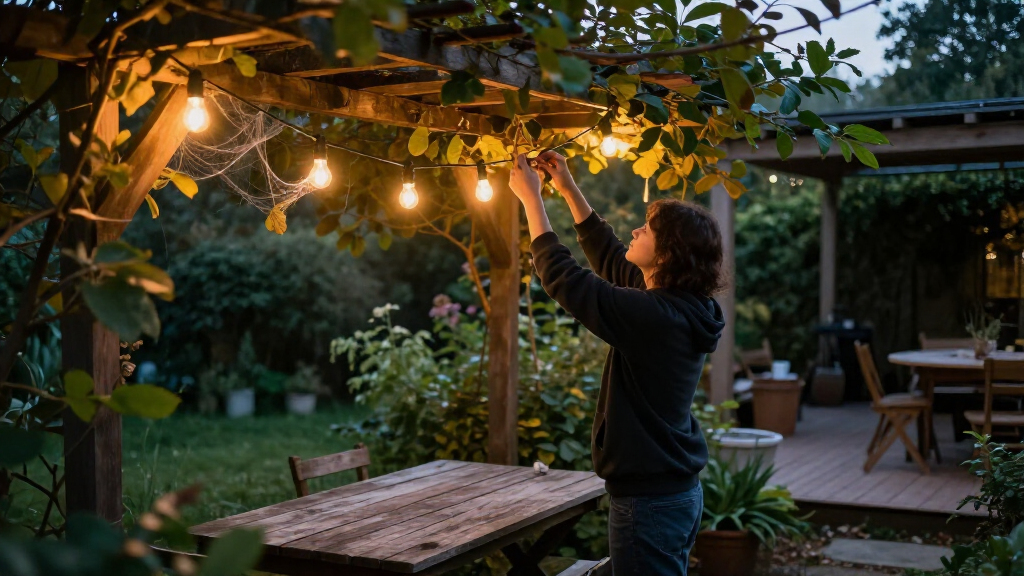
Use clips designed for the surface and light type, keep cords out of walking paths, and connect only the number of strands the manufacturer permits. These steps help protect both the wiring and the people moving through your display. For example, plastic clips made for gutters or siding can hold a light string in place without driving a nail through its wire. A suitable clip also makes removal easier and reduces the chance of damaging paint, gutters, or insulation when the season ends.
Before you hang anything, read the product instructions and check the condition of each strand. Use an outdoor-rated extension cord when needed, protect plugs and connections as directed, and avoid overloading outlets. Never assume two similar-looking strings can connect safely; link them only if the manufacturer says they are connectable and lists a limit. That limit reflects the electrical load the set is designed to carry, so exceeding it can overheat a cord or connector even when every bulb appears to work normally.
Keep cords away from doorways, stairs, and the route trick-or-treaters will follow. Don’t staple or nail through the wiring, and don’t use fasteners that could pierce siding insulation. If the porch gets busy on Halloween night, run cords along an edge where feet won’t catch them. After hanging, check that the strand is supported without tension and that doors, windows, and gates can still open without pinching the cord.
Before switching on: inspect the wire, follow the label, and keep the walking route clear.
Make one simple display feel like a full Halloween scene
A focused display often feels spookier than a yard full of competing colors and effects. Choose one main line of light, then use a smaller accent to draw attention to a pumpkin, doorway, or bare branch. A warm orange strand around the porch roof paired with a few purple bulbs in a nearby shrub can make the entry feel planned and easy to see. Limiting the palette gives the eye a clear place to land, while using different colors for the main outline and accent helps separate the shapes in the scene.
Use the lights to guide visitors as well as decorate. A softly lit path edge or doorway gives people a visible route, while a flashing effect aimed at the pavement may distract from where they’re walking. If you use twinkling or color-changing modes, watch the display from the sidewalk after dark and check whether the main features still stand out. This viewing angle matters because a display that looks balanced from the porch can become a patch of glare or visual clutter from the street.
Try a sample section before wrapping the whole space. One short strand can show you whether blue vanishes against the night sky or whether green blends into a hedge. That small preview can save time and help you keep the strongest color where people will notice it. It also lets you judge brightness against nearby lights, so the Halloween display adds atmosphere without washing out the details you want visitors to see.
Store the lights so they’re ready next October
Dry, loosely coiled lights are easier to reuse than a damp knot pulled from a box the following October. After the season, unplug the set, let it dry, and inspect the cord, bulbs, and connectors before storage. Moisture trapped in a coil or container can contribute to corrosion, while tight knots can stress the wire and make the next installation harder. If a strand wrapped around a porch post has a cracked socket or damaged wire, set it aside rather than packing it away for next year.
Coil the lights loosely around a piece of cardboard or a storage reel to limit tangles, then place them in a dry container with their instructions. Keeping the instructions with the strand makes it easier to check its outdoor rating and connection limits next season. Detachable decorations and replaceable bulbs can make some sets simpler to maintain, though product designs differ. Before hanging them again, check the label and condition instead of assuming last year’s setup still fits.
Frequently Asked Questions
Can spooky outdoor string lights stay outside in rain?
Only if the lights are labeled for outdoor use and installed as directed. Check the rating and follow the manufacturer’s guidance for protecting connections; remove or unplug the set if it becomes damaged or conditions exceed its stated limits.
How many string lights do I need for my porch?
Measure the area you want to decorate, then compare it with the strand’s illuminated length. Add room for corners and the route to the power source, since the total cord length may include an unlit lead wire.
Are LED Halloween string lights safer than incandescent lights?
LEDs generally use less electricity and produce less heat than comparable incandescent bulbs. Either kind can be unsafe if damaged or installed incorrectly, so inspect the strand and follow its instructions.
Can I connect several light strings together?
Connect them only when the manufacturer says the strings are connectable and gives a limit. Similar-looking plugs don’t prove that two sets can be linked safely.
Are solar lights bright enough for Halloween decorations?
Solar lights can work well for small accents, and their brightness and runtime depend on the model and sunlight reaching the panel. A panel in deep shade may not collect enough energy for a long evening display.
Conclusion
Choose lights for the space you have: measure the lit length, match the color and bulb size to the display, and follow the outdoor-use label from setup through storage. A few orange and purple bulbs, placed with care, can turn an ordinary porch into a small, glowing doorway to Halloween night.