TL;DR

Get garden gear delivered free with Prime
- Fast, free delivery on millions of items
- Prime Video, Amazon Music and more included
- Member-only deals all year
Grow Organic has published a nine-step guide to growing larger garlic bulbs, emphasizing variety choice, healthy planting cloves, adequate spacing and steady care through spring. The guide says results depend on climate, soil and variety; it does not promise a particular bulb size.
Grow Organic has published a nine-step guide to growing larger garlic bulbs, advising gardeners to choose varieties suited to local conditions, plant healthy cloves with enough room, and manage water and nutrients through the season. The guide says bulb size also depends on climate, soil and variety, so the practices are not a guarantee of giant harvests.
The recommendations begin before planting. The guide advises selecting firm, large cloves from healthy bulbs and discarding cloves with mold, soft spots or damage. It says large cloves have more stored food to support early growth, and recommends separating cloves shortly before planting while leaving their papery skins intact. Grocery-store garlic may carry disease or be poorly suited to a gardener’s region, the report says.
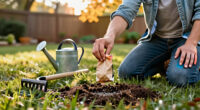
For planting, the guide favors fall in many regions, giving garlic time to form roots before spring growth; it says many fall-planted crops take about eight to nine months. Plant cloves point-end up and root-end down. Six inches between cloves is offered as a starting point for larger bulbs, while planting depth should follow local guidance: the source notes that recommendations vary and may measure depth differently.
Gardeners are also advised to use a sunny, well-drained bed, test soil before adding amendments and keep weeds down. The guide describes a pH near 6.0–7.0 as suitable, but says lime should be applied only when soil-test results call for it. Nitrogen can support leaf growth early, but excess nitrogen late in the season may delay bulb development. For hardneck garlic, removing the curling flower stalk, or scape, may help direct growth toward the bulb.
The Choices That Shape Bulb Size
The guide’s main point is that larger bulbs depend on a season of coordinated care, not a last-minute fertilizer boost. Spacing, healthy planting stock, suitable growing conditions and timely water all affect how garlic develops. These practical steps matter to gardeners because small errors—such as crowding plants or letting weeds compete—can limit growth even when the crop receives additional feed.
The advice also cautions against treating “giant garlic” as a predictable result. The source says outcomes vary with local climate, soil and variety. Its recommendation to test soil before fertilizing may help gardeners avoid unnecessary amendments, while monitoring leaves and sample bulbs can help them choose a harvest time that balances bulb development and storage quality.
Popular right now

Dyson V8 Cyclone Cordless Vacuum

De'Longhi 15-Bar Pump Espresso Machine with Milk Frother & Temperature Control

KitchenAid Artisan 5-Quart Tilt-Head Stand Mixer, KSM150PS, Almond Cream
As an affiliate, we earn on qualifying purchases.
Matching Garlic to Local Conditions
The report distinguishes hardneck and softneck garlic. Hardneck varieties form a central stalk called a scape and often perform well in regions with cold winters. Softneck varieties generally suit milder climates, tend to produce more cloves and often store longer. The guide stresses that performance still varies by variety and growing conditions, and recommends checking local growing advice when selecting planting dates and depth.
It also separates elephant garlic from true garlic. Elephant garlic can produce very large bulbs, but the source says it is not true garlic (Allium sativum); it is related to leeks and has a milder flavor. This distinction matters for gardeners choosing a crop based on size, taste or botanical identity.
Planting time and harvest timing depend on the growing season. Fall planting is common, while spring planting can work but may produce smaller bulbs, according to the guide. As harvest approaches, it advises checking plants when lower leaves brown while several upper leaves remain green, then lifting a sample to inspect the cloves and wrappers.
““Extra fertilizer alone will not turn a weak crop into jumbo garlic.””
— Grow Organic guide
What the Guide Cannot Guarantee
The source does not report trial results, measured bulb sizes or a comparison showing how much each practice increases yields. It presents the nine steps as gardening guidance, not as a controlled test or a promise of oversized bulbs. The publication date is not provided in the supplied material, and the timing of any later revisions is unclear.
Some recommendations require local interpretation. Planting dates, depth, watering and the timing of stopping irrigation vary with climate and soil; the guide directs readers to local Extension advice and soil testing. It does not specify one fertilizer rate or watering schedule for every garden, and those details should not be inferred from its general advice.
Monitor the Crop Through Harvest
The next steps for gardeners are to use local guidance to set planting dates and depth, prepare a sunny bed with well-drained soil, and keep notes on spacing, variety and seasonal conditions. During growth, the guide advises watering when the root area begins to dry, accounting for rainfall, and reducing irrigation as bulbs near maturity. It says local advice often recommends stopping watering about two weeks before harvest.
As plants mature, gardeners can check a sample bulb when lower leaves brown and several upper leaves remain green. Lift bulbs gently with a fork; harvest too early and they may be undersized, while waiting too long can allow wrappers to split. After lifting, cure garlic in shade with good airflow until the necks and wrappers dry. The source provides no follow-up results or confirmed harvest outcomes.
Key Questions
How far apart should garlic cloves be planted for larger bulbs?
Grow Organic gives about six inches between cloves as a starting point. The best spacing may depend on variety and local growing conditions.
When should garlic be planted?
The guide says fall planting suits many regions because cloves can form roots before spring growth. Planting dates differ by climate, so gardeners should check local Extension advice. Spring planting can work, but the source says it often yields smaller bulbs.
Should garlic be fertilized to make the bulbs bigger?
Not automatically. The guide says nitrogen supports leaf growth early, but excess nitrogen late in the season can delay bulb development. It recommends testing soil and following product label rates when fertilizer is needed.
When is garlic ready to harvest?
Begin checking when lower leaves have browned but several upper leaves remain green. Lift a sample to inspect whether the cloves are full and their wrappers intact; harvest timing varies with growing conditions.
Does elephant garlic count as true garlic?
No. The source identifies elephant garlic as a relative of leeks, not true garlic (Allium sativum). It produces large bulbs and has a milder flavor.
Source: rss