TL;DR
Gardening Know How advises checking plants for scale insects before bringing them indoors for fall, when pests can spread among houseplants. Remove small infestations by hand; for heavier ones, use a labeled horticultural oil or insecticidal soap and repeat treatment only as the product label directs.
Gardening Know How is advising plant owners to inspect outdoor plants for scale insects before bringing them inside for fall, since pests on a porch or patio plant can spread to houseplants. The report recommends early detection, isolation and repeated checks because adult scales are protected by a hard or waxy covering, while young insects can move between nearby plants.

Get garden gear delivered free with Prime
- Fast, free delivery on millions of items
- Prime Video, Amazon Music and more included
- Member-only deals all year
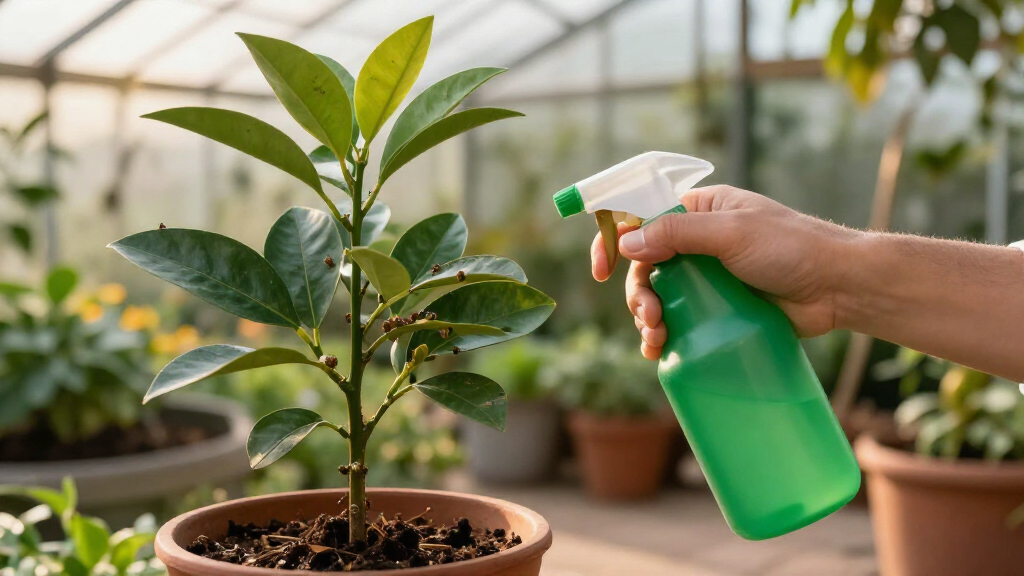
Scale insects feed by inserting a thin mouthpart into a plant’s stems or leaves. Adults often look like small brown, tan, white or black bumps, and can be mistaken for rough patches on bark. The report says they may appear along stems and leaf veins or on leaf undersides. A magnifying glass can help with inspection. Soft scale may also leave sticky honeydew; sooty mold can grow on the residue, and severe infestations may cause yellowing leaves, leaf drop or stunted growth.
The report recommends keeping a plant with scale away from other plants as soon as the pests are found, and washing hands and tools after handling it. For a small number of insects, it describes rubbing them off with a cotton swab dipped in isopropyl alcohol, or using a fingernail, toothpick or soft toothbrush. It advises testing alcohol on one leaf first and waiting a day or two for possible damage. Dead scale can remain attached, so the report suggests checking whether a bump leaves a wet smear when pressed.
For heavier infestations, the report describes horticultural oil and insecticidal soap as options, with thorough coverage of stems and both sides of leaves. It says adults beneath thick covers may survive a spray, while exposed young crawlers are more vulnerable. Because eggs may hatch later, repeat treatment may be needed; the report gives a common interval of 10 to 16 days between two or three rounds, but says the product label takes precedence. It also warns that soap can damage jade plants and ferns, and that treatment products may not be labeled for edible plants such as citrus or bay laurel.
Why Fall Inspections Matter
Moving a plant indoors can bring an established pest population into close contact with other houseplants. The report says scale insects are slowed by cold nights outdoors and are eaten by predators such as lady beetles and tiny wasps, while indoor conditions remove those controls. Crawlers can cross between plants where leaves touch and can also be carried on hands or pruning tools.
The practical point is timing: inspect and treat before plants come inside, rather than relying on a single spray after an infestation has spread. Continued checks matter because young insects keep hatching, and a shell can shield adult scales from treatments. Early removal may also avoid repeated spraying, though the report does not provide research data comparing the effectiveness of different prevention methods.
Popular right now

TCL 65-Inch R7D Series 4K UHD QLED Roku Smart TV

Ninja Foodi 8-Quart DualZone 6-in-1 Air Fryer, Grey (DZ201)

KitchenAid Artisan 5-Quart Tilt-Head Stand Mixer, Almond Cream
As an affiliate, we earn on qualifying purchases.
How Scale Moves Between Plants
Scale insects do not all look alike. The report describes brown soft scale as rounded or slightly domed, with a covering that is part of its body. Armored scales are flatter; their separate cover may lift away when pried, leaving the insect underneath. Only the young crawlers move around. They are tiny, often yellow or orange, and settle to feed after wandering for a day or two.
Citrus, jade, hibiscus, ficus, bay laurel, oleander and orchids are among the plants identified as common hosts, although the report says many other tropical houseplants can also be affected. Plants that spent summer outdoors—especially those kept close together—are the main focus of the seasonal inspection advice. The report recommends weekly checks through winter, including plants that have not shown signs of scale.
“The best time for controlling scale insects is before the pots come inside.”
— Gardening Know How report
Treatment Results Vary by Plant
The report does not provide trial data or quantify how often scale survives particular treatments. It also does not identify a single treatment suitable for every plant. Plant sensitivity and product labeling vary, and the report specifically cautions that insecticidal soap can harm jade plants and ferns. For edible plants, it says some products may not be labeled for crops intended for consumption.
How long an infested plant should remain isolated may also depend on the infestation. The report recommends waiting until several weekly checks in a row find no new scale, but does not define a fixed isolation period. It says a plant heavily covered with scale may be better discarded; that is presented as practical guidance, not a universal rule.
Inspect Before the First Cold Nights
Before moving summer plants indoors, examine stems, leaf joints, new growth and the undersides of leaves. Treat any affected plant outdoors where practical, following the product label and checking that the product is permitted for that plant and its intended use. Test sprays on a small area first, as the report advises, and use protective equipment required by the label.
After plants come inside, keep affected specimens separate and check them weekly through winter. Wash hands and tools after contact, and look for new crawlers as well as adult bumps. The report says a strip of double-sided tape around a stem can catch moving crawlers; yellow sticky cards are aimed at flying pests such as whiteflies and fungus gnats, not scale.
Key Questions
How can I tell if a houseplant has scale?
Look for small bumps on stems, leaf veins and leaf undersides. They may be brown, tan, white or black. A magnifier can help; sticky honeydew or yellowing leaves can also be signs of an infestation.
Should I bring an infested plant indoors?
The report advises isolating an affected plant from other houseplants and treating it before it is moved inside, where possible. Keep it separate until several weekly checks in a row find no new scale.
Will one spray get rid of scale?
Not necessarily. Adults may be protected by their covers, and eggs can hatch after treatment. The report says repeat applications may be needed, but product-label directions should determine the schedule.
Can I use insecticidal soap on every plant?
No. The report warns that insecticidal soap can damage jade plants and ferns. Check the product label and test a small area before treating a plant.
Source: rss