
TL;DR

Get garden gear delivered free with Prime
- Fast, free delivery on millions of items
- Prime Video, Amazon Music and more included
- Member-only deals all year
An Ideal Home report recommends checking for compacted lawn areas in October and aerating them when the soil is moist and workable, not waterlogged. A garden fork can be used on small patches; larger or more severely compacted lawns may benefit from a specialist aerator. The report does not establish that aeration alone will prevent winter waterlogging or guarantee healthier grass.
Ideal Home’s October lawn-care report advises gardeners to aerate compacted patches before winter, when the soil is moist and workable but not saturated. The task is intended to create channels for air and water to reach grass roots, particularly in areas where foot traffic or pooling water may have compressed the soil.
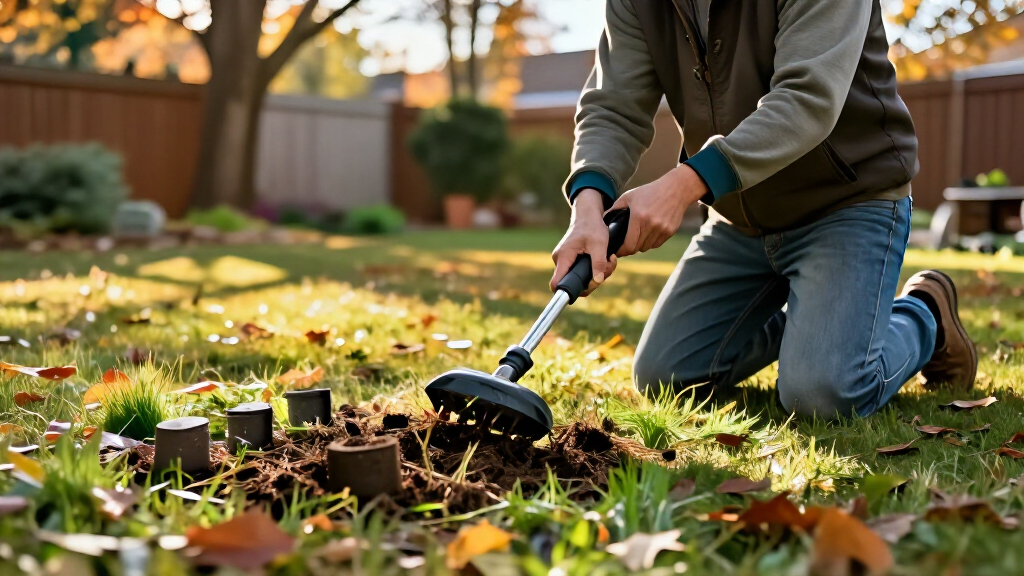
The report says a garden fork may be enough for a small lawn or isolated compacted areas. Push the fork vertically into the soil at intervals across the affected patch; gently moving it back and forth can help open the soil around the holes. For larger lawns or more severe compaction, it points to dedicated aerators, including hollow-tine tools that remove small plugs of soil.
Timing and ground conditions matter. The guidance recommends working after autumn rain has softened the soil, while avoiding ground that is completely saturated. The report warns that working on waterlogged ground can add to compaction. It suggests prioritising frequently walked routes, areas around garden furniture or children’s play spaces, and spots where puddles regularly form.
To check whether soil may be compacted, the report suggests pushing in a garden fork: substantial resistance can indicate that the area could benefit from aeration. After the job, gardeners are advised to limit repeated walking on the freshly treated ground. The report does not give a specific hole spacing, depth, or schedule for repeating the work.
Preparing Compacted Patches for Winter
Compacted soil has less space for air and water to move through it. According to the report, that can leave rainfall sitting at the surface instead of soaking toward the grass roots. Autumn and winter rain can put additional pressure on already compacted areas, making the condition relevant to lawns that have had heavy summer use or show standing water after showers.
Aeration is presented as a practical way to improve movement through the soil, not as a guarantee against a soggy lawn. Its relevance for readers is that the job can be limited to the patches most affected, rather than requiring treatment of the entire lawn. Choosing workable conditions also matters: aerating when the ground is saturated could worsen the problem the task is meant to address.
Popular right now

Dyson W1 PencilWash Cordless Wet and Dry Floor Cleaner with Dock

De'Longhi Magnifica XS ECAM22110B Automatic Espresso Machine

KitchenAid Artisan 5-Quart Tilt-Head Stand Mixer, Almond Cream
As an affiliate, we earn on qualifying purchases.
Why Autumn Aeration Is Recommended
The Ideal Home report frames the advice around lawns that have experienced a busy summer of mowing, walking and dry weather. Its explanation is that soil can become compressed, leaving less room for air and water to pass through. Rain may then remain on the surface rather than moving down to the roots.
The article attributes its aeration advice to Morris Hankinson, managing director of Hopes Grove Nurseries, who says aerating compacted areas after rain can help air, water and nutrients reach grass roots. A second gardening expert quoted in the report, Christopher O’Donoghue, director of Gardens Revived, also advises against working on saturated lawns. He says October can be used for other care, including clearing fallen leaves and repairing bare patches, depending on conditions.
“Aerating is helpful after a dry summer because compacted soil prevents rain from soaking deeper into the roots.”
— Morris Hankinson, as quoted by Ideal Home
Limits of the Lawn-Care Advice
The report offers seasonal gardening guidance rather than results from a trial or a quantified assessment of how much aeration improves drainage. It does not state how quickly a lawn should respond, how often aeration should be repeated, or whether the advice applies equally to every soil type and lawn. Aeration is not a guarantee that pooling or winter waterlogging will stop.
The report also does not provide detailed instructions on tool depth or spacing, or a threshold for deciding how much of a lawn to treat. Its practical recommendation is to assess individual areas, use a fork as a basic check, and avoid working when the soil is saturated.
Check Conditions Before Aerating
Gardeners following the report’s advice should first inspect the lawn for compacted areas and recurring puddles, then wait for rain to soften the soil without leaving it waterlogged. A fork can be used on smaller patches; larger lawns may call for a purpose-built aerator. Limit foot traffic on freshly aerated areas afterward.
The report does not identify a fixed date for the job or a later milestone. Conditions on the ground, rather than the calendar alone, determine whether a lawn is ready to work. It also recommends clearing fallen leaves and considering repairs to thin or bare patches where weather and growth conditions allow.
Key Questions
What lawn-care job does the report recommend for October?
It recommends aerating compacted areas to create openings that allow air and water to move toward grass roots.
Can I aerate a lawn with a garden fork?
Yes. The report says a garden fork can work for small lawns or isolated patches. A dedicated aerator may be easier for a larger lawn or more serious compaction.
Should I aerate when the lawn is very wet?
No. The guidance says to work when soil is moist and workable, but not completely saturated, because working on waterlogged ground can cause further compaction.
Which parts of the lawn should I treat first?
Start with areas that receive frequent foot traffic, spots around garden furniture or play areas, and places where water tends to pool after rain.
Does aeration guarantee a lawn will not become soggy?
No. The report describes aeration as a way to improve air and water movement in compacted soil, but it does not claim the job will prevent all pooling or waterlogging.
Source: rss