
TL;DR

Get garden gear delivered free with Prime
- Fast, free delivery on millions of items
- Prime Video, Amazon Music and more included
- Member-only deals all year
An Amateur Gardening report argues that pumpkins should be treated as autumn and winter food, not just Halloween decorations. It highlights culinary varieties including Crown Prince and Tractor, explains how pumpkins can be stored into the New Year, and shares a roasted pumpkin soup recipe.
Amateur Gardening is urging readers to use pumpkins as seasonal food rather than treating them only as Halloween decorations, pointing to culinary varieties that can be harvested in early autumn, stored into winter and used in dishes such as soup, cakes and muffins. The report says pumpkins harvested in September and October can keep into the New Year and beyond when properly cured and stored, though storage life depends on the fruit and conditions.
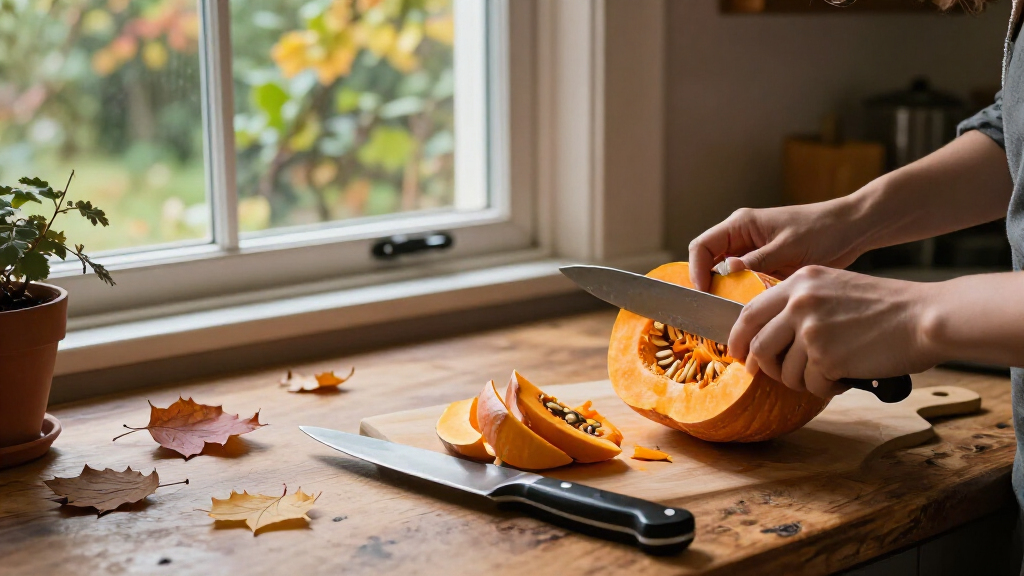
The report distinguishes cooking varieties from the large, watery pumpkins often sold for carving. It praises Crown Prince, with blue-grey skin and orange flesh, for roasting, and describes Tractor as sweet and creamy when puréed for baking. These are the writer’s taste assessments, not a comparison based on formal testing. The report recommends leaving the skin on Crown Prince while roasting, then removing it before using the flesh in soup.
For storage, the advice is to wait until a pumpkin is hard and sounds hollow when tapped, usually around the end of September or start of October. After harvest, the writer recommends leaving it for about a week, cutting it with roughly three inches of stem, and keeping it in a cool, dark place. The stem is intended to reduce the risk of rot; the report does not give a guaranteed storage duration for every variety.
The accompanying soup recipe uses pumpkin, onions, butter, stock, cumin, garam masala and cinnamon. It calls for roasting pumpkin chunks at 180C for 40 minutes, cooking the onions and cumin slowly, then simmering the ingredients with stock and spices before blending. Pumpkin seeds and calendula petals are suggested as optional toppings. The report also gives growing guidance, including sowing indoors from mid-April and planting outside in June in a sheltered spot.
From Halloween Decoration to Winter Food
The practical point is that a pumpkin can serve as both a seasonal decoration and a stored ingredient. Treating edible varieties as food gives households more ways to use an autumn harvest after Halloween, and the report offers options for both savoury and sweet cooking. Its storage advice also connects the harvest window to meals later in the year, rather than limiting pumpkin use to October.
The article’s enthusiasm for specific varieties is personal, but it highlights a useful distinction for shoppers and growers: not every pumpkin is selected for the same purpose. A carving pumpkin may be less appealing in a recipe than a culinary variety, while the report says even traditional carving pumpkins can be used in its soup. Readers should follow food-safety guidance and check that any pumpkin used for cooking is sound and suitable for eating.
Popular right now

Jura E6 Automatic Espresso Machine, Piano Black (15622)

Vitamix Propel Series 750 Professional-Grade Blender, 4 Programs, Black

Dyson W1 PencilWash Cordless Wet and Dry Floor Cleaner with Dock
As an affiliate, we earn on qualifying purchases.
Harvesting and Keeping Pumpkins
Pumpkins belong to the Cucurbitaceae, or gourd family, and are botanically fruits, according to the report. The writer also describes them as sources of vitamins A and C, potassium and fibre, but provides no nutritional figures or independent sourcing for those claims. The article’s main focus is practical: grow the plants, harvest ripe fruit and find uses for it in the kitchen.
The growing instructions reflect a long season. Seeds are started indoors in small pots from mid-April, with plants moved outdoors in June after they have established. The report says pumpkins need plenty of water and feeding, protection from wind, and room to spread; it also suggests placing wood beneath growing fruit and removing smaller fruits that are failing to develop. Harvest timing will vary with growing conditions and location.
““It tastes sublime roasted with olive oil and the skin left on.””
— The Amateur Gardening report’s writer, describing Crown Prince
Storage Depends on Each Pumpkin
The report does not specify how long each named variety can be kept, or give temperature and humidity ranges for storage. Its claim that pumpkins may last into the New Year and beyond should not be read as a guarantee: variety, maturity, damage and storage conditions can affect keeping quality. It also does not provide independent evidence for its nutritional description or comparative taste judgments. Readers should discard fruit that shows signs of spoilage and check reliable food-safety guidance before eating it.
Use the Harvest in Seasonal Meals
The report offers a recipe as an immediate way to put a harvested pumpkin to use, while its growing notes look ahead to the next season: start seeds indoors from mid-April and plant them outside in June once established and weather permits. For pumpkins already in storage, the practical next step is to inspect them periodically and use any fruit showing damage or deterioration promptly. The article gives no further reporting or scheduled follow-up.
Key Questions
Are pumpkins only useful for Halloween?
No. The report recommends cooking with pumpkins in soup, roasts, cakes and muffins, and says properly stored fruit may be used into winter. Its case is particularly focused on culinary varieties rather than pumpkins grown primarily for carving.
Which varieties does the report recommend?
It highlights Crown Prince for roasting and soup, and Tractor for sweet purées used in cakes and muffins. These recommendations reflect the writer’s stated preferences.
How should a pumpkin be stored?
The report advises harvesting when the pumpkin is hard and sounds hollow, leaving it for about a week, then cutting it with around three inches of stem. Store it in a cool, dark place and check it for signs of spoilage; the article does not give a guaranteed shelf life.
Can a carving pumpkin be used in soup?
The supplied recipe lists either a medium Crown Prince or a traditional carving pumpkin. The report prefers culinary varieties for flavour and texture, but says a carving pumpkin can also be used in this soup.
Source: rss