TL;DR

Get garden gear delivered free with Prime
- Fast, free delivery on millions of items
- Prime Video, Amazon Music and more included
- Member-only deals all year
Amateur Gardening has shared six ways to support plants without buying new garden equipment, using items such as an old ladder, wire wastebasket, metal straw, chopsticks, fallen branches and string. The ideas suit different plants and support needs; each item should be matched to the plant’s size and secured safely.
Amateur Gardening has outlined six ways to support plants using household items and garden materials, including an old ladder, a wire wastebasket, chopsticks and fallen branches. The suggestions offer gardeners alternatives to buying new supports, while stressing that the object needs to suit the plant and be secured properly.
The report recommends an old wooden ladder as a climbing frame. It should lean securely against a wall, fence or other stable structure, with the plant positioned at its base. Gardeners can guide new stems around the rungs and tie them loosely if needed. The report warns that mature foliage can catch the wind and put extra strain on an unstable ladder.
A wire wastebasket turned upside down can contain a perennial that spreads or flops outward. Its rim should be pushed securely into the soil so growing stems can pass through the open sides. Amateur Gardening advises avoiding baskets that are badly rusted, unstable or have sharp sections; rough edges should be covered to reduce the risk of injury.
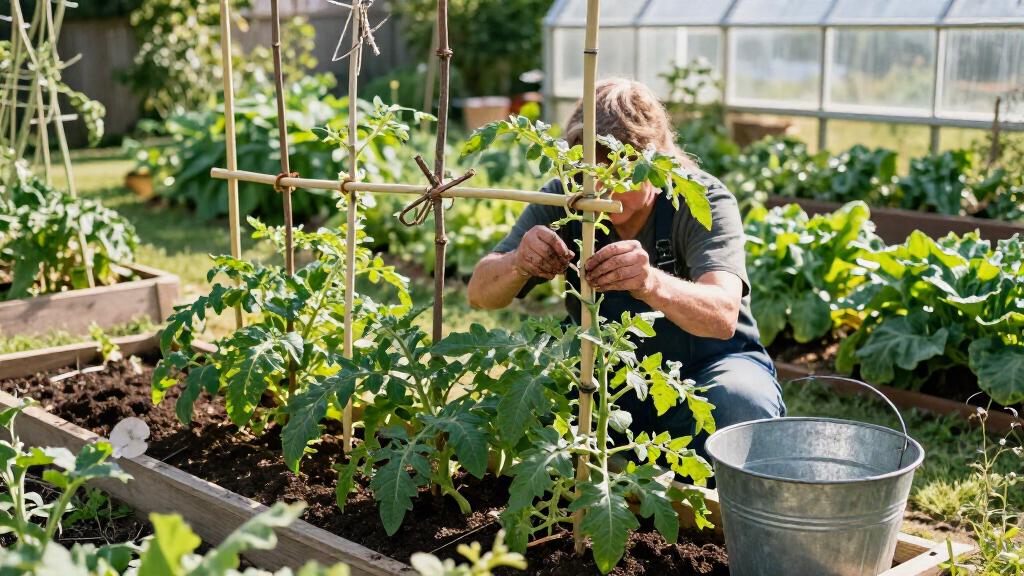
For smaller plants and individual leaning stems, the report suggests inserting a reusable metal straw or wooden chopstick beside the stem and tying the plant loosely with soft string or garden twine. The tie should leave room for growth. Two or three chopsticks connected with string can form a small frame. These slim stakes are intended for young or delicate plants, not tall perennials or vigorous climbers.
Match the Support to the Plant
The ideas address a common garden problem: plants that stood upright earlier in the season may flop as they grow, while climbers need something to scramble over. Using an item already at home can avoid buying a dedicated support for every plant, but the method is not a one-size-fits-all substitute. A single stake may steady one small stem; a spreading perennial may need support around its perimeter, and a climber needs a stable structure.
That distinction matters for safety as well as usefulness. A support that is too flimsy, poorly anchored or inappropriate for the plant’s weight may fail. The report’s guidance is practical rather than a guarantee of performance: gardeners need to check each item’s condition, secure it, and allow stems room to grow.
garden plant support DIY household items
As an affiliate, we earn on qualifying purchases.
As an affiliate, we earn on qualifying purchases.
Six Ways to Reuse Materials
Beyond the ladder, basket and small stakes, Amateur Gardening suggests using sound fallen branches from pruning. Several can be placed around a floppy perennial and joined with twine; a forked branch can also cradle an individual stem. The report advises choosing solid branches without signs of rot or disease and anchoring them firmly, especially for heavier plants.
The sixth option is to use an existing fence, railing or other fixed structure as an anchor. Gardeners can tie lengths of twine between suitable points to make vertical, horizontal or grid-like lines for a lightweight climber. This relies on the existing structure being sturdy enough for the task; the supplied report does not specify a universal spacing or weight limit.
The six suggestions range from individual stakes to wider frameworks, reflecting different support needs. The report presents them as ways to reuse what is available, particularly for smaller plants and individual stems, rather than as a claim that every household item will suit every plant.
“The trick is to match what you find to the kind of support your plant actually needs.”
— Amateur Gardening
Limits Depend on Plant and Site
The supplied report does not give a publication date, cost estimates, tests comparing the supports, or weight limits for particular materials. It also does not specify how long each support will last outdoors. Suitability will depend on the plant’s size and growth, the condition of the reused item, and the stability of the soil or anchor point.
The final suggestion covers twine tied to a sturdy existing structure, but the supplied source text ends partway through its instructions. It describes using lines for a lightweight climber, but provides no further detail on maintenance or how to attach different plants. Gardeners should inspect supports as plants grow and avoid tight ties that could restrict stems.
Check Supports as Plants Grow
The report sets out practical options rather than a scheduled follow-up or formal trial. For gardeners applying the ideas, the next step is to choose a support suited to the plant, secure it before adding weight, and check it periodically as stems and foliage develop. Loose ties may need adjustment, and branches, baskets or ladders should be replaced or repositioned if they become unstable.
Key Questions
What are the six no-buy plant support ideas?
Amateur Gardening suggests an old ladder, an upside-down wire wastebasket, a reusable metal straw, wooden chopsticks, fallen branches and twine tied to a suitable existing structure.
Can chopsticks or a metal straw support a large plant?
The report recommends them for young or delicate plants and individual stems. It says a metal straw is not substantial enough for a tall perennial or vigorous climber.
How can a wire wastebasket support a perennial?
Turn an open-wire basket upside down over the plant and push its rim securely into the soil. The stems can grow through the gaps. Do not use a badly rusted, unstable or sharp basket.
How should I secure a plant to a small stake?
Use soft string, garden twine or a plant tie, and leave enough room for the stem to thicken. Check the tie as the plant grows so it does not restrict the stem.
Are these supports suitable for every garden plant?
No. The report says to match the support to the plant’s needs. A lightweight climber may use twine anchored to a sturdy structure, while a floppy perennial or heavy plant may require a broader, firmly anchored support.
Source: rss
Fall yard work Picks
leaf blowers
As an affiliate, we earn on qualifying purchases.