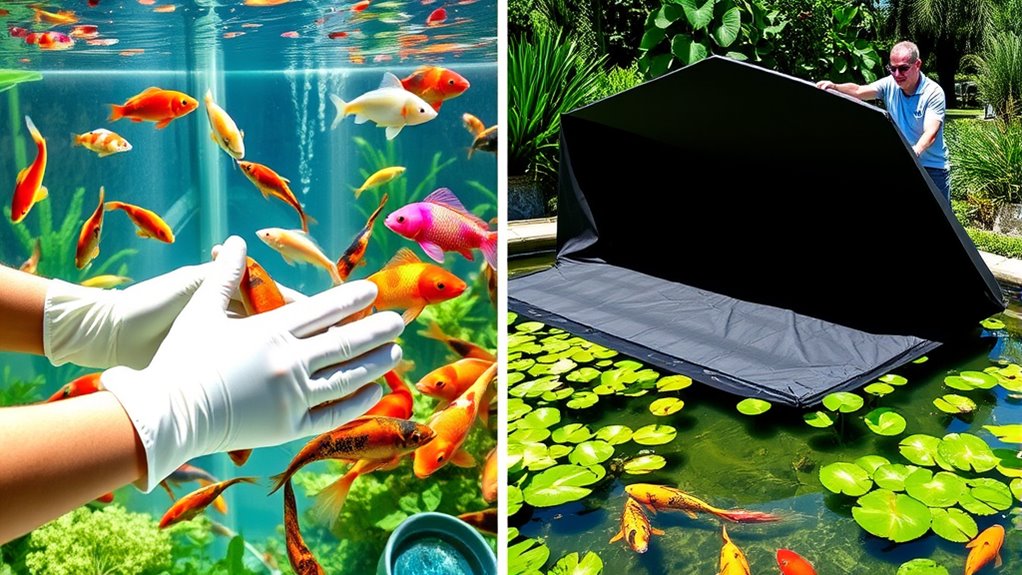

To prepare your aquarium and pond animals for disasters, assemble an emergency kit with water conditioners, backup power, medications, and first aid supplies. Secure habitats with lids, reinforce stands, and protect equipment from water damage or flooding. Keep a supply of dechlorinated water for quick changes and plan evacuation routes using transport containers. Regular maintenance and swift response plans will boost your animals’ chances of safety. If you want to learn more, keep exploring effective strategies to safeguard your aquatic pets.

Get garden gear delivered free with Prime
- Fast, free delivery on millions of items
- Prime Video, Amazon Music and more included
- Member-only deals all year
Key Takeaways
- Assemble an emergency kit with water conditioners, medications, and first aid supplies for quick response.
- Secure lids, reinforce equipment, and install barriers to prevent escapes and protect habitats during disasters.
- Maintain dechlorinated water reserves and ensure equipment is regularly inspected and protected from damage.
- Identify safe evacuation routes and prepare labeled transport containers with clean water for animal relocation.
- Conduct regular habitat inspections and pre-storm checks to address vulnerabilities and ensure readiness.
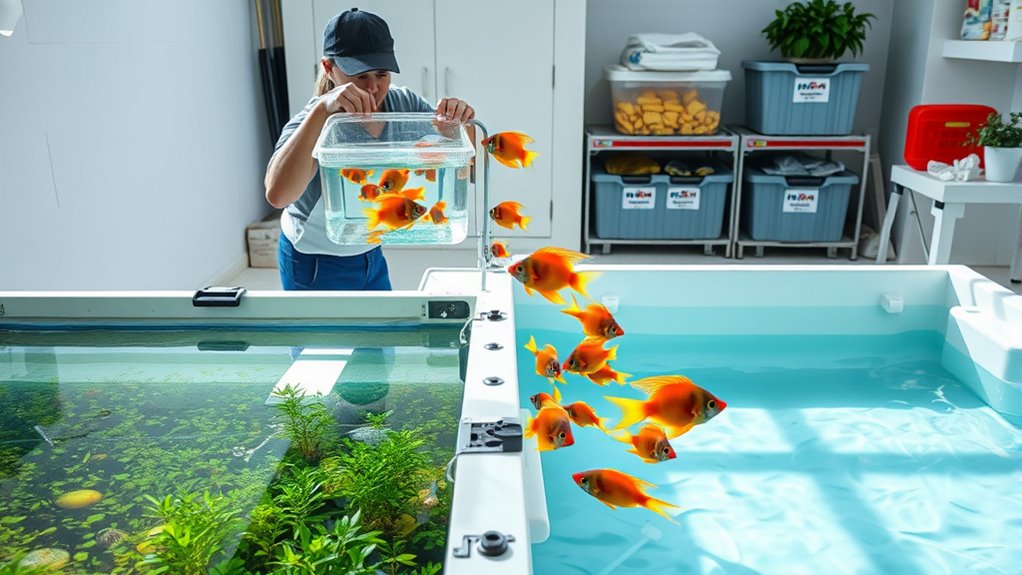
Disasters can strike unexpectedly, leaving your aquarium or pond animals vulnerable if you’re not prepared. The key to protecting your aquatic life lies in having the right emergency supplies and ensuring habitat security. By planning ahead, you can minimize stress and prevent loss during emergencies like power outages, floods, or severe storms. Start by assembling a well-stocked emergency kit that includes essentials such as water conditioners, backup power sources, medications, and first aid supplies. These items are essential for maintaining water quality and health if your normal systems fail or get compromised. Additionally, keep a supply of clean, dechlorinated water on hand to perform quick water changes if necessary, preventing harmful toxin buildup in your tanks or ponds.
Prepare emergency supplies and secure habitats to protect your aquatic life during unexpected disasters.
Habitat security is equally important. Make sure your aquarium or pond is properly secured against potential hazards. For aquariums, secure lids and covers to prevent animals from escaping during vibrations or sudden movements caused by storms or earthquakes. Reinforce tank stands and ensure that cords, filters, and other equipment are firmly attached and protected from water damage or power surges. For outdoor ponds, consider installing barriers or fencing to keep out debris, predators, or flooding water. Elevate pond equipment like pumps and filters on sturdy platforms to prevent water damage during heavy rains or rising water levels. Also, examine your pond’s edges for vulnerabilities that could lead to erosion or overflow. Incorporating remote work principles such as thorough planning and regular maintenance can greatly enhance your preparedness efforts.
Another essential step is to have a clear plan for evacuating your animals if the situation worsens. Know the locations of nearby emergency shelters or safe areas where you can relocate your fish or pond animals temporarily. Keep transport containers ready and filled with suitable water, ensuring they’re clean and escape-proof. Label these containers clearly, so you can quickly move your animals without confusion during a stressful situation. Regularly check and maintain your emergency supplies and habitat security measures, especially before storm seasons or harsh weather forecasts. This proactive approach reduces the likelihood of panic and mistakes when disaster strikes.
Ultimately, your goal is to create a resilient environment that can withstand unexpected events. By having comprehensive emergency supplies and securing your habitat, you considerably increase your animals’ chances of survival. Remember, preparedness isn’t just about reacting when a disaster occurs; it’s about preventing chaos and ensuring your aquatic friends remain safe and healthy regardless of unforeseen circumstances. Taking these steps now can save you time, stress, and your animals’ lives in the long run.
As an affiliate, we earn on qualifying purchases.
Frequently Asked Questions
How Often Should I Check Emergency Supplies for My Aquatic Pets?
You should check your emergency supplies at least once a month to make certain they’re well-organized and fully stocked. During your aquarium maintenance routine, review your emergency kit organization, replacing expired items and adding new essentials. Regular checks help you stay prepared for sudden disasters, so you can act quickly if needed. Keeping everything up-to-date minimizes stress and keeps your aquatic pets safe during emergencies.
What Signs Indicate My Animals Are Stressed Before a Disaster?
A warning is worth more than a cure, so watch closely. You’ll notice behavior changes like hiding more often, darting, or unusual swimming patterns. Physical symptoms such as faded colors, clamped fins, or spots can also signal stress. These signs often appear before a disaster strikes, so noticing them early helps you act fast to protect your aquatic pets. Stay observant and respond promptly to keep them safe.
Can I Use Household Items to Temporarily Shelter Pond Fish?
Yes, you can use household materials to create DIY shelters for your pond fish temporarily. Fill large, sturdy containers like plastic bins or buckets with water, and add pond-safe plants or rocks for cover. Use old blankets or tarps to shield the shelter from harsh weather. These household materials help protect your fish from cold, wind, and debris during emergencies, giving them a safe refuge until conditions improve.
How Do I Prevent Disease Spread During a Disaster?
Think of your pond as a fortress; keeping it disease-free during a disaster is essential. You should implement quarantine protocols for new or affected animals, preventing infection from spreading. Use water disinfectants to sanitize equipment and any materials that could harbor pathogens. Regularly monitor water quality and isolate sick fish immediately. These steps act like a shield, helping prevent disease spread and protecting your pond’s health during chaos.
What Is the Best Way to Evacuate Aquatic Animals Safely?
To evacuate aquatic animals safely, plan ahead for emergency relocation by preparing a suitable transport container with proper water conditions. Use sturdy, leak-proof containers for aquarium transport, ensuring oxygen levels are maintained. Keep the animals calm and minimize stress during the move. Always have a backup plan, and move them quickly but gently to a safe location, ensuring water quality and temperature are consistent throughout the process.
Conclusion
By taking these simple steps, you’re gently guiding your aquatic friends toward calmer waters during life’s storms. Preparing in advance isn’t just about safety—it’s about nurturing peace and harmony beneath the surface. When you stay proactive, you create a comforting oasis where your animals can weather any ripple or gust. Remember, your thoughtful care acts as a soothing current, helping them drift safely through life’s unpredictable tides. Your dedication truly makes all the difference.
Fall yard work Picks
leaf blowers
As an affiliate, we earn on qualifying purchases.