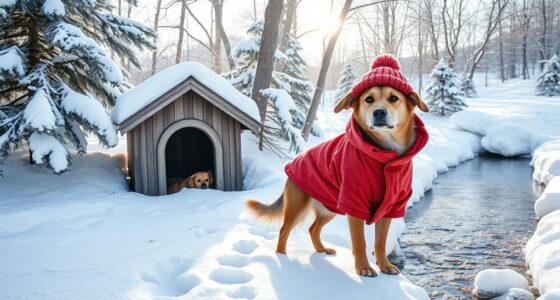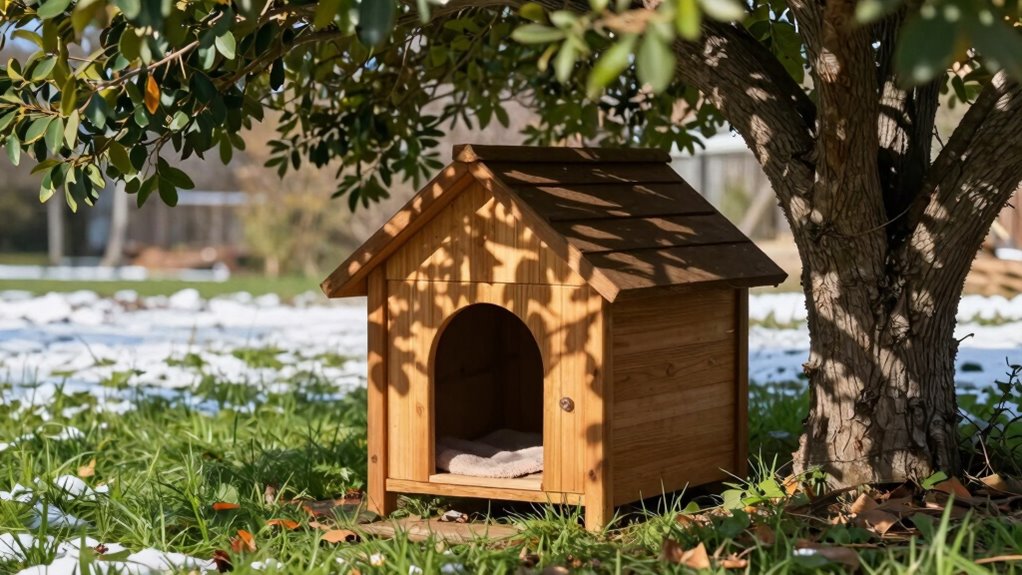

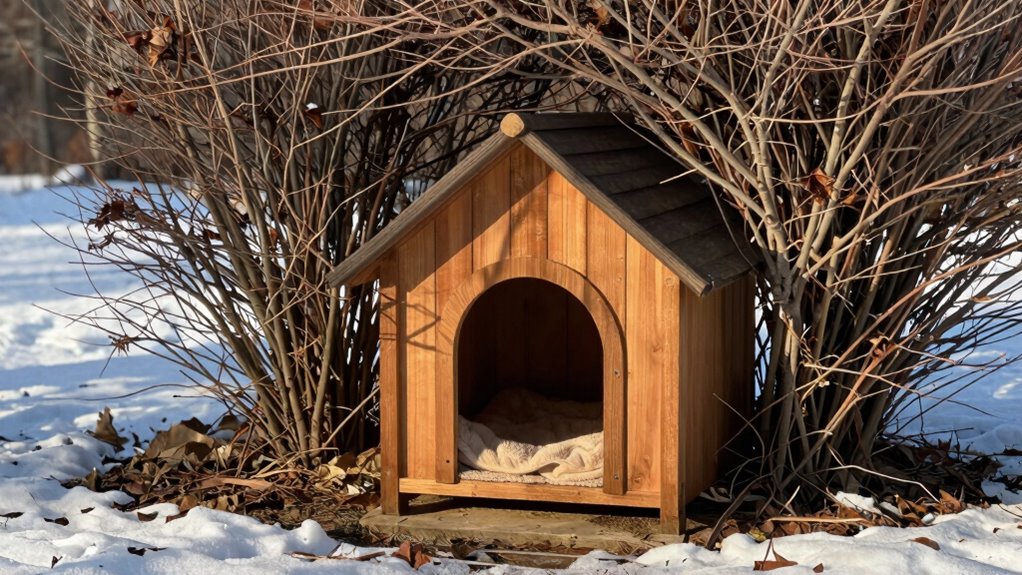
To boost warmth quickly, position your outdoor dog house strategically. Place it behind natural windbreaks like fences or bushes to block cold winds and improve insulation. Elevate it on a raised platform to keep it dry and prevent dampness. Face the entrance away from prevailing winds for extra protection. Choose a spot with indirect sunlight to keep the interior dry and warm. For more tips on effective placement, keep exploring how to make your pet’s shelter cozier.
Key Takeaways
- Place the dog house behind natural windbreaks like fences or bushes to block cold winds and improve insulation.
- Elevate the shelter on a raised platform to prevent dampness and keep insulation dry.
- Position the entrance away from prevailing winds to reduce heat loss.
- Select a location in indirect sunlight to keep the interior warm and dry.
- Ensure proper ventilation to prevent moisture buildup and maintain a stable microclimate.
Have you ever wondered how to keep your dog comfortable and protected outdoors? The key lies in the right placement of their outdoor dog house, which can dramatically improve warmth and comfort. When positioning the house correctly, you give your pet a cozy refuge, shielding them from harsh weather conditions. One vital aspect often overlooked is how the placement interacts with insulation materials and ventilation design. Proper placement ensures that insulation materials are most effective and that ventilation helps maintain a healthy, stable environment inside the house.
Start by choosing a location that offers natural windbreaks, like behind a fence, a row of bushes, or near a building wall. These features block cold winds, which can sap heat from the dog house quickly. When the house is shielded from prevailing winds, the insulation materials you’ve selected—like foam boards, straw, or insulated panels—work more efficiently. They trap your dog’s body heat, creating a warm bubble inside. Without proper placement, even the best insulation can be rendered useless if cold air constantly flows into the house.
Choosing a sheltered spot behind fences or bushes boosts insulation efficiency and keeps your dog warm.
At the same time, consider the ventilation design when placing the dog house. Good ventilation isn’t about letting cold air in; it’s about preventing moisture buildup and ensuring fresh air circulates. Positioning the dog house where it gets some indirect sunlight during the day can help keep the interior dry and warm. Avoid placing it in low-lying areas where water or cold air might settle. Proper airflow allows excess moisture to escape, preventing dampness that can make your dog cold and susceptible to illness. It also reduces condensation on insulation materials, prolonging their effectiveness. Understanding outdoor shelter placement can significantly enhance your dog’s comfort and safety.
Another trick is to elevate the house slightly off the ground. A raised platform prevents cold, damp air from seeping in from below and keeps insulation materials dry. When you do this, make sure the house’s entrance faces away from prevailing winds to minimize heat loss. Combining strategic placement with thoughtful ventilation design creates a microclimate that maintains warmth more efficiently. This setup ensures your dog’s outdoor shelter stays cozy, reducing the need for additional heating and making sure your pet stays comfortable regardless of the weather. Proper biodiversity-friendly placement also helps protect the surrounding environment by avoiding water runoff and habitat disruption.

GUTINNEEN Large Outdoor Insulated Dog House Weatherproof Dog Kennel Indestructible Dog Shelter with Chew-Proof Full Metal Frame, Openable Roof for Small to Large Dog Breeds (33.5"L x 22"W x 25.2"H)
ADVANCED INSULATED DOG HOUSE: The GUTINNEEN insulated dog house is crafted with high-quality insulation, keeping outdoor animals warm…
As an affiliate, we earn on qualifying purchases.
As an affiliate, we earn on qualifying purchases.
Frequently Asked Questions
How Does Shade Placement Affect My Dog’s Warmth?
Shade placement markedly impacts your dog’s warmth by balancing sun exposure and insulation. Positioning the dog house in shaded areas prevents overheating during hot days, while still allowing some insulation from shade insulation materials. Proper shade placement ensures your dog benefits from coolness when needed and warmth when temperatures drop, making them comfortable year-round. Avoid direct sunlight in extreme heat, but ensure some sun exposure on cooler days for added comfort.
Can I Place the Dog House on Uneven Ground?
You can place the dog house on uneven ground, but it’s better to level it first. Uneven terrain can cause instability and drafts, reducing warmth. Use ground leveling techniques like adding gravel or paving stones for a sturdy foundation. Consider insulation options to improve warmth further. Proper placement guarantees your dog stays cozy and safe, even on uneven terrain. Taking these steps makes a significant difference in your dog’s comfort outdoors.
What Materials Are Best for Cold Climates?
In cold climates, you should select durable materials like heavy-duty plastic or wood for your dog house. For insulation options, consider adding foam panels or straw bedding to trap warmth effectively. These materials resist harsh weather and maintain insulation, keeping your dog cozy. Durability guarantees the house withstands snow and ice, while proper insulation ensures your pet stays warm during freezing temperatures.
How Often Should I Reposition the Dog House?
Think of repositioning your dog house as tuning a musical instrument for perfect harmony. You should move it every few weeks to keep it in the best spot, especially to maintain ideal wind protection and insulation. Adjusting its location prevents drafts and cold spots, ensuring your pup stays warm. Keep an eye on weather changes, and shift the house accordingly, so it continues to shield your dog from harsh elements effectively.
Is It Better to Keep the Door Open or Closed?
It’s better to keep the door closed during cold or wet weather to trap warmth inside, especially if you’ve used indoor insulation and weatherproofing techniques. Opening the door can let cold air and moisture in, making your dog less warm and comfortable. When it’s warmer or dry, you can open the door to improve ventilation. Always observe your dog’s comfort and adjust the door position accordingly.

Simple Trending Raised Dog Bed for Large Dogs, Waterproof XL Dog Cot, Outdoor Cooling Elevated Pet Bed Load 200lb, 47.75" x 30.5", Grey
【Product Dimensions】47.75"L x 30.5"W x 8"Th. Raised dog bed designed for medium and large dog breeds, like a…
As an affiliate, we earn on qualifying purchases.
As an affiliate, we earn on qualifying purchases.
Conclusion
By mastering the placement trick, you’ll turn your outdoor dog house into a cozy fortress against the cold. Think of it as giving your furry friend a warm hug that keeps the chill at bay. When you position the house just right, warmth seeps in and stays, making winter nights more comfortable. With this simple tweak, you’re not just providing shelter—you’re creating a haven where your dog can feel safe and warm, no matter the weather.

Pawmmo Dog Shade Shelter Outdoor Tent for Large Medium Dogs, Outside Doghouse Sun Rain Canopy Dog House with Waterproof Roof Ground Nails for Cats Pigs Livestock 4'x4'x3.3'
EXTRA LARGE DOG HOUSE OUTDOOR: Designed for your lovely pet, Measuring 4x4x3.3 feet, it provides ample space for…
As an affiliate, we earn on qualifying purchases.
As an affiliate, we earn on qualifying purchases.

ZIZIWIN 5.5" Solar Chicken Coop Fan 2 Kit, 20W Solar Powered Greenhouse Fan Outdoor Waterproof for Vent Exhaust & Intake, for Outside Shed Doghouse Ventilation Air Circulation Cooling
POWERFUL AIRFLOW & FLEXIBLE FUNCTIONALITY: With a large monocrystalline solar panel, this exhaust fan achieves 3200 RPM at…
As an affiliate, we earn on qualifying purchases.
As an affiliate, we earn on qualifying purchases.