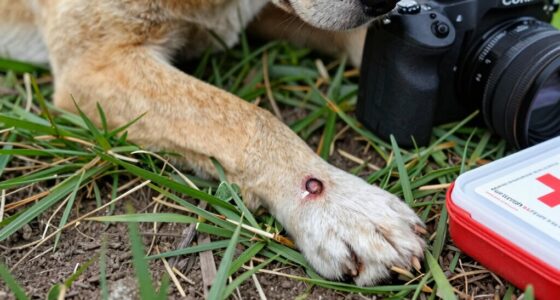

To perform pet CPR and rescue breathing, first check if your pet is breathing and has a pulse. If not, position them on their side on a firm surface, open their airway, and give gentle breaths every 3-5 seconds, sealing their nose or mouth depending on the size. Then, perform chest compressions at a rate of 100-120 per minute, ensuring the chest fully recoils between presses. Keep calm and act quickly—you’re about to learn more lifesaving techniques.

Get garden gear delivered free with Prime
- Fast, free delivery on millions of items
- Prime Video, Amazon Music and more included
- Member-only deals all year
Key Takeaways
- Position the pet on a firm surface and check for airway obstructions before rescue efforts.
- Clear the airway by gently opening the mouth and removing visible objects without forcing fingers.
- Give gentle breaths every 3-5 seconds, sealing the mouth or nose, and watch for chest rise.
- Perform chest compressions at 100-120 per minute, using proper hand placement and allowing full chest recoil.
- Stay calm, practice techniques beforehand, and seek professional help immediately after initial rescue steps.

Knowing how to perform pet CPR and rescue breathing can be lifesaving when your furry friend suddenly stops breathing or their heart stops beating. Emergencies like a dog choking or a feline experiencing respiratory distress demand quick, confident action. Recognizing the signs of distress early can make all the difference in your pet’s survival. If your dog starts choking on food or a foreign object, you need to act fast. First, gently open your dog’s mouth and check for obstructions. If you see something lodged, carefully remove it if possible. Do not force your fingers into their mouth, as this might push the object further down or cause injury. If the object isn’t easily removable, proceed with abdominal thrusts—similar to the Heimlich maneuver—by applying quick, inward upward pressure just below the ribs. For cats, rescue efforts are similar but require gentleness, as they’re more delicate. If your cat shows signs of choking—gasping, pawing at the mouth, or inability to breathe—you may need to perform feline resuscitation.
When your pet isn’t breathing and you suspect cardiac arrest, start CPR immediately. For dogs and cats, position them on their side on a firm surface. Clear their airway if necessary, and check for breathing. If they’re not breathing, begin rescue breathing. Seal your mouth over their nose and mouth (or just their nose for small pets) and give gentle, steady breaths—one every 3-5 seconds for dogs, slightly quicker for smaller animals. Watch to see if their chest rises with each breath. If it doesn’t, reposition their head to open the airway, and try again. After establishing breathing, perform chest compressions. For larger dogs, place your hands over the widest part of their chest; for small dogs and cats, use one or two fingers or thumbs on the chest. Compress about one-third to one-half the depth of the chest at a rate of around 100-120 compressions per minute, allowing the chest to fully recoil between compressions.
Throughout this process, remain calm and focused. Your quick response—whether it’s clearing a choking dog or performing feline resuscitation—can give your pet a fighting chance until professional help arrives. Remember, practicing these techniques beforehand can boost your confidence and effectiveness during real emergencies. Knowing what to do in these critical moments is essential, and staying composed can make all the difference in saving your beloved pet’s life.
As an affiliate, we earn on qualifying purchases.
Frequently Asked Questions
How Do I Identify if My Pet Is Choking Rather Than CPR Needed?
If your pet is choking, you’ll notice signs of choking like gagging, pawing at the mouth, or inability to breathe. Pet breathing difficulties may cause rapid, labored breathing, or gasping. To tell the difference, observe if your pet seems distressed and unable to cough or breathe properly. If they’re choking, quick intervention is essential to clear the airway. Stay calm, and act promptly to help your pet breathe again.
Can I Perform CPR on Any Size or Breed of Pet?
Yes, you can perform CPR on any size or breed of pet, but size considerations are important. For small pets, use gentle compressions with your fingers or thumbs, while for larger animals, use both hands to apply firm, steady pressure. Breed-specific techniques may be necessary for brachycephalic or very small breeds. Always call your vet promptly and seek training to guarantee proper technique for your pet’s size and breed.
What’s the Difference Between Pet CPR and Human CPR?
Pet CPR differs from human CPR mainly due to anatomical differences across species and breeds. You’ll need different rescue techniques because pets have varied chest sizes and shapes, requiring adjustments in compression depth and hand placement. For example, small animals may need gentler compressions, while larger breeds require more force. Understanding these differences makes certain you perform effective CPR tailored to your pet’s unique anatomy, increasing their chances of survival.
How Long Should I Attempt Rescue Breathing Before Seeking Help?
You should attempt rescue breathing for about 2 minutes, following timing guidelines for emergency protocols. If there’s no sign of breathing or response within that time, immediately seek help by calling your veterinarian or emergency animal hospital. Don’t delay seeking professional assistance, as prompt action can make a critical difference in your pet’s survival. Keep checking your pet’s breathing every few breaths during this period.
Are There Specific Signs Indicating Immediate Emergency for Pets?
When your pet’s health hangs in the balance, look for emergency symptoms like difficulty breathing, unresponsiveness, or bleeding—these are red flags that demand immediate action. Behavioral indicators such as collapse, seizures, or extreme lethargy also signal urgent trouble. Trust your instincts; if something feels off, don’t hesitate. Recognizing these signs quickly can be the difference between life and death, so stay alert and act fast.
Conclusion
Knowing pet CPR and rescue breathing techniques can truly make the difference between life and death. Are you prepared to act confidently in an emergency? Practice these skills regularly, so you’ll be ready if your furry friend ever needs you. Remember, quick and calm action can save your pet’s life. Don’t wait for an emergency to learn what to do—be proactive and confident. After all, isn’t their safety worth a little preparation?
Halloween Picks
halloween
As an affiliate, we earn on qualifying purchases.