Many rural homes often place generators too close to their houses or indoor spaces, risking dangerous carbon monoxide buildup and poisoning. They might also set them on unstable surfaces or too near outdoor living areas, causing noise disturbance and safety risks. Proper placement involves keeping your generator outdoors, at least 15-20 feet away from structures, on stable ground, and behind natural barriers. If you want to find out how to avoid these common mistakes, there’s more helpful advice below.

Get garden gear delivered free — and shop member deals
- Fast, free delivery on millions of items
- Access to Prime Big Deal Days deals on October 6–7
- Prime Video, Amazon Music and more included
Key Takeaways
- Placing generators indoors or in enclosed spaces risks carbon monoxide poisoning due to poor ventilation.
- Setting up generators directly on unstable or uneven outdoor surfaces can cause tipping or shifting during operation.
- Selecting an undersized generator may lead to overloading and safety hazards, while oversized units waste resources.
- Positioning generators too close to structures without adequate distance or noise barriers increases noise pollution and safety risks.
- Ignoring natural barriers or terrain features can reduce safety buffers and fail to mitigate noise effectively.
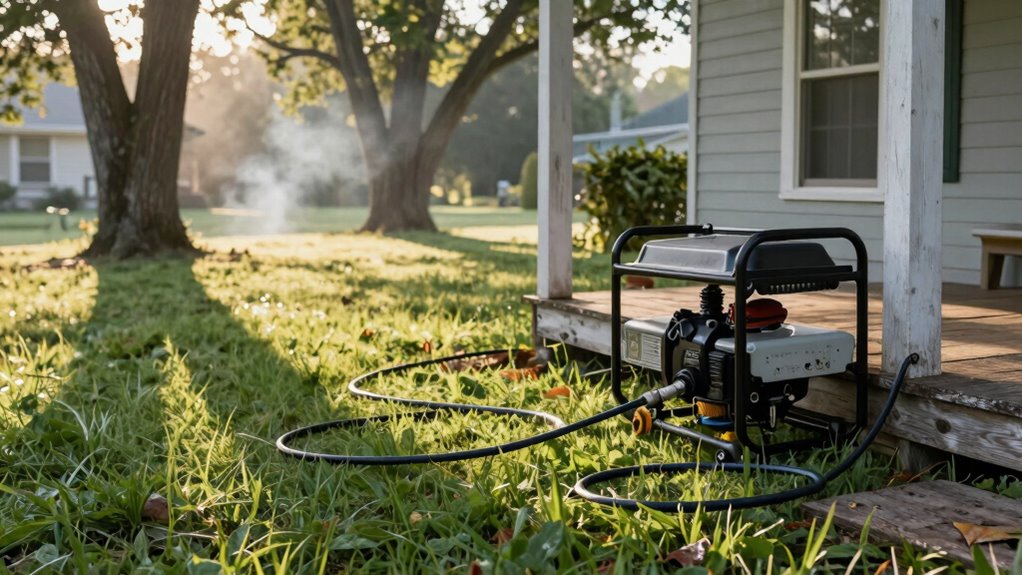
Have you ever considered how crucial proper generator placement is for safety? Many rural homeowners overlook this essential aspect, often placing generators in spots that seem convenient but can pose serious risks. One of the most overlooked factors is indoor ventilation. Even if it appears safe to keep a generator inside a garage or shed, it’s important to remember that generators emit carbon monoxide—a colorless, odorless gas that can be deadly if it accumulates. Poor indoor ventilation allows this dangerous gas to seep into your living spaces, risking poisoning for everyone inside. To prevent this, you should position your generator outdoors in a well-ventilated area, ensuring exhaust fumes dissipate safely into the air. Keeping it outside not only minimizes health hazards but also reduces the risk of accidental carbon monoxide buildup, especially during extended use. Proper generator placement also involves considering outdoor surfaces, which can impact stability and safety during operation. Additionally, selecting an appropriate generator capacity ensures it can meet your power needs without overloading, further enhancing safety. Another common mistake is ignoring noise mitigation. Generators can be loud, often reaching decibel levels that disturb your household and neighbors. Placing a generator too close to windows, doors, or living spaces amplifies the noise, creating discomfort and potential conflicts. Proper placement involves locating the generator at a safe distance—preferably at least 15 to 20 feet away from your home and other structures—and using barriers or soundproof enclosures if necessary. This reduces noise pollution and helps maintain good neighborly relations. Additionally, you should consider the terrain and natural barriers around your property. Trees, shrubs, or fences can act as sound buffers, further mitigating noise while also providing a layer of safety by keeping the generator out of direct reach. Recognizing the importance of safe generator placement can significantly reduce risks associated with operation and maintenance. Moreover, understanding the importance of proper ventilation is essential for ensuring safe use during prolonged operation. Proper planning and adherence to safety standards can make all the difference in ensuring your generator functions reliably and safely.
outdoor generator safety enclosure
As an affiliate, we earn on qualifying purchases.
As an affiliate, we earn on qualifying purchases.
Frequently Asked Questions
How Loud Can a Generator Be During Operation?
A generator’s noise levels can range from 50 to 100 decibels during operation, which might be quite loud. To keep sound levels manageable, you can use sound barriers or enclosures around your generator. Position it away from your home and neighbors to prevent noise disturbance. Proper placement and noise reduction measures guarantee your generator runs efficiently without causing unnecessary noise complaints.
What Are the Best Weather Conditions for Generator Use?
The best weather conditions for generator use are clear, dry, and mild days. Avoid using your generator during rain, snow, or strong winds, as these can cause safety hazards or damage. Always prioritize weather safety by ensuring good ventilation and proper generator placement, keeping it away from windows or vents to prevent carbon monoxide buildup. Clear, calm weather helps your generator run efficiently and safely without risking indoor or outdoor safety.
How Often Should I Perform Maintenance on My Generator?
You should perform maintenance on your generator every 6 to 12 months, even if it seems fine. Ignoring this can reduce fuel efficiency and cause unexpected breakdowns. A proper maintenance schedule keeps your generator running smoothly and extends its lifespan. It’s ironic how neglecting routine upkeep can lead to more problems down the line, especially when you need power most. Stay proactive, and your generator will serve you reliably.
Can I Run a Generator Indoors Safely?
No, you shouldn’t run a generator indoors safely. Doing so risks indoor ventilation issues, leading to dangerous carbon monoxide buildup. Carbon monoxide is a colorless, odorless gas that can cause serious health problems or death. Always operate your generator outdoors in a well-ventilated area, away from windows and doors. Ensuring proper ventilation safeguards you from the deadly risks associated with indoor generator use.
What Are Common Signs My Generator Needs Repairs?
If your generator struggles to start, runs unevenly, or produces unusual noises, these are clear repair indicators. During generator troubleshooting, you might notice decreased power output or persistent warning lights. Don’t ignore these signs; they signal your unit needs repairs. Regularly check for fuel or oil leaks, and listen for knocking sounds. Addressing these issues promptly keeps your generator running smoothly and prevents costly breakdowns.
Conclusion
Remember, a wise man once said, “Prevention is better than cure.” When it comes to generator placement, taking the time to position it correctly can prevent dangerous fumes from entering your home and avoid costly accidents. Always keep it outdoors, away from windows and vents, and on a stable, level surface. By doing so, you’re not just protecting your property—you’re safeguarding your loved ones. Stay cautious, stay safe.
Fall Picks
fall essentials
As an affiliate, we earn on qualifying purchases.