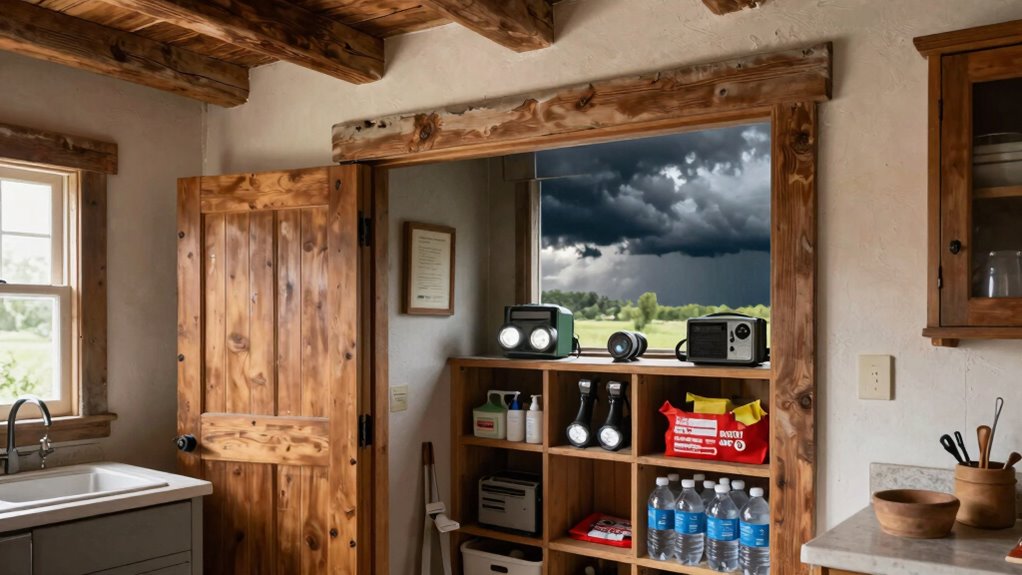

Having a storm room routine is essential for your farmhouse to protect everyone, including family, livestock, and valuable property. It helps you respond quickly and calmly to severe weather, reducing chaos and preventing injuries. By practicing safety protocols and keeping supplies ready, you guarantee everyone knows exactly what to do. Building this routine creates confidence and peace of mind when storms hit. Keep going, and you’ll discover simple steps to strengthen your storm safety plan even further.
Key Takeaways
- Ensures quick, organized response during severe weather, reducing chaos and potential injuries on the farm.
- Protects vulnerable farm equipment and livestock by providing a secure shelter during storms.
- Promotes household and farm staff preparedness through regular drills and clear safety protocols.
- Facilitates real-time weather monitoring and communication, enabling proactive storm management.
- Maintains a routine for ongoing storm readiness, minimizing risks and increasing confidence in storm safety.
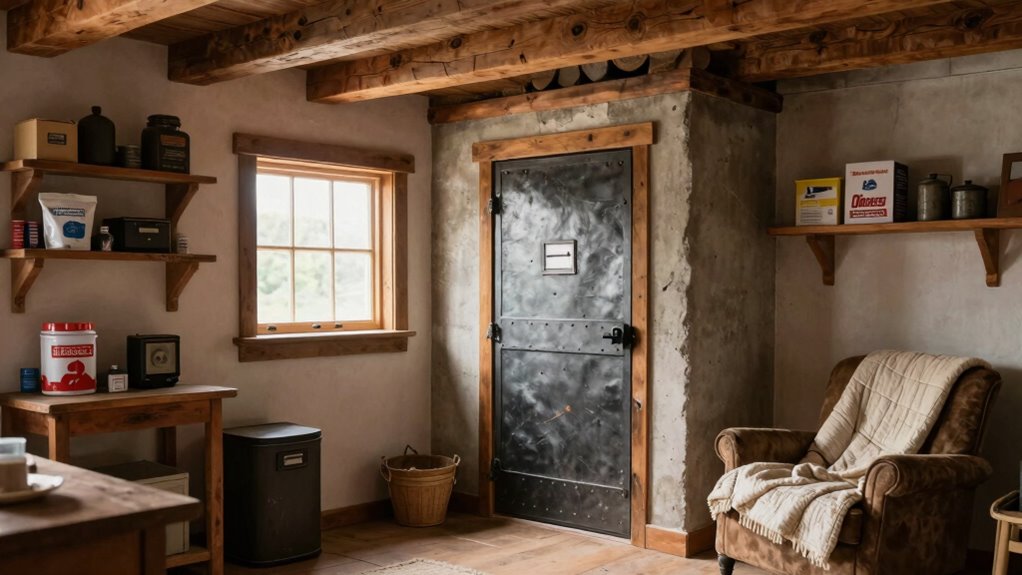
Have you ever wondered how to make storm safety feel less chaotic on a farmhouse? Establishing a clear storm room routine is crucial. When severe weather hits, confusion and panic can take over, but with a well-practiced plan, you can keep everyone calm and safe. The key is to prioritize storm preparedness, which involves more than just having supplies on hand. It’s about creating a set of safety protocols everyone understands and follows without hesitation. By doing so, you reduce the risk of injuries and guarantee that your household responds swiftly and effectively.
A essential part of this routine is knowing exactly where to go when a storm approaches. Your storm room should be a designated space that’s easily accessible and fortified against strong winds, hail, or flying debris. Familiarize everyone with its location and practice moving there quickly. When you implement safety protocols, you establish roles and responsibilities for each person, so no one is left uncertain about what to do. For example, assign someone to gather emergency supplies, another to check on children or elderly family members, and ensure that everyone understands how to secure windows and doors beforehand. Practicing these steps regularly builds muscle memory, making it second nature during an actual storm.
Having a complete storm preparedness plan also means keeping an emergency kit ready in your storm room. Stock it with essentials like bottled water, non-perishable food, first aid supplies, flashlights, extra batteries, and important documents. Regularly check and update these supplies, so nothing is expired or missing when a storm strikes. Clear safety protocols include not only what to do during the storm but also how to communicate with neighbors or emergency services if needed. It’s wise to have a charged cell phone and a backup power source, along with a list of emergency contacts. Additionally, understanding the importance of indoor air quality helps ensure proper ventilation and safety during storm events, especially if power outages or debris impact your home’s air circulation.
Incorporating storm safety training sessions can further empower your household to respond effectively in emergencies. Staying informed about weather updates through weather alerts can help you react proactively and avoid last-minute panic. Having a plan for communication methods ensures everyone stays connected during unpredictable situations.
In addition to physical preparations, your routine should include staying informed about weather updates. Use weather radios or smartphone alerts to get real-time information. Knowing when a storm is approaching allows you to activate your safety protocols early, giving everyone ample time to reach the storm room. Practicing your routine regularly, especially during storm season, helps identify gaps and ensures everyone remains confident in their actions. It’s also important to understand the signs of severe weather so you can respond proactively rather than reactively. When your storm room routine is ingrained in daily life, storm safety becomes less intimidating and more manageable, giving you peace of mind no matter what Mother Nature throws your way.
As an affiliate, we earn on qualifying purchases.
Frequently Asked Questions
How Often Should the Storm Room Be Inspected for Safety?
You should inspect your storm room at least once every three to six months for safety. During inspections, check the storm room ventilation to guarantee it’s clear and functioning properly. Also, verify your emergency communication devices are working, so you can alert others if needed. Regular inspections help you identify potential hazards early, keeping you safe during severe weather. Staying proactive makes certain your storm room remains a reliable refuge.
What Emergency Supplies Are Essential in a Farmhouse Storm Room?
Did you know that 90% of tornado injuries occur outdoors or in vehicles, not in shelters? To stay safe, you need an emergency kit in your farmhouse storm room, including bottled water, non-perishable food, a flashlight, batteries, a first-aid kit, and a safety checklist. These essentials guarantee you’re prepared for any storm, helping you stay calm and protected until danger passes.
Can a Storm Room Double as a Storage Space?
Yes, a storm room can double as a storage space, offering added utility for your farmhouse. A storm room multipurpose setup maximizes space benefits, allowing you to store emergency supplies, tools, or seasonal items securely. This dual purpose makes your farmhouse more efficient, especially when space is limited. Just make certain the storage area is organized and safe, keeping your essentials protected while maintaining the room’s primary function as a storm shelter.
How Do I Train Family Members to Use the Storm Room Properly?
You must make family communication a priority and hold regular emergency drills to train everyone effectively. Start by explaining the importance of the storm room, then practice quick, calm responses repeatedly—so it becomes second nature. Use clear instructions and praise teamwork. When family members understand their roles, the storm room routine will become instinctive, turning what could be chaos into a well-oiled safety plan, even in the worst storms.
What Are the Costs Associated With Building a Storm Room?
The costs of building a storm room vary based on storm room design and construction materials. You’ll spend more on reinforced concrete or steel walls, specialized doors, and high-quality ventilation systems. Labor costs also play a role, especially if you hire experts for installation. On average, expect to pay between $3,000 and $10,000, but investing in durable materials and proper design guarantees safety and long-term peace of mind during severe weather.
Conclusion
Having a farmhouse storm room routine isn’t just about safety—it’s about peace of mind. Did you know that homes with designated storm shelters see a 50% reduction in storm-related injuries? By establishing and practicing your routine, you guarantee everyone knows what to do when severe weather strikes. Stay prepared, stay safe, and make your storm room a trusted refuge for your family. It’s a small step that makes a big difference in safeguarding your farmhouse.