TL;DR

Get garden gear delivered free with Prime
- Fast, free delivery on millions of items
- Prime Video, Amazon Music and more included
- Member-only deals all year
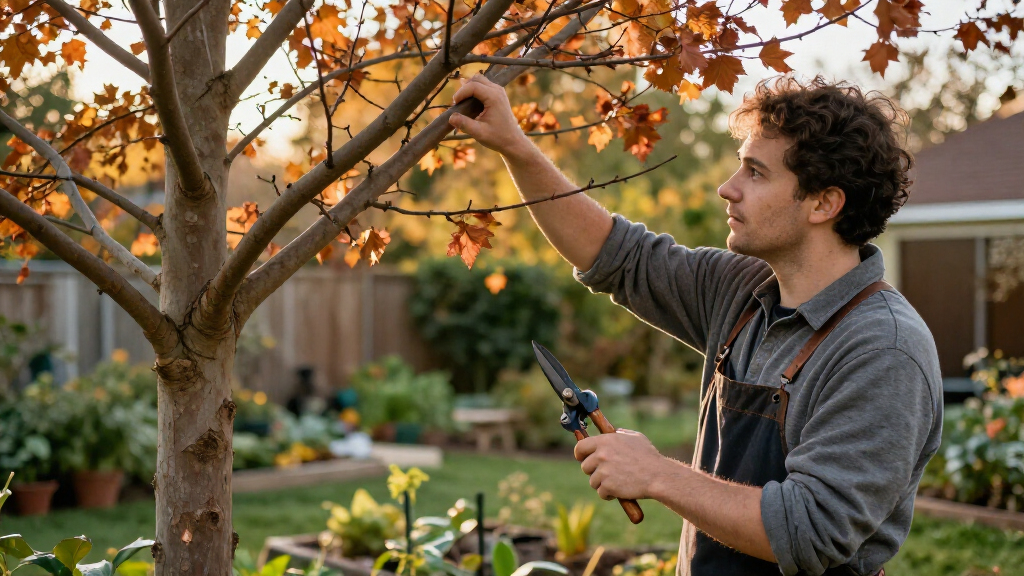
An Ideal Home report says October is too early for routine pruning of most trees, which generally fare better when pruned during dormancy. Gardening expert Gareth Mitchell identifies three exceptions for a light tidy: acers, birches and newly planted trees, with cuts limited to dead, damaged, diseased or rubbing growth.
Most trees should not be pruned routinely in October, according to an Ideal Home gardening report, but acers, birches and newly planted trees can have a light tidy if needed. The advice, attributed to gardening expert Gareth Mitchell of Tree2MyDoor, focuses on removing dead, damaged, diseased or rubbing branches rather than reshaping trees before winter dormancy.
The report says October is generally too early for most trees’ main pruning, because the dormant period typically falls between late autumn and late winter. It warns that pruning at the wrong time can cause excessive sap loss or leave a tree more exposed to disease. For trees that are not among the exceptions, the recommendation is to wait rather than make a substantial cut now.
Mitchell says Japanese maples and other acers can be checked for dead, damaged or crossing branches before dormancy, although they naturally have an attractive form and usually need little pruning. Birches can also have small dead or damaged branches removed in October. The report says birches are more vulnerable to sap loss from heavy pruning in late winter and early spring, when sap flow is at its peak.
The third exception is a freshly planted tree, which may need minor corrective pruning to remove broken growth or balance its shape, Mitchell says. Across all three groups, the advice is for a light trim only. The report does not recommend using October as an opportunity for major reduction or routine shaping.
Avoiding Stress Before Dormancy
The timing matters because large or poorly timed cuts can stress trees, while pruning can create openings where disease may take hold, according to Mitchell. Holding off on routine work helps avoid unnecessary cuts during a period that the report describes as still early in the autumn season.
The limited exceptions give gardeners a practical distinction: inspect now, but cut selectively. Removing a broken limb or a branch rubbing against another is different from carrying out a full annual prune. That approach may also reduce the chance of disturbing a tree’s natural shape or removing healthy growth without a stated need.
As an affiliate, we earn on qualifying purchases.
Why October Is Not Dormancy
Many plants finish flowering or fruiting as the weather cools, which can make October seem like a natural time to tidy the garden. But the Ideal Home report says leaf fall does not by itself mean deciduous trees are ready for their annual prune. The broader dormant period is typically later, from late autumn through late winter.
The report uses apple trees as an example of a tree generally pruned in winter, saying that cutting them too early can cause unnecessary stress. It does not provide a single pruning schedule for every species; timing depends on the tree and the type of work. Its October guidance is limited to small, targeted cuts for the named exceptions.
“Timing really matters when it comes to pruning.”
— Gareth Mitchell, gardening expert and founder of Tree2MyDoor, as quoted by Ideal Home
Species and Cut Size Matter
The report does not give species-by-species pruning dates for all trees or define a precise maximum branch size for an October trim. It also does not offer separate instructions for trees with specific diseases or other conditions. Its guidance should be read as general advice, not a diagnosis or a substitute for species-specific instructions where a tree’s condition is uncertain.
It remains unclear from the report how local climate or weather conditions might alter the timing in a particular garden. The central recommendation is nevertheless clear: avoid heavy pruning in October, and limit any work on the three named groups to small corrective cuts.
Keep Major Pruning for Later
For most trees, gardeners should wait until the appropriate dormant-season window before carrying out routine pruning, with timing depending on the species. In October, inspect acers, birches and newly planted trees, and remove only dead, damaged, diseased or rubbing growth where necessary.
Mitchell’s guidance, as reported by Ideal Home, does not set out a calendar for every tree or prescribe a follow-up date for each exception. Gardeners should check the needs of the specific species before making larger cuts and seek qualified advice if a tree has significant damage or a health problem.
Key Questions
Can I prune trees in October?
Most trees should wait for their appropriate dormant-season pruning. The report allows only a light tidy for acers, birches and newly planted trees when there is a clear need.
Which trees can have a light October trim?
The three exceptions named by gardening expert Gareth Mitchell are Japanese maples and other acers, birches, and newly planted trees. The advice is limited to minor corrective cuts.
What should I remove from an acer in October?
Mitchell advises checking for dead, damaged or crossing branches. Acers generally need little pruning, so the report does not recommend reshaping them now.
Why are birches an October exception?
The report says birches can lose sap when heavily pruned in late winter and early spring, when sap flow is at its peak. In October, it says small dead or damaged branches can be removed; it does not endorse heavy pruning.
What does a newly planted tree need?
A recently planted tree may need minor corrective pruning to remove broken growth or balance its shape, Mitchell says. The report does not recommend a full prune.
Source: rss
Fall Picks
fall essentials
As an affiliate, we earn on qualifying purchases.