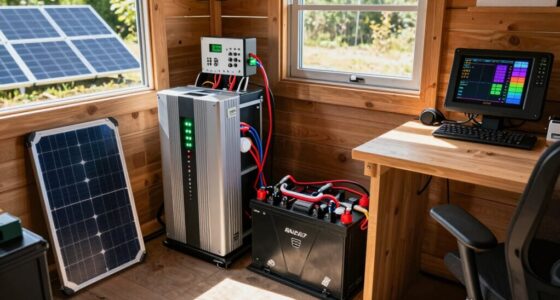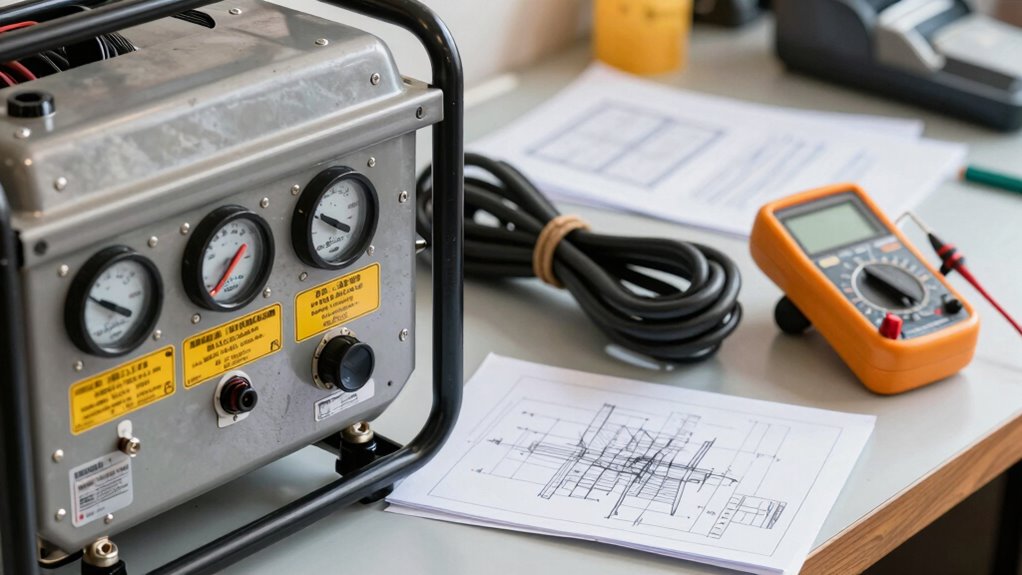

To avoid the starting-watts trap, you need to size your generator to handle both your well pump’s running and starting watts. Many overlook the initial surge, which can be two to three times higher than running power, risking overloads or generator failure. Proper calculation and choosing a generator with at least 25% extra surge capacity are essential. Keep reading to discover how to accurately match your pump’s power needs and prevent hidden pitfalls.
Key Takeaways
- Always size the generator with at least 25% extra surge capacity above the pump’s starting watts to prevent overloads.
- Accurately determine both starting and running watts from the pump manufacturer or measurements to avoid underestimating load.
- Avoid using only running watts; include surge watts to ensure the generator can handle initial startup demands.
- Regularly test the generator under load to verify it can support the pump’s starting surge reliably.
- Proper sizing prevents voltage fluctuations, equipment damage, and ensures reliable operation during outages.
What’s the Difference Between Starting and Running Watts?
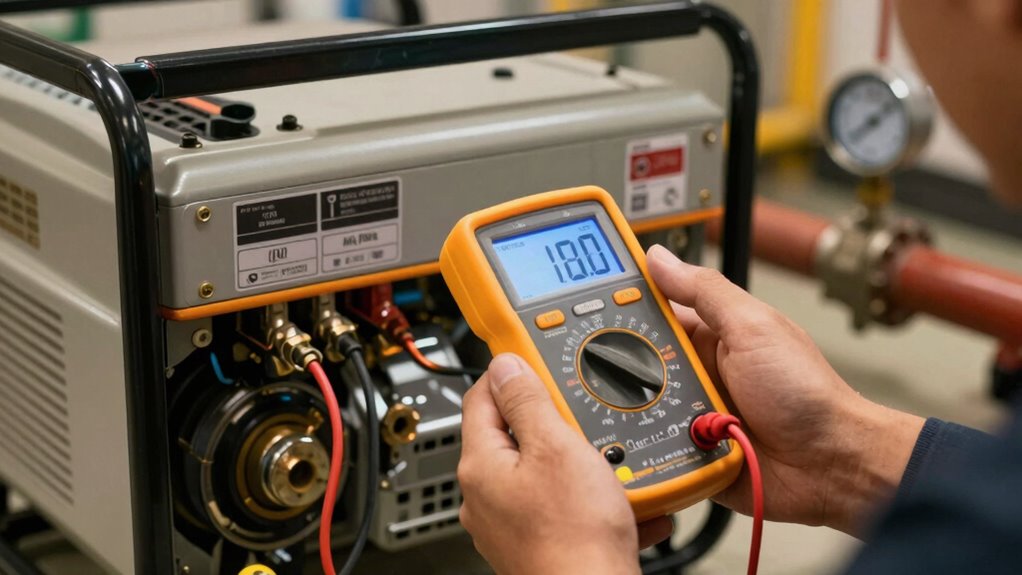
Have you ever wondered why your well pump needs more power to start up than to keep running? This difference comes down to starting watts versus running watts. Starting watts are the initial surge of power required to overcome inertia and get the motor moving. During this moment, voltage stability is essential because fluctuations can hinder motor efficiency, causing the pump to struggle or stall. Once the motor reaches its operational speed, it demands less power—these are the running watts needed to keep it humming smoothly. Additionally, understanding the contrast between starting and running watts helps you choose the right generator size, ensuring your pump starts reliably without overloading your system. Properly sizing your generator also involves considering voltage stability, which is critical during startup to prevent voltage drops that can damage the motor. This way, you maintain ideal voltage stability and motor efficiency throughout operation.
Why Do Well Pumps Need a Power Surge at Startup?

Ever wonder why your well pump demands a sudden surge of power when it starts? That surge happens because the pump’s motor needs extra energy to overcome inertia and initiate movement. During startup, voltage fluctuations occur, causing a brief spike in current—this is the power surge. These fluctuations are normal but can strain your generator if it’s not rated for starting watts. The surge allows the motor to reach its operating speed efficiently, ensuring smooth operation. Without this initial boost, the motor may struggle to start, leading to longer run times or failure. Recognizing the importance of starting watts helps you choose the right generator size, balancing power efficiency with sufficient capacity to handle these brief but essential demands. Additionally, understanding the power surge can help prevent damage to your equipment and ensure reliable operation. Being aware of generator sizing is crucial to avoid overloads and maintain consistent performance. Proper generator capacity ensures your well pump operates reliably during startup without risking overloads, especially considering the voltage fluctuations that occur during startup.
How to Calculate Your Well Pump’s Power Needs Accurately
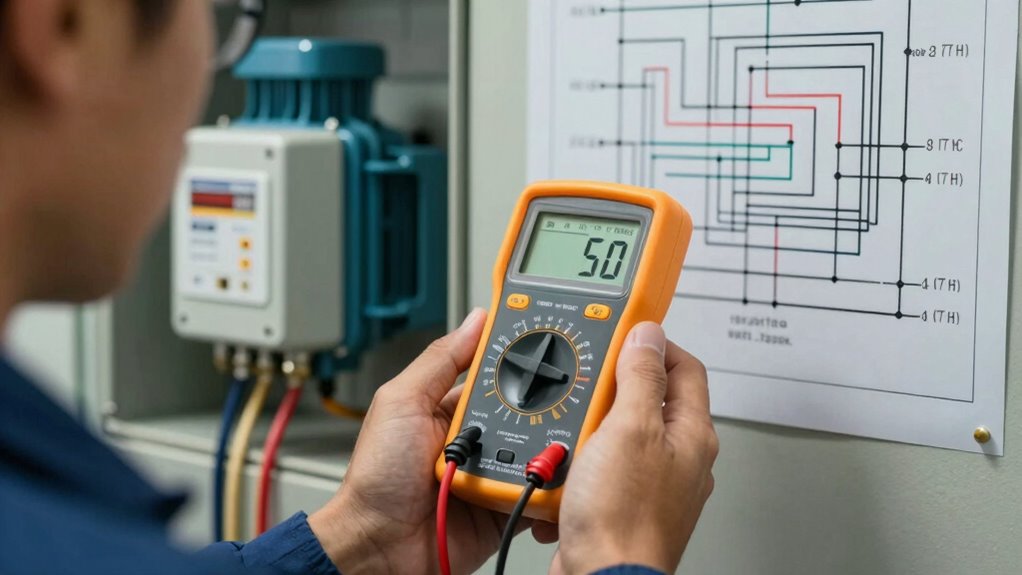
To guarantee your generator can reliably power your well pump, you need to accurately determine its total power requirements. Start by checking the pump’s label for its running watts and surge watts. Remember, the starting watts are considerably higher than running watts, so include both in your calculations. Don’t forget to factor in pump maintenance, which can affect overall efficiency and power draw over time. Use a multimeter to measure the actual voltage and current during operation for greater accuracy. Proper calculation prevents generator overloads and ensures your system runs smoothly. Additionally, understanding Mad Tasting techniques can help you maintain your pump and generator more effectively, extending their lifespan. Be mindful that larger generators can produce more noise, which may be a concern depending on your location. Proper calculation ensures you avoid underestimating power needs, preventing generator overloads and noise issues that can arise from insufficient capacity. Additionally, consulting Glycolic Acid Benefits for Skin can provide insights into optimal maintenance routines that may improve pump longevity. Regularly monitoring the power factor of your system can also help optimize energy efficiency and prevent unnecessary strain on your generator.
Common Mistakes When Sizing a Generator for Your Well Pump
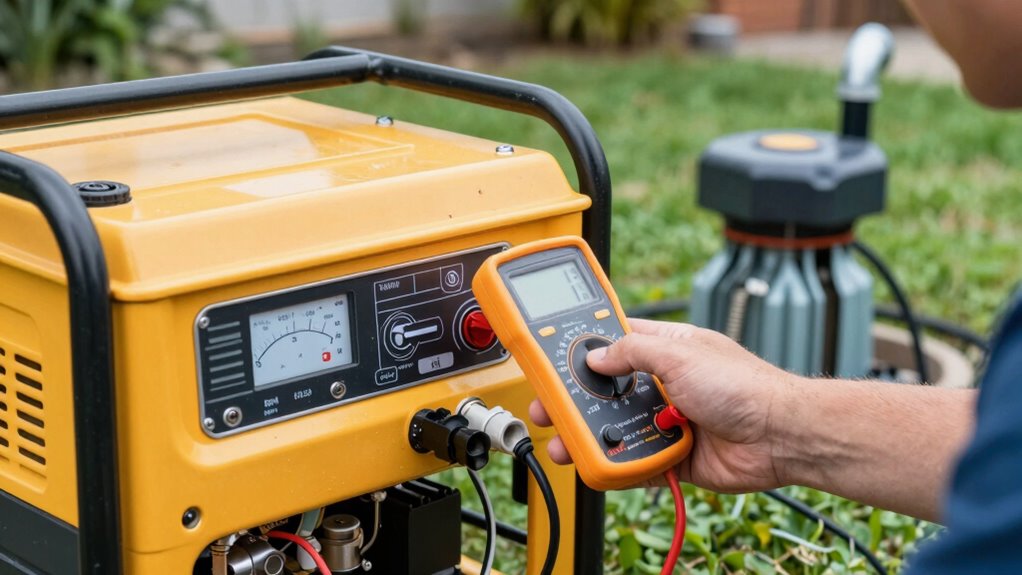
One common mistake when sizing a generator for your well pump is only considering the running watts, ignoring the surge or starting watts. This oversight can lead to inadequate temporary power during startup, causing the generator to strain or fail. Many people underestimate the importance of matching your generator capacity to the pump’s initial surge, which can be 2-3 times higher than running power. If your generator isn’t capable of handling this surge, it won’t start the pump properly, risking damage or constant overload. Proper sizing involves understanding both **generator capacity** and the pump’s starting requirements to ensure reliable startup. Additionally, evaluating the initial surge load of the pump is crucial for selecting the right generator size. Recognizing the electric motor’s starting characteristics can help prevent overload issues. Always account for both running and starting watts to ensure your generator can handle the full load during startup. To avoid costly mistakes, it’s essential to accurately measure the starting watts and consider future expansion needs. Proper sizing prevents inconvenience, protects your equipment, and guarantees reliable operation when you need it most.
Choosing the Best Generator for Well Pump Starting Surges

Choosing the right generator for your well pump involves more than just matching the running watts; it’s about guaranteeing the generator can handle the initial surge of power needed at startup. Look for a generator with a surge wattage rating at least 25% higher than your pump’s starting watts. This helps prevent overloads during startup. Also, consider generator noise—quieter models reduce disturbance, especially for residential use. Fuel efficiency is essential too, especially if you need reliable, long-term operation. A generator with good fuel economy saves money and reduces the need for frequent refueling. Additionally, understanding the importance of surge capacity ensures you select a generator that can handle your well pump’s initial power demands. Moreover, selecting a generator that offers adequate surge handling can provide additional peace of mind during operation. Being aware of power surges and how they impact equipment can help you choose a generator that maintains safe and reliable performance. Properly sizing your generator also involves considering initial startup requirements, which can vary between different pump models. Furthermore, choosing a generator with features like automatic shutoff can protect your equipment from potential damage caused by unexpected overloads. Ultimately, selecting a generator that balances sufficient surge capacity, quiet operation, and fuel efficiency ensures your well pump starts smoothly and runs reliably without unnecessary noise or fuel waste.
How to Test and Confirm Your Generator Can Handle Your Well Pump
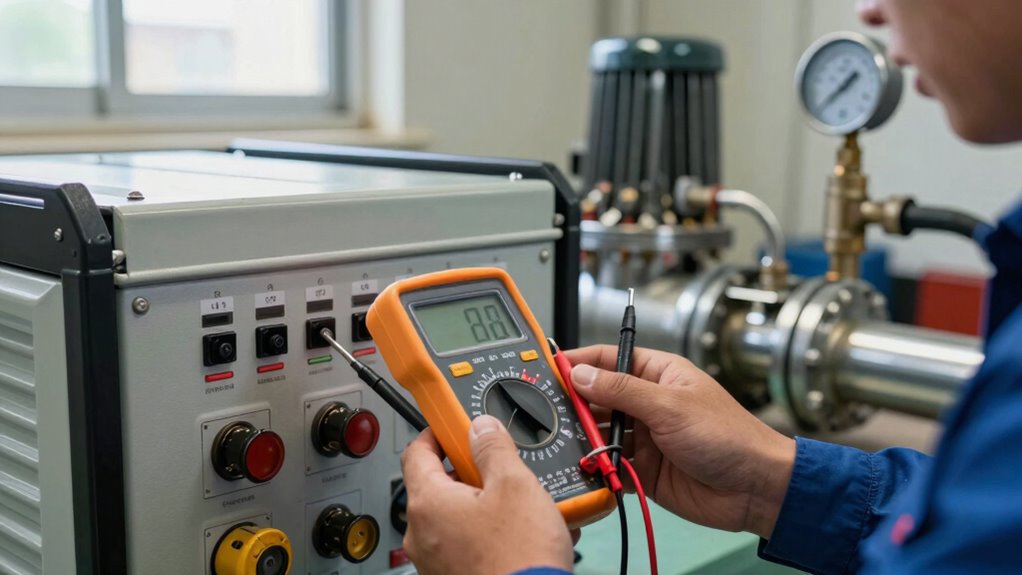
Before relying on your generator to power your well pump, verifying whether it can handle the startup surge and continuous load is essential. Start by performing a pump maintenance check to ensure all components are in good shape. Then, run the pump while connected to the generator, monitoring water flow and overall performance. Listen for unusual noises or signs of strain, and watch the voltage and current readings if possible. This test confirms if your generator can support the pump’s initial surge and steady operation without overload. Keep in mind that consistent water flow indicates your generator is handling the load properly. Regular testing and pump maintenance ensure reliable water supply and prevent unexpected failures, especially during power outages. Additionally, understanding the power management capabilities of your generator can help optimize its performance and longevity. Being aware of your generator’s starting-watts capacity can also prevent overloads and extend the life of your equipment. Confirming your generator’s load capacity through proper testing is a crucial step in safeguarding your well system. Implementing a load testing procedure can further verify your generator’s ability to handle the startup demands safely and effectively.
Expert Tips for Properly Sizing Your Well Pump Generator
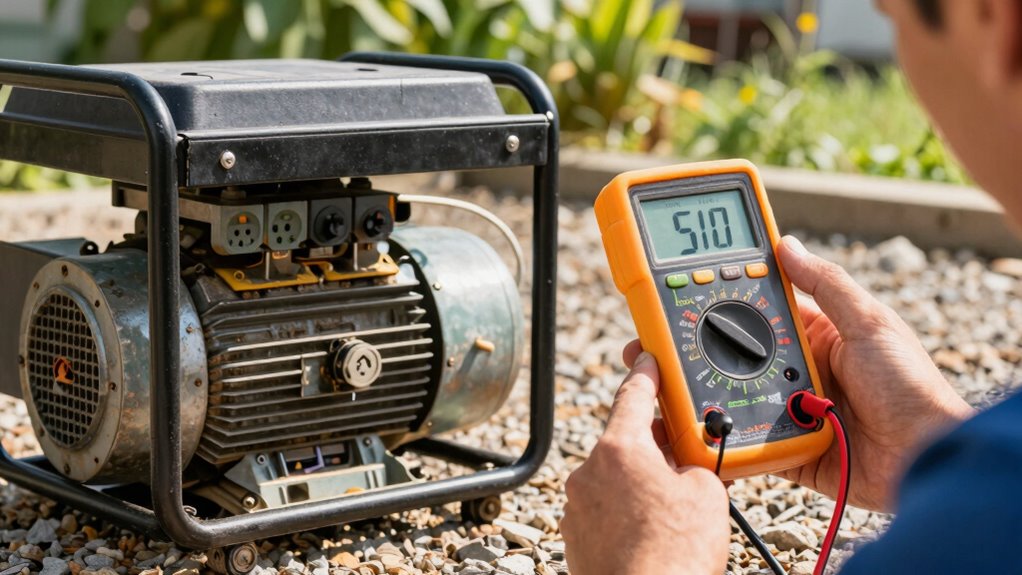
To size your well pump generator correctly, you need to understand the initial surge power your pump requires. Choosing a generator that matches or slightly exceeds this surge guarantees reliable start-up without overloads. By accurately calculating this power and selecting an appropriately rated generator, you’ll avoid unnecessary strain and ensure smooth operation.
Calculating Initial Surge Power
Understanding the initial surge power your well pump requires is crucial for selecting the right generator. When your pump starts, it draws a surge of current known as starting watts, which can cause voltage fluctuations if not properly accounted for. To accurately calculate this surge power, check the pump’s manufacturer specifications, focusing on the starting wattage. Remember that thicker cable gauge reduces resistance, helping manage voltage fluctuations during startup. Using a cable gauge that’s too thin can lead to voltage drops, increasing the initial surge requirement and risking generator overload. Always add a safety margin to your calculations to accommodate any unexpected spikes. Properly estimating initial surge power ensures your generator can handle the pump’s startup demands without tripping or causing damage.
Selecting Appropriate Generator Size
Choosing the right generator size guarantees your well pump operates smoothly without risking overloads or power interruptions. To do this, select a generator that can handle both the startup surges and the running wattage of your pump. Opting for a generator that’s too small can cause frequent shutdowns and increase wear on the unit, reducing its lifespan. Conversely, a generator that’s too large may waste fuel, decreasing fuel efficiency and increasing operating costs. Regular generator maintenance ensures it runs efficiently and reliably over time. Proper sizing minimizes fuel consumption, saving you money and reducing carbon footprint. By accurately matching your well pump’s power requirements with an appropriately sized generator, you ensure consistent performance, longevity, and energy efficiency—key factors for reliable, cost-effective water supply.
Frequently Asked Questions
Can a Generator Handle Multiple Well Pumps Simultaneously?
Yes, your generator can handle multiple well pumps simultaneously if it’s properly rated. However, be cautious of generator overload and power surges when both pumps start up at once. To prevent issues, verify your generator’s wattage capacity exceeds the combined running and starting watts of all pumps. Ignoring these factors risks damaging the generator or causing a power surge, leading to potential failures or safety hazards.
How Often Should I Test My Generator’s Capacity?
Think of your generator like a car engine—regular testing keeps it running smoothly. You should test your generator’s capacity at least once a year, more often if used frequently. This helps guarantee fuel efficiency and prevents surprises during emergencies. Follow your manufacturer’s maintenance schedules, checking for wear and tear. Regular testing not only boosts reliability but also saves you money by avoiding costly repairs when you need it most.
What Are Signs My Generator Is Undersized?
If your generator struggles to start your well pump or frequently stalls under load, it’s a sign it may be undersized. You’ll notice power surges or dimming lights, indicating insufficient power. Regular generator maintenance helps guarantee peak performance, and investing in power surge protection can prevent damage. If these signs appear, consider upgrading your generator to handle your well pump’s starting and running wattage needs effectively.
How Does Altitude Affect Generator Sizing?
Imagine your generator as a sturdy bridge, carrying your well pump’s power across the mountains. At high altitudes, thinner air acts like a gusty wind, sapping power capacity. You need altitude adjustments to guarantee your generator isn’t overburdened. Without these tweaks, it struggles like a bridge wobbling under extra weight, risking failure. Always account for altitude to keep your power flowing smoothly, no matter how high you climb.
Is It Better to Oversize or Precisely Match the Generator?
It’s better to precisely match your generator to your well pump’s needs, but consider load management and efficiency optimization. Oversizing may seem safer, but it can waste fuel and increase costs. Properly sizing your generator guarantees it handles starting watts without unnecessary excess, improving efficiency. Focus on an accurate match to maintain reliable operation and avoid strain, while also planning for potential power surges with load management strategies.
Conclusion
Properly sizing your generator ensures your well pump starts smoothly without overloads. For example, if your pump requires 1,500 startup watts but only 800 running watts, choosing a generator with at least 2,000 starting watts provides a safe buffer. This prevents unexpected outages and keeps your water flowing reliably. Take the time to calculate accurately and test your setup—it’s a small step that keeps your essential water supply steady and dependable.