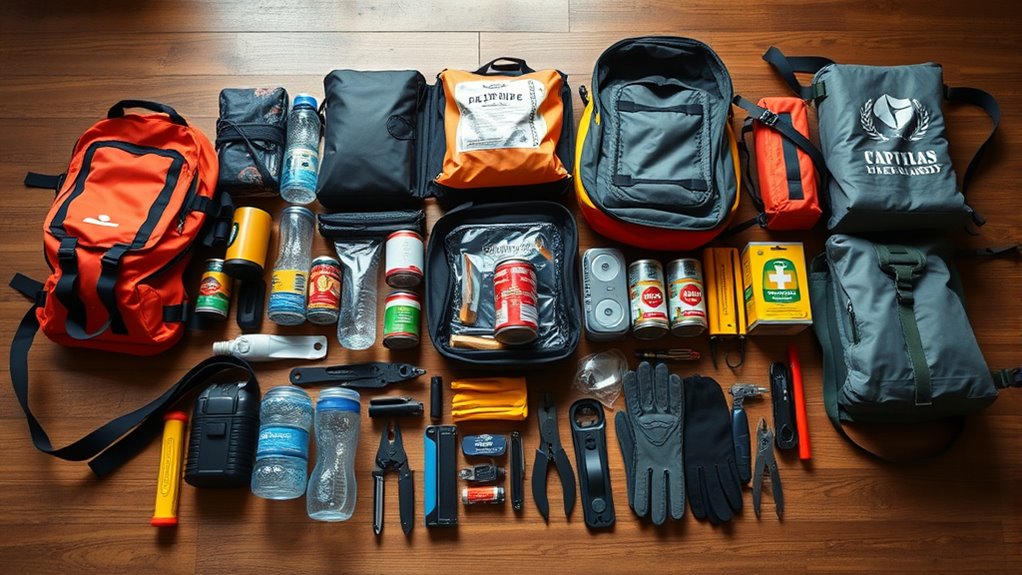

To build a household emergency kit, include essentials like communication devices such as radios, cell phones with extra power banks, and whistles to signal for help. Pack first aid supplies like bandages, antiseptic wipes, and pain relievers, along with enough water and non-perishable food for at least three days. Add flashlights, warm clothing, and hygiene items. Regularly review and update your supplies, and learn how to use everything effectively—more tips await to help you prepare fully.

Get garden gear delivered free with Prime
- Fast, free delivery on millions of items
- Prime Video, Amazon Music and more included
- Member-only deals all year
Key Takeaways
- Include communication devices like radios, cell phones, and whistles to maintain contact during emergencies.
- Stock sufficient water, non-perishable food, and basic first aid supplies for at least three days.
- Ensure all items are clearly labeled, stored accessibly, and regularly checked for expiration or functionality.
- Prepare warm clothing, blankets, and hygiene items to support comfort and health in various hazards.
- Educate household members on emergency procedures, kit use, and conduct routine reviews of supplies and equipment.
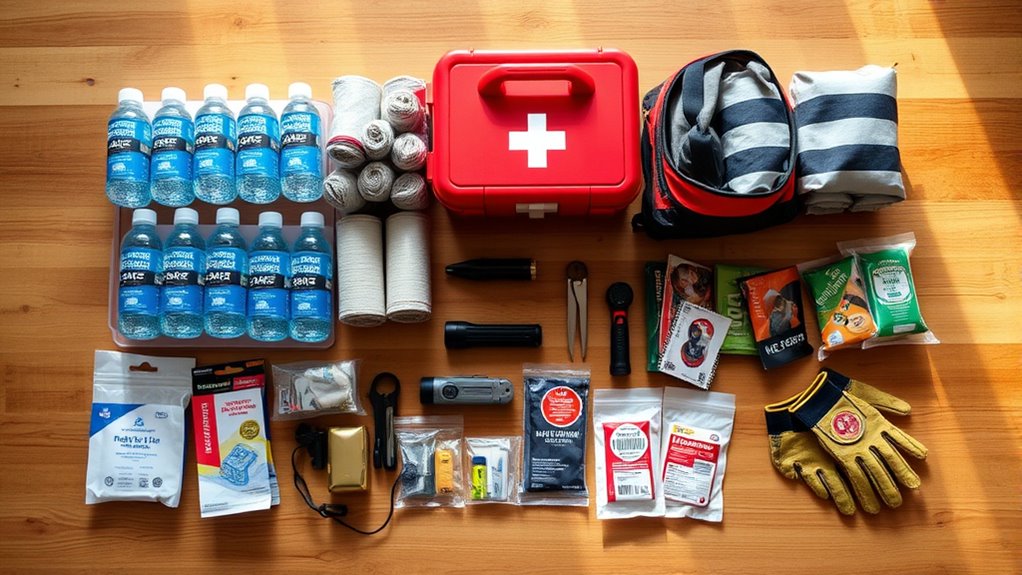
Preparing a household emergency kit is essential to guarantee you’re ready for unexpected disasters. When disaster strikes, having the right supplies can make all the difference in protecting yourself and your loved ones. One of the most important aspects of your kit is making certain you have reliable communication devices. These could include a battery-powered or hand-crank radio, a fully charged cell phone with extra power banks, or even a whistle to signal for help. Communication devices keep you connected to emergency services and loved ones, especially if other forms of communication fail. Without these tools, you might find it challenging to receive updates or ask for assistance during critical moments.
Reliable communication devices are vital for emergency preparedness and staying connected during disasters.
Alongside communication devices, you need to stock ample first aid supplies. These supplies are your first line of defense for treating minor injuries and stabilizing more severe wounds until professional help arrives. Your first aid kit should include bandages of various sizes, antiseptic wipes, antibiotic ointments, pain relievers, and scissors. Consider adding items like tweezers for removing splinters or debris and gloves to prevent infection. Having a well-stocked first aid kit allows you to manage injuries quickly and effectively, which can prevent complications and reduce the risk of infection.
When assembling your emergency kit, keep these essentials in mind: aside from communication devices and first aid supplies, gather enough water and non-perishable food to sustain your household for at least three days. Pack a flashlight with extra batteries, warm clothing, blankets, and hygiene items like moist towelettes and hand sanitizer. Remember, disasters can cause power outages and disrupt normal routines, so being prepared with these basic needs is indispensable. Additionally, understanding projector technology and its specifications can help you better plan for home safety and entertainment during emergencies.
Label all items clearly and store your emergency kit in an accessible location known to everyone in your household. Periodically review and update your supplies, especially first aid items and batteries, to guarantee everything remains functional and within expiration dates. Practice using your communication devices and familiarize your family with the kit’s contents so everyone knows what to do in an emergency.
As an affiliate, we earn on qualifying purchases.
Frequently Asked Questions
How Often Should I Update My Emergency Kit?
You should update your emergency kit at least once a year. Check the shelf life of items like food, water, and medications, replacing expired products. Make seasonal updates to include items relevant to the weather, such as warm clothing or rain gear. Regularly reviewing and revitalizing your kit ensures everything stays in good condition and ready to use when needed, giving you peace of mind during emergencies.
What Are the Best Storage Locations for My Kit?
Your emergency kit should be stored in a spot as accessible as your favorite chair, so you can grab it effortlessly when needed. Use storage tips like a waterproof container in a cool, dry place, avoiding areas prone to flooding or extreme heat. Consider accessibility concerns, making sure everyone in your household knows where it is and can reach it quickly, ensuring safety is just a step away during emergencies.
How Do I Include Pets in My Emergency Plan?
To include your pets in your emergency plan, prioritize pet safety by creating an emergency pet supplies kit with food, water, medications, and comfort items. Keep this kit accessible and store it near your household emergency kit. Plan for safe evacuation routes that accommodate pets, and identify pet-friendly shelters ahead of time. Regularly update your pet’s supplies and guarantee all family members know how to care for your pets during a disaster.
Should I Customize Kits for Different Family Members?
You should definitely customize kits for different family members, ensuring their personal needs are met. Think of it as tailoring a wardrobe to fit each person perfectly, with age-specific supplies and comfort items. This way, everyone feels prepared and cared for during emergencies. By considering individual requirements, you create a more effective and reassuring emergency plan, helping each family member stay safe and supported no matter what happens.
What Are Cost-Effective Ways to Build My Emergency Kit?
You can create a budget-friendly emergency kit by using DIY emergency kits and shopping smart. Look for sales, discounts, and generic brands to save money on essentials like first aid supplies, water, and non-perishable food. Repurpose items you already have, like containers or clothing, and gradually add items over time. Prioritize your family’s needs, and build your kit step-by-step without breaking the bank.
Conclusion
Now that you know the essentials, assembling your emergency kit is a crucial step to protect your household. Did you know that over 60% of Americans aren’t fully prepared for a disaster? By gathering these supplies now, you’re taking a vital step toward safety and peace of mind. Remember, being prepared can make all the difference when emergencies strike. Start building your kit today—you’ll thank yourself later.
Halloween Picks
halloween
As an affiliate, we earn on qualifying purchases.