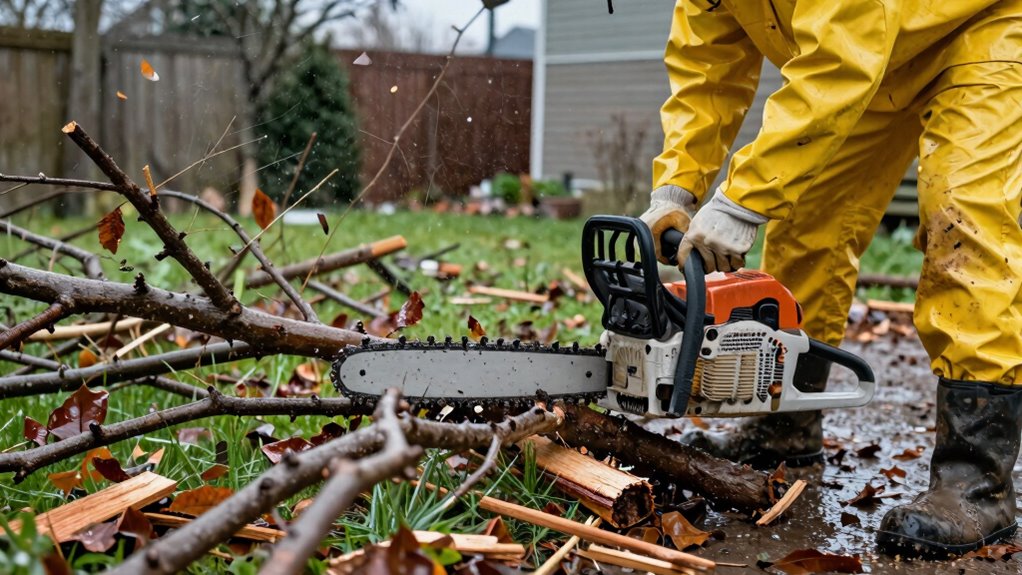

When cleaning up storm damage with a chainsaw, prioritize safety by wearing sturdy gloves, eye and ear protection, and a helmet. Evaluate each branch or tree’s stability before cutting, and start with smaller limbs. Keep the chainsaw well-maintained, and use proper cutting techniques to prevent pinching or binding. Stay alert to your surroundings, especially around power lines, and make certain no bystanders or pets are nearby. For more tips on safe cleanup, keep exploring how to protect yourself and your property.
Key Takeaways
- Assess storm-damaged trees or branches for stability before cutting, and consult professionals for large or unstable limbs.
- Always wear proper safety gear, including gloves, eye protection, helmet, and hearing protection during cleanup.
- Start with small branches, make careful cuts, and maintain a firm grip and stable footing to prevent accidents.
- Clear the area of bystanders and pets, and avoid working near power lines or in adverse weather conditions.
- Regularly inspect and maintain the chainsaw, ensuring blades are sharp and safety features are functioning correctly.

After a storm, tackling fallen branches and damaged trees can feel overwhelming, but a chainsaw makes the cleanup process more efficient. With the right approach, you can clear debris safely and restore your yard quickly. The key is understanding proper tree removal techniques and always prioritizing safety gear. Before you start, evaluate the size and stability of the branches or trees you plan to cut. For large or unstable limbs, consider consulting a professional to avoid accidents. When you’re ready to proceed, make sure you’re equipped with the necessary safety gear. This includes sturdy gloves, eye protection, hearing protection, and a helmet if you’re working near falling branches. Wearing the right safety gear minimizes the risk of injury from flying debris, loud noise, or accidental slips.
Using a chainsaw effectively requires more than just turning it on. Keep a firm grip on the tool, and maintain good footing to prevent falls. When doing tree removal, start by cutting smaller branches and limbs first, working your way toward the trunk or larger sections. Make your cuts carefully, ensuring the chainsaw doesn’t bind or get pinched by the wood. Be mindful of your surroundings—avoid working near power lines or in bad weather conditions. If a tree leans dangerously or is too large to handle safely, don’t hesitate to call a professional arborist. Additionally, understanding the importance of chainsaw safety features can greatly reduce the risk of accidents during operation. Proper maintenance, like sharpening blades and ensuring safety features work correctly, is also essential for safe operation.
Start with small branches, use careful cuts, and stay aware of your surroundings for safe chainsaw operation.
Throughout the process, stay alert and attentive. Check that your safety gear remains in place, and frequently inspect your chainsaw for any signs of damage or wear. Proper maintenance, like sharp blades and functioning safety features, keeps your chainsaw efficient and safe to operate. Remember, rushing through tree removal can lead to accidents, so take your time and follow best practices. When clearing debris, make sure to clear the area of bystanders or pets to prevent injuries from falling branches or accidental contact with the chainsaw. Recognizing the storm damage can help you assess the urgency and safety of your cleanup efforts. Being aware of potential hazards involved can help you plan your work more effectively and prevent injuries. It’s also helpful to understand the storm damage assessment process to prioritize which trees or branches need immediate attention. Moreover, understanding how to properly distribute weight when making cuts can help prevent the chainsaw from pinching or causing unpredictable falls.
In the end, tackling storm damage with a chainsaw can be manageable if you’re prepared and cautious. Prioritize safety gear, plan your cuts carefully, and know your limits. If you feel unsure about handling large or unstable trees, don’t hesitate to seek professional help. With patience and the right safety precautions, you can efficiently and safely clean up your yard after a storm.

Husqvarna 590091101 Classic Power Kit with Chainsaw Chaps, Safety Kit
- Complete Safety Kit: Includes chaps, helmet, and gloves
- Proper Personal Protection: Ensures safety for chainsaw users
- Injury Risk Reduction: Chainsaw chaps and helmet protect legs and head
As an affiliate, we earn on qualifying purchases.
As an affiliate, we earn on qualifying purchases.
Frequently Asked Questions
How Do I Dispose of Large Storm-Damaged Tree Debris?
You should first sort the large storm-damaged tree debris, focusing on tree branch disposal. Use a chainsaw carefully to cut branches into manageable sizes. To handle the smaller debris efficiently, operate a wood chipper safely—wear protective gear and follow manufacturer instructions. For large trunk sections, consider hiring a professional or renting heavy-duty equipment. Proper disposal prevents hazards and keeps your property safe after storm damage.
What Safety Gear Is Essential During Cleanup?
Think of your safety gear as your armor—crucial for protection. You need protective clothing like gloves, eye protection, earplugs, and sturdy boots to guard against debris and chainsaw hazards. Always have emergency supplies nearby, such as a first aid kit and a cellphone. Wearing the right gear keeps you safe, reduces injury risk, and helps you stay focused while cleaning up storm damage.
How Can I Prevent Chainsaw Accidents in Wet Conditions?
To prevent chainsaw accidents in wet conditions, you need to prioritize chainsaw safety by ensuring your equipment has good traction and sharp blades. Always maintain a firm grip, cut slowly, and avoid rushing. Be cautious of slippery surfaces that can cause slips or falls. Wear slip-resistant boots, reduce your cutting speed, and stay alert. By staying attentive and adjusting your techniques, you minimize risks and keep yourself safe during wet conditions.
What Are the Signs of a Faulty Chainsaw?
You’ll notice signs of a faulty chainsaw if it’s difficult to start, makes unusual noises, or stalls frequently. If your chainsaw isn’t cutting efficiently, it might need chainsaw sharpening, or the fuel mixture could be off. Excessive vibration or smoke also signal trouble. Regular maintenance, including checking the chain tension and ensuring proper fuel mixture, helps keep your chainsaw running smoothly and safely.
How Often Should I Perform Maintenance After Storm Cleanup?
You should perform maintenance on your chainsaw after storm cleanup every few hours of use, especially checking the chainsaw blade and fuel mixture. Regularly inspect the blade for dullness or damage and sharpen or replace it as needed. Also, guarantee the fuel mixture remains fresh and properly mixed to keep the engine running smoothly. These steps help prevent accidents and ensure efficient, safe operation during cleanup.
Conclusion
After storm damage, a chainsaw becomes your best tool for quick, efficient cleanup. Remember to prioritize safety, wear protective gear, and follow proper cutting techniques. Did you know that according to the National Storm Damage Center, storms can cause over 1.2 billion dollars in tree-related damages annually? Using your chainsaw wisely not only speeds up the process but also helps prevent injuries and further property damage. Stay cautious, and you’ll restore your landscape safely and effectively.