
To choose safe indoor heat during utility failures, pick devices designed specifically for indoor use and follow all safety instructions. Ensure proper ventilation to prevent the buildup of toxic gases like carbon monoxide. Keep combustibles away and never block vents or exhaust outlets. Use carbon monoxide detectors for early warning and inspect your equipment regularly for damage or leaks. Following these safety tips is essential—continue exploring to learn more about maintaining a safe indoor environment during power outages.

Get garden gear delivered free with Prime
- Fast, free delivery on millions of items
- Prime Video, Amazon Music and more included
- Member-only deals all year
Key Takeaways
- Select indoor-specific heating devices with clear safety instructions and proper ventilation features.
- Use appliances designed for indoor use, avoiding outdoor or portable heaters not intended for enclosed spaces.
- Install and maintain carbon monoxide detectors to monitor for dangerous gas buildup.
- Ensure proper ventilation when using any combustion-based heater to prevent toxic gas accumulation.
- Regularly inspect and maintain heating equipment for leaks, damage, and proper operation before use.

When it comes to keeping your home warm, safety should always be your top priority. During utility failures, heating your space becomes tricky, and it’s essential to choose a safe method to avoid dangerous situations. First, always consider ventilation safety. Proper ventilation ensures that any heat source you use doesn’t produce dangerous carbon monoxide or other harmful gases. If you’re using alternative heating methods—like space heaters, fireplaces, or fuel-burning appliances—make sure they’re installed correctly and used in well-ventilated areas. Never block vents or exhaust outlets, and keep windows slightly open if you’re relying on indoor combustion sources. This helps prevent the buildup of toxic gases inside your home, which can cause severe health issues or even be fatal.
Fuel source safety is another critical aspect to think about when selecting a heating method during a power outage. You need to understand the risks associated with each fuel type. For example, kerosene heaters can be effective but require careful handling and proper ventilation. Always use the recommended fuel and never substitute with other types, as incorrect fuel can lead to dangerous fumes or fires. If you’re using a gas-powered heater, ensure your gas lines, connections, and regulators are in good condition and rated for indoor use. Leaks or faulty connections can cause leaks of carbon monoxide or flammable gases, increasing the risk of poisoning or explosions. Wood-burning stoves can be safe if they’re installed properly and maintained regularly, but you must also ensure good airflow and prevent creosote buildup to minimize fire hazards. Additionally, understanding the importance of indoor air quality when using combustion sources can help prevent health issues caused by indoor pollutants. Regularly checking for ventilation safety helps ensure that harmful gases don’t accumulate unnoticed. Staying informed about proper fire safety procedures is essential to prevent accidental fires during heating emergencies.
It’s vital to keep a fire extinguisher nearby and know how to use it in case of emergencies. Regularly check your heating devices for signs of wear, leaks, or damage, and never leave them unattended while operating. Using a carbon monoxide detector can provide extra peace of mind during heating emergencies, alerting you to dangerous gas levels early. When choosing a backup heat source, opt for options that are specifically designed for indoor use, and always follow the manufacturer’s safety instructions. Additionally, consider investing in a carbon monoxide detector to alert you if dangerous gases accumulate. Remember, even during a power outage, prioritizing ventilation safety and fuel source safety can make all the difference in maintaining warmth without risking your health or safety. Taking these precautions helps ensure that your home stays warm and safe until normal utility services are restored.
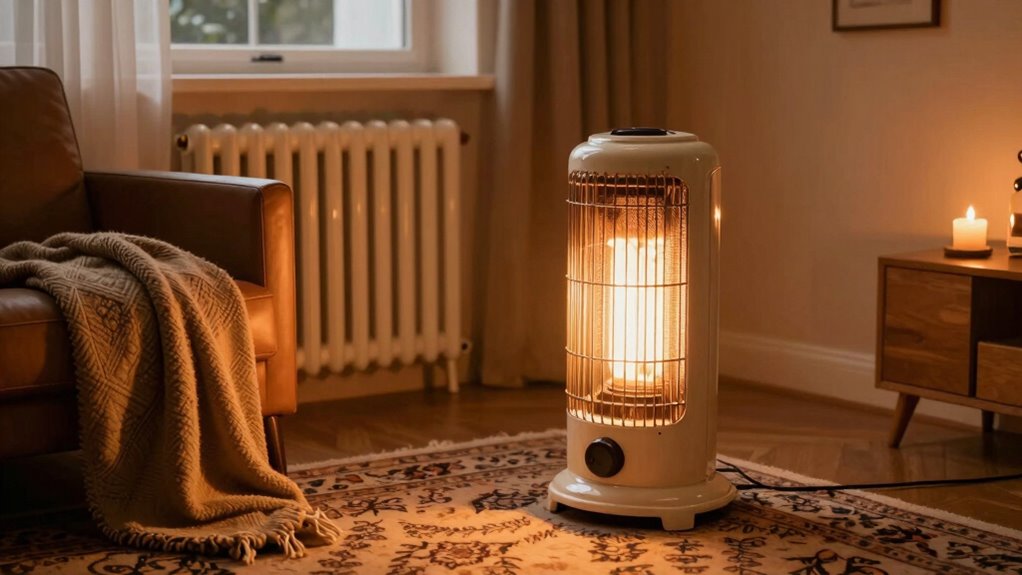
indoor space heater with safety features
As an affiliate, we earn on qualifying purchases.
As an affiliate, we earn on qualifying purchases.
Frequently Asked Questions
Can Using a Fireplace Cause Carbon Monoxide Poisoning Indoors?
Using a fireplace can cause carbon monoxide poisoning indoors if you don’t prioritize ventilation safety. Burning wood produces carbon monoxide, which is dangerous in enclosed spaces. To stay safe, guarantee proper chimney venting and never leave a fire unattended. Consider fireplace alternatives like space heaters that are vented or electric options, which eliminate the risk of carbon monoxide buildup. Always follow safety guidelines to protect yourself and your loved ones.
What Are the Signs of Carbon Monoxide Poisoning?
Imagine your body whispering warnings before disaster strikes. Signs and symptoms of carbon monoxide poisoning include headache, dizziness, nausea, and confusion. If you notice these, get fresh air immediately. Detection methods like carbon monoxide detectors are lifesavers—they alert you before symptoms appear. Keep them active and maintained. Early detection is vital; don’t ignore subtle clues—it’s your body’s way of signaling danger.
Is It Safe to Leave Space Heaters Unattended?
It’s not safe to leave space heaters unattended because improper heater placement can increase carbon monoxide risks and fire hazards. Always keep heaters on a stable, non-flammable surface, away from curtains or furniture, and never leave them running when you’re not present. Regularly check for signs of overheating or malfunction. Staying attentive guarantees your safety and reduces the risk of dangerous situations caused by unattended heaters.
How Often Should I Check My Heating Devices During a Power Outage?
During a power outage, you should check your heating devices every 30 minutes to guarantee they’re functioning safely. Regularly inspect for proper thermostat calibration and perform heating device maintenance to prevent hazards. These checks help you spot any malfunctions early and keep your home warm safely. Remember, never leave heating devices unattended for long periods, and always follow safety guidelines to avoid fire risks or carbon monoxide buildup.
Are There Any Chemical Risks With Portable Heaters?
Think of portable heaters as potential ticking time bombs if not handled properly. Chemical hazards can lurk if you neglect heater maintenance, especially with fuel-powered units that emit fumes or contain chemicals. Always guarantee proper ventilation and check for leaks or corrosion. Keep safety in mind, read manufacturer instructions, and regularly inspect your heater to prevent chemical risks, making warmth safer for everyone in your home.
Conclusion
When utility failures strike, remember that your safety depends on choosing the right heat source. Think of it as your shield against the cold—trusting your instincts and knowledge keeps you warm and secure. Always prioritize ventilation and proper use of heating devices. After all, in the battle against winter’s chill, your preparedness is your greatest weapon. Stay vigilant, stay safe, and let your awareness be the guiding light through any power outage storm.
Columbus Day / Indigenous Peoples' Day Picks
long weekend sales
As an affiliate, we earn on qualifying purchases.