
You play a vital role in squeeze chute safety long before the animal enters. Calmly approach cattle, ensuring they sense your steady presence and avoiding sudden movements or noises that could trigger panic. Regularly inspect and maintain equipment to prevent malfunctions, and prepare the environment by clearing obstacles and checking gates. Developing routines and understanding animal behavior help reduce stress and improve safety. Continue to explore ways to set the stage for safer handling and confident control.

Get garden gear delivered free with Prime
- Fast, free delivery on millions of items
- Prime Video, Amazon Music and more included
- Member-only deals all year
Key Takeaways
- Conduct thorough equipment inspections and maintenance before use to ensure all parts function properly.
- Prepare the environment by clearing obstacles and verifying gate and latch integrity.
- Approach animals calmly and allow time for acclimation to reduce stress and panic.
- Train handlers in proper handling techniques to promote safety and confidence.
- Recognize early stress signals in cattle to adjust handling methods proactively.
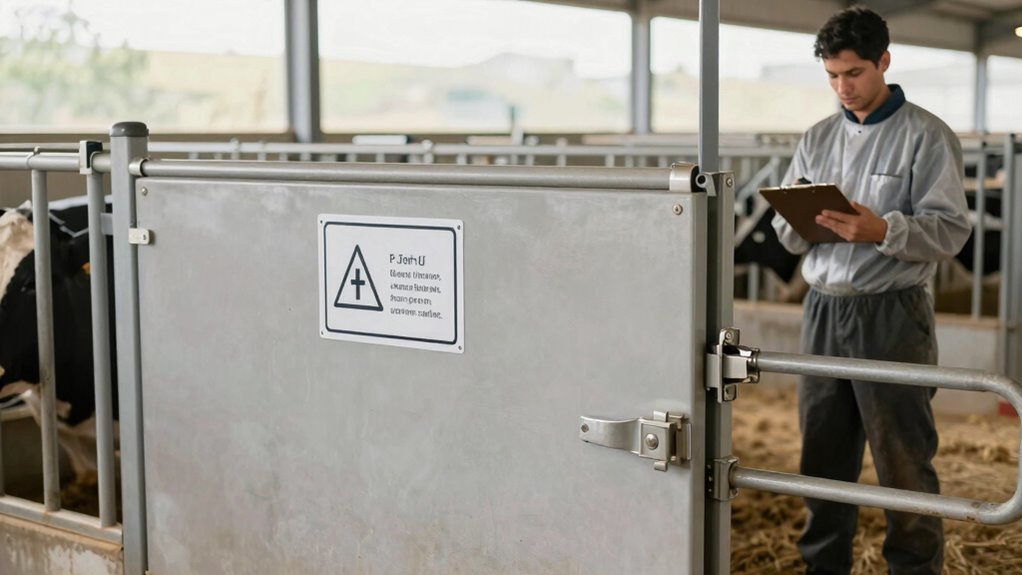
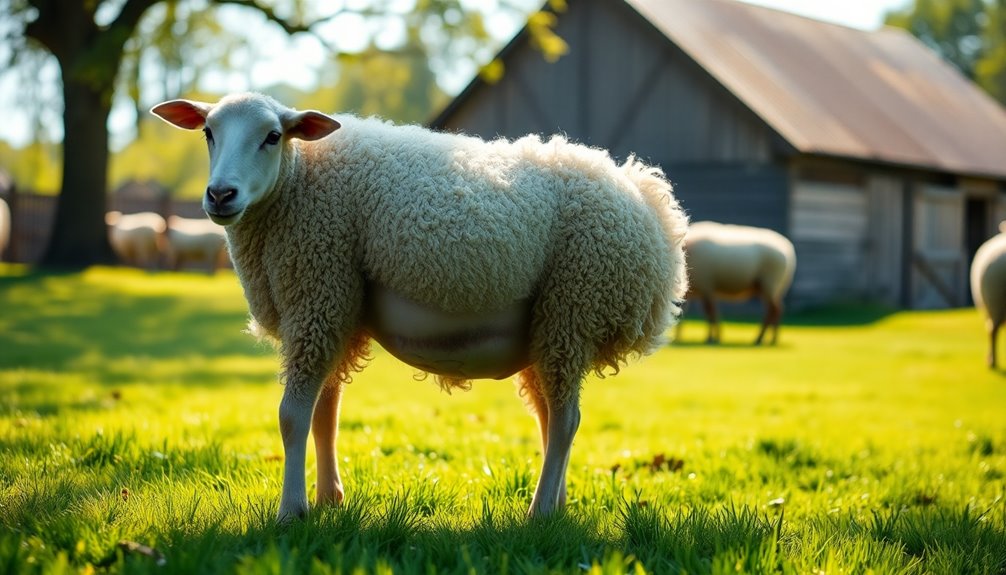
Have you ever wondered how to keep both you and your cattle safe during handling? The key lies in preparation and understanding, starting long before the animal steps into the squeeze chute. Recognizing animal behavior is essential; cattle are prey animals that can become stressed or unpredictable if they sense fear or discomfort. When you understand their instincts and reactions, you can take steps to minimize surprises and reduce the risk of injury. For example, cattle tend to be more calm when approached calmly and with steady movements. Sudden noises or quick movements can trigger panic, making handling dangerous for both you and the animal.
Understanding cattle behavior and approaching calmly minimizes stress and keeps everyone safe during handling.
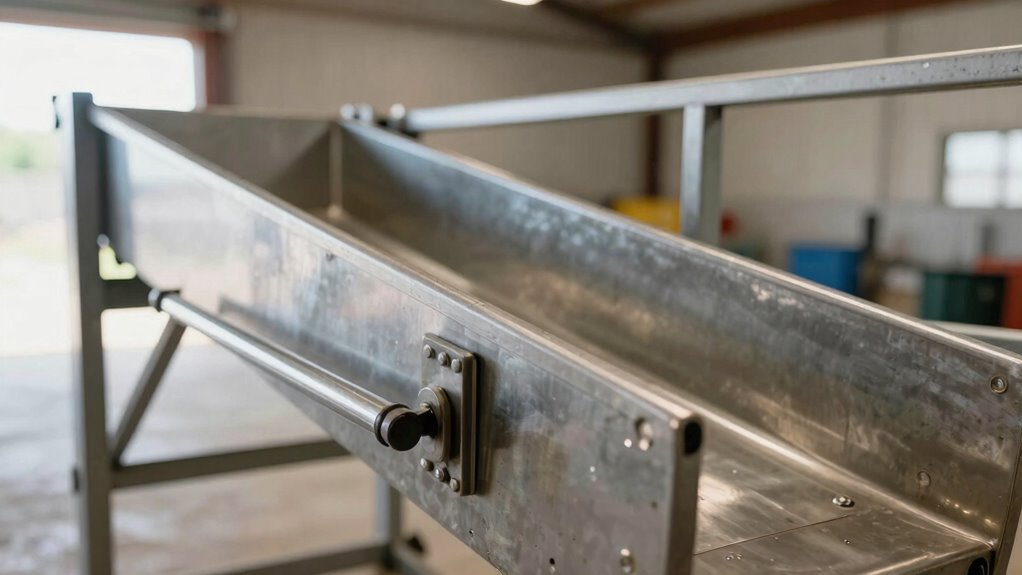
Getting your equipment in top shape is equally important. Equipment maintenance isn’t just about keeping your squeeze chute functional; it’s about guaranteeing safety at every step. Regularly inspect all parts—hinges, latches, hydraulics, and any moving components—to prevent malfunctions that could startle or injure the animal or yourself. A well-maintained chute operates smoothly, reducing the chances of animals getting caught or panicked. Lubricate moving parts and replace worn or damaged components promptly. Properly functioning equipment also means you can handle animals efficiently, which reduces stress and improves safety. Additionally, understanding the importance of equipment safety standards can help you ensure your setup adheres to best practices.
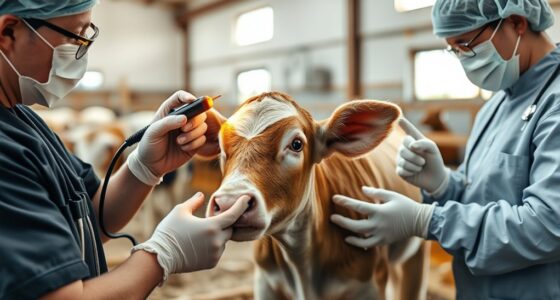
Before any animal enters the chute, take time to prepare the environment. Clear the area of obstacles, ensure good lighting, and double-check that gates and latches work properly. Establish a routine that minimizes surprises—for example, approach the animal calmly and give it time to acclimate to your presence. Use your understanding of animal behavior to gauge their mood; if they’re agitated, it’s better to wait until they calm down rather than rushing their entry. Ensuring your equipment complies with safety standards can help prevent accidents and make handling safer for everyone involved. Moreover, training yourself and your team on proper handling techniques increases confidence and promotes consistent, safe practices. Developing a thorough understanding of animal behavior can significantly improve safety and efficiency during handling procedures. Being aware of stress signals in cattle can also alert you to when they need extra patience or a different approach, further enhancing safety.
cattle squeeze chute safety inspection
As an affiliate, we earn on qualifying purchases.
As an affiliate, we earn on qualifying purchases.
Frequently Asked Questions
What Are Common Causes of Squeeze Chute Accidents?
Common causes of squeeze chute accidents often stem from poor animal handling and neglecting equipment maintenance. If you rush or handle animals roughly, they can become frightened or aggressive, increasing injury risk. Additionally, failing to regularly inspect and maintain the chute’s parts can lead to mechanical failures. Always handle animals calmly, and keep your equipment in good shape to prevent accidents and guarantee safety for everyone involved.
How Often Should Equipment Be Inspected for Safety?
Think of equipment inspection as your trusty steed’s shining armor—regular checks are essential. You should inspect your squeeze chute weekly, or after any heavy use, to guarantee safety protocols are maintained. Consistent equipment maintenance catches potential issues early, preventing accidents. Don’t wait for a breakdown; proactive inspections keep both you and your livestock safe, allowing you to work confidently and efficiently every day.
Who Should Be Trained to Operate Squeeze Chutes?
You should guarantee that only trained operators, who have completed proper operator training, operate squeeze chutes. They need to understand safety protocols thoroughly to prevent accidents. Proper training helps operators handle the chute confidently and respond quickly in emergencies. Regular refresher courses are also essential to keep safety protocols fresh in mind. By doing so, you protect both the animal and the operator, ensuring a safe, efficient process.
What Safety Gear Is Recommended for Handlers?
You should wear protective clothing, including gloves, sturdy boots, and eye protection, to stay safe when handling animals in squeeze chutes. Studies show that proper safety gear reduces injury risk by over 60%. Additionally, being emergency prepared is essential—keep first aid kits nearby and know emergency procedures. This proactive approach helps prevent accidents, ensuring both your safety and the animal’s well-being during stressful situations.
How Can Animal Behavior Influence Chute Safety?
Animal behavior greatly influences chute safety because stress and agitation can cause unpredictable movements. When animals are stressed, they might thrash or attempt to escape, increasing danger for handlers. You should use clear, calm handler communication to reassure the animal and help it stay calm. Recognizing signs of stress early allows you to adjust your approach, reducing risk and ensuring both your safety and the animal’s well-being.
Conclusion
Remember, safety with a squeeze chute begins long before the animal steps in—it’s the foundation you build with careful planning and awareness. Think of it as the first brushstroke on a canvas; the rest of the picture depends on that initial act. Stay vigilant, follow safety protocols, and treat every encounter with respect. When you lay this groundwork, you create a smoother, safer rodeo, turning what could be chaos into a well-orchestrated dance.
Fall yard work Picks
leaf blowers
As an affiliate, we earn on qualifying purchases.